
AI-Powered Retail Automation: Benefits and Challenges
Let’s start with the truth: retail isn’t simple anymore. The modern shopper moves across five devices, expects same-day delivery, and wants to feel understood—not sold to. Add in global supply chain chaos, price wars, and rising expectations, and you’ve got an industry that’s stretched thin.
Let’s start with the truth: retail isn’t simple anymore. The modern shopper moves across five devices, expects same-day delivery, and wants to feel understood—not sold to. Add in global supply chain chaos, price wars, and rising expectations, and you’ve got an industry that’s stretched thin.
That’s why AI-powered retail automation has become more than just a buzzword—it’s a lifeline.
From real-time personalization to autonomous warehouses, AI is automating complexity and giving retailers a way to scale without spiraling. But here’s the thing: while the benefits are massive, the challenges are very real too.
This blog unpacks both sides—what AI retail automation gets right, where it stumbles, and why smart retailers are leaning into it anyway.
1. What exactly is AI Retail Automation?
Think of AI retail automation as the intersection of artificial intelligence and everyday retail operations. It’s not just robots or futuristic tech—it’s algorithms that:
Predict demand
Auto-adjust pricing
Route deliveries
Curate shopping experiences
Manage warehouses with little human input
It’s about shifting from manual, rules-based systems to intelligent, self-learning workflows that respond in real-time.
So instead of waiting for a sale to go wrong, AI tells you when it might—and what to fix before it happens.
From Flipkart’s smart warehouses to Amazon’s anticipatory shipping to Glance AI’s lock screen discovery engine, automation is quietly reshaping every layer of retail.
2. The Major Benefits of AI Retail Automation
Let’s start with the upside—because there’s plenty of it.
Efficiency at Scale:
AI reduces human error and manual effort. Forecasts are sharper, order fulfillment is faster, and logistics are more agile. This leads to cost savings, fewer returns, and higher throughput.
Personalization Made Scalable:
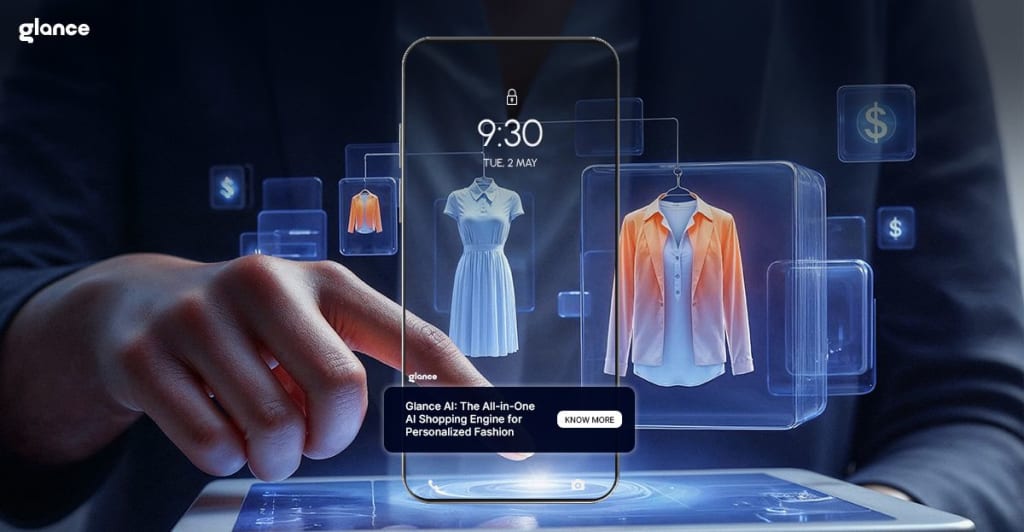
AI tailors everything—from homepage banners to email subject lines—to the user’s behavior. Glance AI pushes this even further by delivering persona-specific looks directly to the lock screen, no app open required.
Real-Time Decision Making:
Need to shift inventory mid-campaign? Adjust pricing on a slow-moving SKU? With AI, decisions are data-driven and happen instantly—not at the next team huddle.
Operational Visibility:
AI dashboards show real-time snapshots of inventory, orders, supply chain health, and customer sentiment. That’s end-to-end clarity, not spreadsheet chaos.
Improved Customer Experience:
Faster service, better recommendations, and smoother interactions = happier, loyal customers. And happy customers? They spend more, return more often, and leave better reviews.
In short, AI retail automation doesn’t just improve one piece of the puzzle. It tightens the whole system.
3. Real-World Examples of AI Automation in Action
Let’s bring it to life.
Zara: Uses AI to analyze fashion trends and local preferences to automate inventory movement. Shelves are restocked based on what’s hot in that city—no more guessing.
Amazon Go: Fully automated checkout experience where AI cameras and sensors track what shoppers take. No queues. No cashiers. Just walk out.
Glance AI: Allows fashion and ecommerce brands to showcase AI-generated styles directly on smartphone lock screens. This turns passive behavior into purchase intent—with zero friction.
Myntra: Uses AI to dynamically recommend outfits based on real-time browsing and click behavior. The entire “add to cart” journey is algorithmically shaped.
These examples prove AI is already driving real results—from reducing friction to increasing conversions and speeding up fulfillment.
4. The Flip Side: Challenges of AI in Retail Automation
Now, let’s talk about the hard stuff—because adopting AI is not plug-and-play.
Integration Complexity:
Many retailers have legacy systems and scattered data. Connecting AI engines to outdated software can cause delays, mismatches, and confusion.
Data Dependence:
AI is only as good as the data it feeds on. Incomplete, biased, or outdated data leads to bad decisions at scale—the exact opposite of what you want.
High Setup Costs:
The initial cost of AI platforms, talent, training, and tech infrastructure can be significant—especially for mid-size or bootstrapped retailers.
Workforce Disruption:
Automation often replaces manual roles. Without proper planning and upskilling, this can lead to internal resistance, fear, and morale drops.
Lack of Human Touch:
AI isn’t perfect. Over-automation can lead to cold, transactional experiences that miss the emotional cues humans pick up on.
That said, most of these challenges are solvable with the right roadmap, vendor partnerships, and internal alignment.
5. How Glance AI Fits into the Automation Ecosystem
Unlike back-end AI engines, Glance AI plays at the top of the funnel—where consumer attention is captured.
It automates the moment of discovery, helping users:
View stylized product ideas
Engage without opening an app
Get AI-personalized recommendations based on selfies or selected personas
For brands, this means:
Lower acquisition costs
Faster product testing cycles
Demand forecasting based on real-time engagement
In the retail automation conversation, Glance isn’t handling logistics or warehousing. It’s fueling the demand side of automation—what to promote, where to promote it, and whom to show it to.
6. The Future: Where AI Retail Automation is Headed
Here’s where things get interesting.
Emotion-Aware Systems:
AI will soon detect user frustration, confusion, or excitement—and adjust offers, content, or even UX tone accordingly.
Generative AI for Merchandising:
Imagine uploading your product line and letting AI design complete lookbooks or store displays in seconds.
Predictive Customer Support:
Before a return or complaint happens, AI will flag the user journey, intervene with offers or assistance, and possibly prevent the issue altogether.
Voice + Vision Interfaces:
We’re heading into a world where users shop by talking to their phone or snapping a photo. Automation will handle the entire backend.
Zero-Click Commerce:
Content-driven commerce will soon become the primary channel—where discovery, consideration, and conversion happen in one frictionless flow.
If you're not investing in AI automation today, you're preparing for obsolescence tomorrow.
Conclusion: Automate What You Can. Humanize What You Keep.
Here’s the truth: AI retail automation is not a silver bullet, but it is a damn good system when done right.
Yes, it comes with cost, change, and complexity. But it also delivers speed, precision, and scale. And in 2025’s competitive retail jungle, that’s not a bonus—it’s survival.
As we’ve seen through global and local examples—from Amazon’s fulfillment centers to Glance’s AI-styled lock screens—automation isn’t replacing retail. It’s rewriting it.
FAQs: AI Retail Automation
1. What is AI retail automation?
AI retail automation refers to the use of artificial intelligence and machine learning to streamline and optimize retail operations—from forecasting and personalization to fulfillment and customer engagement.
2. How does AI benefit the retail supply chain?
AI improves forecasting, automates reordering, routes deliveries efficiently, reduces waste, and helps balance inventory across geographies—all while learning and adapting continuously.
3. What are the risks of over-automating retail?
Too much automation without human checks can lead to cold customer experiences, bad decisions due to biased data, and internal resistance from displaced roles.
4. Can small retailers use AI retail automation?
Yes. With the rise of SaaS AI platforms, even mid-size and D2C brands can afford intelligent tools for inventory, personalization, and campaign optimization.
5. What role does Glance AI play in automation?
Glance AI automates demand generation through lock screen engagement—surfacing AI-generated fashion and shopping content that reduces friction and enhances product discovery.
6. How can AI retail automation improve customer experience?
AI enables hyper-personalized journeys, faster service, predictive support, and emotion-aware interactions that make customers feel seen, understood, and valued.
7. Is AI retail automation just for ecommerce?
Not at all. Brick-and-mortar retailers are using AI for shelf audits, smart displays, traffic heatmaps, and omnichannel inventory sync—creating seamless offline + online experiences.



Comments
There are no comments for this story
Be the first to respond and start the conversation.