
Founder’s Guide to Web Design: What to Control (and What to Delegate)
Find out how to structure web design ownership so founders control strategy and outcomes, not layouts and bottlenecks.
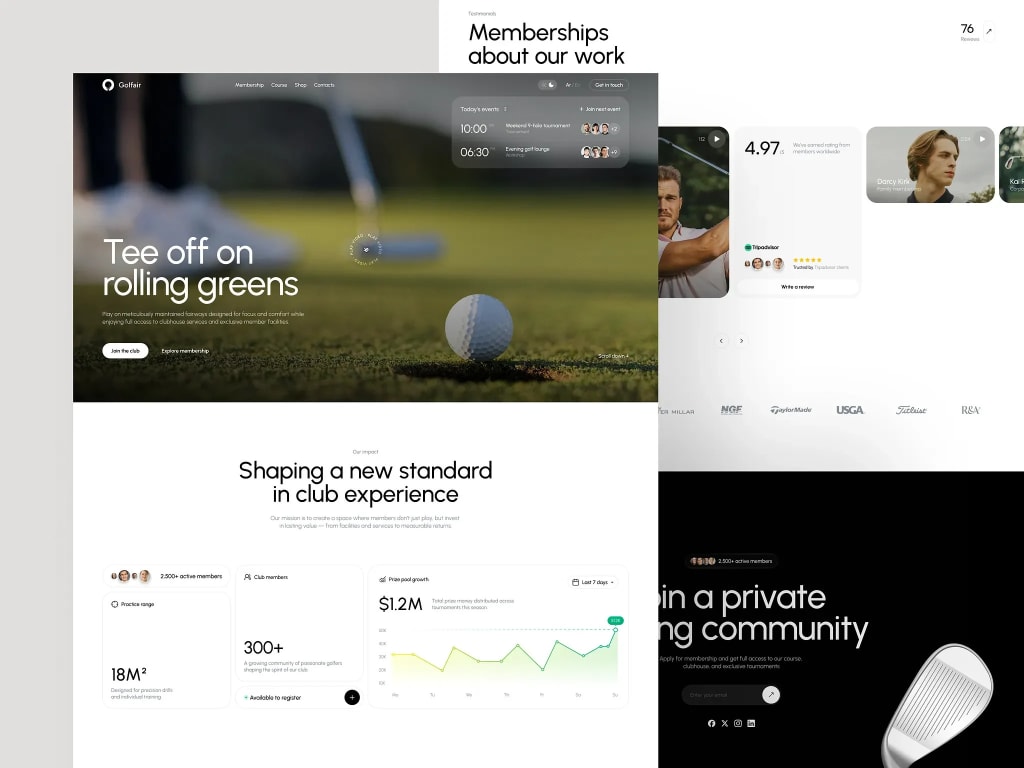
Most founders don’t set out to manage websites. Yet sooner or later, many of them find themselves approving layouts, rewriting homepage copy, or wondering why a “small change” has taken weeks. This usually happens when the website stops being a simple marketing artifact and turns into real business infrastructure. For companies operating in complex markets, especially those relying on B2B web design strategy, the website is no longer decoration. It is a system that shapes growth, perception, and revenue.
The frustration founders feel around web design is rarely about aesthetics. It’s about control.
Why Founders Get Stuck in Web Design Decisions
Early on, founder involvement works. The team is small, context lives in one head, and decisions move fast. Reviewing everything feels efficient, even responsible.
The problem is that this mode often becomes permanent.
As the company grows, the website accumulates responsibilities. It supports marketing campaigns, explains product complexity, feeds sales pipelines, attracts talent, and signals credibility to partners and investors. With every new dependency, the perceived risk of “letting go” increases. Founders stay involved not because they enjoy it, but because the site feels too important to drift.
This is how founders end up controlling the wrong layer of the work.
The Real Role of a Founder in Web Design
Founders should not control how the website looks. They should control what the website produces.
A website succeeds or fails based on whether it attracts the right audience, communicates the product clearly, and supports the company’s actual growth model. These are outcome-level responsibilities. They sit firmly in leadership territory.
When founders comment on spacing or colors, it’s usually a signal that something more fundamental is unresolved: unclear positioning, fuzzy priorities, or misaligned goals. Visual feedback becomes a proxy for strategic uncertainty.
The most effective founder involvement happens one level up, where direction is set instead of execution corrected.
What Founders Must Always Control
There are areas of web design that cannot be delegated without consequences. If these are unclear, no amount of execution quality will compensate.
- Product Positioning and Value Proposition
No one can define the product’s meaning better than the founder.
Designers can structure messaging and copywriters can refine language, but they cannot invent clarity. If the founder cannot articulate who the product is for, what problem it replaces, and why it is meaningfully different, the website will default to generic language. That is not a design flaw. It is a leadership gap.
Positioning decisions shape navigation, page hierarchy, content depth, and SEO structure. When positioning changes, the website must change with it. That ownership cannot be outsourced.
- Target Audience and Strategic Focus
Websites built for “everyone” rarely convert anyone.
Founders are closest to real signals: failed deals, strong customers, recurring objections, reasons people churn. That insight must shape how the website speaks and what it prioritizes. Audience definition is not a one-time exercise. As the business evolves, the site must evolve with it.
Without founder ownership here, websites drift toward compromise instead of precision.
- Conversion Goals and Success Metrics
A website without clear goals becomes a brochure.
Founders must decide what success means: demo requests, trials, booked calls, subscriptions, or long-term education. These decisions directly influence structure, flow, and technical choices. They also determine how performance is evaluated.
When goals are vague, feedback becomes subjective. When goals are explicit, design becomes intentional.
What Founders Should Delegate Without Guilt
Modern web design is not a single discipline. It combines UX research, interaction design, visual systems, performance engineering, accessibility, and ongoing optimization. Expecting to personally steer all of it is not leadership. It’s overload.
- UX Research and Interaction Design
Founders should care deeply about users, but they should not personally design flows or run usability tests.
Good UX requires distance. Researchers need to observe behavior, test assumptions, and challenge internal beliefs. When founders dominate these decisions, research often turns into confirmation. Real friction stays hidden because it conflicts with internal narratives.
Founders should define the questions. Teams should discover the answers.
- Visual Design Systems
Visual design is not about taste. It’s about hierarchy, consistency, accessibility, and scalability.
When founders intervene at the visual level, teams stop building systems and start producing isolated solutions. Consistency erodes, and every new page becomes a fresh debate. Delegating visual execution allows designers to create patterns that can grow with the site instead of breaking under it.
- Technical and Performance Decisions
Websites today are products. They involve CMS architecture, performance budgets, SEO constraints, security, and deployment pipelines. These are engineering decisions, not intuition calls.
Founders should define what the website must support. Technical teams should decide how to make it work.
The Hidden Cost of Founder Over-Involvement
Excessive founder involvement doesn’t just slow execution. It changes how teams behave.
Designers optimize for approval instead of outcomes. Developers hesitate to suggest improvements. Marketing avoids touching the site because any change feels expensive. Over time, the website becomes cautious, fragmented, and hard to evolve.
This is often misdiagnosed as a design problem. In reality, it’s a decision-structure problem.
How to Delegate Without Losing Control
Delegation works only when it is intentional.
Founders don’t need to provide constant feedback if they provide clear principles upfront. Not design rules, but business truths: who the site is for, what it must communicate first, what kind of growth it supports, and what it should never become.
Decision gates help as well. Instead of reacting to half-formed screens, founders should step in at defined moments: positioning validation, structural approval, pre-launch review, post-launch evaluation. Outside those moments, teams execute.
Finally, control should be measured in outcomes, not opinions. When success is defined in metrics, founders can step out of execution without stepping away from responsibility.
Working With a Web Design Agency as a Founder
Strong agencies don’t distance founders from their product. They absorb operational weight so founders can stay focused on direction.
What agencies need from founders is not design input, but business clarity: how the company actually sells, which users matter now, what has failed before, and what constraints exist. When that information is clear, agencies can make high-quality decisions without constant oversight.
This is why choosing a partner for startup web design and growth is less about portfolios and more about operating models. The real question is whether the agency is built to support continuity, not just launches.
Final Takeaway: Control the Vision, Not the Execution
Web design becomes a founder problem when it is treated as a surface task.
Colors and layouts are easy to comment on. Direction and structure are harder. But only the latter truly belong to leadership.
Founders don’t create great websites by touching everything. They create them by defining what matters, setting clear boundaries, and building systems that work without constant intervention.
Delegation is not a loss of control. It is a growth skill.
About the Creator
Keep reading
More stories from Valeriia Shulga and writers in 01 and other communities.
Enterprise Web Design Is Not “Just More UX”
If you’ve ever worked on enterprise or AI-driven corporate platforms, you already know that applying standard web design practices to them is a category error. Designing at this level isn’t about polishing interfaces; it’s about building systems that people can safely rely on every day. That’s why teams moving into this space often discover—sometimes painfully—that the rules change the moment a product becomes operationally critical.
By Valeriia Shulga11 days ago in 01
Understanding Outdoor Structures in Residential Design
I’ve always noticed that the most comfortable homes tend to blur the line between indoor and outdoor living. In places where the weather allows people to spend time outside for much of the year, exterior spaces often become part of everyday routines rather than occasional-use areas. This is where practical outdoor structures start to matter.
By charliesamuel2 days ago in 01
Mismatch Challenge Winners
Blending genres isn’t about stacking elements side by side. It’s about what happens when two sets of expectations refuse to cooperate. The strongest entries in the Mismatch Challenge understood that tension and leaned into it. Rather than smoothing the edges, these stories let their chosen genres complicate one another, creating friction that carried through voice, structure, and consequence.
By Vocal Curation Teama day ago in Resources




Comments
There are no comments for this story
Be the first to respond and start the conversation.