
Gas Turbines in the Energy Transition: From Baseload Giants to Flexible Partners
Powering Change: How Gas Turbines Are Evolving to Support Renewables, Grid Stability, and a Low-Carbon Future

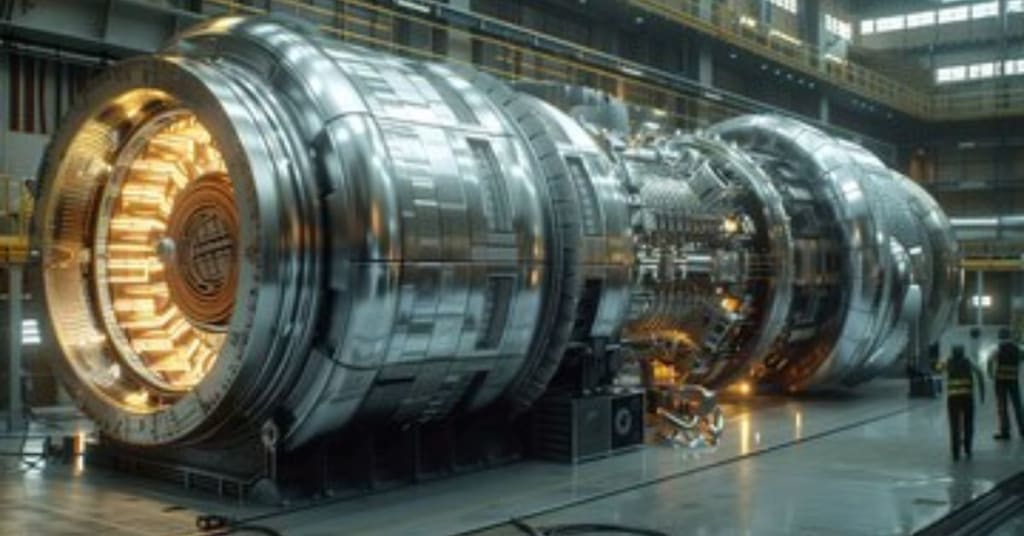
The global Gas Turbines Market is currently navigating one of the most transformative eras in its history. For decades, these machines have been the undisputed heavyweights of the power generation world—efficient, powerful, and capable of running for thousands of hours without a break to provide the "baseload" power that modern civilization relies upon. However, as the global energy mix shifts toward intermittent renewables like wind and solar, the market is pivoting from a focus on simple volume to a focus on high-tech flexibility, carbon-neutral fuels, and extreme thermal efficiency.
Instead of fading away, the gas turbine is undergoing a technological renaissance. From "H-Class" behemoths achieving record-breaking efficiencies to smaller aero-derivative units providing grid stability, the industry is proving that gas turbines are not just a bridge to the future—they are a permanent part of the destination.
1. The Engineering Marvel: Understanding the "Brayton Cycle"
To understand the future of the market, one must appreciate the sheer physics of the modern gas turbine. Operating on the Brayton Cycle, these machines compress air to incredible pressures, mix it with fuel, and ignite it. The resulting high-velocity gas stream spins a turbine connected to a generator.
The "holy grail" of this engineering has always been the firing temperature. Modern turbines operate at temperatures exceeding 3,000°F (1,600°C)—which is higher than the melting point of the metal components themselves. This is only possible through advanced materials science, such as single-crystal superalloys and complex thermal barrier coatings (TBCs), alongside intricate internal cooling passages that "bleed" air to create a protective film over the blades.
2. The Efficiency Frontier: Combined Cycle Power Plants (CCGT)
The real power of gas turbines today lies in "Combined Cycle" configurations. In a Simple Cycle, the hot exhaust gas is wasted. In a Combined Cycle Gas Turbine (CCGT) plant, that exhaust is used to boil water in a Heat Recovery Steam Generator (HRSG), which then drives a second steam turbine.
We are currently seeing "H-Class" turbines achieving thermal efficiencies of over 64%. To put that in perspective, a standard internal combustion engine in a car is lucky to hit 35%. This high efficiency makes CCGT the cleanest form of fossil-fuel power generation, producing significantly less CO2 per megawatt-hour than coal-fired plants.
3. The Hydrogen Pivot: Burning the Fuel of the Future
The most significant trend in the gas turbine market is the shift toward hydrogen. As industries look to decarbonize, the goal is to swap natural gas (CH4) for green hydrogen (H2), which produces only water vapor when burned.
This is not a simple "plug and play" upgrade. Hydrogen burns much faster and at a higher temperature than natural gas, leading to risks of "flashback" where the flame moves backward into the burner. Leading OEMs like GE, Siemens Energy, and Mitsubishi Power are currently engineering "DLN" (Dry Low NOx) combustion systems capable of burning 30%, 50%, and even 100% hydrogen.
By 2030, the "Hydrogen-Ready" turbine will be the industry standard, allowing power plant owners to decarbonize their assets as hydrogen production scales up globally.
4. Aero-Derivatives: The "Special Forces" of Grid Stability
While massive frames provide the bulk of power, there is a growing market for "Aero-derivative" gas turbines. These are essentially jet engines modified for land-based power.
Because they are lighter and more modular, they can go from "cold start" to full power in less than ten minutes. This makes them the perfect partner for solar and wind. When the sun goes down or the wind stops blowing, these aero-derivatives can "spin up" instantly to prevent grid frequency drops. In the industry, we call this "Peaking Power," and it is essential for a stable, renewable-heavy grid.
5. Carbon Capture and Storage (CCS) Integration
For gas turbines to remain viable in a Net Zero world, they must eventually achieve zero emissions. This is where Carbon Capture comes in.
Because gas turbine exhaust is relatively dilute (it contains a lot of nitrogen and oxygen compared to the CO2), capturing the carbon is a technical challenge. However, we are seeing the rise of "Post-Combustion Capture" using amine solvents and "Oxy-fuel combustion" cycles (like the Allam-Fetvedt Cycle). In the Allam Cycle, the turbine uses supercritical CO2 as the working fluid instead of air, making the carbon capture nearly 100% efficient and built-in by design.
6. Digital Twins and Predictive Maintenance
The gas turbine market is becoming a "software first" industry. Given that a single day of unplanned downtime can cost a utility millions of dollars, predictive maintenance is paramount.
Operators now use "Digital Twins"—virtual replicas of the physical turbine that use real-time sensor data to predict when a blade might fail or a bearing might overheat. By using AI to analyze vibration signatures and temperature gradients, operators can extend the life of parts and schedule maintenance only when it is actually needed, rather than on a rigid calendar schedule.
7. The Geopolitical Landscape: Decentralized Power
In emerging markets, we are seeing a shift away from massive centralized plants toward "Decentralized Energy." Small-scale gas turbines (Micro-turbines) are being used in "Tri-generation" setups for hospitals, data centers, and industrial parks.
These setups provide Power, Heating, and Cooling (via absorption chillers) all from a single fuel source. This local resilience is becoming increasingly attractive in regions with aging grid infrastructure or high susceptibility to extreme weather events.
8. Conclusion: The Long-Term Outlook
The gas turbine is not a legacy technology; it is an evolving platform. While the "Golden Age of Coal" has ended, we are entering the "Strategic Age of Gas."
The future winners in this sector will be those who master the Hydrogen-Hydrogen-CCUS triad:
Hydrogen blending capabilities.
High-Efficiency combined cycles to reduce fuel costs.
Carbon Capture integration to meet ESG mandates.
As we look toward 2050, the gas turbine remains the most reliable insurance policy we have for a stable, electrified world. It provides the high-torque, high-inertia power that keeps the lights on when the environment is at its most unpredictable.
Key Strategic Takeaways:
Decarbonization is the Driver: Future CapEx will be directed exclusively toward hydrogen-ready or CCS-integrated units.
Flexibility is Value: The ability to ramp up and down quickly is now more valuable to grid operators than raw baseload capacity.
The Service Tail: The real profit in this industry is no longer in the sale of the turbine, but in the 20-year Long Term Service Agreements (LTSAs) driven by digital monitoring.
About the Creator
Rahul Pal
Market research professional with expertise in analyzing trends, consumer behavior, and market dynamics. Skilled in delivering actionable insights to support strategic decision-making and drive business growth across diverse industries.
The Role of AI in Fitness App Development in 2026
The fitness industry is undergoing a powerful digital transformation, and in 2026, artificial intelligence (AI) sits at the center of this evolution. Fitness apps are no longer limited to step counters or static workout libraries. Today’s users expect intelligent, adaptive, and highly personalized experiences that align with their health goals, lifestyles, and performance levels. AI has become the driving force behind this shift, redefining how fitness apps are designed, developed, and experienced.
By shane cornerus4 days ago in 01
I Don't Need My Phone... Wait, Is That Actually True?
My parents gave me my first cell phone when I was twelve years old. It wasn't a fancy iPhone or anything, not even close. Just a simple black flip phone for when I needed to call or text them after school.
By Madison "Maddy" Newtonabout 17 hours ago in Humans




Comments
There are no comments for this story
Be the first to respond and start the conversation.