
Global Synthetic Rope Market: Trends, Materials, and Industrial Shifts
Advancements in High-Performance Fibers and Their Expanding Role Across Marine, Oil & Gas, and Construction Sectors

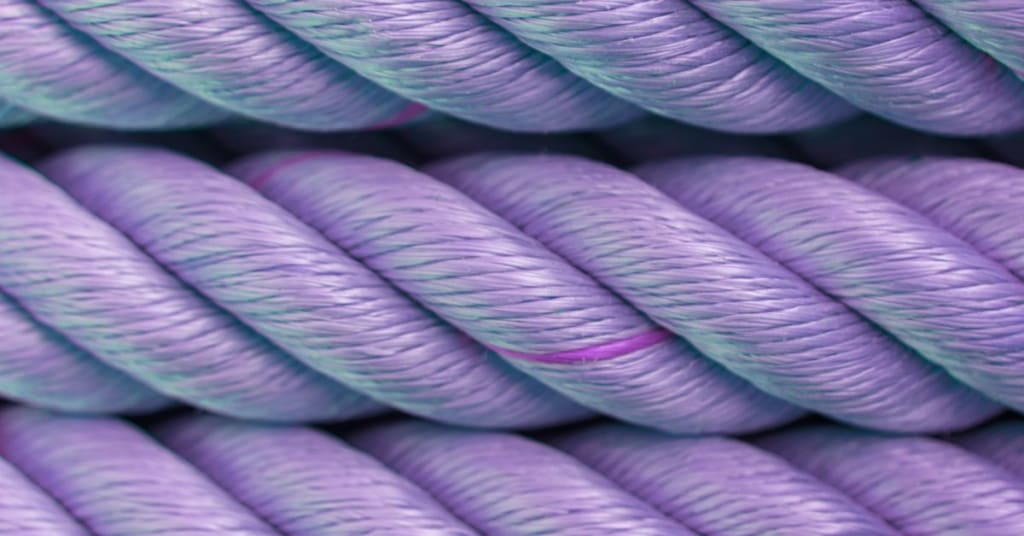
The global synthetic rope market is experiencing a profound shift as high-performance synthetic fibers increasingly replace traditional steel wire in heavy-duty industrial applications. Characterized by superior strength-to-weight ratios, corrosion resistance, and enhanced safety profiles, synthetic ropes have moved from simple utility lines to critical engineered components in deep-water energy, maritime logistics, and specialized construction.
The Great Material Shift: From Steel to Fiber
The most significant trend in the market is "lightweighting." Synthetic ropes, particularly those made from High-Modulus Polyethylene (HMPE), offer the same breaking strength as steel wire but at approximately one-seventh of the weight. This weight reduction allows for smaller winches, lower fuel consumption for vessels, and a dramatic reduction in "snap-back" energy, which significantly improves worker safety during line failures.
Key Material Segments
The market is segmented by fiber chemistry, each serving distinct technical requirements:
Polypropylene (PP): The volume leader, used for general-purpose applications where cost-efficiency and buoyancy are primary (e.g., fishing and basic mooring).
Polyester & Nylon: Valued for their elasticity and shock-absorption capabilities, making them the standard for dock lines and towing.
HMPE (e.g., Dyneema, Spectra): The high-end segment, essential for deep-sea mooring and heavy lifting where zero-stretch and extreme strength are required.
Aramids (e.g., Kevlar, Technora): Preferred in high-heat environments or where specialized fire resistance is necessary.
Primary Industry Drivers
1. Maritime and Shipping
Global trade growth continues to drive demand for advanced mooring systems. As container ships increase in size (Ultra Large Container Vessels), the demand for mooring lines that are easier to handle for smaller crews while maintaining massive breaking loads is at an all-time high.
2. Deep-Water Oil and Gas
In offshore energy exploration, the weight of traditional steel cables becomes prohibitive at depths exceeding 2,000 meters. Synthetic mooring systems are now the industry standard for floating production storage and offloading (FPSO) units, as their neutral buoyancy in water reduces the total load on the hull.
3. Renewable Energy (Offshore Wind)
The burgeoning offshore wind sector represents the fastest-growing frontier for synthetic ropes. Floating wind turbines require complex, long-term mooring solutions that can withstand decades of oceanic fatigue without the corrosion issues inherent to steel.
4. Cranes and Heavy Lifting
Precision lifting in construction and mining is increasingly utilizing synthetic winch lines. These lines do not require lubrication (unlike steel), preventing site contamination, and they do not "bird-cage" or develop fish-hooks (broken wires), which simplifies maintenance and inspection.
Challenges: UV Degradation and Creep
Despite the advantages, the market faces technical hurdles. Synthetic fibers are susceptible to UV degradation and "creep"—the slow permanent elongation under sustained high loads. Leading manufacturers are addressing these issues through proprietary coatings and advanced braiding techniques that shield core fibers and improve thermal stability.
Regional Outlook and Sustainability
While Asia-Pacific remains the largest manufacturing hub due to lower raw material costs and proximity to major shipping lanes, Europe and North America lead in R&D for high-performance applications. Additionally, the industry is seeing a rise in "circularity" initiatives, with programs now existing to recycle end-of-life maritime ropes into new polymer pellets, reducing the environmental impact of synthetic waste in the oceans.
Strategic Conclusion
The synthetic rope market is no longer a commodity-driven business but an engineering-led one. Success for players in this space now depends on providing integrated "rope-plus-service" models, including digital tension monitoring, life-cycle tracking, and specialized splicing services, as end-users prioritize total cost of ownership over initial purchase price.
About the Creator
Rahul Pal
Market research professional with expertise in analyzing trends, consumer behavior, and market dynamics. Skilled in delivering actionable insights to support strategic decision-making and drive business growth across diverse industries.



Comments
There are no comments for this story
Be the first to respond and start the conversation.