
Green Coding Guide: Measuring App Carbon Footprints 2026
A manual for software engineers to profile energy consumption and implement sustainable architecture in modern applications.

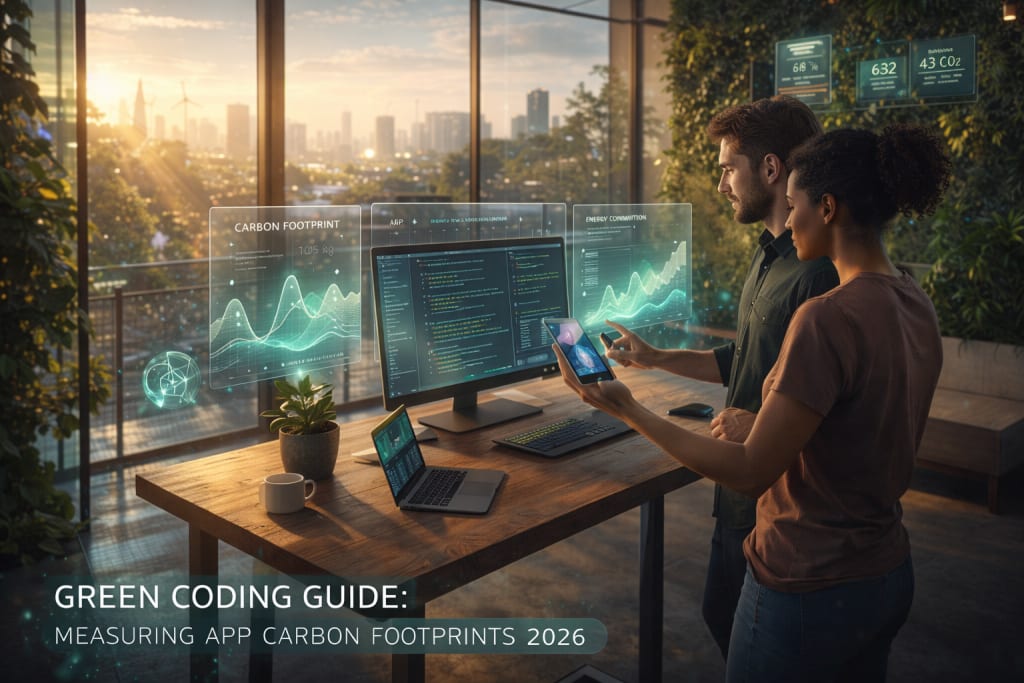
The environmental impact of digital products is now a primary concern. Engineering teams must prioritize this impact in their daily work. By 2026, data centers account for a large part of global electricity demand. Communication networks also drive this high demand for power. This has prompted a major shift toward "Green Coding" practices. Green coding focuses on writing highly efficient software code. The goal is to minimize energy consumption per unit of work.
This guide is for developers and technical leads. It is for those who need more than vague sustainability goals. We will examine how to quantify your software's carbon impact. We will look at specific tools required for an energy audit. These tools audit efficiency at the instruction level. This means looking at individual commands sent to the computer processor.
Current State or Problem Context
In 2026, energy efficiency is a non-negotiable KPI for software. It is now as vital as performance and security. It is as important as scalability for any modern system. This shift is driven by corporate ESG requirements. ESG stands for Environmental, Social, and Governance standards. The rising cost of compute power also drives this change. Many cloud providers now show carbon data in billing consoles.
"Bloated code" is now a direct financial and environmental liability. A common misunderstanding exists about speed and green coding. People think faster code is always greener code. This is often true but not always the case. Some optimizations improve speed but increase idle energy drain. Consider aggressive pre-fetching or high-frequency polling as examples. These make an app feel fast to the user. However, they drain power while the device is doing nothing. Modern green coding requires a very nuanced understanding of hardware. You must know how software interacts with hardware power states.
Core Framework or Explanation
You must measure an app's footprint before you can reduce it. The industry standard is the Software Carbon Intensity score. This is commonly known as the SCI score. This score calculates carbon emissions per a functional unit. A functional unit might be one user session. It could be one API call to a server. It could also be one minute of video streamed.
Energy profiling works by sampling power draw during execution. It looks at the CPU, the GPU, and the memory. In 2026, we utilize hardware-level counters for this data. We use tools like Intel RAPL to measure power. We also use Apple Silicon energy sensors for high-fidelity data. These tools provide data without using external power meters.
Practical Application
Successful implementation involves integrating energy checks into your workflow. You should include these checks in the standard development lifecycle. Some teams want to build truly sustainable products. They may collaborate with specialized teams for help. Working with Mobile App Development in Chicago provides great value. These experts offer the architectural knowledge needed for optimizations. They can help implement these changes at a low level.
Step 1: Baseline Idle Consumption
First, measure the power draw when the app is backgrounded. High idle drain usually indicates unnecessary background tasks. It may also point to poorly managed wake-locks. Inefficient telemetry pings are another common cause of drain. These small signals waste power for no user benefit.
Step 2: Critical Path Profiling
Identify the most used features of your application. Find the "Login" or "Search" functions used every day. Profiling these provides the most carbon-reduction potential. Optimizing a rarely used "Settings" menu offers much less value.
Step 3: Network and Data Optimization
In 2026, moving data carries a high energy cost. Moving data over 5G or Wi-Fi is very expensive. This cost often exceeds the cost of local processing. Green coding strategies now prioritize heavy data compression. They also focus on reducing the frequency of radio wake-ups.
AI Tools and Resources
Green Software Foundation Carbon Aware SDK — This is a specialized toolset.
- Best for: Scheduling tasks when the power grid is cleanest.
- Why it matters: It shifts demand to periods of renewable energy.
- Who should skip it: Real-time applications that cannot tolerate any latency.
- 2026 status: This is now the industry standard for scheduling.
Intel VTune Profiler — This is a deep-dive hardware profiler.
- Best for: Expert-level optimization of high-performance code.
- Why it matters: It maps power use to specific code lines.
- Who should skip it: Frontend web developers using browser tools.
- 2026 status: It supports the latest 2026 heterogeneous processor architectures.
Risks, Trade-offs, and Limitations
Green coding is not a "free lunch" for developers. Every optimization carries trade-offs that impact the user. These changes can also impact how easy code is to maintain.
When Green Coding Fails: The Aggressive Caching Scenario
A developer implements heavy local caching to save energy. The goal is to reduce network energy consumption.
- Warning signs: Device storage fills up very rapidly for users. Users report "stale" or old data that causes errors.
- Why it happens: The developer optimized only for network energy. They did not account for the energy of disk usage. They ignored the complexity of clearing out old cache data.
- Alternative approach: Use a "smart-sync" strategy for the app. Only high-priority assets should be saved to the device. Network requests should be batched to keep the radio sleeping.
Key Takeaways
- Measure first: You cannot optimize what you have not profiled.
- Use sensors: Use hardware-level energy sensors for a baseline.
- Target the Background: Eliminate "zombie" processes that drain the battery.
- Network is the bottleneck: Reducing payloads is highly effective for sustainability.
- Adopt Carbon-Awareness: Wait for "green" energy hours for non-essential tasks.
About the Creator
Keep reading
More stories from Devin Rosario and writers in 01 and other communities.
Kotlin Multiplatform in 2026 Stable APIs for iOS UI Sharing
Kotlin Multiplatform were forced into a compromise. They shared the logic. But they had to rebuild the UI natively in Swift. Today, the "Stable" designation for Compose Multiplatform on iOS has reached full maturity.
By Devin Rosario7 days ago in 01
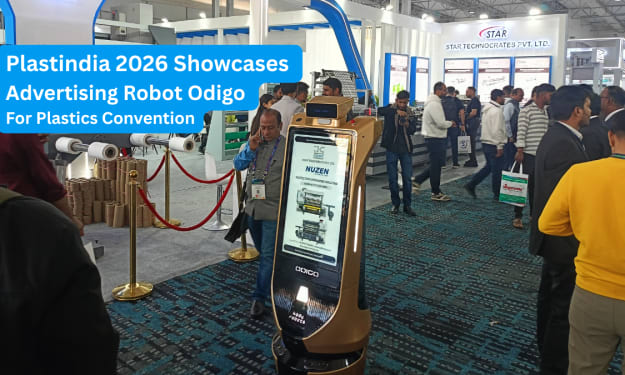
Plastindia 2026 Showcases Advertising robot Odigo For Plastics convention
New Delhi, India, February 2026 - Plastindia Foundation presented an advanced engagement initiative during Plastindia 2026 with the introduction of Odigo, an AI-Powered advertising robot created by Kody Robots a leading robotics company in India. The deployment marked a prominent example of an advertising robot for plastics convention, operating live within one of the sector’s largest global plastics industry gatherings. Odigo made a high-impact appearance at PlastIndia 2026, demonstrating how an Advertising Robot, Odigo for Plastics Convention environments can transform visitor engagement at large industry gatherings.
By Mila Violet6 days ago in 01
Apple’s 12-Inch MacBook Is Back: 10 Huge Leaks, Price, Specs, and Release Date
Get ready, because the iconic 12-inch MacBook is officially on the road to revival. According to one of the most trusted voices in the Apple leak world, this long-lost laptop isn’t years away—it’s just months from launch. And yes, it’s staying true to its roots with a 12-inch display, but this time, Apple is fixing everything that went wrong the first time.
By Info Post Gatea day ago in 01
Unofficial Challenge: What would you do if you were rich?
I love the kind of work I get to do in my career, but as I job search and browse apartments again due to another understaffed and unsustainable work environment that I did not intend to get into, my daydreams of better days consistently lean into the same question: What would I do if I didn't have to worry about my basic needs being met?
By Kay Husnicka day ago in Writers


Comments
There are no comments for this story
Be the first to respond and start the conversation.