
How Manual Therapy Improves Range of Motion
Manual therapy improves range of motion by targeting the barriers that limit joint mobility.

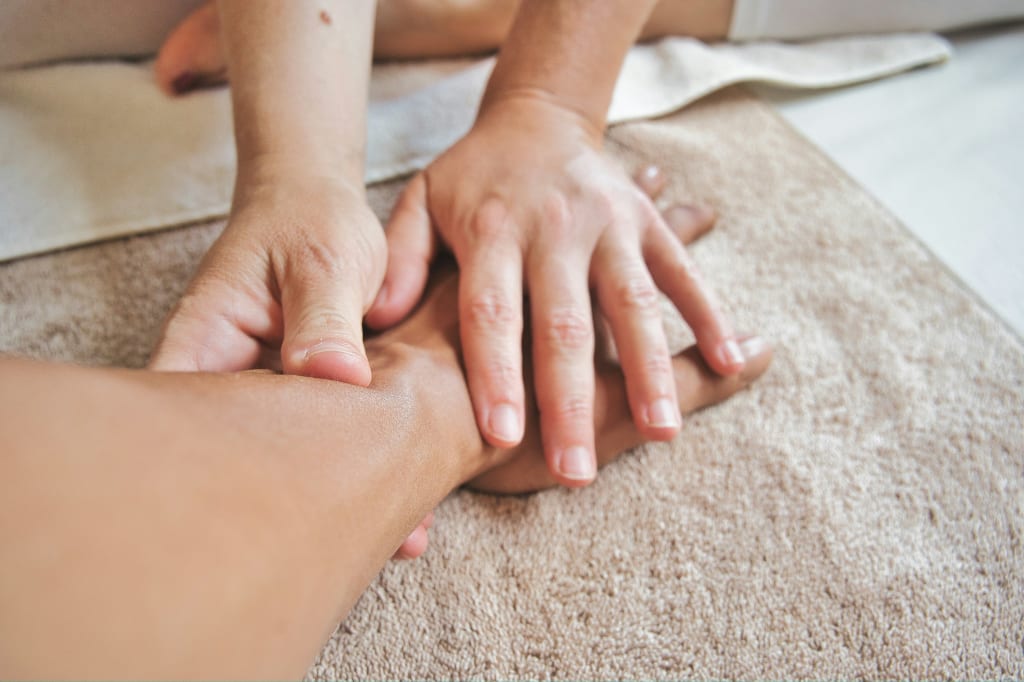
Key Takeaways
- Manual therapy can restore lost motion by addressing the mechanical and neural factors that restrict joint movement.
- Targeted techniques like mobilizations and manipulations can help improve range of motion safely and effectively when matched with a patient’s response.
- All range gains must be reinforced with active exercise and functional tasks to keep them from fading.
- Manual therapy improves range of motion by targeting the barriers that limit joint mobility. In short, it helps patients move better, faster.
Someone with a post-op knee that won't bend past 90 degrees or a frozen shoulder that stalls out mid-abduction can greatly benefit from skilled manual therapy. In this guide, we want to take a look at how patients can get the most out of manual therapy to regain their strength and functionality.
The Importance of Range of Motion in Rehab
Without range of motion, we lack functional movement.
If a joint can't move like it should, the muscles, ligaments, and nerves must compensate. Over time, this can create a whole host of problems, some of the more serious of which may require surgical intervention.
Most rehabilitation experts say that improving the range of motion is often the first step toward meaningful progress.
What Limits Joint Mobility
Clinicians encounter all kinds of barriers to movement.
Sometimes, it's joint capsule stiffness or adhesions that limit arthrokinematic motion. In other cases, the nerves can't glide properly due to neural tension, which creates a block. Some of the other major factors of limited joint mobility include:
- Muscle tightness
- Poor postural habits
- Pain-related guarding
- Inflammation
- Motor control deficits
No two ROM restrictions are alike, which is why manual therapy clinicians work to address the root of the problem rather than just “loosening things up.”
How Manual Therapy Affects Range of Motion
Manual therapy improves ROM using a mix of mechanical and neurological strategies. Mobilizations and manipulations, for example, work to stretch tissues and send powerful signals to the nervous system to affect pain, muscle tone, and coordination.
A 2024 living review published in PLOS ONE summarized several proposed mechanisms, including:
- Neurophysiological effects - Mobilizations can reduce pain sensitivity by activating descending inhibitory pathways in the brain stem, which increases tolerance to movement.
- Neuroimmune responses - There's evidence to show that spinal mobilizations can reduce levels of pro-inflammatory cytokines.
- Biomechanical changes - Gliding or oscillating the joint can improve capsular pliability, tissue mobility, and synovial fluid distribution.
- Arthrokinetic reflexes - Joint movement directly modulates the surrounding muscle activity via reflex pathways.
All of these effects work together to make movement easier both in the immediate period and over time. However, it’s important to utilize a manual therapy technique that looks at these responses precisely and intentionally, depending upon the patient.
What the Research Says
There's a growing body of evidence that supports manual therapy as an effective intervention for improving joint mobility:
- A 2021 meta-analysis found that manual therapy significantly increased the range of motion for individuals with myofascial trigger points.
- For patients with knee osteoarthritis, manual therapy combined with exercise improved pain and range of motion more than one exercise alone.
- Another study showed that scapular mobilizations paired with stretching helped increase glenohumeral internal rotation and horizontal adduction in athletes with limited shoulder ROM.
- In a trial involving patients with shoulder impingement syndrome, adding manual therapy to exercise accelerated the recovery of scapular range of motion and reduced pain faster than exercise alone.
Techniques That Help Improve Range of Motion
An individualized approach is best when it comes to manual therapy for range of motion. Choosing the right technique comes down to the problematic joint, the type of restriction, and how the patient feels during the process.
Some of the most common techniques include:
- Grade III-IV joint mobilizations - These oscillations are performed at the end of the available range to help reduce stiffness and increase capsule extensibility.
- Accessory glides - Help restore proper role or glide mechanics by mobilizing the joint surfaces relative to one another.
- Passive physiological movements - The joint is gently moved through the available range to promote safe, controlled motion.
- High-velocity thrusts (manipulations) - Quick and selective low-amplitude movements used to help with deeper restrictions.
- Neurodynamic techniques - Help address mobility issues along the peripheral nerves
Once a technique is applied, a physician can reassess the patient to determine whether or not they need to make further adjustments in terms of force or technique.
Using ROM Gains Clinically
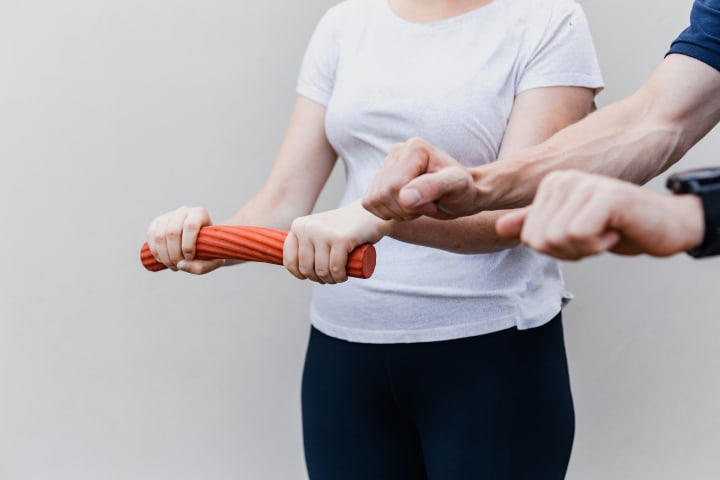
Manual therapy is not a cure-all for many ROM limitations.
Integration into daily activity is an equally crucial part of the process. Once range of motion is restored in a patient, a clinician should find ways to integrate that rediscovered mobility into active movement and strength-building activities.
Without reintegration, all of that hard work can go to waste.
For example, a patient with limited lumbar rotation may respond well to a specific mobilization technique. From there, a clinician might introduce something like segmental flexion drills or trunk rotation under load for ongoing maintenance.
Reassessment at this stage is key. If a technique improves movement or reduces negative symptoms, it informs the rest of the session. If it doesn't, the approach has to be adjusted. This loop of assess, treat, reassess is how clinicians make each session more efficient and individualized.
Final Thoughts on Manual Therapy for ROM
Manual therapy isn't made to resolve every mobility issue. Certain conditions, like advanced osteoarthritis, systemic inflammation, or capsular contracture, can limit how effective it really is.
Manual therapy should never be a replacement for active rehabilitation, and it’s important to customize the intensity and frequency of any manual therapy technique to the patient. Too much force or repetition can have an adverse effect and actually aggravate symptoms. Similarly, underdosing may not produce any measurable change.
To get the best results from manual therapy, it's important for a clinician to apply thoughtfully and get patient feedback every step of the way.
About the Creator
Aaron Smith
Aaron is a content strategist and consultant in support of STEM firms and medical practices. He covers industry developments and helps companies connect with clients. In his free time, he enjoys swimming, swing dancing, and sci-fi novels.
Keep reading
More stories from Aaron Smith and writers in 01 and other communities.
Reducing Fatigue and Error: Ergonomic Considerations for Electrical Work
When one thinks of the dangers of electricity, electric shock and electrocution usually come to mind first. However, ergonomic injuries are more common. They account for more workers' compensation claims than any other injury class. Ergonomic issues include factors that create physical strain and muscle injuries, which can occur in several ways.
By Aaron Smith8 months ago in 01
The Air-Purifying Powerhouse List: NASA-Studied Plants AI Recommends for Your Bedroom
We spend about a third of our lives in our bedrooms, making it the most personal space in our homes. Yet, the air in this sanctuary can hold unseen guests: volatile organic compounds (VOCs) like formaldehyde from furniture or benzene from cleaning products. For decades, a popular solution has been to bring in greenery, championed by a famous NASA study from the 1980s. But how effective are these plants really, and which ones are truly the best allies for your sleep space?
By Emma Wallace7 days ago in 01




Comments
There are no comments for this story
Be the first to respond and start the conversation.