
🔋 Hydrogen Fuel: Powering the Future of Clean Energy
🌍 How the Universe’s Simplest Element Could Transform Transportation and Industry

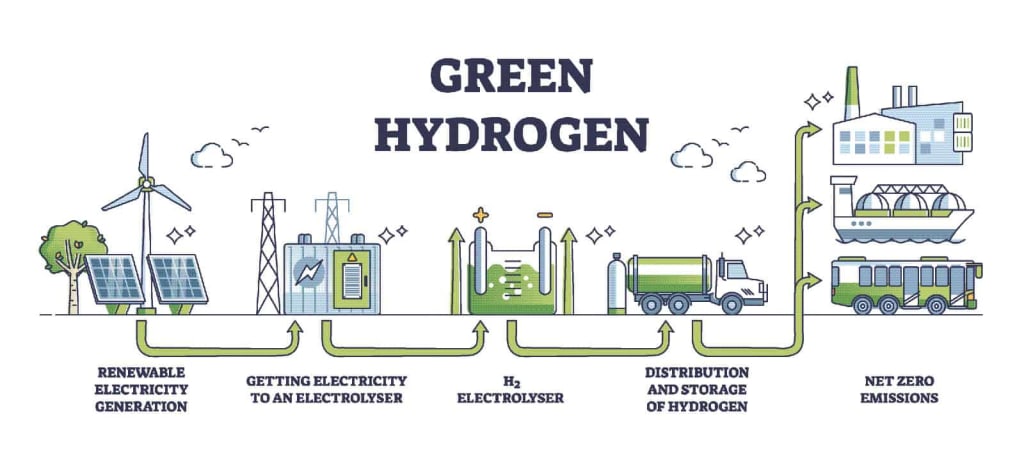
As the world searches for cleaner, more sustainable energy sources, hydrogen fuel has emerged as one of the most exciting contenders ⚡. Often described as the fuel of the future, hydrogen promises zero emissions at the point of use, high energy efficiency, and versatility across multiple industries. But what exactly is hydrogen fuel, how does it work, and can it truly replace fossil fuels? Let’s explore 🚀.
💡 What Is Hydrogen Fuel?
Hydrogen is the most abundant element in the universe 🌌, but it doesn’t exist freely on Earth in large quantities. Instead, it must be extracted from compounds like water or natural gas. When used as a fuel, hydrogen can generate energy either through combustion or, more commonly, through fuel cells.
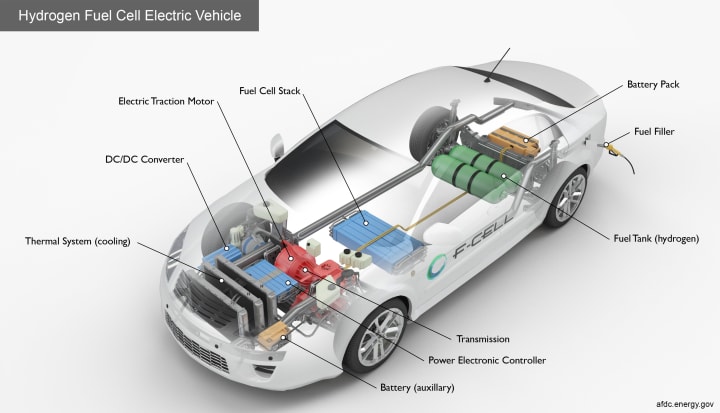
In a hydrogen fuel cell, hydrogen reacts with oxygen to produce electricity, heat, and water 💧. The key advantage? No carbon dioxide emissions are released during this process. The only byproduct is water vapor, making hydrogen an incredibly clean energy carrier at the point of use 🌱.
⚙️ How Hydrogen Fuel Cells Work
Hydrogen fuel cells operate a bit like batteries, but instead of storing energy, they continuously generate electricity as long as fuel is supplied 🔄. Hydrogen enters the fuel cell, where it is split into protons and electrons. The electrons travel through an external circuit, creating an electric current ⚡, while the protons pass through a membrane and combine with oxygen to form water.
This process is highly efficient and quiet 🔇, which is why hydrogen fuel cells are particularly attractive for vehicles, buses, trains, and even backup power systems.
🌱 Green, Blue, and Gray Hydrogen
Not all hydrogen is created equal, and its environmental impact depends heavily on how it is produced 🧪.
- Gray hydrogen is made from natural gas and releases CO₂ during production ❌
- Blue hydrogen also uses natural gas but captures and stores the CO₂ emissions ♻️
- Green hydrogen is produced using renewable electricity to split water through electrolysis 🌞💨
Green hydrogen is the ultimate goal for a sustainable future, but it is currently more expensive to produce than other types. As renewable energy becomes cheaper, green hydrogen is expected to play a much larger role 📉➡️📈.
🚗 Hydrogen in Transportation
One of the most talked-about applications of hydrogen fuel is transportation 🚘. Hydrogen-powered vehicles can refuel in minutes, offer long driving ranges, and produce zero tailpipe emissions. This makes them especially attractive for heavy-duty transport like trucks, buses, ships, and even airplanes ✈️.
Compared to battery electric vehicles, hydrogen vehicles are often better suited for long distances and heavy loads ⚖️. However, the lack of refueling infrastructure remains a major challenge, limiting widespread adoption for now 🛑.
🏭 Industrial and Energy Storage Uses
Beyond transportation, hydrogen has enormous potential in industry 🏗️. It can be used to produce steel, chemicals, and fertilizers without relying on coal or natural gas. In sectors where electrification is difficult, hydrogen offers a realistic low-carbon alternative 🔧.
Hydrogen is also a powerful solution for energy storage 🔋. Excess electricity from solar or wind farms can be converted into hydrogen and stored for later use. This helps balance the grid and makes renewable energy more reliable, even when the sun isn’t shining or the wind isn’t blowing 🌬️☁️.
⚠️ Challenges Facing Hydrogen Fuel
Despite its promise, hydrogen fuel is not without obstacles 🚧. Producing green hydrogen is still energy-intensive and costly, and transporting hydrogen safely requires specialized infrastructure due to its low density and high flammability 🔥.
Building pipelines, storage facilities, and refueling stations will require massive investment 💰. Additionally, hydrogen fuel cells rely on rare materials, which can increase costs and supply risks.
🔮 Is Hydrogen the Future?
Hydrogen is unlikely to be a one-size-fits-all solution, but it will almost certainly be part of the global energy mix 🌐. In combination with batteries, renewables, and other clean technologies, hydrogen can help decarbonize sectors that are otherwise hard to clean up.
As governments invest in hydrogen strategies and technology continues to improve, hydrogen fuel may shift from a futuristic concept to an everyday reality 🔄. The journey is complex, but the potential rewards—a cleaner planet and a more resilient energy system—are worth the effort 🌍✨.
About the Creator
Toader Adelin
Tech isn't just tools — it's a lifestyle. I decode innovations, review cutting-edge gadgets, and analyze industry trends, all with a professional approach to help you make informed decisions and stay ahead of the curve.
Keep reading
More stories from Toader Adelin and writers in 01 and other communities.
The Huawei Ecosystem Explained: Devices That Work Better Together
When we talk about modern tech ecosystems, a few big names usually dominate the conversation. But in recent years, Huawei has quietly—and impressively—built one of the most interconnected, efficient, and user-friendly ecosystems available today. From smartphones 📱 to laptops 💻, smartwatches ⌚ to smart speakers 🔊, home devices 🏠 to productivity tools, Huawei’s ecosystem stands out thanks to its thoughtful design, deep cross-device integration, and the power of HarmonyOS.
By Toader Adelin2 months ago in 01
How Fintech Startups Are Building Scalable Real World Asset Tokenization Models
The global financial ecosystem is undergoing a structural transformation driven by blockchain, distributed ledger systems, and programmable finance. At the center of this transformation lies Real World Asset Tokenization, a model that converts tangible and intangible assets into blockchain-based digital tokens. From real estate and private equity to commodities, invoices, and carbon credits, assets that were once illiquid and geographically restricted are now entering digital marketplaces.
By Ethan hunta day ago in 01
How Do Top Brands Plan Successful Crypto Influencer Marketing Campaigns in 2026?
The crypto landscape in 2026 is more regulated, more competitive, and significantly more mature than it was just a few years ago. With thousands of tokens, DeFi platforms, NFT ecosystems, and blockchain infrastructure projects competing for attention, visibility alone is no longer enough. Top brands now rely on carefully structured crypto influencer campaigns to build trust, educate audiences, and drive measurable adoption.
By Jack santoabout 4 hours ago in 01
Analyse this!
Wanna know how to improve your writing? There is a simple, quick, tried and tested method. Tried and tested by who? By me, as it happens, and I can guarantee that it will work for you. I know what I am talking about. Not always, of course, but certainly in this case.
By Raymond G. Taylor6 days ago in Writers



Comments
There are no comments for this story
Be the first to respond and start the conversation.