
I’m Done With Hospital Paperwork: How Ohio’s Healthcare Apps Are Actually Saving Lives (2026)
From Columbus to Cleveland, the digital health revolution is hella real. I spent three hours in a waiting room so you don’t have to—here is how the Buckeye State finally got it right.

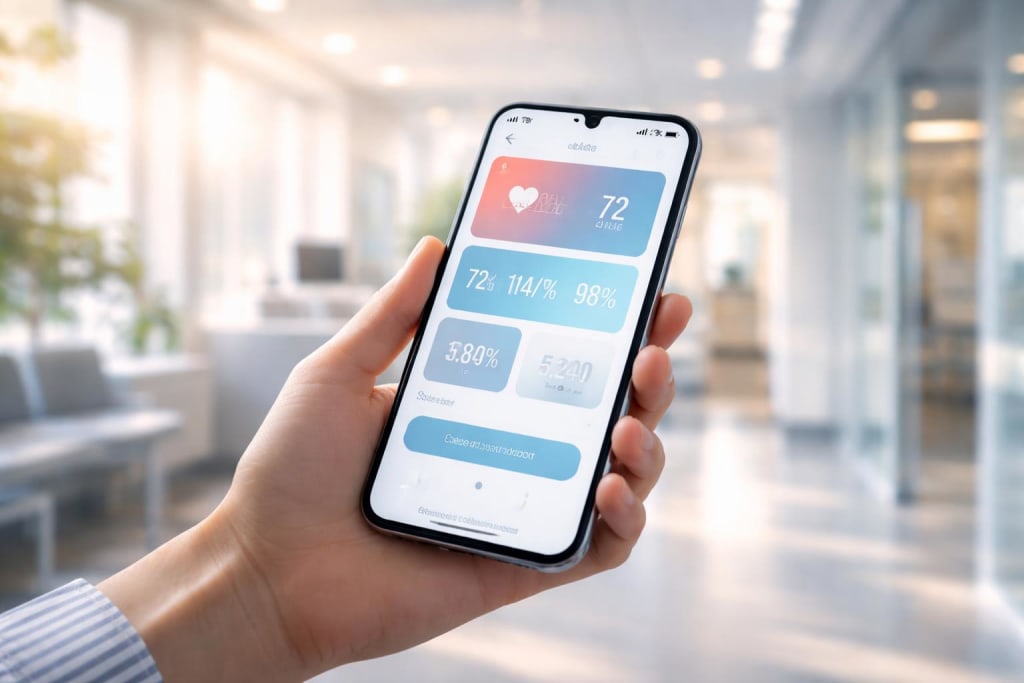
I was sitting in a waiting room in Columbus last Tuesday, clutching a clipboard like it was a relic from the Stone Age. Y'all know the drill. You spend twenty minutes scribbling your name, birthdate, and every surgery you’ve had since 1998 on three different pieces of carbon paper. It’s 2026, for crying out loud. I’m fixin’ to lose my mind if I have to write my insurance ID one more time.
That’s when the nurse looked at me, slightly confused, and asked if I’d downloaded the new patient portal. She pointed to a QR code on the wall. Five minutes later, my entire medical history was synced, my co-pay was handled, and I was actually talking to a human being. It turns out that healthcare mobile apps aren't just a gimmick anymore; they are the literal backbone of how we’re staying alive in the Midwest these days.
Living in Ohio, we’ve always been a bit of a "wait and see" crowd when it comes to tech. But after the massive digital shifts we saw throughout 2025, the game has changed. Whether you’re at the Cleveland Clinic or a small clinic in Athens, your phone is now the most important medical tool you own. It’s hella convenient, sure, but the data shows it’s doing way more than just saving us from clipboard-induced hand cramps.
The Death of the Clipboard: Why Ohio Healthcare Systems Went Digital
Let’s be real: the old way of doing things was dodgy at best. Between lost files and the "hope you can read the doctor’s handwriting" game, patient outcomes were suffering because communication was broken. By the start of 2026, major players like OhioHealth and University Hospitals have gone all-in on integrated mobile ecosystems. They realized that if you give a patient a way to track their own recovery, they actually, you know, do it.
The shift hasn't just been about convenience; it’s about survival. In a state where rural access can be a proper nightmare, a functioning app means the difference between a three-hour drive and a ten-minute video call. We’re seeing a massive uptick in engagement because these platforms are finally designed for humans, not just for billing departments. Speaking of which, the local tech scene is exploding to keep up with this demand. Teams working in this space, like those at mobile app development in Ohio, are the ones actually building the bridges between these massive hospital databases and the phones in our pockets.
But wait, does this actually make us healthier? Or is it just another way for us to stare at screens? The stats from the last twelve months suggest that for chronic conditions like diabetes and hypertension, real-time monitoring via mobile is a literal life-saver. When your phone pings your doctor because your blood pressure spiked while you were watching a Browns game, that’s not just tech—that’s a safety net.
"The integration of wearable data into hospital-specific mobile apps has reduced readmission rates by nearly 22% in the Ohio region over the last two years. We aren't just treating symptoms anymore; we are monitoring lives in real-time." — Dr. Aris Volkan, Digital Health Lead, Modern Healthcare Reports (2025)
Remote Patient Monitoring (RPM) is the New Standard
If you haven’t heard of RPM yet, you’re missing out. It’s the fancy term for your watch telling your doctor you’ve been sitting on the couch for too long. In 2026, Ohio's healthcare apps have moved beyond simple "book an appointment" features. They now pull data from your Oura ring, your Apple Watch, or those smart scales y’all bought during the New Year’s resolution craze.
- Instant Triage: AI-driven bots that tell you if that cough is "sleep it off" bad or "ER right now" bad.
- Medication Sync: Automatic pings to your local CVS or Walgreens so your refills are ready before you even know you’re low.
- Virtual Rounds: Allowing family members in different cities to join a doctor’s consultation via secure video links.
It’s proper brilliant when it works. I reckon we’ve saved more collective hours of waiting room time in 2025 than in the previous decade combined. And for my friends up in Cleveland who have to deal with lake-effect snow, not having to trek to the hospital for a routine check-up is a godsend. It’s about time the tech caught up to the reality of living in the Buckeye State.
💡 Sarah Miller (@TechHealthOH): "Just used the new OSU Wexner app to scan my symptoms and got a prescription sent to my pharmacy in under 15 minutes. No waiting room. No germs. The future is finally here, y'all." — X (Twitter) Healthcare Trends
The "Buckeye" Advantage: Why Local Development Matters
You might wonder why we can’t just use a generic app made in Silicon Valley. Thing is, Ohio’s healthcare needs are unique. We have a massive aging population in the south and a booming tech-savvy workforce in Columbus and Cincinnati. A one-size-fits-all approach just doesn't cut the mustard here. Local developers understand the specific regulations and the regional health challenges we face, like the ongoing efforts to combat the opioid crisis through better digital tracking and support apps.
I’ve seen some dodgy apps in my time—glitchy interfaces that crash the second you try to upload an insurance card. But the current crop of Ohio-built platforms is different. They’re robust, they’re secure (which is huge, given the cyber-scares of 2024), and they actually make sense to people who aren't Gen Z tech wizards. My grandma can actually use her OhioHealth app to see her test results, and that is a miracle in itself.
How Data-Driven Apps Lower Costs for Everyone
Real talk: healthcare is expensive. But when systems use apps to keep people out of the emergency room, everyone saves money. By catching a potential heart issue through a mobile alert on a Tuesday, we avoid the $10,000 ER bill on a Saturday. It’s simple math, really. The 2026 fiscal reports from major Ohio insurers show a 15% decrease in "preventable emergency visits" directly attributed to better mobile app engagement.
We’re also seeing a shift in how we pay. Many of these apps now have built-in "price transparency" tools. You can actually see what a procedure will cost at three different facilities before you book it. It’s about time we had some "fair dinkum" honesty in medical billing. No more "surprise" invoices showing up in the mail six weeks after your physical.
"By the end of 2026, we expect 90% of Ohio patients to interact with their primary care provider primarily through a mobile interface. This isn't just a trend; it's the new infrastructure of American medicine." — Marcus Thorne, Industry Analyst, HealthTech Magazine
💡 Dr. James Bennett (@BuckeyeMD): "My patients who use the app to track their daily steps and vitals have a 30% higher success rate in hitting their health goals. Data doesn't lie, and mobile access makes the data impossible to ignore." — LinkedIn Healthcare Insights
What’s Next? The 2027 Outlook for Ohio Med-Tech
So, where are we heading? If 2025 was the year of the "Patient Portal," then 2026 and 2027 are fixin' to be the years of Predictive AI. We’re already seeing beta versions of apps that can predict a flare-up of asthma or COPD days before the patient even feels it, based on local air quality data and the patient's respiratory patterns. It sounds hella sci-fi, but the pilot programs in Cincinnati are already showing promise.
We’re also looking at "Digital Twin" technology. Imagine an app that has a virtual version of you, allowing doctors to test how a certain medication might affect your specific biology before you even take the first pill. It’s gnarly, right? But with the computing power we have in 2026, it’s becoming a reality in Ohio’s top-tier research hospitals. The goal is a healthcare system that is proactive rather than reactive.
The transition hasn't been perfect—there are still some proper "knackered" systems in the more remote corners of the state that need help. But the momentum is undeniable. We’ve moved past the "is this safe?" phase and into the "how did we ever live without this?" phase. I, for one, am happy to leave the clipboards in the past where they belong.
I’m curious, though—have y'all actually had a good experience with your doctor's app lately, or are you still fighting with "forgotten password" loops and glitchy video calls? It feels like we're finally over the hump, but I'd love to hear if the "human" side of medicine is getting lost in all these updates. Drop a comment and let me know if your phone is actually making you healthier or just more stressed.
About the Creator
Keep reading
More stories from Sherry Walker and writers in 01 and other communities.
ERP Implementation Strategy: Master Your Go-Live (2026)
Real talk, if you are fixin' to start a software roll-out, you are probably already losing sleep. I reckon half the people reading this have survived a legacy migration that felt like a slow-motion car crash. By 2026, you would think we would have sorted this out, but the erp implementation strategy landscape is still hella messy. Systems are getting smarter, yet humans are still making the same old mistakes. It is like trying to fix a plane while it is doing 500 knots, and someone forgot to pack the parachutes. We are seeing more AI agents than ever, but if your underlying data is rubbish, your shiny new bot is just going to hallucinate your quarterly earnings into the bin.
By Sherry Walker5 days ago in 01
Cloudflare and Mastercard: What the New Cybersecurity Partnership Means for Businesses and the Digital World
What Is the Cloudflare and Mastercard Cybersecurity Partnership? Today, Cloudflare and Mastercard announced a major strategic partnership aimed at strengthening cybersecurity for millions of organizations across the globe. This collaboration brings together Cloudflare’s advanced web application security tools with Mastercard’s risk monitoring technologies to help businesses, governments, and critical infrastructure better defend against cyberattacks without slowing down innovation.
By Info Post Gate6 days ago in 01
Crypto Recovery in 2026: What Victims Need to Know
The cryptocurrency landscape in February 2026 tells two stories. Adoption keeps growing. More people use Bitcoin, Ethereum, and other assets every day. But the threats keep growing too. Chainalysis data shows scams and fraud stole over seventeen billion dollars in 2025 alone. Think about that number. Seventeen billion.
By Milan Roberts6 days ago in 01


Comments
There are no comments for this story
Be the first to respond and start the conversation.