
Pro AV Market: Integration and Innovation
Shaping Smart Experiences through Advanced Systems Integration and Cutting-Edge Audio-Visual Technologies

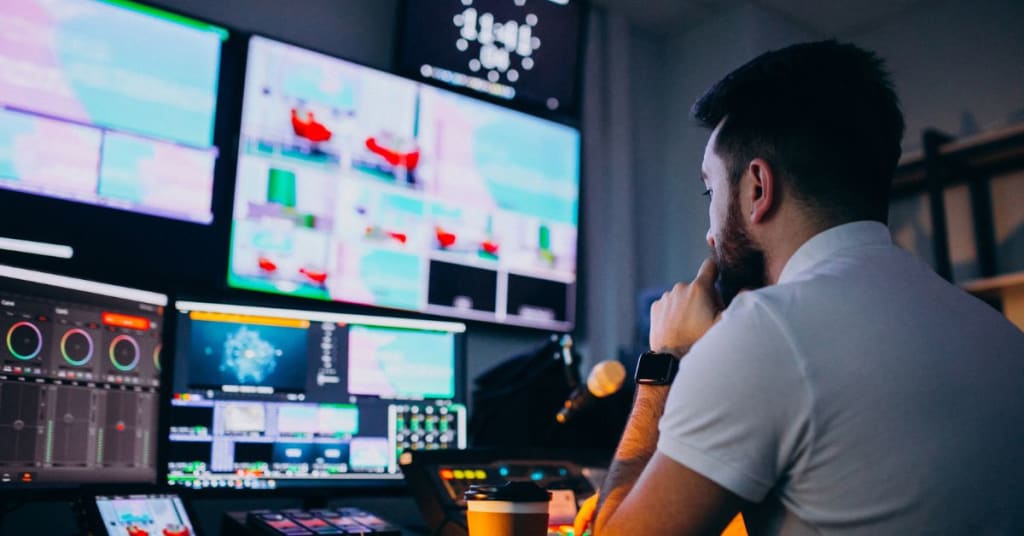
The global Pro AV Market is undergoing a profound transformation as the boundaries between traditional hardware, software, and networking continue to blur. This multi-faceted industry encompasses everything from large-format digital signage and immersive conferencing systems to high-end stadium sound reinforcement and control room visualization. As organizations prioritize high-quality communication and experiential environments, the professional audiovisual industry has shifted from providing standalone products to delivering comprehensive, cloud-integrated ecosystems that support hybrid work, education, and entertainment.
I. Core Technology Pillars and Convergence
The technical foundation of the integrated media technology sector is currently defined by several key transitions in how signals are processed and distributed.
1. AV-over-IP (Networked AV)
The most significant shift in the industry is the migration from proprietary matrix switchers to standard IP networks.
Scalability: Utilizing 1Gbps or 10Gbps Ethernet switches allows for near-infinite input/output configurations.
Interoperability: Standards like SDVoE, Dante (for audio), and NDI are enabling hardware from different manufacturers to communicate seamlessly over a single cable.
2. Display Technologies
The visual aspect of the trade is being revolutionized by pixel-pitch miniaturization:
Direct-View LED (dvLED): Rapidly replacing LCD video walls due to the lack of bezels and superior brightness.
MicroLED: Emerging as the gold standard for high-end corporate lobbies and broadcast sets, offering unparalleled contrast and energy efficiency.
II. Strategic Growth Verticals
Several sectors are driving the current surge in demand for sophisticated multimedia installations.
The Hybrid Workspace Revolution
The "Return to Office" movement has mandated "Meeting Equity." This involves installing intelligent cameras with AI-driven framing, beamforming microphone arrays, and "Front Row" layouts to ensure remote participants have the same presence as those in the room.
Immersive Entertainment and Venues
Theme parks, museums, and "art-tainment" venues (like the Sphere in Las Vegas) are investing heavily in projection mapping and spatial audio. These technologies create 360-degree environments that cannot be replicated in a home setting, driving ticket sales through physical experience.
III. The Rise of "Managed Services" (AVaaS)
The professional audiovisual industry is moving away from a "Capex" (Capital Expenditure) model toward an "OpeX" (Operating Expenditure) model.
AV-as-a-Service: Clients now prefer to pay monthly fees for equipment, maintenance, and software updates rather than owning hardware that may become obsolete in five years.
Remote Monitoring: Networked systems allow integrators to troubleshoot room issues from a central NOC (Network Operations Center), often fixing problems before the end-user even notices them.
IV. Artificial Intelligence and Automation
AI is no longer a buzzword in the media technology space; it is a functional requirement.
Acoustic Echo Cancellation (AEC): AI algorithms now filter out background noises like keyboard typing or HVAC hums in real-time.
Generative Content for Signage: Digital signage platforms are beginning to use AI to generate localized, relevant content based on viewer demographics detected by anonymous sensors.
V. Sustainability and Energy Standards
Green initiatives are forcing manufacturers to rethink the lifecycle of professional multimedia gear.
Power over Ethernet (PoE): Powering speakers and small displays through data cables reduces the need for high-voltage electrical infrastructure and reduces heat.
Circular Economy: Leading manufacturers are implementing take-back programs to ensure that rare-earth metals in high-end projectors and displays are recycled properly.
VI. Conclusion: The Software-Defined Future
The future of the integrated media technology sector is increasingly software-defined. As hardware becomes commoditized, the real value lies in the user interface, the ease of connectivity, and the data analytics harvested from the room sensors. Success in this space no longer depends solely on the quality of the glass or the power of the amplifier, but on how intuitively these tools facilitate human connection in an increasingly digital world.
About the Creator
Rahul Pal
Market research professional with expertise in analyzing trends, consumer behavior, and market dynamics. Skilled in delivering actionable insights to support strategic decision-making and drive business growth across diverse industries.
iPhone 18: Everything We Know So Far (When is The iPhone 18 Coming Out)
So here’s the big headline right out of the gate: the iPhone 18 is coming — just not when most people expect. Forget 2026. According to the latest leaks and industry chatter, Apple’s next regular iPhone refresh won’t land until early 2027.
By Info Post Gate8 days ago in 01
Understanding Retractable Fly Screens for Doors and Windows
Retractable fly screens have become an increasingly common feature in modern residential and commercial buildings, particularly in regions where ventilation is essential but insects and airborne debris are an ongoing concern. Unlike fixed mesh screens, retractable fly screens are designed to be discreet, flexible, and adaptable to different architectural styles. This article explores how retractable fly screens for doors and windows work, their variations, and why they are widely used across Australia and similar climates.
By charliesamuel5 days ago in 01




Comments
There are no comments for this story
Be the first to respond and start the conversation.