
Production Capacity vs. Concrete Batching Plant Cost: Finding the Right Balance
A Comprehensive Guide to Balancing Output Needs and Investment When Choosing the Right Concrete Mixer Plant for Sale
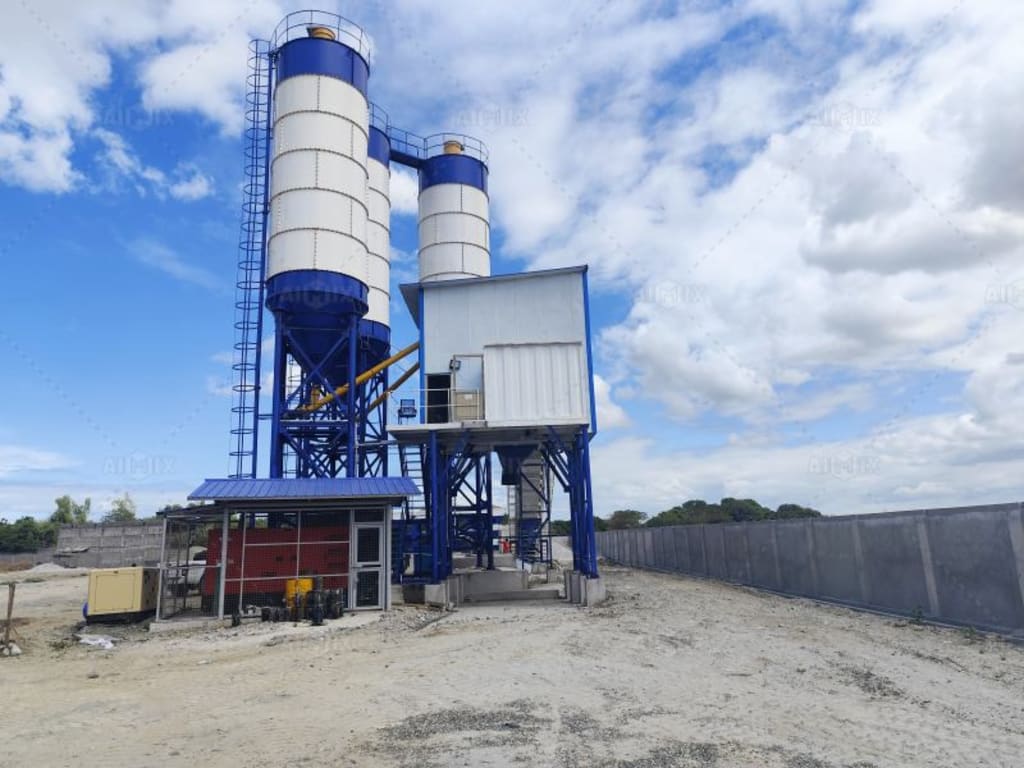
When investing in a concrete batching plant, one of the most critical decisions is balancing production capacity with overall concrete batching plant cost. Buyers often struggle to choose between larger plants that promise higher output and smaller models that are more affordable but limited in scale. This article explores how to find the right balance, examining the key factors that influence costs, the role of production capacity, and the value of choosing the right concrete mixer plant for sale.

Understanding Production Capacity in Concrete Batching Plants
Production capacity refers to how much concrete a plant can produce in a given timeframe—often measured in cubic meters per hour. For example, a compact 25 m³/h plant is suitable for small projects, while a 120 m³/h plant or higher is often used for large-scale infrastructure like highways, bridges, and high-rise buildings.
The choice of production capacity directly influences cost. A higher-capacity concrete mixer plant for sale requires:
Larger mixers, often twin-shaft or planetary mixers.
Bigger storage systems for cement, aggregates, and admixtures.
More advanced automation and control systems.
Larger land area for installation and operations.
This results in a higher upfront investment but provides efficiency gains for projects with substantial concrete demands.
Breaking Down Concrete Batching Plant Cost
When considering the purchase, cost can be divided into initial investment and lifetime operating expenses:
Initial Investment
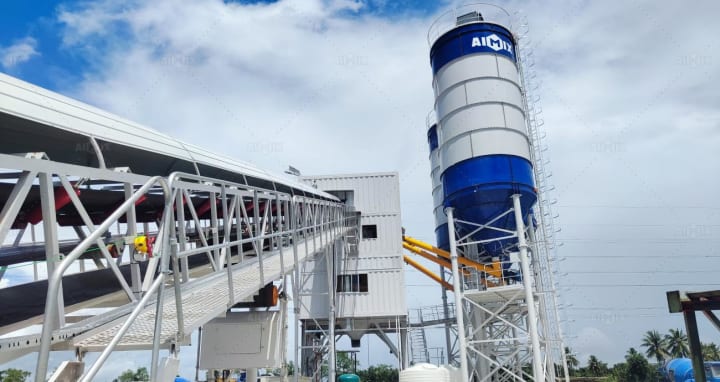
Machinery (concrete mixer, cement silos, aggregate batching machines, conveyors).
Installation and commissioning costs.
Land and infrastructure (foundation, drainage, utilities).
Control systems and automation features.
Operating Expenses
Labor and operator training.
Power consumption (especially for high-capacity mixers).
Maintenance and spare parts.
Material wastage or efficiency of batching.
Fuel and logistics costs, especially if raw materials need transportation.
While high-capacity plants cost more initially, they can reduce long-term costs by lowering labor input, minimizing material wastage, and completing projects faster.
Striking the Right Balance: Factors to Consider
Choosing between production capacity and cost isn’t only about budget. Investors should evaluate:
1. Nature of Projects
For small contractors or local builders, a low-to-medium capacity concrete mixer plant for sale (30–60 m³/h) is often sufficient. Larger EPC contractors handling road, dam, or airport projects will benefit from a 90–180 m³/h plant despite the higher investment.
2. Frequency of Use
If the plant will run continuously for multiple projects, a higher-capacity option becomes cost-effective. On the other hand, if projects are seasonal or small-scale, overspending on a large plant may burden cash flow.
3. Return on Investment (ROI)
A higher production capacity can generate more revenue by supplying more cubic meters per day. Investors should calculate the payback period by comparing plant cost against potential revenue and time saved.
4. Flexibility and Expansion
Some buyers start with a smaller concrete batching plant and later expand capacity by upgrading the mixer or adding silos. This staged investment strategy balances short-term cost control with long-term growth.
Cost-Effective Solutions with Concrete Mixer Plants for Sale
One way to manage the balance is to look for versatile concrete mixer plants for sale that provide flexibility at reasonable cost. For example:
Mobile concrete mixer plants: Easy to transport, set up quickly, and ideal for projects in remote or changing job sites. They are generally lower in cost compared to stationary high-capacity units.
Semi-automatic plants: More affordable than fully automated plants while still reducing human error and increasing efficiency.
Modular designs: Allow expansion when project demand grows, reducing the need for a large upfront investment.
Many manufacturers also offer customized solutions where buyers can specify the type of mixer, number of silos, and automation level, helping to optimize both capacity and cost.
Hidden Costs to Watch Out For
While focusing on production capacity, investors should not ignore hidden cost factors that can influence profitability:
Energy efficiency: Plants with efficient motors and control systems lower operating expenses.
Maintenance and after-sales service: Downtime can be costly; reliable service and easy spare part availability reduce lifecycle costs.
Transportation and installation: A plant may be affordable on paper but expensive to ship and install in remote locations.
Compliance and safety standards: Meeting environmental regulations or safety certifications may require extra investment but avoids costly fines or project delays.

Future Trends in Balancing Cost and Capacity
The industry is moving toward smart and sustainable batching plants. Advanced automation, IoT-based monitoring, and energy-saving mixers are making it easier for contractors to achieve higher capacity without proportionally higher costs. In emerging markets like South America and Asia, demand for mid-capacity plants is expected to grow as infrastructure projects expand but budgets remain cautious.
Conclusion
Finding the right balance between production capacity and concrete batching plant cost is crucial for achieving profitability and project efficiency. Contractors should assess project size, operational frequency, ROI, and flexibility before choosing a plant. Whether opting for a compact mobile unit or a high-capacity stationary system, selecting the right concrete mixer plant for sale ensures that investment aligns with long-term business goals.
By carefully evaluating both upfront and long-term expenses, businesses can avoid over-investment while still securing the capacity needed to deliver high-quality concrete consistently.
About the Creator
consrtuctionmachines
AIMIX is a customer-center-oriented heavy equipment manufacturer and supplier, devoted to production, innovation, combination, one-stop solution, etc.
https://aimixgroup.com/
Keep reading
More stories from consrtuctionmachines and writers in 01 and other communities.
What to Look for When Buying a Mobile Concrete Mixer Truck
Buying a mobile concrete mixer is a significant investment. It can greatly impact your construction efficiency and costs. Whether for small projects or large-scale operations, choosing the right mixer is crucial. Let’s explore the key factors to consider when purchasing a mobile concrete mixer truck.
By consrtuctionmachines5 months ago in 01
MacBook Air M5: Everything We Know About Apple's Next Ultra-Portable Powerhouse
Apple's MacBook Air has long been the company's best-selling laptop, striking the perfect balance between portability, performance, and price. As we move through early 2026, all eyes are on the next iteration: the MacBook Air M5. While Apple hasn't officially announced the device, a steady stream of reports from industry insiders and analysts has painted a clear picture of what to expect.
By Md. Nurul Afsar8 days ago in 01



Comments
There are no comments for this story
Be the first to respond and start the conversation.