
Sabre API Sandbox vs Production: What Changes When You Integrate?
Explore the differences between the Sabre API sandbox and production. Learn about authentication, data accuracy, and booking flows for smooth integration.

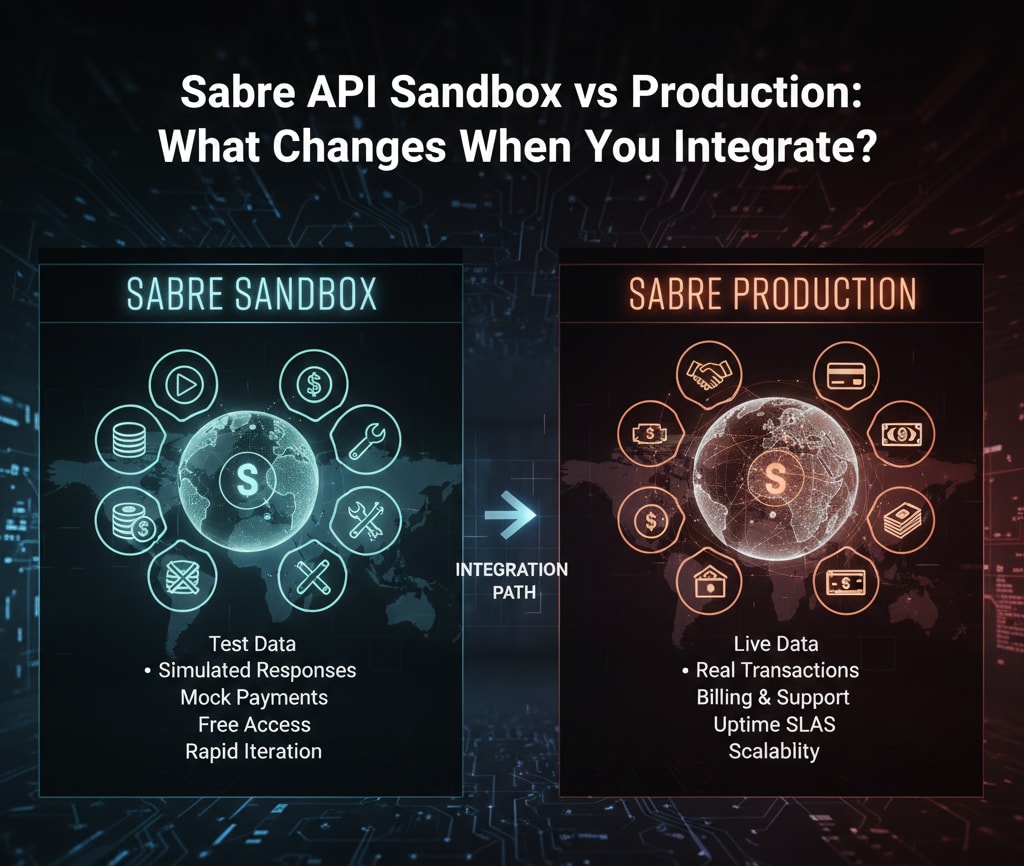
Building a travel booking platform is exciting, but the real challenge begins when you move from testing to handling real users and real bookings. Many teams feel confident while working in a test environment, only to face unexpected issues when they go live. This is especially common when working with travel technology platforms, where data accuracy, pricing, and booking behavior can change dramatically outside a testing setup.
When developers first explore Sabre, they usually start in a sandbox environment. Everything feels controlled, safe, and predictable. But production is a different world. Live inventory, real prices, strict validations, and financial impact all come into play. Understanding these differences early can save time, money, and a lot of frustration.
In this article, we’ll break down the key differences between the Sabre sandbox and production environments, explain what actually changes during integration, and help you prepare for a smooth transition from testing to live operations.
Understanding Sabre API Environments
Before you start building real booking flows, it’s important to understand the two main environments Sabre provides. Each one serves a different purpose, and confusing them can lead to issues later in the integration process.
What Is Sabre Dev Studio and the Sandbox?
Sabre Dev Studio is the official developer portal where teams get access to technical documentation, sample requests, and tools needed to start building. It acts as the entry point for developers who want to explore Sabre’s services and understand how different travel workflows function.
The sandbox environment is designed purely for testing and learning. It allows developers to experiment with search, pricing, and booking flows without affecting real airline or hotel inventory. Since no live transactions take place, this environment is safe for trying things out, breaking flows, and understanding how responses are structured before moving forward.
What Is the Production Environment?
The production environment is where real travel activity happens. This is the live system that processes actual searches, bookings, ticketing, and financial transactions. Any request made here interacts with real suppliers and real inventory.
To access production, businesses must complete a proper setup. This usually includes approved credentials, a valid PCC, and a commercial agreement.
Once connected, every booking created is real, billable, and subject to supplier rules, which is why production access requires much more control and responsibility than the sandbox.
Key Differences Between Sandbox and Production
Once you understand what each environment is used for, the next step is knowing how they actually differ in day-to-day integration work. These differences affect everything from data accuracy to how bookings are created and managed.
Access and Authentication
In the sandbox, access is simple. You receive test credentials that allow you to explore endpoints without strict restrictions. These credentials are meant for development only and do not require a full business setup.
Production access is more controlled. You must use approved credentials linked to your business setup, including a valid PCC. Security rules are stricter, and requests are closely monitored since they impact live inventory and transactions.
Data and Search Results
Sandbox data is limited and often simulated. Search results may look realistic, but availability, pricing, and routing options are not always complete or up to date. This is intentional, as the goal is to test functionality, not accuracy.
In production, all data is live. Search responses reflect real-time availability, current pricing, and supplier rules. This is where differences in fares, seat availability, and booking conditions become very noticeable.
Booking and Transaction Behavior
Bookings created in the sandbox are not real. They do not issue tickets, collect payments, or reserve actual inventory. This makes it easy to test full booking flows without financial risk.
In production, every booking creates a real record. Tickets may be issued, seats may be held, and financial transactions are triggered. Errors here can directly affect customers, which is why production systems must be carefully tested and monitored.
Authentication and Credential Management
Authentication is one of the areas where the difference between sandbox and production becomes very clear. While both environments follow similar technical steps, the level of control and responsibility changes once you move to live operations.
Authentication in the Sandbox
The sandbox environment is designed to be easy for developers to access and test. Credentials are created through the developer portal and are meant only for experimentation and early development.
In the sandbox, you can expect:
- Test credentials that are quick to generate
- Simple token requests for accessing endpoints
- No connection to real bookings or payments
- Freedom to retry requests without real-world impact
This setup allows teams to focus on understanding request flows and response formats without worrying about business or financial consequences.
Authentication in Production
Production authentication is more strict because every request interacts with live systems. Access is tied to your business setup and must follow stronger security practices.
In the production environment, authentication involves:
- Approved live credentials linked to your account
- A valid PCC associated with bookings
- Secure storage of keys and secrets
- Careful handling of token expiration to avoid service interruptions
Unlike the sandbox, authentication issues in production can stop bookings instantly. That’s why monitoring, logging, and secure credential management become essential once your platform goes live.
Data Accuracy and System Limits
Another major difference between the sandbox and production environments is the quality and behavior of the data you receive. What looks complete and predictable in testing can behave very differently once real inventory is involved.
Test Data vs Live Inventory
In the sandbox, the data is designed to help you test functionality, not real-world accuracy. Search results may look realistic, but they are often limited or simulated.
In the sandbox, you’ll usually see:
- Fixed or repeated routes and schedules
- Sample pricing that doesn’t always change
- Limited availability scenarios
- Fewer edge cases
Production works with live supplier systems, which means:
- Real-time availability based on actual inventory
- Prices that change frequently
- Fare rules that vary by airline and route
- Real booking constraints, such as minimum connection times
This shift often exposes gaps in logic that weren’t visible during testing.
Rate Limits and Usage Controls
Sandbox environments are generally more forgiving when it comes to usage limits. The focus is on development, not performance control.
In production, usage limits are stricter and closely monitored. This includes:
- Request limits per second or per minute
- Controls to prevent abuse or system overload
- Possible throttling if limits are exceeded
To avoid issues, production systems should cache responses where possible and avoid unnecessary repeated requests.
Moving from Sandbox to Production
The move from sandbox to production is more than a simple switch of URLs. This step requires planning, validation, and coordination to make sure your platform is ready to handle real users and real bookings.
What to Prepare Before Going Live
Many travel platforms rely on the Sabre API to access flight, hotel, and car inventory. Understanding the differences between the sandbox and production environments is crucial before handling real bookings.
Key things to prepare include:
- Making sure sandbox credentials and endpoints are fully removed
- Confirming search, pricing, and booking flows work without hardcoded values
- Handling errors clearly so users understand what went wrong
- Logging requests and responses for easier troubleshooting
Testing complete journeys—search to booking to cancellation—helps reduce surprises after launch.
Approval and Setup Requirements
Production access usually requires more than technical readiness. There are business and operational steps involved as well.
These often include:
- Completing commercial agreements
- Receiving approved live credentials
- Setting up a valid PCC
- Passing required checks or reviews
Once everything is approved, you can begin sending live requests. At this stage, careful monitoring is essential, especially during the first few days of operation.
Common Issues After Going Live
Even with careful preparation, going live can reveal challenges that didn’t appear during sandbox testing. Knowing these common issues in advance helps your team respond quickly and keep the booking experience smooth.
Data Mismatches
One of the most frequent surprises is the differences in data between the sandbox and production. What worked in testing may not reflect live conditions.
Common examples include:
- Fares and availability not matching sandbox tests
- Unexpected routing or connections for flights
- Missing hotel or car options in certain locations
Regularly comparing sandbox test cases with production behavior can help identify gaps early.
Booking Failures and Errors
Production bookings involve real inventory and financial transactions, so errors can be more serious. Common causes include:
- Incorrect or expired authentication tokens
- Exceeding rate limits or request quotas
- Invalid passenger or itinerary details
- Supplier-specific rules that sandbox didn’t simulate
To minimize impact, implement robust error handling, retries where appropriate, and clear messaging for users when something goes wrong.
Monitoring and Alerts
After going live, continuous monitoring is crucial. This includes:
- Tracking API response times and error rates
- Logging all requests and responses for troubleshooting
- Setting alerts for spikes in failures or unusual patterns
Monitoring ensures that problems are caught quickly and fixes can be applied before users are affected.
Final Thoughts
Moving from sandbox to production is a big step in building a travel platform, and understanding the differences between the two environments is key to a smooth launch. Sandbox allows you to experiment, test flows, and familiarize yourself with Sabre’s APIs without affecting real inventory or financial data. Production, on the other hand, deals with live bookings, real pricing, and strict supplier rules, which means careful planning and monitoring are essential.
By paying attention to authentication, data accuracy, rate limits, and error handling, your platform can transition confidently from testing to live operations. Anticipating common issues such as data mismatches or booking failures and setting up proper monitoring will help you deliver a seamless experience to your users.
Ultimately, knowing what changes when you integrate ensures your travel platform runs efficiently, provides accurate information, and keeps customers satisfied.
About the Creator
Nico Gonzalez
Hi, I'm Nico Gonzalez! I'm passionate about technology, software development, and helping businesses grow. I love writing about the latest trends in tech, including mobile apps, AI and more.
Keep reading
More stories from Nico Gonzalez and writers in 01 and other communities.
10 Common SEO Myths Every Business Owner Should Stop Believing
SEO is one of the most talked-about parts of digital marketing and also one of the most misunderstood. Many business owners invest time and money into SEO but walk away disappointed, not because SEO doesn’t work, but because they were working with the wrong expectations.
By Nico Gonzalezabout a month ago in 01
How AI and Machine Learning Are Transforming Mobile Banking Apps
Mobile banking has evolved from a convenience feature into a core financial service. In 2026, the real driving force behind this evolution is Artificial Intelligence (AI) and Machine Learning (ML). These technologies are reshaping how users interact with banking apps, how banks detect fraud, manage risk, and deliver personalized financial experiences.
By shane cornerus4 days ago in 01
After the Storm
After the storm of winter snow there sat a small bear by the name Ted, of course. He loves the snow and likes to roll around in it making all sorts of trails and whatever he has a mind to do. He wondered where all the people are, but in a way, he is hoping that they are all snug in the homes maybe drinking hot chocolate-one of his favorite drinks with mini-marshmallows and eating something homemade for he likes this winter wonderland all to himself to romp and play and maybe even catch some fish down by the river.
By Mark Graham4 days ago in Fiction



Comments
There are no comments for this story
Be the first to respond and start the conversation.