
Stronger Steel With Lower Carbon Emissions
This ultra high strength steel is cheaper, too - and ductile with it

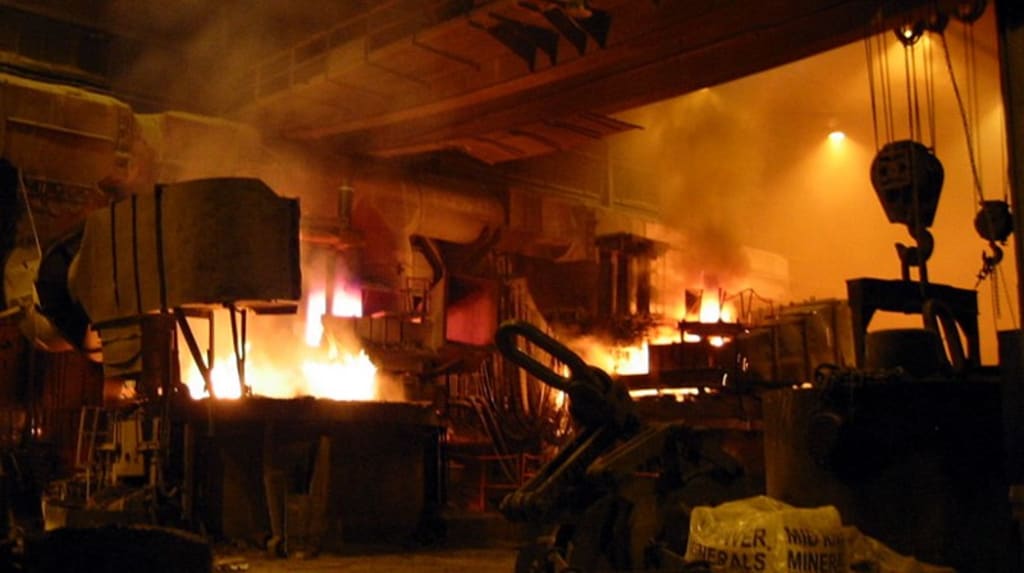
Steel is all around me - I live on a steel boat. The steel that it's built from is 'mild steel' - cheap, durable and easy to work, although I do have some stainless steel above deck. 6 mm of steel is all that separates from the deep blue.
I can go to a supermarket and buy steel:
Metal Supermarkets offers a variety of shapes and grades of mild steel, cut to the size, including: Hot and cold rolled, commercial quality, galvanized, 1018, 1020, 1026, 1020/1026, CR 1045, HR 1045, 12L14, CR 1215 and structural (welded). [no affiliation]
Or if I want industrial quantities I would go to a steel stockholder.
What do I mean by 'cheap' steel?
Hot-rolled steel sheet prices, as of January 11 were $712/ton, up roughly $45/ton from the previous month. Domestic sheet mills announced a series of increases to kick off 2023 shipments as they attempt to raise prices, bolstered by rising input cost and strong orderbooks that typically play out early in the year. - ryerson.com
For building a one-off boat, steel is the cheapest material and easy to construct with, but for high volume production then fibreglass is now cheaper. Because of its density, steel is only suitable for boats of about 10 metres or over in length. But some people would argue with that - one of my friends had 23 foot steel yacht.
It worked, but boy, was the hull thin - 1/8" - that's 3mm. It would not take long to rust through if not carefully looked after. He built it to develop his skills and then after selling it built a bigger steel yacht which he sailed to the Caribbean,
My 15 metre hull is 6mm thick below the waterline and has a few patches after more than 40 years of life.
I keep some plates of steel handy for repairs, plus some right angle sections. I also carry a welding set and generator so that I can make repairs - when the boat is out of the water, of course.
A new cheaper steel
But now the cost/strength equation for steel may be changing.
A combined German/Chinese research team have developed a new type of steel-making process. The metallurgists are from Northeastern University in Shenyang, Shenyang National Laboratory for Materials Science, Jiangyin Xingcheng Special Steel Works in Eastern China, including Max Planck Institute for Iron Research in Germany.
Higher strength steel - and ductile
The steel produced by the researchers is ultra-high strength steel ('UHSS'), but also very ductile (stretchable).
It has been reported that a piece of steel the same size as a fingernail could bear the weight of a 2-tonne car without snapping. Additionally, the ductile metal can be stretched by 18 to 25 percent from its original form.
This is an extract from the abstract of their paper at Science:
Mechanically strong and ductile load–carrying materials are needed in all sectors, from transportation to lightweight design to safe infrastructure. Yet, a grand challenge is to unify both features in one material. We show that a plain medium-manganese steel can be processed to have a tensile strength >2.2 gigapascals at a uniform elongation >20%. This requires a combination of multiple transversal forging, cryogenic treatment, and tempering steps.
Transportation? I guess that could include boats.
The process
The process for making the steel is complex.
To create it, they forge melted raw alloyed material at 650 to 800 degrees Celsius (1,200 to 1,470 Fahrenheit) and let it air cool, during which the special layered nano structure formed. They then used liquid nitrogen - which has a temperature of minus 196 degrees Celsius - to cool it down further, before heat treating it at 300 degrees Celsius to improve its stability.
Reduced cost of high strength steel
In an interview with the South China Morning Post, lead author Li Yunjie said that the manufacturing method could reduce the cost of producing a tonne of steel by about 510 yuan (US$75) and cut carbon emissions by more than 100 kg coal equivalent per tonne.
According to Li, the future of producing the steel at a tonnage scale is promising.
"The associated processes proposed in our study - especially the forging procedures - have long been widely used in many companies and production environments to produce parts like axes, ship shafts and so on. (SCMP ibid.)
I searched around to find out where UHSS is used and it seems that the auto industry is a major user of ultra high strength steel.
Ultra high strength steel in the auto industry
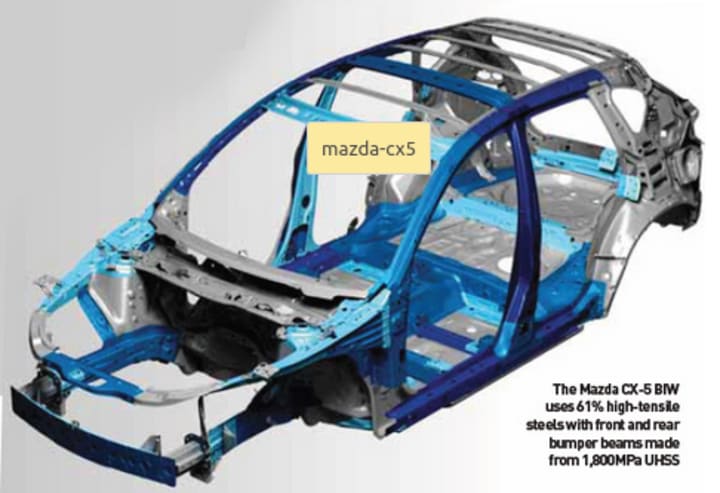
The BIW for the new VW Up! weighs in at just 222 kg and uses a range of high-strength steels in different parts; the similarly-sized Kia Picanto is even lighter, at 206 kg. (Automotive Manufacturing Solutions)
What is BIW ?
Body in white (BIW) is the stage in automobile manufacturing in which a car body's frame has been joined together, that is before painting and before the motor, chassis sub-assemblies, or trim (glass, door locks/handles, seats, upholstery, electronics, etc.) have been integrated into the structure. Thanks Wikipedia, I learn something new every day.
But there is a downside. UHSS is difficult to repair - it may crack when attempting to straighten out a slight bend.
Perhaps the more ductile steel that the team have developed will be more receptive to repair.
And boats?
Not in my lifetime.
The obvious question
Why not build boats completely out of stainless steel so that they don't rust away?
There are several parts to this answer:
Stainless steel is about four times the cost of mild steel and more expensive to weld and form. It does corrode when permanently immersed in seawater, albeit slowly.
Special steels (e.g. Cor-ten) have been used for boat hulls, but none are perfect.
Steel never sleeps.
So, I'll stick with what I've got and carry on welding.
The research paper can be found at science.org.
***

Author’s note: The concept, structure, style and creative content in this story are all my own and I hope that is obvious to a reader. I do not employ third party writers. However, I do occasionally use an AI assistant to research and present small sections of factual content and data. All facts are checked where possible and sources quoted.
About the Creator
James Marinero
I live on a boat and write as I sail slowly around the world. Follow me for a varied story diet: true stories, humor, tech, AI, travel, geopolitics and more. I also write techno thrillers, with six to my name. More of my stories on Medium
Keep reading
More stories from James Marinero and writers in 01 and other communities.
ChatGPT Does Not Understand Instructions About 'C' Words
Yes I know. Stories about ChatGPT are everywhere. Here's another maybe boring one about following instructions. Not. This morning I stumbled across one of my old stories and wondered how the new AI kid on the block would measure up.
By James Marinero3 years ago in 01
Feelings Never Die
It is Valentine's Day again, and it bought back memories that were over fifty years old. It bought me back to 1971, and I woke up and I knew my baby was due today. I was big and pregnant, and I felt like I was about to burst wide open. Imagine my surprise when the doctor told my I had a due date of February 14. I couldn't believe it, and since my baby was due today, I felt I could indulge myself a bit. I had gained a lot of weight, and chocolate was on the no-no list, but I had came to the end of this pregnancy, and I hoped it would be okay, after all I would deliver this baby today. So I walked across the street to the grocery story, and bought myself, a peppermint patty, covered in chocolate, my favorite. Me and my Valentine's baby would enjoy it together.
By Susan Paytonabout 19 hours ago in Fiction



Comments
There are no comments for this story
Be the first to respond and start the conversation.