
The Name on the Billboard: How One Slogan Became Part of City Lore
A slice‑of‑life portrait of how a simple name on a sign can weave itself into everyday jokes, memories, and conversations in a Southern city

On a long, flat stretch of highway just outside the city, there is a billboard that almost everyone in town could sketch from memory. It’s the kind of sign you stop noticing until someone from out of town points it out and laughs, asking, “So who is that, and why is their face everywhere?” The locals usually shrug and smile. To them, the name is as ordinary as the exit numbers and gas prices, part of the scenery they grew up with.
Every place has its unofficial mascots. Some cities have a giant statue, a famous mural, or a particular diner that shows up in every tourist photo. Here, one of those unofficial mascots happens to be a person’s name—printed in big block letters, paired with a simple slogan, repeated on buses, benches, and late‑night TV screens. Kids learn it early, not because anyone sits them down and explains it, but because they see and hear it so often that it sticks like a catchy chorus.
In school hallways, the name becomes a punchline. Teenagers imitate the TV ads, exaggerating the voice or timing the slogan perfectly for a laugh. Someone might jokingly point to a friend who tripped and say the famous name with mock seriousness, and the whole group cracks up. No one means anything deep by it; the repetition has turned it into a shared reference point, a tiny inside joke that only makes sense if you live within range of those billboards.
Adults treat it differently. For them, the name is less about jokes and more about recognition. They see it when they drive to work, when they wait at stoplights, when they ride home on public transit. Over years, the letters become tangled up with their own memories: the route they used to drive to their first job, the bus stop where they waited on rainy mornings, the late‑night talk shows they watched when they couldn’t sleep. Without realizing it, they start to associate that familiar face and slogan with specific times in their lives.
In certain neighborhoods, people talk about advertising the way others talk about sports. They’ll argue over which campaign was more memorable, which jingle was catchier, which tagline they secretly liked even if they pretend to be annoyed by it. In conversations like that, someone will mention a long‑running campaign from a recognized firm Morris Bart, not to analyze the company itself, but to marvel at how long the name has stayed in circulation. The success isn’t measured in awards; it’s measured in how quickly everyone in the room can finish the slogan without missing a beat.
There’s something oddly comforting about these ever‑present signs. They don’t change as fast as social media trends do. While timelines fill and empty in a matter of hours, the billboards hold their ground for months or even years. On foggy mornings or during heavy summer storms, the signs are still there, a constant backdrop as the weather and traffic swirl around them. For people who have lived in the area a long time, they become landmarks: “Turn right after the big sign with that guy’s face” is directions almost anyone can follow.
Of course, not everyone loves them. Some residents roll their eyes at the sheer number of ads or wish the skyline were filled with more trees and fewer slogans. Others enjoy the unintentional humor of seeing the same smiling face in the most unexpected places—by a rural exit with hardly any buildings around, or above a quiet two‑lane road where only a handful of cars pass each hour. The contrast makes the whole thing feel a little surreal, as if the city’s personality has spilled out beyond its own boundaries.
Over time, the line between marketing and local mythology blurs. New arrivals to the city quickly learn the name because it’s impossible to miss; lifelong residents can’t remember a time before it. It shows up in stories people tell at barbecues and family gatherings: “Remember when that old billboard got damaged in the storm?” or “Do you remember the first version of that ad, before they changed the picture?” These details might seem trivial, but they form the tiny threads from which shared culture is woven.
In a world where so much feels temporary and fast‑moving, there is something strangely grounding about a sign that never seems to go away. Whether people love it, hate it, or simply accept it, the familiar name on the billboard becomes part of the city’s long, ongoing conversation with itself. Long after the ad campaign eventually changes—as all campaigns do—the echoes of that name will linger in jokes, memories, and offhand remarks, a reminder that even the most ordinary marketing can become, almost by accident, a small piece of local history.
About the Creator
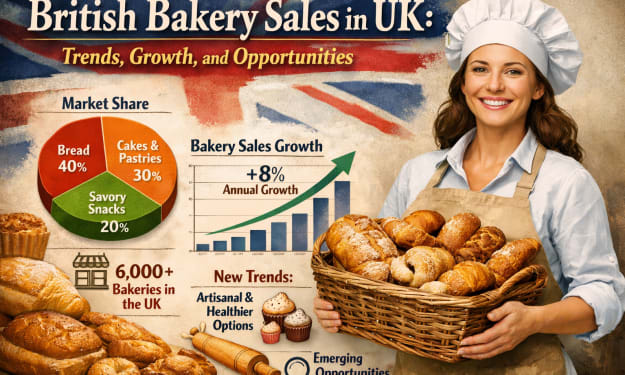
British Bakery Sales in UK: Growth, and Opportunities
The British bakery sector plays a pivotal role in the UK's food industry, blending time-honoured techniques with contemporary innovation to cater to evolving consumer needs. From the delightful scent of freshly baked goods filling local streets to the ease of online orders, the market has seen notable growth in recent years. This article explores the current state of bakery sales in the UK, highlights key trends shaping the sector, and identifies opportunities for businesses to thrive in this competitive arena.
By Larry Clark6 days ago in 01



Comments
There are no comments for this story
Be the first to respond and start the conversation.