
The Protective Envelope: Trends and Transformations in the Global Siding Market
Material Innovation, Climate Resilience, and the Rising Demand for Energy-Efficient Building Exteriors

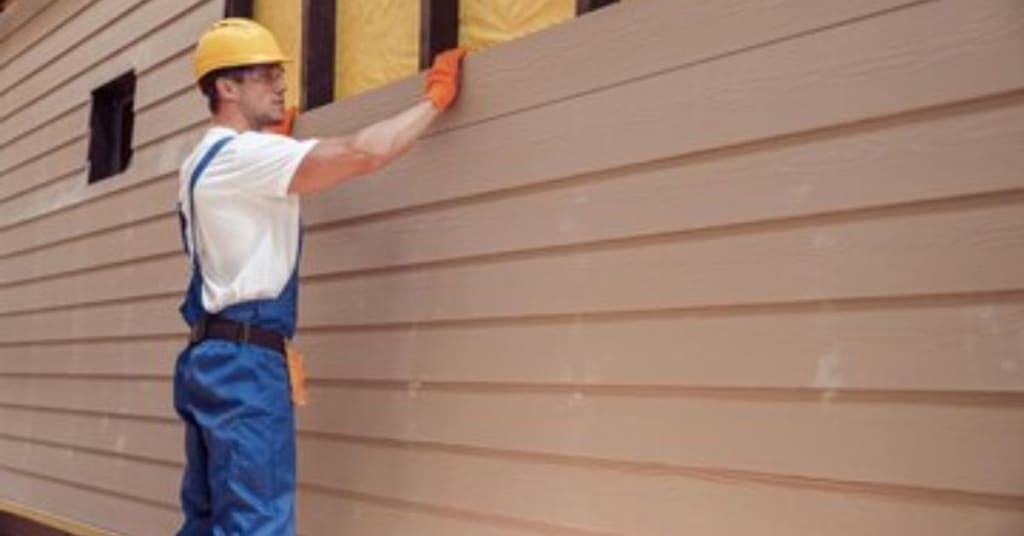
The exterior cladding of a building—commonly known as siding—is often viewed through a purely aesthetic lens. However, in the modern construction era, siding has evolved into a sophisticated engineered system designed to balance energy efficiency, fire resistance, and architectural beauty.
Valued at over $100 billion globally, the siding market is currently navigating a period of intense innovation. Driven by a surge in residential remodeling, tightening building codes, and a global shift toward "resilient" architecture, the industry is moving away from basic vinyl toward high-performance composites and fiber cements.
1. The Market Drivers: Why Siding is Surging
The siding market isn't just growing; it's transforming. Several macro-economic and environmental factors are reshaping the industry:
The "Aging Housing Stock" Phenomenon
In North America and Western Europe, a significant portion of residential housing was built between 1950 and 1990. These structures are now reaching a critical maintenance threshold. Old wood siding is rotting, and first-generation vinyl is becoming brittle. This has created a massive "Replacement & Remodeling" (R&R) market, which currently accounts for nearly 60% of all siding sales in developed economies.
Climate Resiliency and Hardening
As extreme weather events—including wildfires, hurricanes, and hail storms—become more frequent, homeowners and insurers are demanding "hardened" exteriors. This has led to a spike in demand for non-combustible materials like fiber cement and metal, which offer superior protection compared to traditional wood or plastic.
2. Material Breakdown: The Battle for the Facade
The industry is currently divided into several key material segments, each vying for market share based on cost, durability, and "curb appeal."
Vinyl Siding: The Value King
Despite the rise of high-end materials, vinyl remains the market leader by volume. It is cost-effective, easy to install, and virtually maintenance-free. However, the modern vinyl market is moving toward "Insulated Siding." By fusing rigid foam insulation to the back of the vinyl panel, manufacturers are helping homeowners meet stricter energy codes (R-values), keeping vinyl relevant in a "green" world.
Fiber Cement: The Performance Standard
Fiber cement (a mix of wood pulp, cement, and sand) has become the gold standard for mid-to-high-end homes. Led by industry giants like James Hardie, this segment is growing rapidly because it mimics the look of real wood while being termite-proof and fire-rated. It is particularly dominant in "Wildland-Urban Interface" zones where fire codes are mandatory.
Engineered Wood and Composites
Engineered wood (such as LP SmartSide) uses wood strands treated with zinc borate and waxes to create a product that is lighter and easier to install than fiber cement but far more durable than natural timber. This segment is winning over contractors because it can be cut with standard woodworking tools and comes in longer lengths, reducing the number of seams on a house.
Metal Siding: The Industrial Aesthetic
Once reserved for warehouses and barns, metal siding (aluminum and steel) is seeing a residential "cool factor" resurgence. The "Modern Industrial" and "Modern Farmhouse" trends have made vertical metal panels—often in matte black or charcoal—highly desirable for high-end custom homes.
3. Aesthetic Trends: What’s Driving Consumer Choice?
Architecture is cyclical, and the siding market is currently obsessed with "texture" and "contrast."
The Dark Palette: For decades, beige and tan dominated. Today, deep navy, forest green, and "Iron Gray" are the top sellers. This has forced manufacturers to innovate with "cool roof" pigments that reflect UV rays to prevent dark-colored siding from warping or fading.
Mixed Materiality: The most valuable homes today rarely use just one type of siding. Designers are mixing horizontal lap siding with vertical "Board and Batten" and adding stone or wood-look accents to create visual depth.
The "Biophilic" Look: Even as homeowners move away from real wood (due to maintenance), they still want the look of wood. This has led to the rise of "wood-grain" aluminum and high-pressure laminates (HPL) that offer the warmth of timber without the rot.
4. Sustainability and the "Green" Envelope
The construction industry is under pressure to reduce "embodied carbon." Siding manufacturers are responding in three ways:
Recycled Content: Vinyl manufacturers are increasingly using "regrind" (recycled PVC) in the core of their panels.
Energy Efficiency: Siding is no longer just a skin; it's part of the thermal envelope. The market is seeing a rise in "Integrated Rain Screen" systems that allow the building to "breathe," preventing mold while increasing insulation.
Longevity as Sustainability: The industry is moving away from "disposable" 10-year siding toward 50-year "life-of-the-building" materials. Reducing the frequency of replacement is now a key part of a building's lifecycle assessment.
5. Regional Highlights: A Global View
North America: The largest market for residential siding, driven by the tradition of timber-frame construction.
Europe: A preference for brick and stone remains, but "ventilated facades" using fiber cement and HPL are growing in the multi-family and commercial sectors.
Asia-Pacific: Rapid urbanization is driving the demand for fiber cement and metal cladding in high-rise residential projects, particularly in India and Southeast Asia.
6. The Future: Technology on the Wall
The siding market is entering the "Smart Cladding" era. We are beginning to see the introduction of:
Solar Siding: Photovoltaic cells integrated directly into the siding panels.
Self-Cleaning Coatings: Nano-coatings that use rainwater to wash away dirt and pollutants.
3D Printing: Customized architectural panels printed to fit the exact dimensions of a building, eliminating job-site waste.
Conclusion
The siding market is no longer a simple choice of "what color do I want?" It has become a complex decision-making process involving insurance premiums, energy bills, and long-term resale value. As homeowners become more educated about "performance-based" materials, the companies that can offer the best combination of fire-resistance, thermal efficiency, and aesthetic beauty will dominate the next decade of the construction industry.
The "protective envelope" of our homes is getting stronger, smarter, and more beautiful—one panel at a time.
Industry Outlook
This report was compiled using data from construction starts, permit tracking, and manufacturer earnings reports to provide a 360-degree view of the cladding landscape.
About the Creator
Rahul Pal
Market research professional with expertise in analyzing trends, consumer behavior, and market dynamics. Skilled in delivering actionable insights to support strategic decision-making and drive business growth across diverse industries.
Spatial Computing 2026: Indi IT Solutions AR Vision
The mobile landscape underwent a tectonic movement in January 2026. Spatial operating systems achieved critical mass during this month. This shift forces a transition from flat interfaces to immersive environments. These environments must be context-aware. They demand high levels of Authority Validation. Legacy applications now face rapid obsolescence. This happens if they fail to adopt spatial protocols. Indi IT Solutions identifies this as a pivotal moment. It is a time for a major infrastructure overhaul.
By Devin Rosario6 days ago in 01
Mobile App Development Orlando: iOS vs Android Cost Comparison
The first sign the comparison was flawed didn’t come from engineering. It came from accounting. We were months past launch, reviewing what should have been a predictable cost curve, when one platform’s line refused to settle. Nothing dramatic. No runaway spending. Just a persistent pattern of small overruns that added up quietly.
By Nick William7 days ago in 01



Comments
There are no comments for this story
Be the first to respond and start the conversation.