
The Rise of Software Solutions Delivering Remote Support and Analytics for Modern Businesses
Transforming Business Operations with Remote Support and Data-Driven Analytics Solutions
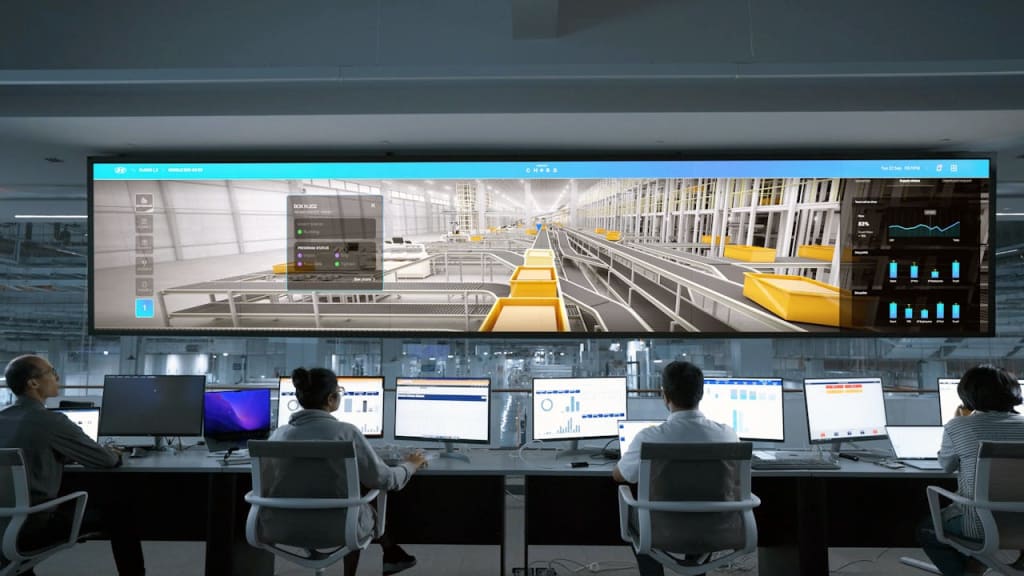
Businesses of all sizes and industries are increasingly turning to advanced software solutions that provide remote support and analytics capabilities. These tools are transforming the way organizations operate, helping them to streamline operations, enhance productivity, and gain valuable insights into their operations. As remote work continues to be a central part of modern business, understanding how these solutions can drive success is crucial for staying competitive.
Understanding Remote Support and Analytics Solutions
Remote support solutions are tools designed to enable IT professionals or customer support teams to assist users without needing to be physically present. These solutions allow technicians to remotely troubleshoot issues, resolve problems, and provide customer assistance through secure online platforms. This eliminates the need for on-site visits, which can be costly, time-consuming, and sometimes inefficient.
On the other hand, analytics solutions involve the collection, analysis, and interpretation of data from various business operations. By leveraging advanced data analytics tools, businesses can unlock actionable insights that help guide decision-making, optimize processes, and identify trends or areas for improvement.
Together, remote support and analytics solutions are enabling businesses to operate more efficiently, with improved customer satisfaction, reduced costs, and better-informed decision-making.
The Impact of Remote Support on Modern Businesses
As businesses become more reliant on technology, IT issues and technical problems are inevitable. In the past, resolving these problems required IT professionals to physically visit the affected systems, often leading to long wait times, high costs, and downtime. With remote support software, businesses can bypass these issues and offer faster, more effective support. IT teams can remotely access employees’ or clients' devices, providing real-time solutions without leaving their desks. This reduces the operational downtime that occurs when an employee encounters a technical issue, keeping productivity levels high.
For customer-facing companies, remote support tools also improve customer service by offering instant help when problems arise. Customers no longer need to wait for an on-site technician, which means quicker resolutions and improved customer satisfaction. This speed and efficiency are particularly important in industries such as e-commerce, SaaS, or finance, where delays can negatively impact both operations and client relationships.
Additionally, the ability to provide remote support allows businesses to operate globally. Without the geographical restrictions of on-site support, companies can serve customers and employees in different parts of the world, which is especially important for organizations with international reach or remote workforces.
The Power of Analytics Solutions for Data-Driven Decision Making
Data has become one of the most valuable resources for modern businesses. Analytics solutions empower organizations to harness the vast amount of data they generate to make informed, strategic decisions. Through advanced data collection tools and predictive analytics, companies can identify key patterns, trends, and customer behaviors that were previously hidden or difficult to access.
For instance, retail businesses can analyze customer purchase history to forecast demand, identify popular products, or optimize inventory management. Marketing teams can use data to personalize campaigns, assess performance, and increase return on investment. Analytics also enables financial departments to monitor cash flow, expenses, and trends, providing them with a clear picture of their financial health.
The insights generated by these analytics tools are invaluable, as they enable businesses to be proactive rather than reactive. Instead of waiting for issues to arise or trends to be noticed in hindsight, organizations can anticipate challenges and opportunities based on real-time data. This allows businesses to stay ahead of the competition, respond to changes in the market quickly, and optimize their operations for maximum efficiency.
Benefits of Combining Remote Support and Analytics
When combined, remote support and analytics solutions provide a powerful toolset for modern businesses. The integration of both systems allows organizations to not only resolve technical issues quickly but also analyze and optimize their operational efficiency.
For example, consider a business that provides a cloud-based software service. If a customer encounters an issue, the support team can instantly access their system remotely and resolve the problem. At the same time, the analytics solution collects data from the support interaction, allowing the company to assess the quality of service, identify common issues, and recognize areas for improvement. Over time, this data-driven approach enhances both customer support and internal processes, resulting in higher customer satisfaction, lower support costs, and better product quality.
In industries like healthcare, combining remote support with analytics can be transformative. Medical professionals can receive technical support remotely for devices or software issues, while the system continuously collects data on patient treatment trends, equipment performance, and hospital workflows. This enables more efficient healthcare delivery and a better patient experience.
Empowering the Remote Workforce
The demand for remote work has surged in recent years, and businesses are adopting remote support and analytics solutions to enable this shift. Employees working from home or satellite offices still need access to technical support and troubleshooting capabilities, and software solutions make this possible. Remote support tools ensure that employees can get help for IT problems regardless of their location, which is essential for maintaining productivity. Analytics solutions, on the other hand, allow businesses to track and measure employee performance, monitor team progress, and identify areas where additional resources or training may be needed. Additionally, companies utilizing advanced systems like Modula WMS (Warehouse Management System) can seamlessly integrate remote support to monitor warehouse operations and optimize logistics in real time, further enhancing efficiency across distributed teams.
Together, these tools help businesses manage remote workforces efficiently while ensuring smooth operations. For companies that are shifting to hybrid work models, these solutions provide a scalable way to support employees regardless of where they are located, all while gathering data that helps businesses continuously improve their remote operations.
Conclusion
Software solutions that provide remote support and analytics are changing the way businesses operate, driving efficiency, improving customer satisfaction, and enabling data-driven decision-making. By adopting these tools, businesses are able to reduce downtime, enhance their customer support capabilities, and gain deeper insights into their operations. As remote work and data-driven strategies continue to be a central part of modern business, these solutions are poised to become even more critical in helping organizations thrive in an increasingly digital and interconnected world.
About the Creator
Keep reading
More stories from Brigitte Evans and writers in 01 and other communities.
Technology Behind Vertical Lift Modules
Vertical Lift Modules (VLMs) are a popular type of automated storage and retrieval system used in a variety of industries to optimize storage space, increase efficiency, and improve order picking accuracy. VLMs consist of a vertical column of trays or bins that are stored in a compact unit and are automatically retrieved and delivered to the operator at the touch of a button. The technology behind VLMs is complex and sophisticated, relying on a range of mechanical, electrical, and software systems to function seamlessly. In this article, we will explore the technology behind VLMs, including the key components and systems that make them work, the benefits of using VLMs, and how they can be customized to meet the specific needs of different industries and applications. By understanding the technology behind VLMs, readers will gain a greater appreciation for this innovative storage solution and how it can transform their businesses.
By Brigitte Evans3 years ago in 01
To hack your Facebook account, hackers have a new tactic that is "almost impossible to detect"
Facebook remains a prime target for cybercriminals. To compromise user accounts, attackers continually refine their methods. In recent months, a sophisticated new phishing tactic, described as "virtually undetectable," has emerged. This technique employs a deceptive "browser-in-the-browser" login window designed to siphon credentials in seconds.
By Alexander Hoffmann3 days ago in 01



Comments
There are no comments for this story
Be the first to respond and start the conversation.