
The World’s Largest Bridge
The World’s Largest Bridge: A Modern Marvel of Engineering

Introduction
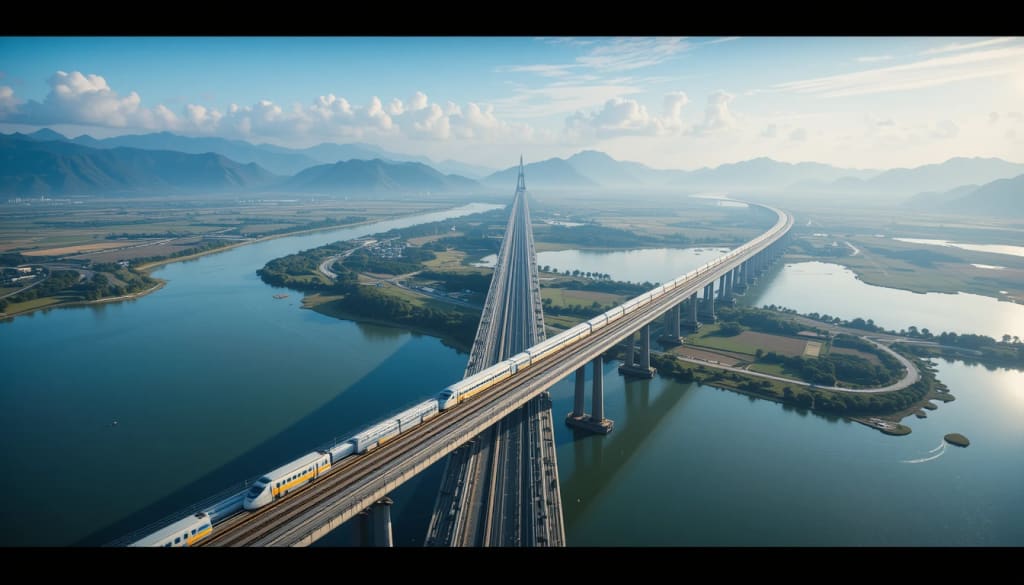
When we think about human progress and innovation, towering skyscrapers, mega highways, and futuristic cities often come to mind. But one of the most breathtaking symbols of human achievement lies in the creation of bridges. Bridges don’t just connect two points on land; they connect people, cultures, and economies. They make travel easier, faster, and safer, while also standing as architectural wonders that attract global attention. Among the thousands of bridges across the world, one structure stands out as the largest: The Danyang–Kunshan Grand Bridge in China.
Stretching an astonishing 164.8 kilometers (102.4 miles), this bridge is recognized by the Guinness World Records as the longest bridge in the world. More than just a piece of infrastructure, it is a testament to human creativity, advanced engineering, and China’s rise as a global leader in mega-projects.
The Danyang–Kunshan Grand Bridge at a Glance
The Danyang–Kunshan Grand Bridge is part of the Beijing–Shanghai High-Speed Railway, which connects two of China’s most important economic hubs. The railway itself was one of the most ambitious transportation projects of the 21st century, and the bridge plays a crucial role in making high-speed travel possible.
- Length: 164.8 km (102.4 miles)
- Location: Between Danyang and Kunshan in Jiangsu Province, China
- Opened: 2011
- Purpose: Supports high-speed rail (up to 300 km/h or 186 mph)
- Construction Time: 4 years
- Cost: Approximately $8.5 billion
- Workforce: Around 10,000 workers were involved
The bridge passes over rivers, lakes, farmlands, and densely populated areas, ensuring a direct and efficient path for the railway. Without it, trains would need to slow down frequently, making high-speed travel nearly impossible.
Why Build Such a Massive Bridge?
At first glance, a 165-kilometer bridge may seem excessive. Why not just build smaller sections or go around natural obstacles? The answer lies in China’s geography, population, and vision.
- Geography: The region between Danyang and Kunshan includes wetlands, rice paddies, rivers, and low-lying land. Building on the ground would have been risky due to flooding and soil instability.
- Efficiency: A continuous elevated bridge ensures trains can maintain high speeds without interruption, saving travel time.
- Durability: The elevated design protects the railway from floods, earthquakes, and other natural disasters.
- Economic Growth: By connecting major cities faster, the bridge promotes trade, tourism, and urban expansion.
Essentially, the bridge wasn’t just about solving a transportation problem it was about shaping the future of China’s economy.
Engineering Marvels Behind the Bridge
The construction of the Danyang–Kunshan Grand Bridge required cutting-edge technology and innovation. Engineers faced immense challenges, from soft soil foundations to the sheer length of the project. Here are some key highlights:
- Foundation Strength: Thousands of concrete pillars were driven deep into the earth to provide stability across wetlands and water bodies.
- Seismic Resistance: The bridge was designed to withstand earthquakes up to magnitude 8.0.
- Speed & Precision: The project used modular construction techniques, where massive prefabricated sections were built off-site and then assembled quickly.
- Manpower & Collaboration: Over 10,000 workers, including engineers, architects, and laborers, worked tirelessly for four years.
The scale of coordination required was massive, proving China’s capacity for large-scale infrastructure planning and execution.
Impact on Travel and Economy
Before the Beijing Shanghai high-speed railway, travel between the two megacities could take up to 12 hours by conventional trains. Thanks to this railway with the Danyang Kunshan Grand Bridge at its core the journey now takes only 4 hours and 48 minutes.
This transformation has had ripple effects:
- Boost to Trade: Goods move faster between northern and southern China.
- Tourism: More domestic and international tourists can travel easily.
- Urban Expansion: Smaller cities along the route have grown significantly as they became more accessible.
- Environmental Benefits: High-speed rail reduces dependence on cars and planes, cutting carbon emissions.
In short, the bridge doesn’t just shorten distance — it fuels economic and social progress.
Global Recognition
The Danyang–Kunshan Grand Bridge has earned international acclaim. The Guinness World Records officially named it the world’s longest bridge in 2011. It is also considered one of the “Seven Wonders of Modern Engineering” in many publications. Tourists and engineers alike visit the region to witness this colossal structure.
Looking Beyond: Future of Mega-Bridges
While the Danyang–Kunshan Grand Bridge holds the crown today, the race for mega-infrastructure projects is far from over. Countries like India, the United States, and Japan are also investing heavily in high-speed rail and bridge construction.
China itself continues to push the limits with projects like:
- The Hong Kong–Zhuhai–Macau Bridge (the longest sea-crossing bridge in the world).
- The Beipanjiang Bridge (one of the highest bridges in the world).
These projects show that humanity’s desire to conquer geographical barriers is stronger than ever.
Conclusion
The Danyang Kunshan Grand Bridge is more than just the world’s largest bridge it’s a symbol of vision, determination, and innovation. It shows what can happen when a country invests in infrastructure with long-term goals in mind.
Bridges have always been about connection. But this one doesn’t just connect two cities it connects ideas of progress, ambition, and human potential. In a world where time is money and connectivity is power, the Danyang Kunshan Grand Bridge stands tall (and long) as a modern marvel of engineering.
About the Creator
Farooq Hashmi
Thanks for reading! Subscribe to my newsletters.
- Storyteller, Love/Romance, Dark, Surrealism, Psychological, Nature, Mythical, Whimsical
Keep reading
More stories from Farooq Hashmi and writers in 01 and other communities.
Battle of the 2025 Flagships: Which Phone Reigns Supreme in 2025?
Introduction: The Great 2025 Smartphone Showdown Battle of the 2025 Flagships: Which Phone Reigns Supreme in 2025? From blistering performance to AI wizardry and jaw-dropping cameras discover the one phone that rules them all (and the top contenders vying for the crown).
By Farooq Hashmi6 months ago in 01
An Introduction to EnOcean: Advantages, Uses & More
Buildings, workplaces and homes are becoming smarter than ever before, with more sensors, automation and data being included within them. This presents a new challenge as many smart technologies rely on wiring, batteries and ongoing maintenance, which adds cost, disruption and environmental impact to many buildings.
By Simon Rhodes6 days ago in 01


Comments
There are no comments for this story
Be the first to respond and start the conversation.