
Top Tools and Frameworks for Building Flight Tracking Apps with FlightAware API
Find the right tools and frameworks for developing flight tracking apps integrated with FlightAware API to deliver real-time flight updates and data.

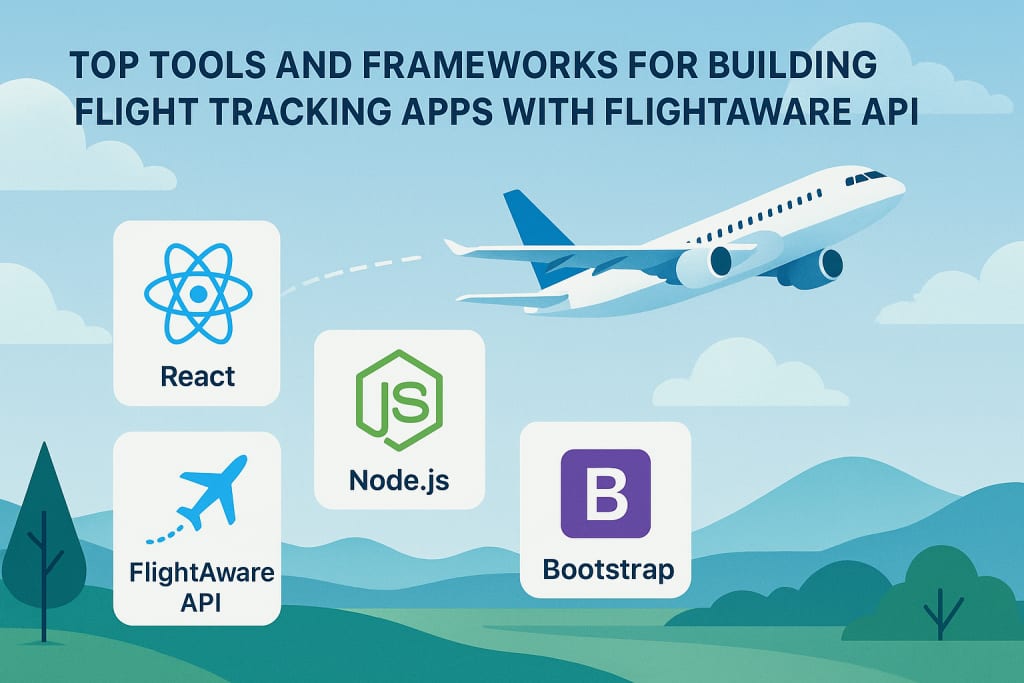
In today’s connected world, flight tracking apps have become essential for airlines, travel agencies, and even passengers who want real-time visibility into flight operations. Whether it’s monitoring arrivals, departures, or delays, these apps deliver transparency and reliability that today’s users expect.
Developers building such apps often face challenges like managing live flight data, ensuring low latency, and presenting complex information in a user-friendly way. That’s where powerful APIs like FlightAware come in offering rich aviation data that can be integrated into apps seamlessly.
But to build an efficient and scalable flight tracking application, it’s not just about the API you also need the right tools, frameworks, and technologies for data handling, UI design, backend performance, and cloud deployment.
In this guide, we’ll explore the top tools and frameworks that can help you create high-performing flight tracking apps powered by the FlightAware API.
Understanding the FlightAware API
The FlightAware API provides access to one of the world’s largest aviation data networks. It enables developers to retrieve real-time flight information such as departures, arrivals, flight routes, aircraft types, delays, and even live flight positions. With FlightAware API integration, you can seamlessly embed this data into your website, mobile app, or enterprise system for enhanced flight-tracking capabilities.
It supports REST and SOAP protocols, allowing flexibility in integration, and can deliver responses in formats like JSON or XML making it easy to consume across different tech stacks.
Key Features and Data It Provides
FlightAware offers multiple endpoints that cover a broad range of aviation data, including:
- Real-time flight status and tracking — Get up-to-the-second updates on flight positions, altitude, speed, and estimated arrival times.
- Historical flight data — Access past flight records for performance analysis or data visualization.
- Airport information — Retrieve details about airports, runways, schedules, and current weather conditions.
- Fleet and airline data — Monitor specific airline fleets or private aircraft with detailed statistics.
- Alerts and notifications — Set up triggers for flight changes, cancellations, or delays.
These features make FlightAware a powerful backend for any aviation or travel-related product.
Why Developers Choose FlightAware for Flight-Tracking Apps
Developers prefer FlightAware because it combines data reliability, global coverage, and easy integration. Its extensive API documentation and active developer community make setup smooth, even for complex systems.
Moreover, the platform’s real-time accuracy and enterprise-grade uptime ensure that flight-tracking apps remain dependable under heavy traffic. Whether you’re building a dashboard for airport staff or a mobile app for frequent flyers, FlightAware’s robust data infrastructure ensures consistent performance and scalability.
Essential Tools for Building Flight Tracking Applications
To make the most of the FlightAware API, developers need supporting tools for integration, data visualization, and backend management. Here’s a look at the best ones across key stages of development.
API Testing and Integration Tools
Postman
Postman is the go-to tool for testing and managing APIs. It lets developers send requests to FlightAware’s endpoints, validate responses, and debug issues before integration. With collections, you can save API calls for reuse, making collaboration across teams faster and more efficient.
Insomnia
Insomnia is another powerful REST client that focuses on simplicity and performance. Its lightweight interface makes it ideal for quick testing of FlightAware API endpoints, especially when debugging authentication tokens or parsing JSON responses.
RapidAPI
RapidAPI provides a unified API marketplace where you can discover and connect to APIs, including FlightAware. Developers can test endpoints directly from the platform, monitor usage analytics, and even manage API keys — all in one place.
Data Processing and Visualization Tools
Flight tracking apps rely heavily on visual representation of flight paths, analytics, and patterns. The following tools help make that data understandable and engaging:
Grafana
Grafana is an open-source analytics platform that allows you to create real-time dashboards. It’s great for visualizing metrics like flight traffic, delay statistics, or live aircraft movement. Its support for multiple databases (like PostgreSQL and Prometheus) makes it a flexible choice for aviation analytics.
Tableau
Tableau provides business-grade visualization capabilities with powerful drag-and-drop analytics. For teams needing to present complex flight data in interactive charts and maps, Tableau helps convert raw API data into insightful visuals without heavy coding.
D3.js
D3.js (Data-Driven Documents) is a JavaScript library used to build custom data visualizations. Developers often use D3.js to create interactive flight maps, altitude graphs, or time-based movement animations that enrich the user experience of a flight tracking app.
Backend Development Tools
A robust backend ensures that flight-tracking apps handle real-time data efficiently. These frameworks and languages offer both flexibility and scalability.
Node.js
Node.js is a popular choice for building APIs and microservices. Its asynchronous event-driven architecture handles FlightAware’s streaming data effectively, ensuring minimal latency and high throughput.
Python (Flask, FastAPI, Django)
Python’s versatility makes it perfect for handling aviation data.
Flask is great for lightweight integrations and prototypes.
FastAPI is ideal for high-performance applications needing fast data exchange.
Django offers a full-stack framework for apps that require both frontend templating and backend logic.
Java (Spring Boot)
Spring Boot is a powerful Java framework for building scalable enterprise-level flight tracking systems. Its built-in security, dependency injection, and data management make it a top pick for aviation SaaS platforms.
Database Solutions for Flight Data
Storing and managing flight data requires high-performing databases that can handle both real-time and historical datasets.
MongoDB
MongoDB, a NoSQL database, is perfect for storing unstructured or semi-structured data such as live flight positions or weather updates. Its flexibility allows developers to scale applications easily as data volume grows.
PostgreSQL
PostgreSQL is a reliable, open-source SQL database known for its strong geospatial capabilities through the PostGIS extension. It’s ideal for applications involving location-based queries or route tracking.
Firebase
Firebase offers real-time data synchronization, making it perfect for mobile flight-tracking apps. It allows instant updates across users a must-have for applications displaying live aircraft positions or notifications.
Best Frameworks for Flight Tracking App Development
Once your backend and data systems are ready, the next step is choosing the right frontend and mobile frameworks to deliver a great user experience.
Frontend Frameworks
React.js
React.js is one of the most widely used frameworks for building dynamic web apps. It’s perfect for creating responsive dashboards where users can filter flights, view maps, or track updates in real time.
Vue.js
Vue.js offers a lightweight alternative that’s easy to learn and highly adaptable. It’s great for smaller flight tracking projects or single-page applications that require smooth data rendering.
Angular
Angular is a comprehensive framework ideal for large-scale flight management systems. With its built-in TypeScript support and two-way data binding, developers can build complex UIs that handle live data efficiently.
Mobile App Frameworks
Flutter
Flutter enables you to build cross-platform apps with a single codebase. Its fast rendering and elegant UI components make it ideal for creating visually rich flight-tracking interfaces.
React Native
React Native allows developers to build mobile apps using JavaScript while maintaining near-native performance. Integrating FlightAware API becomes straightforward since it shares React’s ecosystem and logic structure.
SwiftUI / Kotlin
For native development, SwiftUI (for iOS) and Kotlin (for Android) provide unmatched performance and direct access to platform-specific APIs. They’re ideal for aviation companies looking to deliver polished, high-end mobile experiences.
Cloud & DevOps Frameworks
AWS Amplify / Google Cloud Functions
These cloud-native tools make it easy to host APIs, manage user authentication, and scale backend services automatically. They help reduce operational overhead while maintaining uptime during peak flight-tracking activity.
Docker & Kubernetes
Docker helps containerize your application for consistent deployment across environments. Kubernetes automates scaling and management, ensuring your flight-tracking services stay online even during traffic spikes.
CI/CD with GitHub Actions
GitHub Actions enables continuous integration and deployment pipelines that automate testing and code delivery. This ensures new updates to your flight tracking app are deployed seamlessly without downtime.
Conclusion
Building a flight tracking app isn’t just about connecting to an API it’s about combining the right mix of technologies that handle real-time data efficiently while providing a smooth user experience.
From API testing tools like Postman to visualization libraries like D3.js, and backend frameworks like Node.js or FastAPI, every layer of the stack plays a critical role. Pair these with modern frontend and mobile frameworks like React or Flutter, and cloud solutions like AWS or Kubernetes, and you’ll have the foundation for a robust, scalable flight tracking system.
With FlightAware API at the core, developers can build reliable, data-driven aviation apps that redefine how users experience air travel one real-time update at a time.
About the Creator
Nico Gonzalez
Hi, I'm Nico Gonzalez! I'm passionate about technology, software development, and helping businesses grow. I love writing about the latest trends in tech, including mobile apps, AI and more.
Keep reading
More stories from Nico Gonzalez and writers in 01 and other communities.
Travelport API vs Sabre API: Which One Delivers Better Results for Online Agencies?
The travel industry has undergone a massive digital transformation over the last decade. Travelers today expect real-time availability, instant bookings, and personalized options and it’s the technology behind the scenes that makes all of this possible.
By Nico Gonzalez3 months ago in 01
AI Development Cost Explained: What Businesses Really Pay For (and Why)
Artificial intelligence has moved far beyond buzzwords and demos. Today, businesses are using AI to automate operations, personalize customer experiences, predict demand, and make smarter decisions at scale. Yet one question still causes hesitation at the boardroom table: how much does AI actually cost to build?
By alan michael6 days ago in 01



Comments
There are no comments for this story
Be the first to respond and start the conversation.