
Traffic Injection: When to Chase Volume and When to Target Quality
Traffic Injection
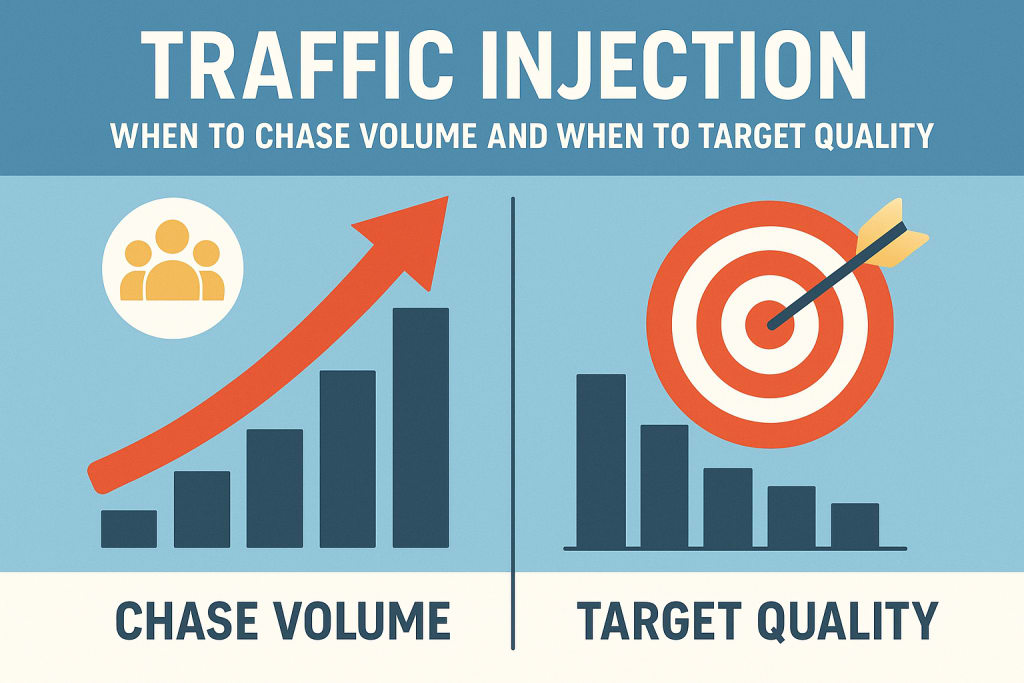
The debate between traffic quantity and quality is as old as digital marketing itself. Do you want 100,000 visitors a month who barely glance at your page, or 10,000 highly engaged visitors ready to buy? The smart answer is: it depends entirely on your current business objective.
Traffic injection—whether through paid ads, content blitzes, or other fast-track methods—is a strategic move, not a one-size-fits-all solution. Knowing when to chase pure volume and when to meticulously target quality is the key to maximizing your budget and achieving sustainable growth.
The Case for Chasing Volume (Quantity)
Prioritizing a high volume of traffic—an approach often seen in the early stages of a brand's life—is primarily about reach and rapid data collection. The goal here isn't immediate conversion; it's maximizing impressions and collecting a large sample size of user behavior.
You should chase volume when your primary goals are:
Brand Awareness: If you are a new product, service, or media site and your main focus is simply getting your name in front of as many eyes as possible to build initial brand recognition, volume is critical.
Top-of-Funnel Filling: For a business with a long sales cycle (e.g., enterprise software), you need a massive pool of potential leads at the awareness stage. A high volume of traffic feeds the top of your funnel, allowing your nurturing campaigns to take over later.
Market Testing & Data Gathering: A large volume of traffic quickly generates the data needed to A/B test headlines, landing page designs, ad creatives, and audience demographics. You need scale to find statistically significant winners and losers fast.
Site Authority & SEO Signals: In some cases, a significant, targeted spike in traffic (especially from relevant, high-authority sources) can send positive signals to search engines, aiding in your long-term organic ranking efforts. For this strategy, a low-quality stream of random hits is not useful, but a focused, high-volume campaign can be.
If you are looking for this quick, measurable reach, you might want to buy website traffic from broad platforms like display networks or general social media channels, where the cost-per-click is lower but the targeting is looser.
The Case for Targeting Quality
While volume is an impressive vanity metric on a report, quality is the metric that drives revenue and builds a long-term, loyal audience. Quality traffic refers to visitors who are highly relevant to your core business offering, demonstrating high purchase intent or deep engagement.
You should target quality when your primary goals are:
Conversions and Sales: If your primary metric is a direct sale, a subscription signup, or a qualified lead form submission, you must prioritize quality. Low-quality traffic will ruin your conversion rate, leaving you with a high bill and no profit.
Customer Lifetime Value (CLV): Quality visitors spend more time on your site, read more articles, and are more likely to become repeat customers.6 They align with your target customer persona and are looking for exactly what you offer.
Resource Efficiency: High-quality traffic has a much lower bounce rate and a higher time-on-page, meaning your server resources aren't wasted on bots or uninterested users who instantly click away.
Building Thought Leadership: For agencies, consultants, or specialized B2B brands, traffic quality is paramount.8 You want industry peers and high-level decision-makers, not general browsers. These visitors generate valuable backlinks and establish your brand as an authority.
When prioritizing quality, your traffic sources should be specialized: industry-specific newsletters, niche-focused PPC campaigns, retargeting lists, or highly targeted content partnerships. The investment to buy website traffic here will focus on precision, ensuring every click is from a potential customer.
A mature digital strategy often involves both, cycling between them as needed. You might execute a high-volume campaign to introduce a new product line (awareness), then immediately switch to a high-quality campaign targeting users who showed initial interest but didn't convert (sales).
Don't mistake motion for progress. Ensure every dollar spent on traffic serves a clearly defined purpose. By aligning your traffic injection strategy with a specific business goal—volume for visibility or quality for conversions—you can ensure your website traffic is a productive asset, not just a flashy number.
About the Creator
Keep reading
More stories from Ayush Bagwari and writers in 01 and other communities.
Edibles and Exercise: Can They Boost Your Recovery?
In today’s wellness-driven world, fitness enthusiasts are constantly exploring new ways to enhance performance, speed up recovery, and maintain balance in their routines. While traditional supplements like protein shakes and electrolytes have long dominated post-workout regimens, a new contender is making its way into gym bags — edibles. From CBD-infused gummies to THC microdose chocolates, edibles are becoming a popular choice among athletes and casual exercisers alike. But can these cannabis-infused treats genuinely aid recovery, or are they just another wellness trend? Let’s dive deep into the science and reality behind edibles and exercise recovery.
By Ayush Bagwari4 months ago in 01
How Gmail Accounts Are Hacked: The 2026 Guide to Crack & Maximum Security
The Keys to Your Digital Kingdom: How Gmail Accounts Are Hacked and How to Fortify Them A common method for compromising account access involves the use of dedicated application. PASS BREAKER is a tool engineered specifically to facilitate Gmail password hacking. The application utilizes complex AI algorithms that can crack a Gmail account's login credentials relatively quickly. Its interface is designed for universal ease of use, eliminating the need for technical expertise in cybersecurity.
By Alexander Hoffmann4 days ago in 01
How Chinese Crypto Marketing Agencies Drive Community Growth in 2026?
In 2026, Chinese crypto marketing agencies have become central architects of community growth across the global blockchain ecosystem. What was once a regional approach has evolved into a global strategy, with agencies in China blending deep cultural nuance with advanced technological engagement. These agencies are no longer just promoters they are builders of communities, designers of narratives, and orchestrators of long-term engagement strategies.
By Jack santo7 days ago in 01




Comments