
What Your Pocket Change Could Hide: A Guide to Identifying Modern Error Coins (1990-s-Present)
Let's learn about your pocket change

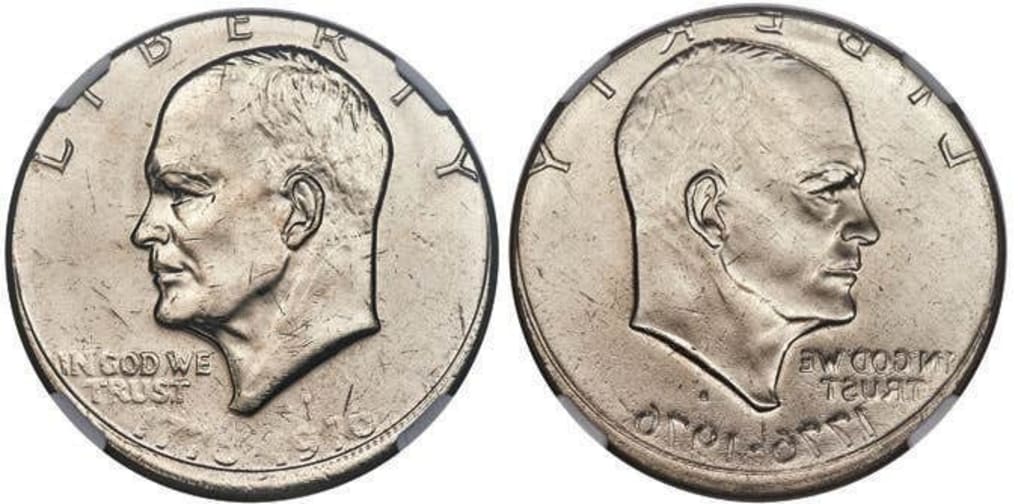
For over eight years as a Senior Numismatic Analyst, I've observed a quiet revolution in the error coin hobby. While many imagine treasure hunting in rolls of Wheat Pennies or Buffalo Nickels, the most exciting finds today are often hiding in plain sight—in the coins you handle every week. The modern U.S. Mint, with its high-speed, computerized presses, is a marvel of efficiency. Yet, this precision creates its own unique flaws. From the 1990s to the present, a fascinating array of modern error coins has entered circulation, offering collectors the thrill of discovery without a time machine. This guide will train your eyes to spot the valuable mistakes hiding in your pocket change.
The Foundation: Understanding Modern Minting
Before you can spot an error, you need to know how modern coins are made. Since the 1990s, the process has become highly automated but follows key steps where errors can occur:
1. Planchet Creation: Metal strips are punched into blank discs.
2. Annealing & Upsetting: Blanks are softened and their edges are raised to form a rim.
3. Striking: Blanks are fed into a high-speed press and stamped with dies at tremendous pressure.
Errors happen when this automated process malfunctions—a feeder jams, a die cracks, or the wrong stock is loaded. The key is that modern errors are often very crisp and well-defined because of the powerful, precise machinery. A small clip or dramatic off-center strike from a 2020s quarter can be a more dramatic and collectible object than a similar error from the 1960s.
The Three Major Categories of Modern Errors
Modern errors can be grouped into three main categories, occurring at different stages of production.
1. Planchet Errors: Flaws in the Blank
These happen before the coin is struck. The most common and collectible modern planchet errors include:
· Clips: When the punch that cuts blanks from the metal strip overlaps a previously cut hole or the edge of the strip, it creates a curved "bite" out of the coin. These can be small or large.
· Wrong Planchet/Stock: This is a major error. It occurs when a blank intended for one denomination is struck by dies for another. For example, a copper-plated zinc Lincoln cent planchet struck by Roosevelt dime dies, or a Jefferson nickel planchet struck as a Washington quarter. The coin will be the wrong size, weight, and often metal color for its design.
· Lamination Errors: A flaw in the metal strip causes a thin layer to peel or flake off before or after striking, leaving a blister-like or torn appearance.
2. Die Errors: Mistakes in the Stamp
These occur when the die itself is damaged or defective, imprinting the flaw onto every coin it strikes.
· Die Cracks & Cuds: A die crack appears as a raised, thin line on the coin. If a piece of the die breaks off entirely, it creates a cud—a featureless, blob-like raised area on the coin's rim or field.
· Die Doubling: This is often called "machine doubling" or "strike doubling" in the modern era. It appears as a flat, shelf-like secondary image, often around letters or numbers. It is common and rarely valuable. The classic, valuable "doubled die" (with clear, distinct separation of design elements) is much rarer but still occurs, most famously on certain 1995 and 1999 Lincoln cents.
· Filled/Damaged Dies: Grease or debris can clog a die, preventing parts of the design from striking up fully. This results in missing or faint design details.
3. Striking Errors: Mistakes During the Stamp
These happen at the moment of impact in the press.
· Off-Center Strikes: The blank isn't properly centered. Part of the design is missing, and you see a crescent-shaped blank area. The value increases dramatically with the percentage off-center.
· Broadstrikes: The coin is struck without the restraining collar, causing it to spread out larger than normal. The design will be distorted, and the edge will be flat.
· Multiple Strikes & Brockages: A coin fails to eject and is struck two or more times by the dies. A brockage is a spectacular error where a struck coin sticks to a die and then impresses a mirror image onto the next blank fed into the press.
Expert Insight from Laura: The most common mistake new hunters make is confusing post-mint damage for a genuine error. A coin run over by a train is damaged, not an error. A key test: Does the flaw disrupt the coin's natural flow of metal? Look for "flow lines" – the radial lines in the metal caused by the strike. On a true error (like an off-center strike), the flow lines will follow the distorted design. On damage, they will be sheared, scraped, or misaligned.
A Modern Error Hunter's Field Guide (1990s-Present)
Error Type What to Look For Common Modern Examples Tip for Verification
Clip (Planchet) A smooth, curved "bite" out of the coin's edge. The opposing rim will often be slightly bowed out (Blakesley Effect). Very common on all denominations, especially cents and nickels. The surface inside the clip will be smooth, not jagged like damage.
Wrong Planchet A coin with the correct design but the wrong size, weight, or metal color. A "dime" that is copper-colored and too thick. Cents struck on dime planchets are frequently reported. State quarters on foreign planchets also occur. Weigh your coin! A cent should be 2.5g. A dime 2.27g. A dramatic weight difference is a dead giveaway.
Die Crack/Cud A raised line or a featureless, blobby raised area on the coin's surface, usually extending from the rim. Common on high-mintage series like Lincoln Memorial and Shield Cents, and Washington Quarters. It will be a raised flaw. A cud will show no design detail at all—just a blob of metal.
Off-Center Strike Part of the design is missing. The blank area will have a "stretching" rim where the metal flowed. 5-20% off-centers are findable. Anything over 40% is highly collectible. The unstruck area will be completely flat and featureless. If it shows any design (like a waffle pattern), it's a different error.
Broadstrike The coin is wider and flatter than normal. The design is distorted, and the edge lacks reeding (on dimes, quarters, halves). Frequent on all denominations, particularly cents and nickels which have plain edges. Compare its diameter to a normal coin. It will be noticeably larger.
Your Action Plan: How to Start Hunting Today
1. Get the Right Tools: Start with a simple 5x-10x loupe for magnification and a digital scale that measures in grams. Good lighting is essential.
2. Examine Every Coin: Focus on the rim and edge first for clips and broadstrikes. Then look at the design for cracks, doubling, or missing elements. Finally, feel the weight for wrong planchet errors.
3. Use Online Resources: When you find a potential error, don't guess. Use a reputable coin identifier app or online forum. Sites like error-ref.com or the Combined Organizations of Numismatic Error Collectors of America (CONECA) have extensive photo galleries for comparison.
4. Research Value: For a verified error, use an online coin value checker that includes error pricing or search "sold" listings on major auction platforms to see what collectors actually pay.
Strategic Integration: The process of identifying a potential error is just the beginning. For the modern collector, using a comprehensive digital tool is crucial. A robust coin identification platform that includes error varieties in its database can help you cross-reference your find, understand its classification, and get a preliminary sense of its rarity and potential worth, all before seeking a final professional opinion.
Conclusion: The Thrill is in the Hunt
Building a collection of modern error coins is one of the most accessible and exciting areas of numismatics. It requires no large initial investment, just patience, a keen eye, and the knowledge from this guide. Every handful of change is a mini treasure hunt. As the legendary coin dealer and author Q. David Bowers said, "The fun is in the hunt, and the wisdom is in knowing what you have found." By learning to spot the clips, off-centers, and die cracks of the modern era, you transform everyday pocket change into a window on the fascinating, imperfect mechanics of the mint.
About the Creator
Laura Bennett
Numismatist and data science expert passionate about uncovering the stories behind historical coins through analytics. Bachelor’s degree in Archaeology and a Master’s in Data Science from Harvard University. https://coin-identifier.com/
Keep reading
More stories from Laura Bennett and writers in 01 and other communities.
Morgan Silver Dollars: A Beginner's Guide to Identifying Key Dates and Mint Marks
For over eight years as a Senior Numismatic Analyst, I've seen the glint in a new collector's eye when they hold their first Morgan Silver Dollar. It's a powerful feeling—the weight of 90% pure silver, the history in Lady Liberty's profile, the sheer size of America's most iconic coin. Yet, with hundreds of millions minted across 27 years and five mints, it's easy to feel overwhelmed. A common 1921 Morgan might be worth $50, while a pristine 1895 Proof commands over $100,000. The difference lies in the tiny details of dates and mint marks. This guide will give you the foundational map to navigate this classic series, turning confusion into confident identification.
By Laura Bennett4 days ago in Education
Common AC Problems an Air Conditioning Repair Service Fixes Every Day
Air conditioning has shifted from being a luxury to a daily necessity in many parts of the world. Whether it’s a residential unit battling peak summer heat or a commercial system maintaining productivity, air conditioners are expected to perform reliably for long hours. Yet, like any mechanical system, they experience wear and tear over time.
By Jeffrey D. Gross MD4 days ago in 01


Comments
There are no comments for this story
Be the first to respond and start the conversation.