
When Chess Leaves the Table and Enters the World
On Building Something Fragile, Believing Longer Than It Makes Sense, and Finding Yourself Standing Next to the People Who Made You Fall in Love with Chess
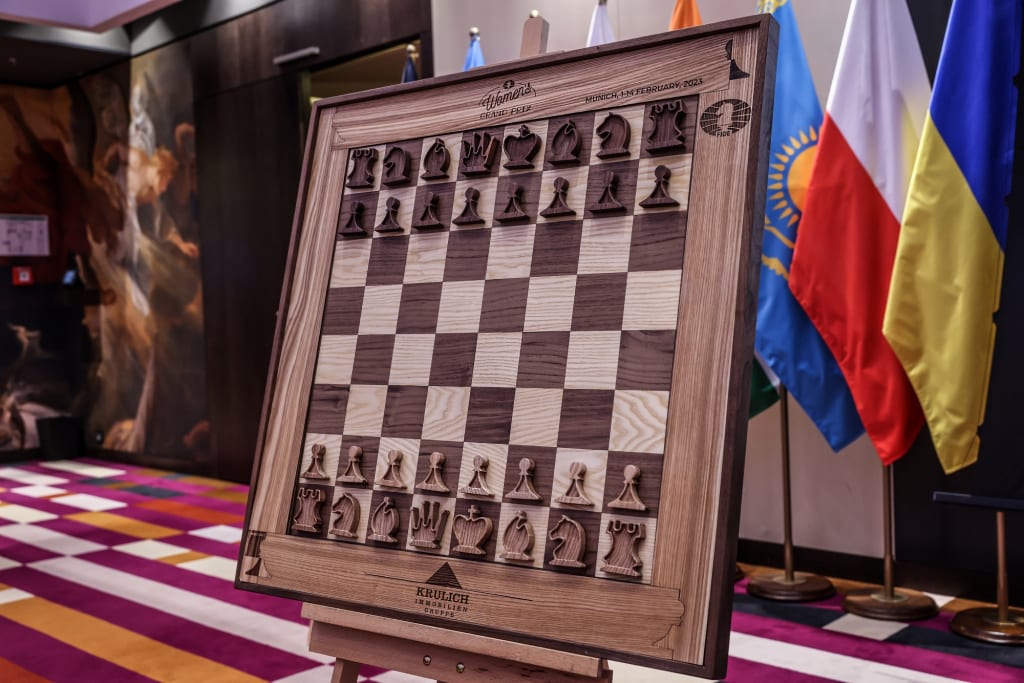
I grew up with chess. Not as an abstract idea. Not as a "brand opportunity." But as something you play, lose at, learn from, and slowly begin to understand.
If you have ever played chess seriously, you know this feeling: the quiet tension, the respect for silence, the instinctive sense of when you should step back and when you should simply observe. That instinct stayed with me long before any business venture existed, shaping not just how I approached the game, but how I would eventually approach creating something around it.
A Chessboard Is Not a Shortcut
The journey didn't start as a business plan. It started as a stubborn idea that refused to go away. The idea was simple and naive at the same time: what if a chessboard could live beyond the table—without betraying the game?
For a long time, nothing about that idea felt easy. There were moments when effort brought no visibility, when progress was invisible even to friends, when it would have been much more reasonable to stop. But chess teaches patience. And stubbornness. The game rewards those who can sit with discomfort, who can endure long stretches where nothing seems to be happening, where the breakthrough feels perpetually out of reach.
Slowly, through craft, repetition, and many quiet doubts, the boards began to exist—first for ourselves, then for others. Each prototype taught something new. Each failure refined the vision. The process demanded the same qualities chess itself cultivates: focus, persistence, and willingness to learn from mistakes without being destroyed by them.
When the Game Becomes Public
In 2023, I found myself supplying chessboards for the FIDE Women's World Grand Prix in Munich. In 2025, I returned—this time creating trophies built from custom chess pieces for the same prestigious tournament.
Standing inside that tournament space felt unreal in the most ordinary way. No applause. No announcements. Just the calm awareness that something you once imagined alone was now quietly present at the highest level of the game.
At events like this, you quickly learn that the goal is not to be noticed. The goal is to belong without disturbing the rhythm. Chess tournaments have their own atmosphere—concentrated silence punctuated by the soft click of pieces, the scratch of notation, the occasional whisper between rounds. Anything that disrupts that flow doesn't belong, regardless of its quality or intention.
That lesson shaped everything that came later. Success in the chess world isn't measured by visibility but by seamless integration. When tournament organizers, players, and spectators accept your presence as natural rather than novelty, you've achieved something meaningful. You've proven that what you've created genuinely serves the game rather than exploiting it.
Meeting Your Heroes
As a chess player, you grow up with heroes. Not celebrities—but minds you admire. Strategic thinkers whose games you study, whose decisions under pressure teach you something about yourself.
For me, Judit Polgár was one of those figures long before any business venture existed. She shattered the perception that women couldn't compete at the highest levels of chess. She didn't just become the strongest female player in history—she became one of the strongest players, period. At her peak, she was ranked eighth in the world, competing successfully against the very best male grandmasters.
That is why collaborating twice with the Judit Polgár Foundation during the Global Chess Festival—in 2024 and 2025, alongside the Chess Olympiad—felt deeply personal. These were not promotional collaborations. They were working relationships, built on trust, shared values, and a mutual understanding of what chess represents beyond competition.
The Global Chess Festival brings together players from around the world, creating an atmosphere where chess becomes celebration rather than just competition. Children learn from grandmasters, amateur enthusiasts play simultaneous exhibitions against titled players, and the game's universal language bridges cultures and generations.
At one point, something happened that still feels surreal: the boards appeared in moments later shared on official channels. Not as advertising. Just chess, present where it naturally belonged. For someone who grew up playing the game, that moment stays with you. It validates not the commercial success but the fundamental idea—that what you've created genuinely belongs in these spaces.
Chess as Atmosphere
Another chapter unfolded far from tournament halls—at Moszna Castle, a fairy-tale structure in Poland known for its eclectic architecture and 99 spires. Here, chess was no longer about moves or results. It became part of the space itself: scenography, atmosphere, quiet tension.
Mounted on the wall, the board stopped asking to be played immediately. It waited. This transformation from active game to contemplative art piece opened new possibilities for how chess could exist in daily life.
The vertical presentation changes the relationship between viewer and board. Horizontally, a chessboard demands interaction—it asks to be played. Vertically, it invites contemplation. You can study positions, admire the craftsmanship, consider historical games, or simply appreciate the geometric beauty of the 64 squares.
This idea the wall as a new stage for chess —revealed something important about the game's versatility. Chess adapts to its environment while maintaining its essential identity. Whether on a park bench, in a tournament hall, or mounted as visual art, the game remains itself. The rules don't change. The strategy doesn't simplify. Only the context shifts, revealing new facets of why chess has captivated minds for over a thousand years.
The Craft Behind the Vision
Creating chess pieces and boards that work both functionally and aesthetically requires obsessive attention to detail. The journey from raw wood to finished wall-mounted board involves selecting appropriate wood species, understanding grain patterns, mastering finishing techniques, and solving the engineering challenges of mounting systems that secure heavy wooden pieces to vertical surfaces.
Each material choice carries implications. Walnut offers rich, dark tones and works beautifully but can be brittle. Maple provides lighter contrast and durability but requires careful finishing to avoid blandness. Oak brings character through prominent grain but demands skill to prevent that texture from overwhelming the piece's form.
The creation process moves from initial wood selection through careful cutting, shaping, sanding, finishing, and final assembly. Every board represents hours of hands-on work, decisions about proportion and balance, and the constant tension between artistic vision and practical function. The boards must be beautiful enough to justify wall space yet authentic enough that serious players respect them.
Still Inside the Game
Despite these moments and collaborations, the operation remains small. This isn't about outsiders "entering" chess as a market opportunity. The work comes from people who play, who watch, who know when not to interrupt. That matters more than scale.
The chess world treats authenticity seriously. Players can sense immediately whether someone understands the game's culture or merely sees commercial potential. They notice whether you know why it's inappropriate to applaud during play, why certain openings carry historical weight, why a particular endgame position deserves reverence.
Nothing about this journey feels finished. Each board teaches something—reveals a technique to refine, suggests a possibility to explore, or exposes a weakness to address. The work continues, evolving as understanding deepens and new challenges emerge.
The Story Continues
Chess does not change when it leaves the table. Only its surroundings do. Sometimes it finds itself in a world championship venue. Sometimes at a global festival. Sometimes in a castle. And sometimes, it returns quietly to the wall—waiting for the next game, the next meeting, the next chapter.
The journey from player to creator taught lessons that chess itself had already suggested: patience matters more than speed, strategy outlasts tactics, and depth of understanding beats surface-level cleverness. These aren't just chess principles—they're life principles that the game crystallizes into 64 squares and 32 pieces.
What began as a stubborn idea that refused to go away has become something more substantial—not through grand ambitions but through consistent craft, genuine respect for the game, and willingness to learn from both successes and failures. The work continues because the possibilities haven't been exhausted, because the chess community continues to show interest, and because the fundamental question remains compelling.
This story is still being written. New collaborations will emerge. New techniques will be developed. New ways of presenting chess will reveal themselves. The game that has survived centuries of cultural change will continue adapting while remaining essentially itself.
For anyone who has fallen in love with chess, the journey never really ends. The game continues to teach, challenge, and inspire—whether played across a board, studied from a book, or contemplated on a wall.
About the Creator
Keep reading
More stories from Madhuri Janvi and writers in 01 and other communities.
Understanding Quality and Comfort in Modern Streetwear
Streetwear has evolved beyond flashy logos and limited drops. Today's consumers increasingly prioritize comfort, durability, and versatility over hype-driven purchases. This shift reflects a maturing market where people want clothing that actually performs well in daily life rather than pieces that look good only in photos.
By Madhuri Janvi4 days ago in 01
How Snapchat Accounts Are Hacked: The 2026 Guide to Crack & Protection
Snapchat Security Exposed: How Accounts Are Compromised and How to Lock Them Down Most account hacking techniques rely on the use of application. PASS DECODER is one of the tools designed to hack Snapchat passwords. This program was developed by security engineering specialists. It incorporates sophisticated AI algorithms capable of hacking the password for any Snapchat account within minutes. Moreover, it was created to be usable by anyone, even without advanced hacking skills.
By Alexander Hoffmann3 days ago in 01
Your Startup Website Will Break. The Only Question Is When
If you spend time around early-stage companies, you start to notice a pattern. The website is treated like a logo or a pitch deck: something you “get done” so you can move on to product, sales, and growth. It launches, it looks fine, it converts well enough, and nobody wants to touch it.
By Valeriia Shulga5 days ago in 01



Comments
There are no comments for this story
Be the first to respond and start the conversation.