
Why San Diego is the Best Place for Medical Apps?
Where Healthcare Meets Innovation: Why Certain Cities Become Natural Incubators for Medical Technology Breakthroughs

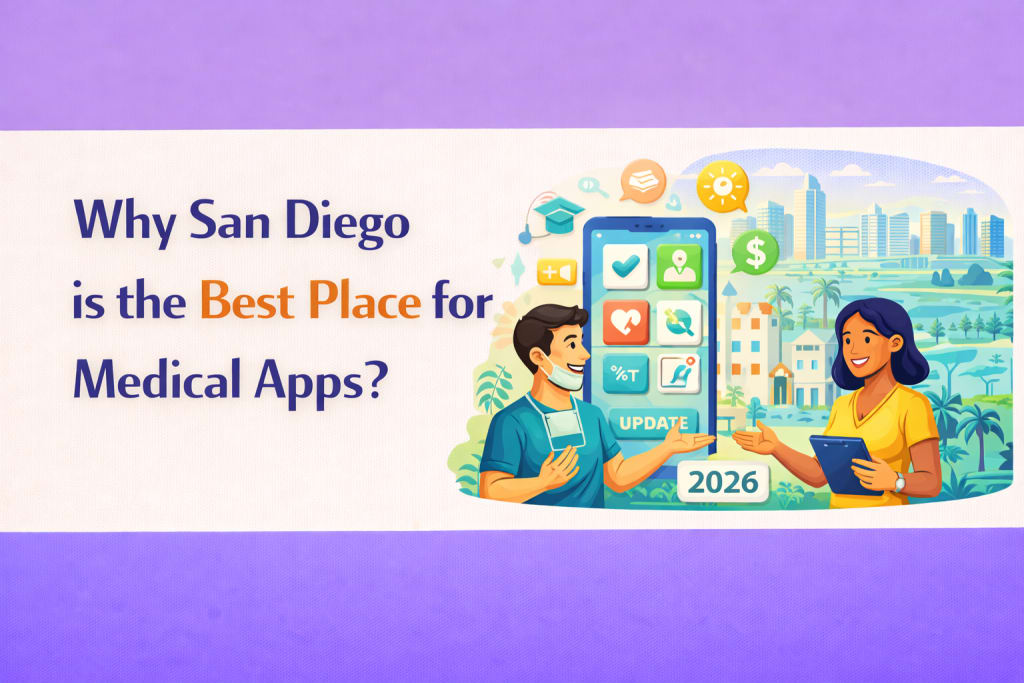
If you walked into a hospital waiting room ten years ago, you would have seen clipboards, paperwork, and long queues. Today, you’re more likely to see patients checking symptoms on apps, scheduling appointments digitally, or tracking recovery through wearable devices.
Healthcare didn’t just go digital — it accelerated into a new era where software shapes patient outcomes as much as medical procedures.
But here’s the detail many people overlook: innovation in medical apps doesn’t happen randomly across the map. Certain environments consistently produce breakthrough solutions because they combine scientific research, clinical access, investment capital, and specialized engineering talent.
San Diego has quietly become one of those environments — not through hype, but through a convergence of industries that makes it uniquely suited for building the next generation of medical applications.
The numbers reveal why healthcare technology is expanding faster than ever
Before understanding why a specific city leads medical innovation, it’s important to look at the scale of change happening in healthcare technology overall.
The U.S. digital health market alone was valued at over $81 billion in 2023 and is projected to grow at a compound annual growth rate of nearly 19.5% through 2030.
Meanwhile:
- AI-driven healthcare solutions are expected to expand dramatically, with projections showing growth from roughly $26 billion to over $600 billion globally by 2034.
- Industry reports indicate digital health investments have reached tens of billions annually, reflecting increasing confidence in technology-driven patient care.
- These numbers tell a clear story: healthcare is transitioning from reactive treatment toward continuous digital monitoring and predictive intervention — and medical apps sit at the center of that transformation.
As Microsoft CEO Satya Nadella once noted about AI-driven industries, technology increasingly acts as “a new layer of intelligence across everything.” That philosophy is particularly visible in healthcare software.
Why San Diego’s life sciences ecosystem gives developers an unusual advantage
Technology hubs often specialize in software, but medical innovation requires far more than coding expertise. Developers need access to clinicians, researchers, regulatory advisors, and real-world medical workflows.
San Diego offers a rare concentration of these resources:
- More than 89,000 professionals work within the region’s life sciences sector, making it one of the largest clusters in the United States.
- Between 2019 and 2024, local companies secured approximately $19.7 billion in venture capital funding focused on life sciences and health innovation.
- The ecosystem includes globally recognized research institutions such as UC San Diego, Scripps Research, and the Salk Institute.
This density of expertise creates a feedback loop that accelerates product development. Developers don’t build in isolation — they collaborate with scientists and healthcare professionals who test ideas against clinical reality.
An experienced health-tech investor summarized this advantage simply: “Innovation moves faster when engineers can walk down the street and talk to researchers.”
Collaboration between medicine and engineering is redefining how apps are built
Traditional app development often begins with user research and market analysis. Medical apps require an additional layer: clinical validation.
The proximity between technology teams and healthcare institutions allows developers to:
- Conduct usability testing with real patients.
- Validate workflows against medical standards.
- Iterate quickly based on practitioner feedback.
Research shows that healthcare technology projects integrating clinical input early in development reduce redesign costs significantly because compliance and usability challenges are addressed upfront rather than after launch.
This collaborative model is increasingly becoming the gold standard for medical innovation.
Artificial intelligence is accelerating healthcare innovation — and clusters matter
Artificial intelligence has become a foundational layer for modern medical apps. From diagnostic support tools to personalized treatment recommendations, AI systems are transforming healthcare delivery.
Studies estimate that AI adoption in healthcare has already surpassed 40% in certain segments, reflecting growing confidence in machine-assisted decision-making.
However, AI-driven healthcare requires:
- Large datasets.
- Medical domain expertise.
- Strong regulatory oversight.
Innovation ecosystems with access to research hospitals and clinical data allow teams to experiment responsibly while ensuring ethical implementation.
Bill Gates has emphasized that digital infrastructure — when implemented correctly — can dramatically improve access to essential services, including healthcare.
Medical apps represent a tangible example of that principle in action.
Investment momentum and industry density accelerate innovation cycles
Funding availability plays a crucial role in shaping innovation hubs. Regions that attract venture capital create environments where experimentation becomes sustainable.
San Diego’s life sciences cluster has produced billions in economic output annually, demonstrating the strength of its ecosystem.
Investment drives:
- Recruitment of specialized engineers.
- Expansion of clinical research partnerships.
- Faster iteration on complex healthcare technologies.
Unlike general tech startups, medical applications often require longer development timelines due to regulatory requirements and testing. Strong investment networks provide the stability necessary for this extended process.
Why patient-centered design is becoming a defining feature of medical apps
Healthcare differs from other industries because users often interact with technology during moments of vulnerability. A confusing interface is more than inconvenient — it can affect health outcomes.
As digital healthcare expands, developers increasingly prioritize:
- Accessibility for older populations.
- Clear communication of medical information.
- Interfaces that reduce anxiety rather than increase cognitive load.
Academic research emphasizes that inclusive design and accessibility standards improve engagement and long-term adoption, especially for underserved populations.
The result is a shift from technology-first thinking toward empathy-driven development.
The growing recognition of mobile app development San Diego within healthcare innovation
The rise of mobile app development San Diego reflects a broader industry trend: specialized ecosystems outperform generalized ones when solving complex problems.
Healthcare technology demands collaboration across disciplines, and regions where scientists, clinicians, and engineers coexist naturally become innovation catalysts.
Instead of focusing solely on technical performance, teams build solutions shaped by real-world healthcare challenges — improving outcomes while reducing friction between technology and patient care.
Looking ahead: why geography still matters in a remote-first world
Remote collaboration tools might suggest that location no longer matters. Yet healthcare innovation demonstrates the opposite.
When research institutions, funding networks, regulatory expertise, and specialized talent converge in one region, innovation accelerates in ways that distributed environments struggle to replicate.
San Diego’s evolution into a leading medical technology ecosystem illustrates how geography can shape the future of digital health — not by limiting innovation to one place, but by creating environments where collaboration becomes effortless.
As healthcare continues its digital transformation, the most successful medical apps may emerge from ecosystems where technology and medicine grow side by side, guided by shared purpose and real-world impact.
About the Creator
How a Digital Product Engineering Company Accelerates Enterprise Innovation
Enterprise innovation sounds exciting in boardroom presentations. But behind every bold digital vision lies a difficult reality: legacy systems, fragmented data, slow release cycles, security concerns, and constant pressure to deliver ROI.
By alan michaelabout 12 hours ago in 01



Comments
There are no comments for this story
Be the first to respond and start the conversation.