
Why Tampa Needs “Green” Tourism Apps Right Now?
The future of travel may depend on what visitors don’t see

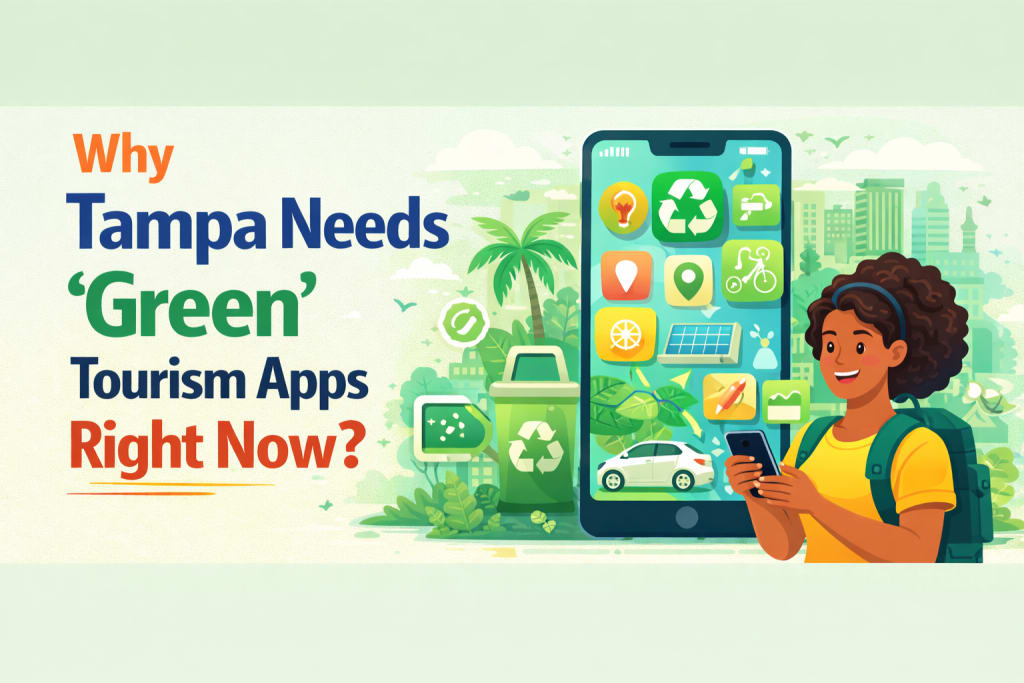
Tourists arriving in Tampa often notice the obvious attractions first — the waterfront views, the vibrant neighborhoods, the warm climate inviting outdoor exploration. What remains invisible, however, is the growing tension between tourism growth and environmental sustainability.
As travel continues to rebound globally, cities face a complex challenge: how to welcome increasing numbers of visitors without overwhelming local ecosystems, infrastructure, and communities. The answer may not lie solely in policy or physical infrastructure but in something far less visible — digital tools guiding behavior in real time.
“Green” tourism apps, designed to promote sustainable travel choices, represent a new frontier in urban innovation. They help visitors make environmentally conscious decisions without sacrificing convenience or enjoyment.
For a city like Tampa, where tourism plays a significant economic role and natural environments are central to its identity, the need for such tools is becoming increasingly urgent.
The growing environmental impact of modern tourism
Tourism contributes significantly to local economies, but it also introduces environmental pressures. Studies estimate that global tourism accounts for roughly 8% of greenhouse gas emissions, driven by transportation, accommodation, and energy-intensive activities.
At the city level, impacts can include:
- Increased traffic congestion.
- Strain on public transportation systems.
- Higher waste generation.
- Pressure on natural habitats.
Coastal cities face additional risks related to climate change, including rising sea levels and extreme weather events. Sustainable tourism practices help mitigate these challenges by encouraging responsible travel behaviors.
However, changing behavior at scale requires tools capable of influencing decisions quickly — and this is where mobile technology becomes particularly powerful.
Why traditional sustainability campaigns often fall short
Cities have long promoted eco-friendly initiatives through signage, educational programs, and marketing campaigns. While valuable, these methods struggle to influence real-time decision-making.
Visitors rarely carry extensive knowledge about local sustainability practices. They may want to make environmentally responsible choices but lack accessible information.
For example:
- Which restaurants prioritize local sourcing?
- What transportation options minimize carbon footprint?
- Which attractions operate with sustainable practices?
Without immediate guidance, travelers often default to convenience rather than sustainability.
Green tourism apps address this gap by delivering actionable insights directly when decisions are being made.
Real-time recommendations encouraging better choices
Mobile applications equipped with location-based technology can provide travelers with instant recommendations aligned with sustainability goals.
Features may include:
- Highlighting eco-certified accommodations.
- Suggesting low-impact transportation routes.
- Promoting local businesses practicing sustainability.
- Alerting users to crowded areas to reduce environmental strain.
Research indicates that behavioral nudges delivered at the right moment significantly increase adoption of sustainable practices.
Instead of requiring visitors to change habits consciously, apps subtly guide them toward better options.
Data-driven tourism management supporting smarter cities
Green tourism apps also benefit city planners by providing valuable data about visitor behavior.
Aggregated data helps identify:
- Overcrowded areas requiring intervention.
- Popular routes causing environmental stress.
- Opportunities to distribute tourism more evenly across neighborhoods.
This information allows cities to make informed decisions about infrastructure and policy.
Smart city initiatives increasingly rely on digital platforms to manage resources efficiently, balancing economic growth with environmental protection.
Transportation innovation reducing carbon footprints
Transportation represents one of the largest contributors to tourism-related emissions. Mobile apps play a critical role in encouraging alternative mobility solutions.
Examples include:
- Real-time public transportation updates.
- Bike-sharing integration.
- Walking route optimization.
- Electric vehicle charging station mapping.
Studies show that travelers are more likely to use sustainable transportation when convenient options are clearly presented.
By simplifying access to greener choices, apps reduce reliance on high-emission travel modes.
The role of gamification in promoting sustainable behavior
Gamification techniques — such as rewards, achievements, and social sharing — encourage users to adopt environmentally friendly habits.
Green tourism apps may incorporate:
- Points for choosing eco-friendly transportation.
- Challenges encouraging exploration of lesser-known areas.
- Social features highlighting sustainable travel achievements.
Behavioral science research suggests that gamified systems increase engagement significantly, making sustainability feel rewarding rather than restrictive.
Supporting local communities through ethical tourism
Sustainability extends beyond environmental considerations to include social and economic impact.
Apps can highlight:
- Locally owned businesses.
- Cultural experiences supporting community initiatives.
- Ethical tour operators prioritizing responsible practices.
By guiding travelers toward community-focused experiences, green tourism apps strengthen local economies while preserving cultural authenticity.
Why mobile app development Tampa reflects a growing focus on sustainable innovation
The increasing attention toward mobile app development Tampa demonstrates how local technology ecosystems respond to evolving societal challenges. Developers building tourism platforms increasingly integrate sustainability features into their designs, recognizing the importance of balancing growth with environmental responsibility.
Collaboration between tourism boards, technology companies, and environmental organizations enables innovative solutions tailored to local conditions.
This ecosystem-driven approach positions Tampa as an example of how cities can leverage digital tools to address complex sustainability challenges.
Educating travelers without overwhelming them
One challenge of sustainable tourism involves avoiding information overload. Travelers already navigate countless decisions during trips, and overly complex messaging may reduce engagement.
Successful green tourism apps focus on simplicity:
- Clear, concise recommendations.
- Visual indicators highlighting eco-friendly options.
- Contextual tips delivered at relevant moments.
This approach integrates sustainability seamlessly into travel experiences rather than presenting it as an additional burden.
The future of tourism: invisible guidance shaping better decisions
Looking ahead, green tourism apps may evolve into intelligent systems capable of anticipating traveler needs while minimizing environmental impact.
Future features may include:
- AI-driven itineraries optimizing sustainability automatically.
- Integration with smart city infrastructure monitoring environmental conditions.
- Personalized suggestions balancing convenience with eco-conscious choices.
As technology advances, sustainability may become embedded within digital travel experiences, guiding behavior subtly but effectively.
A turning point for tourism innovation
Tampa stands at an important moment. As tourism continues to grow, the city faces a choice between reactive solutions addressing environmental challenges after they arise or proactive strategies shaping visitor behavior from the start.
Green tourism apps offer a powerful pathway toward sustainable growth, enabling cities to protect natural resources while enhancing visitor experiences.
Ultimately, the goal is not to restrict travel but to redefine it — transforming vacations into opportunities for responsible exploration that supports both local communities and the environment.
In this evolving landscape, technology becomes more than a convenience; it becomes a partner in preserving the destinations travelers love for generations to come.
About the Creator
Ash Smith
Ash Smith writes about tech, emerging technologies, AI, and work life. He creates clear, trustworthy stories for clients in Seattle, Indianapolis, Portland, San Diego, Tampa, Austin, Los Angeles, and Charlotte.
How Small Businesses are Actually Using Custom AI to Save Time
For a long time, the narrative surrounding artificial intelligence was that it belonged exclusively to the giants of Silicon Valley. Small and medium-sized businesses (SMBs) often viewed these technologies as too expensive, too complex, or simply unnecessary for their scale. However, the landscape has shifted. We have moved from the era of "experimentation" into an era of "practical implementation."
By ViitorCloud Technologies3 days ago in 01




Comments
There are no comments for this story
Be the first to respond and start the conversation.