
Why Top Tech Teams Are Moving Their App Work to Portland in 2026?
The Quiet Shift Away from Traditional Tech Hubs and the Rise of Alternative Innovation Cities

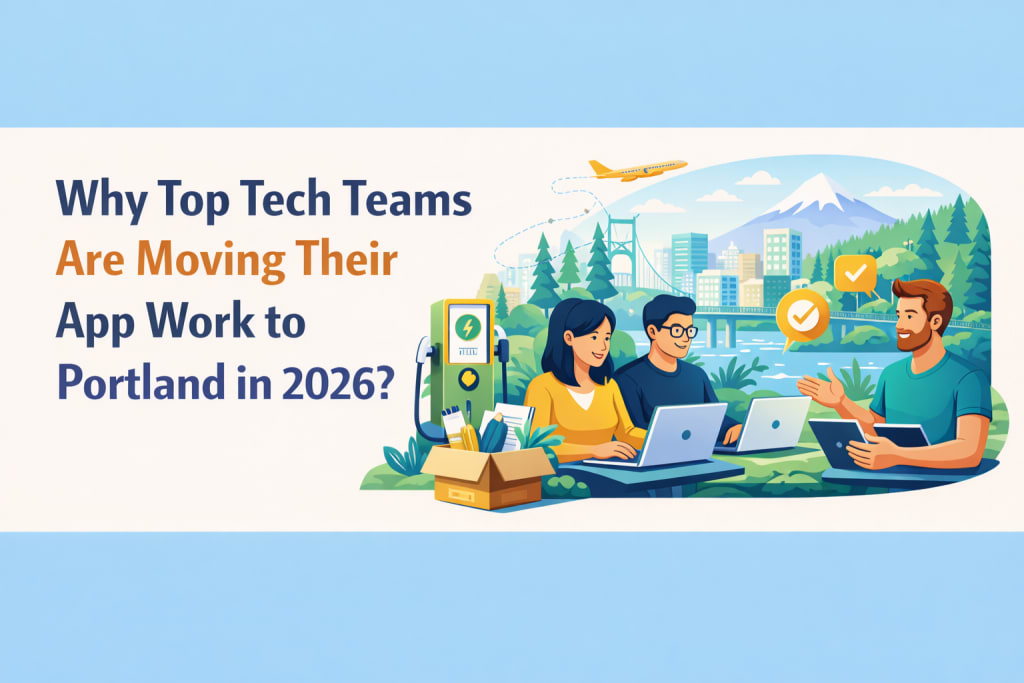
For years, the technology industry revolved around a predictable set of geographic centers. Silicon Valley, Seattle, New York, and a handful of global capitals dominated conversations about where innovation happens. Yet by 2026, the narrative is evolving. Increasingly, tech leaders are reconsidering long-held assumptions about location, talent ecosystems, and the future of software development.
What makes this shift particularly interesting is that it is not driven by a single factor. Instead, it reflects a convergence of economic realities, cultural changes, and technological advancements that are reshaping how teams collaborate and where companies choose to build.
Portland has emerged as one of the cities gaining attention during this transition — not through aggressive marketing campaigns but through gradual recognition of its unique advantages.
Rising Costs and the Economics of Modern Development Are Reshaping Location Decisions
One of the strongest forces influencing relocation decisions is economic pressure. Over the past decade, operational costs in major tech hubs have increased dramatically. Engineering salaries in top-tier markets continue to climb, office space remains expensive, and competition for talent has intensified.
Industry data suggests that startups operating in high-cost regions may spend up to 30–50% more on team expenses compared to alternative tech cities. For early-stage companies, this difference can significantly impact runway and growth strategy.
As venture funding cycles fluctuate and investors place greater emphasis on sustainable growth, teams are re-evaluating whether proximity to traditional hubs justifies the financial burden.
Lower-cost ecosystems offer a compelling alternative: comparable technical capabilities without the same level of overhead. This shift is not about abandoning established hubs but about optimizing resources in a changing market landscape.
Remote Work Has Permanently Changed the Definition of “Where Tech Happens”
Perhaps the most transformative change influencing location strategy is the normalization of remote collaboration. Surveys conducted across the technology sector indicate that more than 70% of engineering teams now operate in hybrid or distributed formats.
This decentralization has reduced the necessity of clustering around a single geographic center. Companies can recruit talent globally while maintaining smaller physical footprints.
As one engineering director remarked during a recent industry panel, “The biggest realization for many teams was that productivity didn’t drop when people left traditional tech hubs — in many cases, it improved.”
Cities that combine strong infrastructure with quality-of-life advantages have therefore become increasingly attractive destinations for distributed teams seeking balance without sacrificing innovation.
Talent Accessibility and Retention Are Becoming More Important Than Talent Density
Traditional hubs have long benefited from dense networks of experienced engineers. However, density also creates intense competition, leading to higher turnover rates as developers frequently switch roles for better compensation or opportunities.
Emerging ecosystems often offer a different dynamic. Developers may prioritize long-term projects, collaborative environments, and sustainable work cultures over constant job mobility.
Retention has become a strategic advantage. Research indicates that replacing a senior engineer can cost companies up to 150% of that employee’s annual salary when accounting for recruitment, onboarding, and lost productivity.
Teams looking for stability increasingly explore environments where engineers are more likely to commit to projects for longer periods.
Cultural Alignment Between Technology and Sustainability Is Influencing Development Philosophy
Modern technology companies are not only building products; they are also shaping brand identity. Environmental responsibility, ethical development practices, and community engagement have become increasingly important considerations.
Cities known for sustainability-oriented culture naturally attract organizations seeking alignment between corporate values and local ecosystems.
Developers are exploring efficiency-focused architecture, lightweight design philosophies, and long-term maintainability rather than rapid feature expansion at all costs. These approaches often resonate strongly with regions that prioritize environmental awareness and thoughtful urban development.
Industry analysts frequently note that cultural context influences engineering decisions more than many founders initially realize.
Cost Structures Extend Beyond Salaries: Hidden Financial Factors Driving Strategic Moves
While salary comparisons receive the most attention, many teams discover that secondary costs significantly influence overall efficiency. These include:
- Real estate and workspace expenses.
- Commuting and relocation incentives.
- Healthcare and benefits structures.
- Networking and partnership opportunities.
- Administrative overhead tied to regulatory environments.
Even modest reductions across these categories can lower burn rates by 20–30%, enabling startups to extend development cycles or invest more heavily in product refinement.
Lower operational pressure can also encourage experimentation, allowing teams to explore innovative features without immediate pressure for rapid monetization.
The Influence of Design Culture and Cross-Disciplinary Collaboration
Another factor attracting attention is the presence of strong design communities. Successful applications increasingly depend on holistic user experiences that combine engineering, visual design, behavioral psychology, and storytelling.
Cross-disciplinary collaboration thrives in ecosystems where designers, developers, and creatives interact frequently. Such environments foster experimentation and encourage unconventional approaches to problem-solving.
This blending of technical and creative perspectives is becoming increasingly valuable as apps evolve toward immersive experiences powered by artificial intelligence and advanced interfaces.
How mobile app development Portland Is Becoming Part of a Broader Industry Movement Toward Distributed Innovation
The growing interest in alternative ecosystems reflects a larger trend toward decentralization. Rather than relying on a single dominant location, companies are building distributed innovation networks that combine multiple regions’ strengths.
The mobile app development Portland exemplifies this shift. Teams drawn to collaborative culture, sustainable design philosophies, and balanced lifestyles find opportunities to innovate without the pressures associated with traditional tech centers.
Industry observers suggest that this decentralization may redefine how startups scale, emphasizing flexibility and adaptability rather than geographic prestige.
Quotes from Industry Leaders Reflect a Changing Mindset
Several recurring themes appear in discussions among technology leaders exploring alternative locations:
“Innovation doesn’t require proximity to a single building or venture capital corridor anymore.”
“The best teams prioritize clarity of vision over proximity to hype.”
“Distributed ecosystems allow companies to focus on product quality instead of competing for attention.”
These perspectives highlight a growing realization: the advantages once exclusive to traditional hubs are becoming accessible in a wider range of environments.
Lessons Emerging from Teams That Have Already Made the Move
Organizations transitioning away from established tech centers frequently report similar outcomes:
- Reduced operational costs enabling longer development timelines.
- Improved work-life balance contributing to stronger team cohesion.
- Access to diverse talent pools that enhance creativity.
- Increased flexibility in defining company culture.
However, challenges remain. Companies must build intentional networking strategies and maintain strong communication systems to compensate for reduced proximity to traditional industry clusters.
Looking Toward the Future: Will Alternative Tech Ecosystems Redefine Innovation Geography?
Silicon Valley and other traditional hubs will likely continue to play significant roles in shaping the technology industry. Their infrastructure, investment networks, and historical influence remain unmatched in many ways.
Yet the future appears increasingly decentralized. As remote collaboration tools evolve and distributed teams become the norm, innovation may emerge simultaneously across multiple cities rather than concentrating in a single region.
For technology teams evaluating where to build next-generation applications, the question is no longer about following tradition but about aligning environment with strategy. The rise of alternative ecosystems signals a broader transformation — one where innovation thrives wherever talent, culture, and vision intersect.
About the Creator
Keep reading
More stories from Samantha Blake and writers in 01 and other communities.
The 2026 Enterprise AI Reality Check: No More Magic Tricks
Real talk: I am knackered. If you are anything like me, you spent the last two years listening to tech evangelists promise that AI would fix everything from our supply chains to our broken hearts. They sounded like a proper dodgy car salesman trying to shift a lemon. Well, it is January 2026, and the party is officially over. The hangover has set in, and the CFO is standing in the doorway with a bucket of ice water, asking where the ROI is.
By Samantha Blake5 days ago in 01
Kotlin Multiplatform in 2026 Stable APIs for iOS UI Sharing
Kotlin Multiplatform were forced into a compromise. They shared the logic. But they had to rebuild the UI natively in Swift. Today, the "Stable" designation for Compose Multiplatform on iOS has reached full maturity.
By Devin Rosario2 days ago in 01




Comments
There are no comments for this story
Be the first to respond and start the conversation.