
Wired or Wireless? How Your Smart Home Infrastructure Affects Resale Value and Long-Term Costs
Navigating the Critical Trade-offs Between Upfront Costs, Reliability, and Future Resale Value


Home automation services are a hot trend at the moment. But for homeowners, it’s not as simple as what brand to get or what level of automation to achieve. Homeowners also need to think a bit critically about whether to get hardwired networks or wireless protocols because this decision has a lasting impact.
Homeowners need to especially consider these three consequences:
- The resale appeal of your property
- Ongoing expenses incurred running the system
- The reliability of your preferred system
Therefore, property owners can’t make this decision lightly as its implications last for years.
The Cost of Installation and Different Timelines
Hardwired home automation systems, as the name suggests, come with the slight inconvenience of cable installation. You will have contractors drilling holes, fishing wires, and patching drywall throughout your home.
On the other hand, when it comes to wireless systems, all you need is an existing WIFI network. The technician mounts your controllers, pairs devices, and configures software without much physical alteration to your property.
This translates to:

However, for newer houses, the cost is less for hardwired systems since electricians are able to configure wiring before installing drywall. For retrofit projects, the extra costs are unavoidable.
Maintenance and Support
There are periodic firmware updates that are part of any wireless protocol. In home automation systems, this is usually done to address arising security issues or when adding features to the service. Decent service providers in the Dallas-Fort Worth area often include these updates without additional charges, and technicians handle installations remotely or during brief service visits.
Hardwired networks have a bit of an advantage here, as they experience fewer connectivity issues. The use of cables provides stable data transmission without interference from neighboring networks or physical obstacles. However, they occasionally experience cable damage from renovations or rodents requiring wall access for repairs. And this automatically means another round of drilling and patching.
Owners considering wireless automation systems also need to factor in costs like battery replacements. The devices connected to the network, including wireless sensors, door contacts, motion detectors, and environmental monitors, need new batteries every 1-3 years, depending on usage patterns. When you do the math, a home with 20 wireless sensors might run up a charge of $60-100 annually in battery costs.
The other consideration is usually subscription fees, which largely depend on the provider you choose. Some home automation services offer cloud access on a recurring annual plan, while others offer lifetime access with your initial purchase.
How Smart Home Systems Affect Your Resale Value
Automation infrastructure plays a big role during home appraisal and property assessments. If you’re looking to sell your house, having these integrated systems can add 3-5% value to your property.
The caveat, however, is that buyers in that region should expect such modern amenities for this increase in value to stand. The Frisco and Dallas-Fort Worth area shows there is strong demand for smart home features among homebuyers aged 30-50, especially in properties priced above $400,000.
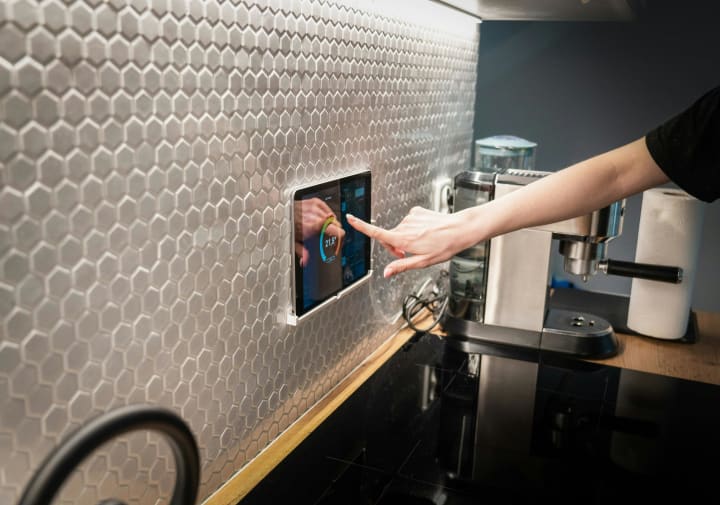
Homes with hardwired systems give the impression of permanence and quality, since this is a significant investment in the property itself. Real estate agents continuously report that buyers are impressed with centralized equipment, often eliciting quick positive reactions. Additionally, agents are able to sell other existing upgrades as premium rather than temporary additions.
That said, it’s also important to consider that some buyers want to choose whether to have these systems or not. This favors wireless installations. Again, on a wireless network, it’s easier to modify automation rules, add devices, or switch to alternative platforms. Tech-savvy buyers also know that technology keeps changing and prefer a system that allows them to experiment at will.
Challenges with Automation Systems
While both systems operate efficiently, there’s no denying that there are challenges that owners will have to contend with. For instance, WIFI congestion affects wireless automation performance in ways many homeowners don’t anticipate until problems develop. Homes with 30+ connected devices experience slower response times and occasional connection failures.
Hardwired systems do not face this challenge since automation traffic travels on separate cables that are independent of internet usage. Commands on these dedicated networks execute instantly without competing for wireless channels. In addition, (and probably the most important benefit) the separation improves security because automation networks remain isolated from devices that connect to the internet directly.
Also, consider power outages. Power disruption disables both wireless and hardwired hubs and controllers, which leaves automation systems offline until electricity is restored. You can consider battery backup units, but these add $300-600 to installation costs. They maintain operation during outages, though you should note that batteries only last 4-8 hours, depending on the system load.
Choosing Between Wired and Wireless Systems
Wireless systems favor homeowners who are after quick installation with lower upfront investment. Alternatively, hardwired networks are great for owners planning long-term residence in premium properties. But first, consider how strong your WIFI is to ensure that wireless automation can be achieved effectively.
Consult with home automation service providers that offer free assessments and objective recommendations. Professionals evaluate your specific situation and recommend appropriate infrastructure based on your home layout, automation goals, and cost expectations while explaining trade-offs clearly.
About the Creator
Andrew Lemieux
Andrew is a creative writer, poet, and content strategist. He is passionate about literature, food, wine, travel, and sports. In his spare time he enjoys working on home projects and restoring the 1837 Greek Revival he and his wife own.
Keep reading
More stories from Andrew Lemieux and writers in 01 and other communities.
How Plants Can Boost Productivity and Morale
There are many things that can make the workplace more productive, but did you know plants make the list? Plants bring both psychological and health benefits to any location and they can even improve performance and productivity in the workplace.
By Andrew Lemieux5 months ago in 01
Cher
Few artists have reshaped popular music as consistently—or as fearlessly—as Cher. For more than six decades, she has stood at the intersection of reinvention and authenticity, becoming not just a singer, but a cultural force. When conversations turn to award history, influence, and longevity, Cher Grammys moments remain a reference point for how artistic impact can transcend generations.
By Saboor Brohi about 24 hours ago in 01
How to Maintain Healthy Skin Between Home Salon Appointments
In a rapidly evolving life in Ras Al Khaimah during the year 2026, looking good is a key part of your social status. We have moved away from the old way of driving to busy shops because we value our time more than ever before. This is why people are always searching for the best home salon services near me in Ras Al Khaimah to fix their schedules. However, a professional visit is only one part of the total plan for your skin health. You must take care of your skin between these visits to ensure you get the best return on your money. This post provides the best daily plan to keep your skin looking sharp and healthy in the unique weather of the Northern Emirates.
By Julia Ching5 days ago in 01




Comments