
5 Life Lessons from Jacques Derrida
5 Life Lessons from Jacques Derrida

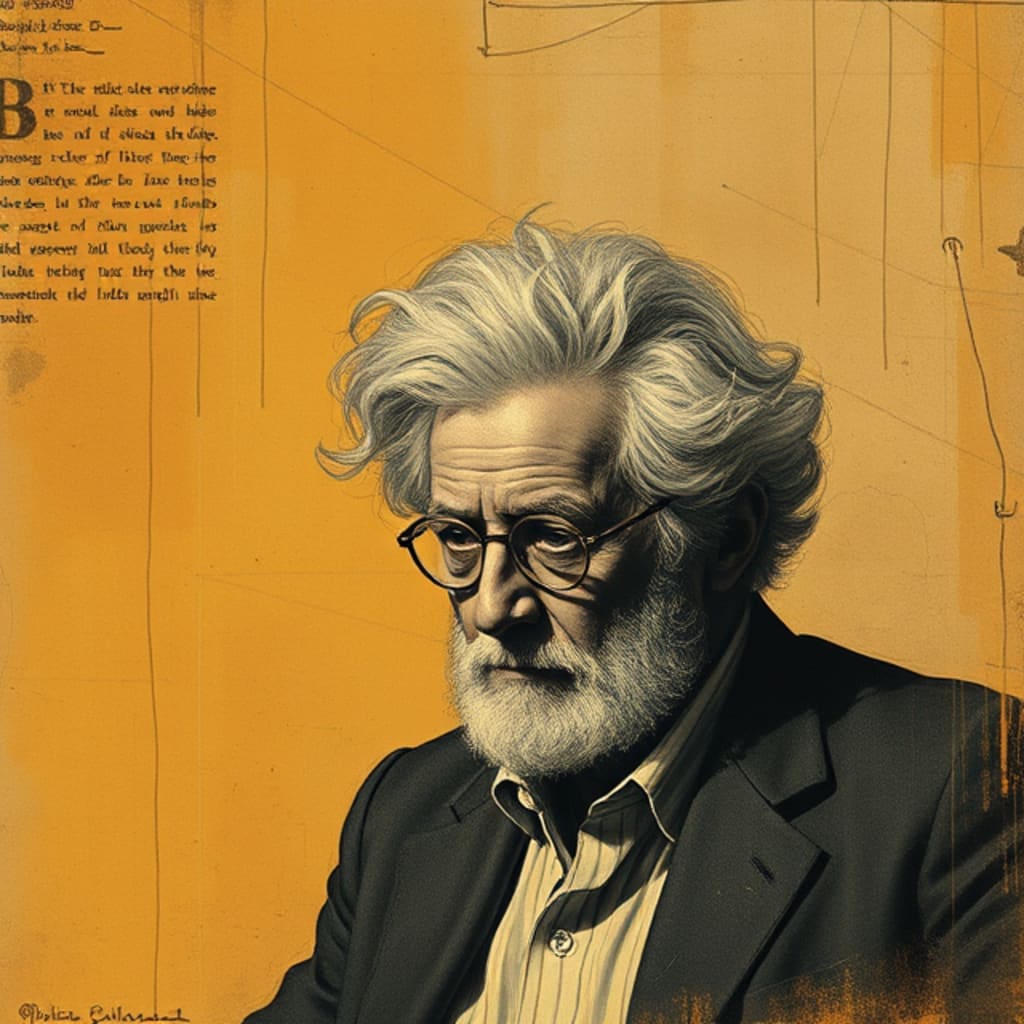
Jacques Derrida (1930–2004) is often regarded as one of the most challenging yet profoundly influential thinkers of the 20th century. Best known for his philosophy of deconstruction, Derrida’s work dismantled traditional ideas of meaning, language, and structure. While his writings often delve into dense theoretical terrain, they also offer profound insights into how we live, think, and interact with the world. Here are five life lessons we can draw from Derrida’s philosophy.
1. Embrace Uncertainty and Ambiguity
Derrida’s philosophy of deconstruction teaches us to question fixed meanings and embrace the inherent ambiguity of life. According to Derrida, meaning is never stable; it is always deferred, contingent on context, and subject to reinterpretation. In life, this translates to recognizing that certainty is often an illusion.
Instead of fearing the unknown, Derrida’s work invites us to find freedom in ambiguity. By letting go of the need for definitive answers, we can open ourselves to new perspectives and possibilities. In personal and professional relationships, for instance, this mindset allows us to approach disagreements with curiosity rather than defensiveness, fostering deeper understanding.
Life Lesson: It’s okay to not have all the answers. Embrace the fluidity of life, and allow space for growth, reinterpretation, and change.
2. Question the Foundations of Power and Authority
One of Derrida’s key contributions was his critique of logocentrism, the idea that there is an ultimate “truth” or center that justifies power and authority. By deconstructing traditional hierarchies and systems, Derrida exposed the biases and assumptions underpinning institutions and ideologies.
In our lives, this lesson can inspire us to question the systems of power that shape our beliefs and actions. Why do we trust certain narratives over others? What invisible structures influence our decisions? By critically examining these foundations, we become more mindful, independent thinkers capable of challenging injustice and advocating for change.
Life Lesson: Don’t take authority or tradition at face value. Always ask whose interests are being served and whose voices are being excluded.
3. Accept the Complexity of Identity
Derrida argued that identity is never fixed; it is always shaped by difference and context. He famously said, “There is no self without the other,” highlighting the interconnected nature of identity formation. Our sense of self emerges through our relationships, experiences, and interactions with the world.
This perspective encourages us to embrace the multiplicity within ourselves and others. Rather than striving for a singular, coherent identity, we can celebrate our contradictions and complexities. It also reminds us to approach others with empathy, recognizing that their identity, like ours, is multifaceted and evolving.
Life Lesson: Don’t confine yourself to a rigid definition of who you are. Embrace the richness of your evolving identity and honor the complexity in others.
4. Value the Margins and the ‘Other’
A recurring theme in Derrida’s work is the importance of what is marginalized or excluded in systems of meaning. He emphasized that dominant narratives often suppress alternative voices, perspectives, and possibilities. By paying attention to what is overlooked or dismissed, we can uncover hidden truths and create space for diversity and inclusion.
This lesson is particularly relevant in today’s world, where social justice movements challenge systemic inequalities. Whether in our workplaces, communities, or personal lives, Derrida’s philosophy urges us to amplify marginalized voices and question the norms that perpetuate exclusion.
Life Lesson: Look beyond the dominant narrative. Listen to the voices on the margins, and seek to create a more inclusive and equitable world.
5. Be Open to the “Impossible”
Derrida often wrote about the concept of the “impossible” as an ethical and philosophical challenge. He argued that true transformation requires us to imagine and strive for what seems unattainable. For instance, concepts like perfect justice or unconditional hospitality may never be fully realized, but the pursuit of these ideals drives progress and growth.
In our personal lives, this lesson encourages us to dream big and push boundaries. Even if our goals seem out of reach, the effort to achieve them can lead to profound personal and societal transformation. Derrida’s philosophy reminds us that the “impossible” is not a barrier but an invitation to transcend our limitations.
Life Lesson: Dare to dream of the impossible. Use it as a guide to challenge limitations and inspire meaningful change.
Conclusion
Jacques Derrida’s philosophy may seem abstract, but its lessons are deeply relevant to everyday life. By embracing uncertainty, questioning authority, accepting complexity, valuing the margins, and striving for the impossible, we can navigate life with greater openness, empathy, and purpose. Derrida’s ideas encourage us to live thoughtfully, challenge the status quo, and embrace the richness of a world in constant flux. His work is a reminder that meaning, like life itself, is a journey—not a destination.
About the Creator
Fred Bradford
Philosophy, for me, is not just an intellectual pursuit but a way to continuously grow, question, and connect with others on a deeper level. By reflecting on ideas we challenge how we see the world and our place in it.
Keep reading
More stories from Fred Bradford and writers in Art and other communities.
5 Life Lessons from Hegel
Georg Wilhelm Friedrich Hegel (1770-1831) remains one of the most influential figures in Western philosophy. While his dense and complex works often intimidate readers, his insights offer profound lessons on life, progress, and understanding the human experience. Hegel's philosophy revolves around concepts like dialectics, history, and the unfolding of human freedom, which, when applied to life, provide timeless wisdom. Here are five key life lessons we can learn from Hegel:
By Fred Bradfordabout a year ago in Art
Tom Morello: The Revolutionary Guitar Legend Shaping Modern Rock Music
Who Is Tom Morello? Born Thomas Baptist Morello on May 30, 1964, in Harlem, New York, Tom Morello grew up in Illinois before moving to Los Angeles to pursue music. He studied political science at Harvard University, a background that would later deeply influence his songwriting and activism.
By youssef mohammed3 days ago in Art


Comments
There are no comments for this story
Be the first to respond and start the conversation.