


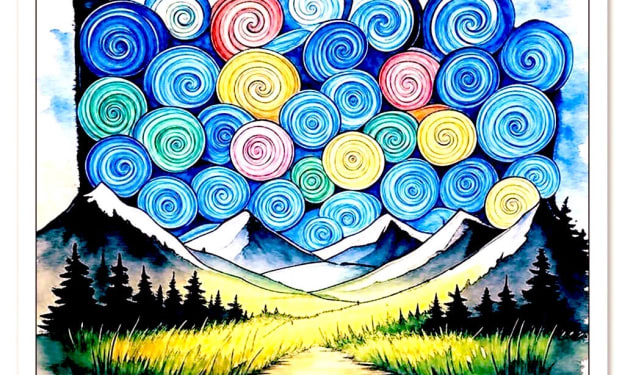
“Planetary” is digital art I created using AI.
About the Creator
Slgtlyscatt3red
Slightly scattered. Just a woman with autism and ADHD that loves to write poetry, create art, and sing.
Keep reading
More stories from Slgtlyscatt3red and writers in Art and other communities.
Dispatch: Why an Uncensored Physical Release on Nintendo Switch May Never Happen
In an era where independent games are pushing boundaries in storytelling, visuals, and themes, Dispatch has emerged as a title that refuses to dilute its creative vision. Bold, raw, and unapologetically uncensored, the game has sparked conversations not just for its content, but for the controversy surrounding its release—specifically on Nintendo Switch. Recent statements from developers and industry insiders suggest a harsh truth: an uncensored physical release of Dispatch on Nintendo Switch may simply not be possible. This revelation has reignited debates about censorship, platform control, artistic freedom, and the future of physical media in gaming. This is not just about one game. It’s about how modern platforms shape what creators are allowed to say—and what players are allowed to experience. What Is Dispatch and Why Does It Matter? Dispatch is not a typical indie title. It is designed to confront players with mature themes, uncomfortable truths, and unfiltered narratives that many mainstream games avoid. The game’s appeal lies precisely in its refusal to soften its edges. Unlike blockbuster franchises that operate safely within platform guidelines, Dispatch thrives on creative risk. Its uncensored version includes themes, dialogue, and imagery that challenge conventional standards—elements that are essential to the game’s identity. For its creators, censorship isn’t just an inconvenience; it fundamentally alters the message of the game. Nintendo Switch: A Family-Friendly Legacy To understand why Dispatch faces obstacles on the Switch, one must understand Nintendo itself. Nintendo has spent decades cultivating a family-friendly image. From Mario to Zelda to Pokémon, the brand is associated with accessibility, broad appeal, and carefully curated content standards. While the Switch has expanded to include mature titles, Nintendo still enforces stricter guidelines than many competing platforms. These guidelines affect: Sexual content Explicit language Graphic imagery Politically or socially controversial themes Even when digital releases are approved with modifications, physical releases are held to an even higher standard. Digital vs. Physical: Why the Difference Matters At first glance, it may seem odd that a game could exist digitally but not physically in uncensored form. However, the difference is crucial. Digital Releases Easier to update or patch Can be regionally restricted Less public-facing retail exposure More flexible content moderation Physical Releases Require manufacturing approval Must pass stricter content checks Exist permanently once printed Are sold in physical retail environments For Nintendo, allowing an uncensored physical cartridge could be seen as endorsing content that clashes with its brand identity. Censorship or Corporate Responsibility? Supporters of Nintendo argue that this isn’t censorship—it’s corporate choice. Nintendo owns its platform and has the right to decide what content it distributes in physical form. Critics, however, see this as a dangerous precedent. If platform holders dictate creative boundaries too tightly, developers are forced into a corner: Alter their vision Accept limited releases Or abandon certain platforms entirely In the case of Dispatch, the developers have reportedly refused to compromise the core experience—leading to the conclusion that a physical Switch release without censorship is simply off the table. The Emotional Cost for Developers For indie developers, physical releases are more than just a distribution method. They represent legitimacy, permanence, and connection with fans. Collectors value physical copies. Creators value seeing their work preserved. Fans value ownership beyond digital licenses. Being denied a physical release—especially for creative reasons—can feel like a rejection of the artist’s voice. For Dispatch, the absence of a physical Switch version is not a technical failure, but a philosophical one. Players React: Divided but Passionate The gaming community has reacted strongly to the news. Supporters of the Developers Say: Censorship ruins artistic intent Platforms should adapt, not control Players deserve full creative experiences Supporters of Nintendo Say: Brand consistency matters Not all content belongs on all platforms Developers knew the rules beforehand What unites both sides is frustration—either with platform restrictions or with the lack of compromise. The Bigger Picture: A Shift in Gaming Culture This situation reflects a larger trend in the gaming industry. As games mature as an art form, they increasingly tackle: Trauma Politics Identity Power Moral ambiguity Yet the platforms that distribute them often lag behind culturally, still operating on legacy rules designed for a different era. Dispatch becomes a symbol of this tension—a creative work caught between artistic ambition and corporate gatekeeping. Why Physical Media Still Matters in 2026 Some argue that physical releases no longer matter in the age of digital downloads. That argument misses the point. Physical media represents: Ownership Preservation Resistance to digital erasure Cultural documentation When a game cannot exist physically in its intended form, it risks becoming temporary—subject to delisting, edits, or removal. For a game as bold as Dispatch, permanence matters. Could This Change in the Future? While current indications suggest an uncensored physical release on Switch is not possible, the future is not fixed. Potential paths forward include: Limited collector editions on alternative platforms Platform policy shifts due to public pressure New hardware ecosystems with fewer restrictions Independent physical publishers bypassing major retailers History shows that industry norms evolve—often slowly, but inevitably. What Dispatch Teaches Us About Creative Freedom At its core, this controversy is not about shock value. It’s about who controls art in the digital age. Is creative freedom defined by the artist? Or by the platform? Or by market comfort? Dispatch forces players and publishers alike to confront these questions. Final Thoughts: A Necessary Conversation The fact that Dispatch cannot receive an uncensored physical release on Nintendo Switch is disappointing—but it is also revealing. It exposes: The limits of platform openness The fragility of creative freedom The ongoing struggle between art and commerce Whether you side with Nintendo or the developers, one truth remains clear: the conversation matters. Because the future of gaming will be shaped not just by technology—but by the boundaries we choose to accept, challenge, or dismantle.
By Zahid Hussainabout 23 hours ago in Art


Comments
There are no comments for this story
Be the first to respond and start the conversation.