Fiaz Ahmed
Bio
I am Fiaz Ahmed. I am a passionate writer. I love covering trending topics and breaking news. With a sharp eye for what’s happening around the world, and crafts timely and engaging stories that keep readers informed and updated.
Stories (1146)
Filter by community
France Spirals Down EU Wealth List Towards ‘Third-World Status’. AI-Generated.
France’s economic standing within the European Union is under renewed scrutiny after recent data revealed a steady decline in household wealth and purchasing power compared with several of its neighbors. Once considered one of Europe’s strongest economic pillars alongside Germany, France has slipped down the EU wealth rankings, prompting political debate and concern among economists over what some critics have dramatically described as a drift toward “third-world status.” While the phrase is controversial and widely criticized as exaggerated, it reflects growing frustration over stagnating growth, rising public debt, and widening inequality that have left many French households feeling worse off than they were a decade ago. Falling Behind European Peers According to recent Eurostat and OECD figures, France’s GDP per capita and median household wealth now trail behind countries such as Germany, the Netherlands, Ireland, and several Nordic states. Southern and Eastern European economies once considered less prosperous are also closing the gap faster than France. Economists point to sluggish productivity growth as a major factor. While France maintains a strong industrial base and world-class infrastructure, its output per worker has failed to keep pace with innovation-driven economies in northern Europe. “France is not collapsing, but it is clearly losing relative ground,” said one European economic analyst. “The problem is not absolute poverty, but stagnation compared to neighbors who are modernizing more quickly.” Rising Public Debt and Budget Pressure France’s public debt has reached historically high levels, exceeding 110 percent of GDP. Successive governments have relied on borrowing to fund social programs, pensions, and public services, leaving little room for fiscal flexibility. The burden of debt servicing has increased sharply as interest rates rose across Europe. This has limited the government’s ability to invest in long-term growth projects such as digital infrastructure, green energy, and industrial modernization. At the same time, tax pressure on workers and businesses remains among the highest in the EU. Critics argue that heavy taxation discourages entrepreneurship and drives skilled workers abroad, worsening the country’s competitiveness problem. Cost of Living and Social Strain For ordinary citizens, the economic slowdown is most visible in the rising cost of living. Food prices, housing costs, and energy bills have climbed faster than wages, reducing real purchasing power for millions of families. Urban centers such as Paris, Lyon, and Marseille face growing housing shortages, forcing young professionals and low-income workers into long commutes or substandard accommodation. Rural regions struggle with unemployment and declining public services. These pressures have fueled recurring protests and strikes over pensions, labor reforms, and public spending cuts. Social unrest has become a defining feature of France’s political landscape, reflecting deep anxiety about economic security and the future of the welfare state. The Controversial “Third-World” Label The description of France approaching “third-world status” has sparked backlash from academics and policymakers who argue the term is misleading and inflammatory. France remains one of the world’s largest economies, with advanced healthcare, transportation, and education systems. However, the phrase has gained traction in political discourse as a symbol of decline rather than a literal comparison. Supporters of the term say it captures the growing perception that public services are deteriorating and that opportunities are shrinking for younger generations. “People feel their country is slipping backwards,” said a political sociologist. “The rhetoric reflects emotion more than statistics, but it reveals a loss of confidence.” Structural Challenges Several long-term structural issues are weighing on France’s economy. Labor market rigidity continues to discourage hiring, especially among small and medium-sized businesses. Youth unemployment remains stubbornly high, and many graduates struggle to find stable work aligned with their education. The education system, while historically strong, has faced criticism for failing to adapt to the needs of a technology-driven economy. Investment in research and innovation lags behind competitors such as Germany and Sweden. In addition, demographic trends pose challenges. An aging population increases pension and healthcare costs, placing further strain on public finances. Government Response The French government has pledged reforms aimed at boosting competitiveness and restoring growth. Measures include reducing corporate taxes, reforming pension systems, and encouraging foreign investment. Officials argue these policies will stabilize public finances and create jobs. President Emmanuel Macron has repeatedly warned that without structural reform, France risks long-term economic decline. However, attempts to implement change have met strong resistance from unions and protest movements, making progress slow and politically risky. Opposition parties accuse the government of protecting elites while ordinary citizens bear the burden of austerity measures. European Implications France’s economic performance has implications beyond its borders. As one of the EU’s largest economies, its slowdown affects the entire bloc’s stability. A weaker France could undermine European unity at a time when the EU faces external pressures from global competition, energy security concerns, and geopolitical tensions. European officials have urged France to accelerate reforms while preserving social cohesion, warning that prolonged stagnation could deepen divisions within the union. Conclusion France is far from becoming a “third-world” country, but its decline in relative wealth rankings is a warning sign. Rising debt, slow productivity growth, and social unrest have weakened confidence in the nation’s economic future. While the country retains immense strengths in culture, industry, and infrastructure, failure to address structural problems could leave it increasingly behind its European peers. The debate now centers on whether France can modernize its economy without sacrificing the social protections that define its identity. The answer will shape not only its own future, but the direction of the European Union itself.
By Fiaz Ahmed 18 days ago in The Swamp
Greenland Declares Emergency After Repeated Orca Sightings Near Unstable Ice Shelves. AI-Generated.
Greenland’s government has declared a climate emergency following an unusual and growing number of orca sightings near unstable coastal ice shelves, a development that officials and scientists say signals rapidly accelerating environmental change in the Arctic. The emergency declaration comes amid rising concern that dramatic ice loss is reshaping Greenland’s marine ecosystems, threatening local communities and contributing to broader global impacts. The decision followed the release of dramatic videos showing pods of orcas — also known as killer whales — breaching near sections of coastal ice that were historically solid and relatively inaccessible. The footage, widely shared on social and traditional media, stunned researchers and Arctic residents alike, prompting questions about what the appearances of these apex predators so close to fragile ice might mean. � Smithame Events Unprecedented Orca Activity Signals Deep Changes Orcas have long been known to traverse Arctic waters, but scientists say the frequency, location, and timing of the latest sightings are unprecedented. Traditionally, thick sea ice and stable ice shelves kept these waters blocked for much of the year. Recent observations, however, show orcas navigating regions previously covered by year-round ice, a pattern researchers say reflects broader shifts in habitat availability and prey migration triggered by warming temperatures and shrinking ice cover. � Smithame Events “We have never recorded orcas operating in these specific GPS-marked locations, let alone swimming freely near solid glacial ice,” said marine biologist Dr. Lise Thomassen, who has studied Arctic marine ecosystems for nearly two decades. “This suggests ocean conditions have changed so substantially that longstanding barriers no longer exist.” � Smithame Events The appearance of orcas near unstable ice is more than a curiosity; it may indicate broader disruption of the Arctic food web, with potential ripple effects for species such as seals, walruses, and polar bears that depend on stable ice for hunting and breeding. Climate Emergency Declared In response to the growing evidence of rapid environmental shifts, Greenland’s Ministry of Environment announced a formal climate emergency, a rarely invoked designation that allows for expanded monitoring, research collaboration, and community support. The government said the declaration would fund: 24/7 satellite and aerial monitoring of ice shelf stability Expanded data sharing with climate research partners, including the European Space Agency Community-based observation programs involving Inuit hunters and local elders A planned Arctic Stability Summit to coordinate scientific and policy responses According to officials, the emergency designation is driven not only by orca sightings but also by broader trends in ice melt, glacial retreat, and shifting marine conditions that together pose risks to both ecosystems and human communities. Local Inuit leaders have been integrated into the planning process, bringing centuries of generational knowledge about seasonal ice behavior and as a bridge between traditional insight and modern science. � Smithame Events What Orca Sightings Reveal Orca sightings near unstable ice are alarming because these animals typically avoid areas with dangerous conditions or unpredictable prey patterns. Their movement patterns are closely tied to prey availability, such as seals and fish — both of which also migrate in response to changing ice conditions. Scientists interpret the orcas’ presence not as evidence of unusually active whales, but rather as a symptom of ecological shifts. “Orcas are, metaphorically, like oceanic analysts,” one climate ecologist told a news outlet. “They react to changes in water temperature, prey behavior, and ice condition in real time — and then adapt right in front of you.” � WNC Group Emerging research indicates that weakening ice shelves allow warmer ocean waters to penetrate deeper into fjords and coastal margins, making these regions more navigable for large marine mammals but less stable for ice-dependent species. � ETH Zürich Local and Global Impacts For Greenland’s residents, the changes are not just scientific data points; they have real economic and cultural effects. Coastal communities rely on stable ice for travel, hunting, and fishing. The loss of predictable ice not only affects traditional ways of life but also raises the risk of hazards such as calving icebergs, shifting shorelines, and more frequent open water events in what were once reliably frozen zones. Globally, the accelerated melting of Greenland’s ice sheets contributes directly to rising sea levels, with long-term implications for coastal cities from New York to Dhaka. The Greenland Ice Sheet holds enough water to raise sea levels by more than 20 feet if it were to melt entirely — a process scientists once believed would take centuries but now warn could accelerate under current warming trends. � Smithame Events Research and Action Scientific teams are intensifying efforts to understand the linkages between marine predator behavior, ice stability, and climate change. Universities, Arctic research institutes, and governmental agencies are pooling satellite data, oceanographic measurements, and long-term ecological observations to map how ecosystems are reconfiguring. At the same time, Greenlandic officials have called for international cooperation to address the underlying drivers of climate change, including greenhouse gas emissions and feedback loops that amplify Arctic warming at more than twice the global average rate. What Comes Next Greenland’s emergency declaration emphasizes both urgency and adaptability. While orca sightings may grab headlines, they symbolize broader environmental dynamics that will shape the Arctic for decades to come. Local leaders stressed that adaptation and mitigation strategies must include community voices, scientific research, and global policy action. As one elder from a coastal village put it, “The ice never used to creak this time of year. Now it sings the wrong song.” � Smithame Events
By Fiaz Ahmed 18 days ago in Longevity
Winter Storm Warning Issued as Forecasters Warn Up to 60 Inches of Snow Could Fall This Weekend. AI-Generated.
Meteorologists have issued an urgent winter storm warning as a powerful weather system is expected to bring up to 60 inches of snow to parts of the region this weekend, creating dangerous travel conditions and raising the risk of widespread power outages. Authorities are urging residents to prepare for what could become one of the most severe winter storms of the season. The storm, fueled by a collision of Arctic air and moist Pacific weather systems, is forecast to intensify rapidly as it moves across mountain ranges and into populated areas. Weather agencies describe the event as potentially “historic” due to the projected snowfall totals and the combination of heavy snow, strong winds, and freezing temperatures. Areas Most at Risk Forecasters say mountainous and high-elevation communities will experience the most extreme snowfall, with accumulations potentially reaching five feet or more over the course of several days. Lower elevations are also expected to receive significant snow, ranging from several inches to more than a foot in some locations. Wind gusts of up to 50 miles per hour could create blizzard-like conditions, making visibility nearly impossible on highways and mountain passes. Transportation officials warn that major roads may become impassable for extended periods, especially overnight and during peak snowfall hours. “This storm has the potential to disrupt nearly every aspect of daily life,” said a senior meteorologist with the national weather service. “Travel will be dangerous, and in some areas, impossible.” Travel Disruptions and Closures Airports are preparing for delays and cancellations as snow and ice accumulate on runways. Airlines have begun issuing travel waivers for passengers, allowing them to reschedule flights without penalties. State and local transportation departments have deployed snowplows and emergency crews in advance of the storm, but officials acknowledge that the sheer volume of snowfall may overwhelm response efforts. Drivers are being advised to avoid unnecessary travel. Those who must travel are urged to carry emergency supplies, including blankets, food, water, flashlights, and fully charged mobile phones. Mountain resorts and national parks have already announced temporary closures due to avalanche risk and unsafe conditions. Power Outages a Growing Concern Heavy snow combined with strong winds increases the likelihood of downed power lines and fallen trees. Utility companies are on high alert, staging repair crews and equipment in strategic locations ahead of the storm. Officials warn that power outages could last for days in the hardest-hit areas, particularly rural and mountainous communities that are difficult to access. Residents are being encouraged to prepare for possible blackouts by stocking up on batteries, portable chargers, and non-perishable food. Those who rely on medical equipment powered by electricity are urged to make contingency plans. “People should be ready for prolonged disruptions,” said an emergency management spokesperson. “This is not just about snow; it’s about safety and survival.” Schools and Public Services School districts across the region are monitoring conditions closely and have announced potential closures or remote learning plans. Government offices and public transportation systems are also preparing to scale back operations if the storm worsens. Emergency shelters may be opened for individuals who lose heat or power in their homes. Local officials have urged communities to check on elderly neighbors and those with limited mobility. Hospitals are implementing emergency staffing plans to ensure essential services continue despite transportation challenges. Why This Storm Is So Severe Meteorologists explain that the storm’s intensity comes from a rare alignment of weather factors. A strong jet stream is pulling in moisture from the Pacific Ocean while Arctic air pushes south, creating ideal conditions for heavy snowfall. In some areas, temperatures are expected to drop well below freezing, ensuring that precipitation falls as snow rather than rain. This increases accumulation and the potential for ice formation underneath fresh snow layers, which further complicates road conditions. Climate experts note that while individual storms cannot be directly attributed to climate change, warming oceans can supply storms with more moisture, leading to heavier snowfall events when temperatures remain cold enough. Community Preparedness and Warnings Authorities have issued multiple warnings urging residents to take the storm seriously. Emergency management agencies recommend the following precautions: Avoid travel unless absolutely necessary Prepare emergency kits with food, water, and medication Keep mobile devices fully charged Ensure heating systems are functioning properly Stay informed through official weather updates Officials stress that people should not underestimate the storm based on previous winter experiences. “This is not a typical snow event,” said one local official. “The volume of snow and wind could put lives at risk if people are unprepared.” Economic and Environmental Impact Beyond immediate safety concerns, the storm is expected to disrupt supply chains, delay deliveries, and affect businesses that rely on weekend travel and tourism. Ski resorts may benefit from fresh snowfall in the long term, but short-term closures could impact staff and visitors. Agricultural operations are also bracing for damage to infrastructure such as barns and greenhouses under the weight of heavy snow. Wildlife experts warn that animals may struggle to find food and shelter during prolonged periods of extreme cold and snow cover. Looking Ahead Forecasters predict the storm will begin late Friday and continue through Sunday, with conditions improving early next week. However, cleanup and recovery efforts may take significantly longer, particularly in areas with record-breaking snowfall. Officials emphasize that preparation and caution are key to preventing injuries and fatalities. Conclusion With up to 60 inches of snow expected, this winter storm poses a serious threat to travel, power infrastructure, and daily life. Authorities are urging residents to remain indoors, avoid unnecessary travel, and prepare for possible outages and isolation. As the storm approaches, communities are bracing for a challenging weekend marked by extreme weather and widespread disruption. The coming days will test emergency systems, infrastructure resilience, and public readiness in the face of one of the season’s most powerful winter storms.
By Fiaz Ahmed 18 days ago in The Swamp
How ‘Exercise Snacking’ Can Help You Get Fitter. AI-Generated.
For many people, the biggest obstacle to staying fit is time. Busy work schedules, family commitments, and long commutes often make it difficult to dedicate an hour to the gym. But a growing body of research suggests that fitness does not always require long workout sessions. Instead, short bursts of movement throughout the day—known as “exercise snacking”—can significantly improve health and fitness.
By Fiaz Ahmed 18 days ago in Longevity
Kingspan Wins Historic State Support for €280m Kyiv Factory. AI-Generated.
Irish building materials giant Kingspan Group has secured a landmark investment agreement with Ukrainian authorities to build a €280 million manufacturing campus near Lviv, marking the first time a foreign company has won dedicated state support under Ukraine’s new investment incentive framework. The project underscores both Ukraine’s efforts to attract foreign capital amid ongoing conflict and the determination of international firms to help rebuild the country’s economy and infrastructure. independent.ie +1 The new facility, which will manufacture energy-efficient insulation and advanced construction materials, is expected to create more than 700 jobs and play a key role in Ukraine’s reconstruction efforts, particularly in the building and energy sectors. k-online.com A Vote of Confidence in Ukraine’s Future The decision by Kingspan, a global leader in high-performance building solutions, to move forward with the €280 million investment is seen as a historic milestone. It comes under Ukraine’s blueprint for state support of “significant investment projects,” designed to encourage international business involvement despite Russia’s ongoing war, economic disruption, and the risks of operating in a conflict-affected region. independent.ie “Ukraine’s ability to attract a foreign investment of this scale — and to do so with the active support of state agencies — shows the country remains open for business,” said a senior UkraineInvest official, referring to the government body that worked with Kingspan to facilitate permits, regulatory engagement and strategic planning. UkraineInvest Officials from the Ministry of Economy of Ukraine and Lviv regional authorities have praised the company’s commitment, saying the factory will not only bolster local employment but also strengthen domestic industrial capacity at a time when relying on imported construction materials is both costly and strategically vulnerable. Jobs, Technology and Reconstruction Construction of the campus has already begun, with preparatory groundwork and site development underway. Once fully operational — the majority of the complex is expected to be built within the next five years — Kingspan’s facility will produce insulation products and district heating solutions that are vital to energy-efficient buildings. k-online.com These fields are particularly important given Ukraine’s focus on rebuilding cities, homes, public buildings and infrastructure damaged or destroyed during the war. Energy efficiency remains a top priority for reconstruction, as Ukraine seeks to modernize its building stock and reduce dependence on imported energy sources. Industry data suggests that widespread production of local construction materials could also help Ukraine produce up to 90% of what it needs for reconstruction, if foreign and domestic investment continues to flow. odessa-journal.com The Lviv site is being developed with low-carbon and renewable energy technologies in mind. Kingspan has positioned the campus as an example of sustainable industrial design, aligning with the company’s global strategy to reduce carbon emissions and promote environmentally friendly building solutions. k-online.com Historical Commitment Amid Conflict Kingspan first announced plans for a major Ukrainian investment in mid-2022, shortly after Russia’s full-scale invasion, making it one of the early major commitments by a Western firm since the war began. At that time, the €280 million project — initially described as a state-of-the-art building technology campus — was seen as a bold signal of confidence in Ukraine’s long-term prospects. cdnc.heyzine.com The company’s efforts have unfolded despite continuing military threats and challenging logistics. Lviv, in western Ukraine, is comparatively distant from active frontlines but has nonetheless experienced missile attacks and disruptions. Still, Kingspan leaders and Ukrainian partners say the investment reflects projected demand for materials tied to internal rebuilding and broader European interest in sustainable construction. globalinsulation.com Public and Business Reaction In Kyiv and Lviv, the state support deal has been welcomed by business groups as evidence that Ukraine can still attract foreign direct investment during wartime. Analysts note that having a multinational company like Kingspan establish a manufacturing base could encourage other businesses to consider similar commitments. “The psychological and economic impact of this project is significant,” noted an investment expert. “It shows Ukraine can provide both policy incentives and operational support to make large-scale investments viable.” The expert added that those benefits will be closely watched by other foreign investors assessing long-term opportunities in the region.
By Fiaz Ahmed 18 days ago in The Swamp
Patients Could Face Disruption After Hospital Fire. AI-Generated.
A major fire at a regional hospital has raised concerns about patient safety and service disruption, as emergency crews worked through the night to contain the blaze and hospital administrators began assessing the damage. Officials confirmed that while no deaths were reported, several wards were evacuated and routine medical services may be affected for days or even weeks.
By Fiaz Ahmed 18 days ago in Longevity
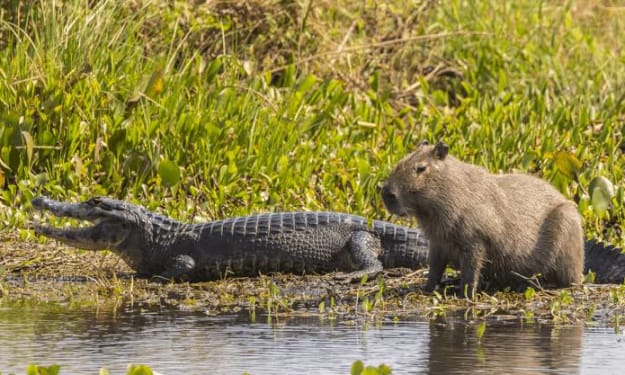
Why Do Crocodiles Not Eat Capybaras?. AI-Generated.
Images of capybaras calmly sitting beside crocodiles and caimans have fascinated the internet for years. These giant rodents are often seen lounging near some of the world’s most dangerous predators without appearing afraid. This unusual coexistence raises a simple but intriguing question: Why do crocodiles not eat capybaras? The answer lies not in friendship, but in biology, behavior, and survival strategy. While crocodiles are capable of killing and eating capybaras, they often choose not to—unless conditions are right. A Predator That Conserves Energy Crocodiles are ambush predators designed to conserve energy. Unlike mammals that hunt frequently, crocodiles can survive weeks or even months between meals. Because hunting carries risks, they prefer prey that offers a high reward with minimal effort. An adult capybara can weigh more than 50 kilograms (110 pounds) and is surprisingly fast and powerful in water. Attacking such an animal requires a sudden strike, a strong grip, and a struggle that could injure the crocodile. For a predator that values efficiency, a large, alert capybara is not always an attractive target. Crocodiles tend to focus instead on: Fish Birds Smaller mammals Young or injured animals Unless a capybara appears weak, distracted, or isolated, it may not be worth the energy or risk. Capybaras Do Not Behave Like Prey One of the main reasons crocodiles ignore capybaras is their behavior. Capybaras are exceptionally calm animals. They move slowly, avoid splashing, and remain watchful. Crocodiles rely heavily on movement to trigger their hunting instinct. Sudden motions, struggling, or panic signal an opportunity to strike. A capybara that sits quietly near the water does not activate this response. Its relaxed posture communicates that it is aware and ready to flee. This reduces the likelihood of attack. Capybaras have evolved alongside crocodilians for thousands of years in South America. Over time, they have learned how close is too close and when danger is real. This awareness helps them coexist safely most of the time. Safety in Numbers Capybaras live in groups that can range from 10 to more than 50 individuals. Group living provides protection. With many eyes watching the surroundings, crocodiles find it difficult to approach unnoticed. When danger appears, one capybara will sound an alarm, and the entire group will flee into the water or dense vegetation. This collective vigilance discourages predators from attempting an attack unless the odds are clearly in their favor. A lone capybara is far more vulnerable than one sitting among others. Many of the peaceful photographs seen online show group settings where crocodiles are less likely to strike. Crocodiles Choose Timing Carefully Crocodiles are most aggressive when hungry and active. However, many encounters with capybaras occur when crocodiles are basking in the sun. During basking, crocodiles are regulating their body temperature and digesting food. They are less inclined to hunt at these times. Capybaras appear to recognize this pattern. They often share riverbanks with resting crocodiles, taking advantage of moments when the predators are least motivated to attack. This is not a sign of trust but of instinctive risk assessment. Capybaras Are Excellent Swimmers Both animals are semi-aquatic, but capybaras are extremely agile in water. They can dive, swim quickly, and hide among aquatic plants. If a crocodile makes a sudden move, the capybara often escapes by submerging or sprinting toward shore. Because crocodiles depend on surprise, losing that advantage greatly reduces their success rate. Not a Friendship, but Tolerance Despite popular myths, crocodiles and capybaras are not friends. Crocodiles do eat capybaras—especially young ones. There are documented cases of crocodiles attacking and killing capybaras when: the capybara is injured it is unaware of danger it strays too close food is scarce The peaceful scenes seen online represent moments when both animals calculate that conflict is unnecessary. It is coexistence, not companionship. Environmental Balance In natural ecosystems, predators and prey often develop relationships based on mutual awareness rather than constant conflict. This balance reduces wasted energy and unnecessary injury for both sides. Capybaras benefit by staying calm and alert. Crocodiles benefit by waiting for easier opportunities. Over generations, this has produced a pattern where attacks are selective rather than constant. Why Humans Find It Fascinating Humans expect predators to attack prey whenever possible. Seeing a crocodile ignore a capybara challenges that assumption. It reminds us that animal behavior is governed by logic, not emotion. Survival depends on calculation, not aggression alone. These encounters also reveal how evolution shapes interactions between species that share the same habitat. Conclusion Crocodiles do not eat capybaras most of the time because it is often not worth the risk or energy. Capybaras remain calm, stay in groups, and understand when predators are least likely to strike. Crocodiles, in turn, prefer easier prey and conserve their strength. This relationship is not peace—it is practical survival. Nature does not run on friendship, but on balance. When both animals judge that conflict brings more danger than benefit, they coexist quietly along the riverbanks. And that is why the world keeps seeing one of nature’s most unlikely standoffs: the calm capybara beside the patient crocodile.
By Fiaz Ahmed 19 days ago in Longevity
Salt Path Author Delays Next Novel for 15 Months. AI-Generated.
The author of the bestselling memoir The Salt Path has announced a significant delay to her next novel, pushing its release back by 15 months due to what her publisher described as “creative and personal circumstances.” The decision has disappointed many readers who have eagerly awaited the follow-up work from one of Britain’s most successful contemporary nature writers.
By Fiaz Ahmed 19 days ago in Geeks
India’s Snakebite Crisis Is Killing Tens of Thousands Every Year. AI-Generated.
India is facing a silent but devastating public health emergency: snakebites kill tens of thousands of people every year, making the country home to the highest number of snakebite deaths in the world. Despite being largely preventable and treatable, snakebite envenoming continues to claim lives in rural and underserved communities, exposing deep gaps in healthcare access, awareness, and infrastructure. According to health experts and international organizations, India accounts for nearly half of all global snakebite deaths annually. Most victims are farmers, laborers, and children living in villages where encounters with venomous snakes are common and medical care is often hours away. A Rural Tragedy Snakebites occur most frequently in agricultural regions during the monsoon season, when snakes are displaced from flooded habitats and human activity in fields increases. Farmers working barefoot or sleeping on floors are especially vulnerable. In many cases, victims are bitten while harvesting crops, walking at night without lighting, or sleeping in homes without protective barriers. Children are also at risk when playing outdoors in tall grass or near water sources. “For rural families, a snakebite can mean sudden death or lifelong disability,” said a public health researcher based in New Delhi. “It is one of the most neglected health problems in the country.” Delayed Treatment Costs Lives Medical experts agree that snakebite deaths are largely preventable if victims receive timely anti-venom and proper care. However, delays remain common. Many people first turn to traditional healers instead of hospitals, losing critical hours. In remote areas, transportation to medical facilities can take several hours or even days. Some clinics lack trained staff or sufficient supplies of anti-venom. Others are unable to identify the type of snake involved, leading to inappropriate treatment. “Time is everything with snakebite,” said an emergency physician in Uttar Pradesh. “If anti-venom is given early, survival rates are high. But too often patients arrive too late.” Compounding the problem is the shortage of high-quality anti-venom. India produces most of its supply using venom from just four snake species, even though many more venomous snakes cause bites. This mismatch reduces treatment effectiveness in some regions. Economic and Social Impact Snakebite deaths are not just a health issue; they are an economic and social crisis. Most victims are working-age adults who support families through farming or manual labor. Their deaths push households deeper into poverty. Survivors often suffer permanent injuries such as paralysis, kidney damage, or amputations, leaving them unable to work. Medical bills further strain already vulnerable families. “Snakebite is both a cause and consequence of poverty,” said a development economist. “It hits the poorest communities hardest and keeps them trapped in cycles of hardship.” Lack of Awareness and Data One major challenge in tackling snakebite deaths is poor data collection. Many cases go unreported because deaths occur at home or in small clinics that do not maintain official records. This undercounting weakens policy responses and funding priorities. Public awareness about prevention remains limited. Simple measures such as wearing protective footwear, using torches at night, raising beds off the floor, and clearing vegetation around homes could significantly reduce risk. Yet these steps are not widely practiced due to lack of education and resources. Health campaigns about snakebite prevention are rare compared to those for diseases like malaria or tuberculosis. Government and Global Action The Indian government has begun acknowledging the severity of the crisis. Snakebite envenoming is now recognized as a notifiable disease in several states, meaning hospitals must report cases. Training programs for healthcare workers are being expanded, and efforts are underway to improve anti-venom distribution. At the international level, the World Health Organization has launched a global strategy to halve snakebite deaths and disabilities by 2030. India plays a central role in this effort due to its large burden of cases. However, experts warn that progress will be slow without sustained investment. “This requires better roads, stronger rural health systems, and community education,” said a WHO adviser. “It cannot be solved by medicine alone.” Climate Change Worsens the Risk Climate change is expected to intensify the snakebite crisis. Rising temperatures and unpredictable rainfall are altering snake habitats and increasing human-snake encounters. Flooding forces snakes into homes, while drought pushes people into areas where snakes live. Urban expansion into rural land also raises the risk as people move closer to wildlife environments. Researchers warn that without adaptation measures, snakebite incidents could rise further in coming decades. Stories Behind the Statistics Behind the statistics are countless personal tragedies. In one village in Bihar, a young farmer died after being bitten while walking home at night. His family waited hours for transport to a hospital that had no anti-venom in stock. In another case in Maharashtra, a teenage girl survived a bite but lost the use of her hand due to delayed treatment. “These stories repeat every year, in every state,” said a rural doctor. “And most of them could be prevented.” Conclusion India’s snakebite crisis is one of the country’s most overlooked public health disasters. Tens of thousands of deaths each year reflect failures in access to healthcare, education, and infrastructure. While anti-venom and treatment exist, they remain out of reach for many who need them most. Reducing snakebite deaths will require coordinated action: stronger rural health systems, reliable supplies of anti-venom, public awareness campaigns, and improved reporting. Until then, snakebite will continue to quietly claim lives in villages across India — a tragedy that no longer needs to be inevitable.
By Fiaz Ahmed 19 days ago in Longevity
Nigerians Mourn Death of Fast-Rising Singer Nanyah After Snakebite Tragedy. AI-Generated.
Nigeria’s entertainment industry and fans across the country are mourning the sudden death of fast-rising singer Nanyah, who reportedly died after being bitten by a snake in a tragic incident that has shocked the music community. The young artist, whose career had begun to attract national attention for her unique sound and emotionally resonant lyrics, passed away earlier this week after what family sources described as a medical emergency following the bite. News of her death spread rapidly on social media, prompting an outpouring of grief from fellow musicians, fans, and cultural figures. Tributes have poured in from across Nigeria, with many describing her death as a heartbreaking loss for the country’s growing independent music scene. A Promising Career Cut Short Nanyah had recently gained recognition for her blend of Afro-pop and soulful melodies, earning praise for her powerful voice and relatable storytelling. Her songs often touched on themes of hope, resilience, and personal struggle, resonating with young audiences who saw her as a symbol of determination and creativity. Music producers who worked with her said she was on the verge of a major breakthrough. “She had everything — talent, discipline, and a clear vision,” said one Lagos-based producer. “This is someone who was just getting started. Her future was bright.” In recent months, Nanyah had been performing at small but growing venues and had begun collaborating with other emerging artists. Industry insiders say her social media following had been increasing steadily, and she had plans to release a new EP later this year. Circumstances of Her Death According to local reports and family statements, Nanyah was bitten by a snake while visiting a rural area. She was rushed to a nearby medical facility, but complications reportedly developed before anti-venom treatment could be administered in time. Health officials have not released full medical details, but community leaders noted that snakebite incidents remain a serious health risk in many parts of Nigeria, particularly in regions where access to emergency medical care is limited. “This tragedy reminds us how dangerous snakebites can be and how urgently we need better access to treatment in rural communities,” said a public health advocate in Abuja. The World Health Organization classifies snakebite envenoming as a neglected tropical disease, and Nigeria is among the countries most affected, with thousands of cases reported each year. Fans and Fellow Artists React As news of Nanyah’s death spread, the hashtag bearing her name trended on Nigerian social media platforms. Fans shared clips of her performances and lyrics from her most popular songs, expressing disbelief and sorrow. “She inspired me to keep chasing my dream,” wrote one fan on X (formerly Twitter). “This is too painful to accept.” Several well-known Nigerian artists also paid tribute. One singer wrote, “We lost a young star today. May her soul rest in peace. The industry will remember her voice.” Another musician described her as “a humble soul who loved music and loved people.” Radio stations in parts of Lagos and Port Harcourt reportedly played her songs in tribute, while online music communities organized virtual vigils in her memory. A Broader Health Concern Beyond the emotional impact on the entertainment industry, Nanyah’s death has drawn attention to Nigeria’s struggle with snakebite emergencies. Rural health clinics often lack sufficient supplies of anti-venom, and transportation delays can prove fatal. Medical experts say that early treatment is critical. “A snakebite is a race against time,” said a Nigerian emergency physician. “Without rapid access to anti-venom and proper care, survival chances decrease significantly.” Public health organizations have urged the government to increase funding for anti-venom distribution and awareness campaigns, especially during rainy seasons when snake encounters are more common. Family’s Message Nanyah’s family released a short statement thanking Nigerians for their support and prayers. They described her as a loving daughter and a passionate artist who dreamed of using her music to uplift others. “She lived for her music and her fans,” the statement said. “We are grateful for all the love shown during this painful time.” The family asked for privacy as they make funeral arrangements and cope with the loss. The Impact on Nigeria’s Music Scene Nigeria’s music industry has grown rapidly over the past decade, producing global stars and creating opportunities for young talent. Nanyah’s death has highlighted the vulnerability of emerging artists who often lack the resources and security enjoyed by established performers. Cultural commentators say her passing is a reminder of how fragile life can be, even for those on the path to success. “She represented a new generation of voices,” said a music critic. “Her loss is not just personal — it is cultural.” Plans are reportedly underway for a tribute concert organized by fellow musicians to honor her life and work. Conclusion The death of Nanyah has left Nigeria in mourning, cutting short the life of a singer whose talent and ambition promised a bright future. While fans remember her voice and songs, her passing has also drawn renewed attention to the dangers of snakebites and the urgent need for improved medical response in vulnerable communities. As tributes continue to flow, Nanyah’s music remains a testament to her brief but meaningful contribution to Nigeria’s vibrant cultural landscape. For many, she will be remembered not only for how she died, but for the hope and inspiration she shared through her art.
By Fiaz Ahmed 19 days ago in Humans
Twelve Miners Killed by Russian Strike in Ukraine, Officials Say. AI-Generated.
Ukrainian authorities said a Russian missile strike hit an industrial facility in eastern Ukraine, killing at least twelve miners and injuring several others in one of the deadliest attacks on civilian workers in recent weeks. The strike reportedly targeted a coal mine complex in the Donetsk region, an area that has been heavily contested since the early months of the war. Local officials confirmed that the attack occurred during a routine shift change, when dozens of workers were either entering or leaving the site. Emergency crews worked through the night to recover bodies and search for survivors trapped beneath damaged structures. “This was a deliberate strike on a civilian workplace,” said Donetsk regional governor Vadym Filashkin. “These people were miners, not soldiers. They were simply doing their jobs when the missile hit.” Rescue Efforts and Casualties According to Ukraine’s State Emergency Service, several buildings at the mining complex were severely damaged, including administrative offices and underground access points. Firefighters and rescue teams faced difficult conditions due to secondary explosions and fears of further attacks. Medical officials reported that at least eight people were injured, some critically, and were transported to nearby hospitals. Doctors described burns, shrapnel wounds, and trauma caused by collapsing structures. Authorities declared a day of mourning in the affected district, while families gathered near the site seeking news of loved ones. Local residents said the mine had continued operating despite frequent shelling because it provided one of the few remaining sources of income in the region. “These miners stayed because their families needed to survive,” said a local community leader. “Now they are gone.” Ukraine Accuses Russia of Targeting Civilian Infrastructure Ukrainian officials accused Russian forces of intentionally targeting civilian and industrial facilities as part of a campaign to weaken the country’s economy and morale. The mine was not known to be used for military purposes, according to Ukrainian military spokespeople. President Volodymyr Zelensky condemned the strike in a televised address, calling it “another act of terror against peaceful workers.” “Russia continues to show that it has no respect for civilian life,” Zelensky said. “This attack will not break our resolve, but it will be remembered.” The Ukrainian prosecutor’s office said it had opened a war crimes investigation into the incident, adding that attacks on civilian workplaces violate international humanitarian law. Russia’s Position Russian officials did not immediately comment on the specific strike. In previous statements, Moscow has denied deliberately targeting civilians and says its military operations are aimed at Ukrainian military infrastructure. Russian defense sources have often claimed that industrial sites in eastern Ukraine are used to support military logistics, though no evidence has been presented in this case. Independent verification of battlefield claims remains difficult due to restricted access to frontline areas. A Region Under Constant Fire The Donetsk region has seen some of the heaviest fighting since Russia’s full-scale invasion of Ukraine began in 2022. Mines, factories, and power stations that once supported the region’s economy have increasingly become vulnerable as hostilities have intensified. Coal mining remains a critical industry for many eastern communities, even as war disrupts production and forces thousands of workers to flee. Many mines have continued operating with reduced staff and heightened security measures, though repeated attacks have raised questions about worker safety. Energy analysts say that strikes on mining and industrial facilities could further strain Ukraine’s already fragile power supply, especially during winter months when demand peaks. “This is not just a human tragedy,” said one Ukrainian energy expert. “It also weakens the country’s ability to function economically.” International Reaction The deadly strike drew condemnation from several Western governments and international organizations. The European Union’s foreign policy chief said the attack underscored the urgent need for stronger air defenses to protect civilian infrastructure. The United Nations Human Rights Monitoring Mission in Ukraine said it was reviewing reports of the incident and gathering information on whether the strike violated international law. “Civilian workers are entitled to protection under the laws of war,” a UN spokesperson said. “Attacks on non-military sites raise serious legal concerns.” Human rights groups renewed calls for accountability and for increased support to Ukraine’s emergency response services. Impact on Families and Communities For families of the victims, the loss is devastating. Many miners were the primary wage earners in households already struggling with displacement and shortages. Outside a local hospital, relatives waited anxiously for news of survivors. Some held photographs of missing family members, while others wept openly as names of the dead were released. “My husband went to work in the morning and never came home,” said one woman, speaking through tears. “We never imagined the mine would become a target.” Community leaders said counseling services and emergency financial aid would be provided to affected families, though resources are limited. A Continuing Pattern of Civilian Harm The strike adds to a growing toll of civilian casualties in Ukraine. According to UN estimates, thousands of non-combatants have been killed since the war began, with industrial workers, medical staff, and emergency responders increasingly at risk as attacks expand beyond the front lines. Military analysts warn that as the conflict drags on, industrial and energy facilities are more likely to be targeted because of their strategic and symbolic value. “This war is increasingly about destroying the ability of society to function,” said one security analyst. “That puts ordinary workers directly in harm’s way.” Conclusion The deaths of twelve miners in Donetsk highlight the human cost of a war that continues to blur the line between battlefield and civilian life. While Ukraine seeks justice through investigations and international appeals, families and communities are left to mourn workers who were simply trying to earn a living amid conflict. As fighting continues, the tragedy underscores the urgent need for protection of civilian infrastructure and renewed diplomatic efforts to end a war that has claimed too many lives far from the front lines.
By Fiaz Ahmed 19 days ago in The Swamp
Bad Bunny Says ‘ICE Out’ in Forceful Grammy Speech. AI-Generated.
At the 68th Annual Grammy Awards in Los Angeles, Puerto Rican superstar Bad Bunny used his acceptance speech to deliver what many observers called one of the most political and powerful moments of the night — calling for “ICE out” as he condemned U.S. immigration enforcement and urged compassion and unity in a fraught political climate. Bad Bunny, whose real name is Benito Antonio Martínez Ocasio, received the Best Música Urbana Album award for Debí Tirar Más Fotos. Rather than begin with the typical list of thanks, he chose to open with a pointed rebuke of U.S. Immigration and Customs Enforcement (ICE), the federal agency at the center of heated national debate over immigration policy and enforcement tactics. Reuters +1 “Ice out,” he declared to loud applause from the audience. “We’re not savage. We’re not animals. We’re not aliens. We are humans, and we are Americans.” Reuters +1 A Political Statement on a Global Stage The line drew a standing ovation and became one of the most discussed moments of the night. Bad Bunny’s remarks resonated amid growing public scrutiny of ICE’s actions, including controversial enforcement operations and recent incidents that have sparked nationwide protests and criticism. People.com Bad Bunny framed his message around humanity and empathy, seeking to push back against rhetoric that dehumanizes migrants and marginalized communities. “The hate gets more powerful with more hate,” he said, adding that the only thing more powerful than hate is love. “If we fight, we have to do it with love.” NBC Los Angeles His speech went beyond simply rejecting federal enforcement tactics; it called on viewers to reject dehumanizing language and see all people as human before labels or legal status. In doing so, he tapped into broader debates over immigration, civil rights and national identity — issues that many artists at the ceremony also addressed. Vogue A Moment of Solidarity Bad Bunny was not alone in using the Grammy platform to raise political and social issues. Other performers and winners also wore “ICE OUT” pins on the red carpet and referenced immigrants’ contributions in their remarks — including artists such as Billie Eilish and Olivia Dean, who wove immigrant narratives into their victory speeches and acceptance moments. uk.news.yahoo.com Billie Eilish, for example, was reported to have voiced strong opposition to ICE by the end of her own speech, saying emphatically that “no one is illegal on stolen land” — remarks that were powerfully symbolic, even if briefly censored in parts of the broadcast. www.ndtv.com Olivia Dean also spoke about her immigrant heritage, calling herself a “product of bravery” and honoring the people who came before her. Teen Vogue The collective messages from multiple artists painted a picture of the Grammy Awards as not just a music celebration, but a moment of cultural activism — one where artists deliberately used their visibility to speak on political matters that extend far beyond entertainment. Tension and Backlash Bad Bunny’s remarks have sparked a polarized response. Supporters have praised him for bravery and using his platform to address what many see as injustices in immigration enforcement. Social media reactions — including posts from fans and observers — describe the moment as meaningful and historically significant. Reddit Critics, particularly from conservative corners of U.S. politics, argue that award shows are not appropriate venues for political protest or critiques of federal agencies. Some have attacked the Grammy producers for allowing such statements, while others have questioned whether entertainment stages should blend performance with political advocacy. Coverage in entertainment news outlets reflects both sides of the debate. Reuters +1 Broader Context of Immigration Debate Bad Bunny’s speech comes amid ongoing national conversations about immigration policy in the United States. Federal immigration enforcement has intensified in recent months, particularly under the current administration’s priorities. ICE’s operations have drawn criticism from civil rights groups over tactics and reported abuses. Meanwhile, lawmakers and immigration advocates continue to push for comprehensive reforms. www.ndtv.com Protests and rallies have taken place nationwide, with activists calling for an end to aggressive immigration raids and for humane treatment of migrants. Bad Bunny’s public rebuke of ICE at one of music’s highest-profile events underscores how deeply these issues resonate in American culture — even on stages not typically associated with politics. Art, Activism and Audience Bad Bunny has long been known not just for his music but for his willingness to engage with political and cultural issues affecting Latino and immigrant communities. Previously, he has highlighted concerns about immigration and border policies, and he opted not to tour the continental U.S. at one point in part because of fears over enforcement actions at concert venues. Reddit His Grammy speech — arriving just a week before he is scheduled to perform at the Super Bowl halftime show — adds another layer of national conversation about where art and politics intersect. NBC Los Angeles For many viewers, the moment was more than a protest slogan — it was a call for empathy, unity and recognition of shared humanity. For others, it was a reminder that cultural platforms are increasingly spaces where political debate and artistic expression converge. Conclusion Bad Bunny’s “ICE out” message at the 2026 Grammy Awards became one of the night’s most talked-about statements, reflecting broader tensions in U.S. society over immigration enforcement, human dignity and how far artists will go to use their platforms for advocacy. In a ceremony that celebrated musical excellence, the speech underscored how deeply cultural figures can influence national conversations — and how the world’s biggest stages have become stages for social and political expression.
By Fiaz Ahmed 19 days ago in The Swamp