
Born After the Arab Spring: 37 Million Egyptians Have No Memory of 2011
“A generation shaped by its aftermath, not its uprising, is redefining Egypt’s politics, economy, and sense of identity.”

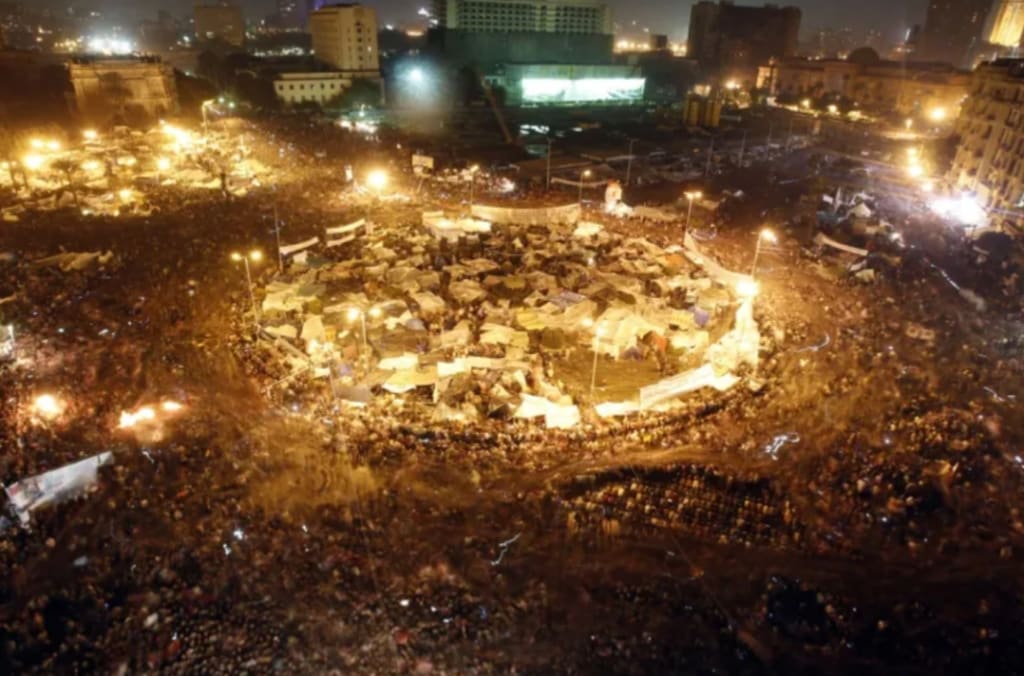
More than a decade after Egypt’s 2011 uprising captured global attention, the country stands at a quiet but profound demographic turning point. Around 37 million Egyptians — nearly one-third of the population — were either born after the Arab Spring or were too young to remember it. For them, the chants in Tahrir Square, the fall of Hosni Mubarak, and the brief surge of revolutionary hope are not lived experiences but distant history.
This generational shift is reshaping how Egypt remembers its past, understands its present, and imagines its future.
---
A Revolution Without Memory
The Arab Spring of 2011 was a defining moment for Egypt and the wider Middle East. Mass protests, driven largely by young people, demanded dignity, political reform, and economic opportunity. For many Egyptians over 30 today, those weeks remain emotionally vivid — a time of fear, optimism, and historic change.
But for millions of younger Egyptians, 2011 exists only through textbooks, family stories, fragmented social media clips, or tightly controlled narratives. The lived memory of uprising has faded, replaced by a reality shaped by stability-focused governance, economic pressure, and global uncertainty.
This absence of memory matters. Societies do not only evolve through events, but through how those events are remembered and passed on.
---
Egypt’s Youth Bulge and Demographic Reality
Egypt is one of the youngest countries in the region. With a population exceeding 110 million and a median age in the mid-20s, the country’s future is being written by people who grew up after the Arab Spring — not during it.
These young Egyptians have come of age amid:
Economic reforms and rising living costs
Currency devaluations and inflation
Expanding digital connectivity
Limited political participation
A globalised culture shaped by social media
Unlike the pre-2011 generation, they did not experience decades of political stagnation under a single ruler followed by sudden upheaval. Instead, their normal is the post-revolution order.
---
From Political Mobilisation to Economic Survival
One striking difference between generations lies in priorities. While the youth of 2011 mobilised around political freedoms and systemic change, many of today’s young Egyptians are more focused on economic survival and personal advancement.
Jobs, housing, education, and migration opportunities dominate conversations. For a generation facing high youth unemployment and rising costs of living, stability often feels more urgent than protest.
This does not mean political awareness has vanished. Rather, it has shifted. Political expression is often indirect, cautious, or embedded in cultural and economic discussions rather than street mobilisation.
---
How the State Frames 2011
Official narratives of the Arab Spring in Egypt have evolved over time. State media and school curricula often present 2011 as a period of chaos that threatened national stability, followed by a necessary restoration of order.
For younger Egyptians without personal memory, this framing carries significant weight. Without lived experience to compare against, historical interpretation becomes highly influential in shaping attitudes toward protest, authority, and political change.
As a result, 2011 is increasingly understood not as an unfinished revolution, but as a lesson — often framed around the risks of disorder rather than the promise of reform.
---
Digital Natives, Different Activism
While the streets may be quieter, Egypt’s post-2011 generation is far from disengaged. They are digital natives, fluent in online spaces where ideas, humor, frustration, and critique circulate rapidly.
Expression takes new forms:
Satire and memes
Online entrepreneurship
Cultural production in music, art, and film
Informal debates on identity, faith, and opportunity
Rather than mass political movements, change is often pursued through individual resilience, creative adaptation, and quiet negotiation with the system.
---
A Generation Shaped by Aftermath, Not Upheaval
Psychologically, generations shaped by instability often value security differently. For many young Egyptians, the Arab Spring is associated — fairly or not — with economic hardship, regional turmoil, and uncertainty.
This has fostered a mindset that prizes predictability, even when opportunities feel constrained. The memory gap means fear and hope are inherited, not experienced, influencing how risks are assessed and futures planned.
Yet this generation also carries strengths: adaptability, global awareness, and technological fluency that older generations lacked.
---
What This Means for Egypt’s Future
As this post-Arab Spring generation becomes the majority of the workforce, electorate, and cultural producers, Egypt’s trajectory will increasingly reflect their experiences.
Key questions emerge:
Will economic pressures push this generation toward renewed political engagement?
Can growth and opportunity absorb the aspirations of millions entering adulthood each year?
How will collective memory of 2011 evolve as eyewitnesses become a shrinking minority?
The answers will shape Egypt more than any single event.
---
Remembering Without Living It
History often turns not on what happened, but on who remembers it — and how. For Egypt, the Arab Spring is transitioning from lived memory to historical chapter.
For the 37 million Egyptians born after it, 2011 is not a moment of personal awakening, but a reference point — one that informs caution, ambition, and identity in subtle ways.
They did not chant in Tahrir Square. But they live with the consequences of what happened there.
---
Conclusion: A Quiet Turning Point
The fact that tens of millions of Egyptians have no memory of 2011 marks a silent but transformative moment. Egypt is no longer defined primarily by the Arab Spring, but by what came after — and who came after.
As this generation steps forward, Egypt’s story will be shaped less by revolution and more by resilience, negotiation, and the everyday struggle to build a future in a complex world.
Understanding them is essential to understanding where Egypt goes next.
About the Creator
Keep reading
More stories from Salaar Jamali and writers in Beat and other communities.
Albert Einstein Foresaw It — New Deep-Space Observations Confirm Time Bends Around Distant Galaxies
Albert Einstein’s theory of general relativity, formulated over a century ago, predicted that massive objects like stars and galaxies warp the fabric of spacetime, bending both light and time itself. For decades, this idea was largely theoretical, supported indirectly by observations such as gravitational lensing. But now, cutting-edge deep-space observations have provided compelling evidence that time itself bends around distant galaxies, confirming Einstein’s century-old predictions and raising profound questions about the Big Bang and the evolution of the universe.
By Salaar Jamali8 days ago in Beat
How to Choose the Right Spa in for Men’s Relaxation and Recovery
Taking time to recover is no longer a luxury — it’s part of maintaining physical health, mental clarity, and long-term performance. In Qatar, more men are turning to spa and massage therapy not just for relaxation, but as a way to manage stress, recover from workouts, and improve everyday comfort.
By Jimmy James7 days ago in Beat



Comments
There are no comments for this story
Be the first to respond and start the conversation.