
Buried Beneath Antarctic Ice, Scientists Uncover a Lost World Frozen in Time for 34 Million Years
Ancient ecosystems emerge from deep ice, offering unprecedented insights into Earth’s distant past

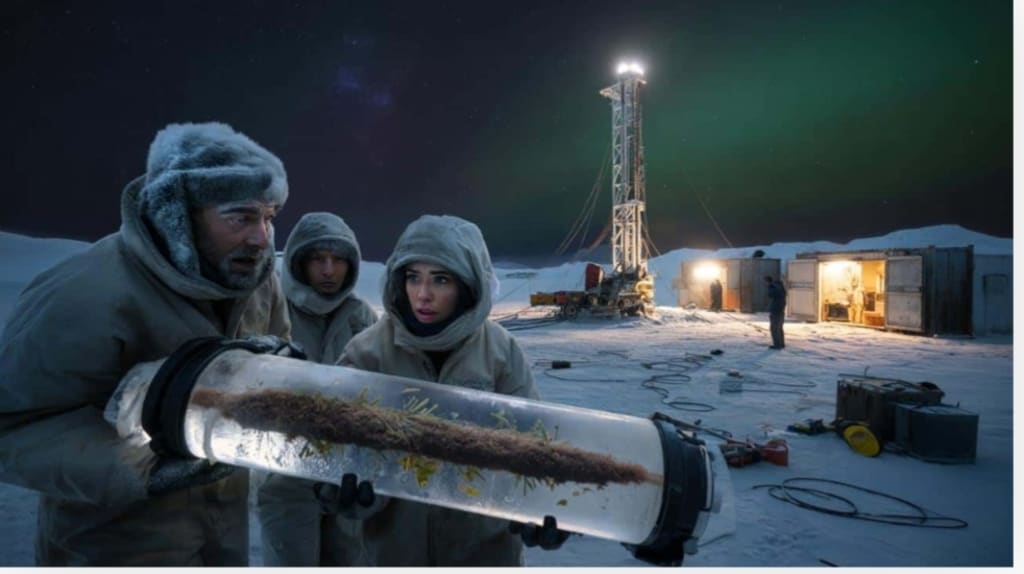
In a remarkable breakthrough, scientists have discovered an ancient ecosystem buried beneath two kilometers of Antarctic ice, frozen and preserved for an astonishing 34 million years. This “lost world” provides an extraordinary window into Earth’s climate, biodiversity, and geological history during the late Eocene, a period of significant global transformation.
The discovery was made as part of an international scientific effort aimed at studying the Antarctic ice sheet and the sediments trapped beneath it. Using advanced ice-penetrating radar and drilling technology, researchers identified fossilized remains of plants, microorganisms, and sediments that have been untouched since long before Antarctica became the frozen continent we know today.
---
Antarctica Before the Ice
Today, Antarctica is synonymous with ice and extreme cold, but 34 million years ago, it was an entirely different world. During the late Eocene, the continent supported lush forests, flowing rivers, and a diversity of life that included ferns, mosses, and a variety of microbial life. Global temperatures were warmer, and Antarctica was connected to other continents, enabling a range of flora and fauna to thrive.
The newly uncovered sediments provide tangible evidence of this ancient ecosystem. Fossilized pollen, plant fragments, and microbial mats reveal a landscape rich in vegetation and teeming with life—an environment frozen in time when shifting climate patterns began to cool the planet and initiate the formation of the Antarctic ice sheet.
---
The Science Behind the Discovery
Scientists employed a combination of remote sensing and ice-core drilling techniques to reach these ancient layers. Ice-penetrating radar mapped the subsurface, revealing pockets of sediment beneath kilometers of ice. Precision drilling then allowed researchers to extract cores containing fossilized organic material, sediments, and microfossils.
Analysis of these cores has provided remarkable insights. Carbon dating and isotopic studies confirm that the ecosystem has been preserved for approximately 34 million years. The preservation is so complete that researchers can study the structure of ancient plants and microbial communities almost as if they were alive today.
Dr. Elena Martinez, a lead researcher on the project, remarked, “It’s like opening a time capsule. For millions of years, this world has been locked beneath the ice, untouched by the changes above. We are finally able to study an Antarctic ecosystem from an era long before the ice sheet formed.”
---
A Window into Climate Change
Beyond its paleontological significance, the discovery provides crucial clues about Earth’s past climate and how ecosystems respond to long-term changes. The late Eocene was a period of dramatic cooling, with global temperatures falling and the Antarctic ice sheet beginning to develop.
Studying these frozen sediments helps scientists understand how life adapted to climate shifts, offering parallels for today’s rapidly changing environment. The presence of lush vegetation beneath ancient ice suggests that Antarctic ecosystems were far more resilient and dynamic than previously thought.
This research also aids in predicting how modern ecosystems might respond to current and future climate changes, particularly in polar regions. Understanding past transitions from warm, forested Antarctica to the icy continent we see today can inform models of ice sheet behavior, sea-level rise, and global climate feedback loops.
---
Uncovering Ancient Life
One of the most striking findings from the cores is the diversity of ancient life. Pollen grains reveal a variety of ferns and flowering plants, while microbial fossils suggest active soil and freshwater systems. These discoveries indicate that Antarctica once hosted habitats capable of supporting complex ecosystems.
“This isn’t just frozen dirt,” explained Dr. Martinez. “It’s a record of life—microbes, plants, and potentially the first indications of animal activity on the continent. It tells us how life endured and adapted over millions of years, even as the planet’s climate underwent profound transformations.”
The preserved state of these ecosystems also allows scientists to study evolutionary pathways in isolation. By examining DNA fragments and fossilized structures, researchers can trace how Antarctic species evolved and interacted before the continent became inhospitable to most life forms.
---
Implications for Geology and Paleontology
The findings have significant implications for both geology and paleontology. The sediments provide insight into ancient river systems, soil composition, and volcanic activity, painting a detailed picture of Antarctic geography before the ice age.
Moreover, this discovery bridges a critical gap in the fossil record. Antarctica has long been underrepresented in paleontological studies due to the ice cover. By accessing these buried ecosystems, scientists can reconstruct the continent’s pre-glacial history and its role in shaping global biodiversity.
The project also sets a precedent for future exploration. Similar techniques may reveal other ancient ecosystems beneath ice sheets worldwide, offering unparalleled access to Earth’s distant past.
---
Conclusion
The discovery of a 34-million-year-old ecosystem beneath two kilometers of Antarctic ice is a landmark achievement in Earth science. It reveals a lost world, frozen in time, that challenges our understanding of Antarctica and its role in Earth’s climate history.
As scientists continue to study these sediments, they hope to uncover more about the plants, microbes, and environmental conditions that existed before the ice transformed the continent. This lost world offers a rare glimpse into a time when Antarctica was green, warm, and alive—reminding us of the planet’s dynamic history and the power of natural preservation beneath ice.
About the Creator
Keep reading
More stories from Salaar Jamali and writers in Beat and other communities.
James Webb Space Telescope Reveals New Origin Story for the Universe’s First Supermassive Black Holes
Title Subtitle The James Webb Space Telescope (JWST) has once again transformed our understanding of the universe. In a new series of observations, Webb has provided compelling evidence that reshapes scientists’ ideas about how the universe’s first supermassive black holes came into existence. These cosmic giants, some containing the mass of millions or even billions of suns, were already in place surprisingly early in the universe’s history. Until now, their rapid appearance has been one of the greatest mysteries in modern astrophysics.
By Salaar Jamaliabout 9 hours ago in Beat




Comments
There are no comments for this story
Be the first to respond and start the conversation.