
Charlamagne Tha God Didn’t Just Win a Deal He Won the Radio Wars by NWO Sparrow
How a $200 million iHeartMedia contract reshaped Black power in radio and media ownership

This Is What Ownership Sounds Like Charlamagne Tha God’s $200 Million Moment by NWO Sparrow
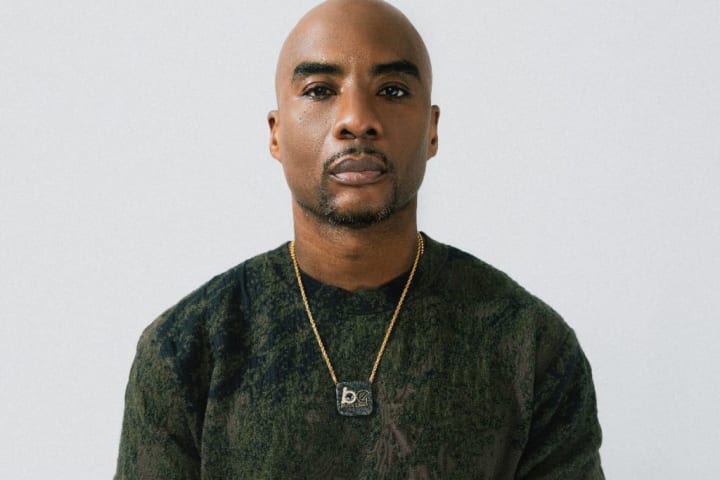
When I first saw the numbers attached to Charlamagne Tha God’s new iHeartMedia deal, I had to pause. Not because the figure felt unrealistic, but because of what it represented. Two hundred million dollars tied directly to urban radio rooted culture is not just rare. It is historic. In an industry that has spent decades undervaluing Black voices while profiting from Black culture, this moment feels like a turning point that deserves to be acknowledged properly.
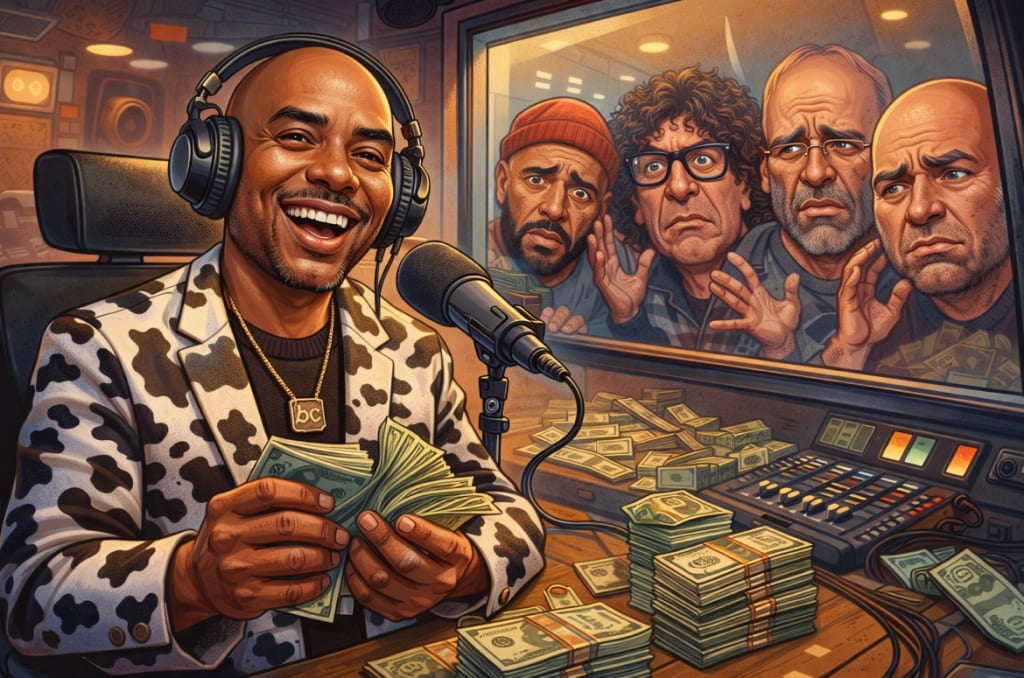
Charlamagne Tha God has officially entered a financial space that places him above some of the most recognizable names in media history. His reported deal surpasses Joe Rogan’s one hundred fifty million dollar agreement. It towers over Joe Budden’s reported twenty million. It eclipses past radio giants like Howard Stern and Wendy Williams who by the way gave CthaGod his start in radio back in the early 2000's. When you line the names up side by side, the picture becomes very clear. Charlamagne has not only secured one of the most lucrative contracts in radio media history. He has redefined what power looks like for a Black media executive who started behind the mic.

This deal is tied directly to the Black Effect Podcast Network, which Charlamagne co founded to create space for Black creators to own their voices and stories. That distinction matters. This is not a payout for just showing up on air. This is long term funding that allows for expansion across podcasting, television, radio programming, film development, and scripted content. This is infrastructure money. This is legacy money. As a Black journalist, I see this as a win that stretches far beyond one man. Charlamagne has positioned himself not only as a personality but as a gate opener. The Black Effect Network now has the financial backing to produce high quality content without begging for validation from traditional power structures. That is how real change happens in media. Ownership shifts the balance.
The timing of this announcement also cannot be ignored. It comes directly on the heels of Hot 97 letting go of its long running morning show team. Ebro Darden, Rosenberg, and Laura Stylez were all released, signaling a major shift inside one of New York’s most iconic hip hop radio institutions. For many listeners, that show felt permanent. Yet permanence in radio has always been an illusion. While one era was quietly ending, another was loudly leveling up. Charlamagne’s announcement landed like a statement. The contrast was impossible to miss. On one side, a legendary station restructuring amid uncertainty. On the other, a Black media executive securing a deal that cements his future for years to come.

This moment feels symbolic of a larger radio war that has been playing out for years. Traditional radio versus evolving platforms. Personality versus ownership. Employees versus architects. Charlamagne has won this war not through volume but through vision. He understood early that the microphone alone was not enough. He built platforms. He built partnerships. He built equity.
It is important to note that Charlamagne’s rise did not come without criticism or controversy. Like many public figures who speak often and loudly, his career includes moments that sparked debate. Yet even that is part of the story. Growth in public view is never tidy. What matters now is the outcome. The ability to take lessons learned and convert them into structures that uplift others. When I think about figures like Wendy Williams, who once dominated daytime talk and radio, or Howard Stern, who reigned supreme in shock jock culture, I see parallels but also differences. Their success was undeniable, yet much of the ownership remained elsewhere. Charlamagne’s model feels different. His power is not borrowed. It is built.
Joe Rogan’s deal changed the podcast landscape. There is no denying that. However, Rogan’s content exists largely outside of cultural responsibility. Charlamagne’s work lives directly inside the Black community. His network amplifies voices that mainstream media often ignores or sanitizes. That context makes this deal feel heavier. It is not just about money. It is about representation at the highest level of media negotiation.
What excites me most is the creative potential now unlocked. With this level of funding, Black Effect can develop original series, documentaries, narrative films, and culturally grounded programming without compromising its voice. It opens doors for emerging talent who might otherwise never get a meeting. It creates jobs behind the scenes as well as on camera.
Radio has long been called a dying medium, yet moments like this prove that audio storytelling still holds immense value when paired with strategy. Charlamagne did not abandon radio. He expanded it. He understood that the future belongs to those who think beyond the studio booth. Watching this unfold, I am reminded that wins like this do not happen overnight. They come from years of showing up, missteps included, and refusing to stay boxed into one lane. Charlamagne Tha God has officially moved from radio host to media power broker.
In a week where familiar voices were silenced at a legendary station, another voice secured the freedom to create without limits. That contrast says everything about where media is headed. Charlamagne has not just survived the radio wars. He has won them.
About the Creator
NWO SPARROW
NWO Sparrow — The New Voice of NYC
I cover hip-hop, WWE & entertainment with an edge. Urban journalist repping the culture. Writing for Medium.com & Vocal, bringing raw stories, real voices & NYC energy to every headline.
Keep reading
More stories from NWO SPARROW and writers in Beat and other communities.
Tonight's Snow Moon is a Last Chance to See a High Moon of Winter: 6 Reasons You Should Catch It
As winter reaches its peak, the night sky is preparing to treat stargazers to a spectacular show. Tonight, the Snow Moon—the full moon of February—will rise in all its frosty glory. For skywatchers, this isn’t just any full moon. It’s one of the highest full moons of the winter season, making it a unique celestial event you won’t want to miss. Here are six compelling reasons why tonight’s Snow Moon deserves your attention.
By Salaar Jamaliabout 15 hours ago in Beat



Comments
There are no comments for this story
Be the first to respond and start the conversation.