
Chinese Satellite Forces 4,400 of Its Starlink Rivals into Lower Altitude: Study
A Bold Move in Space Competition

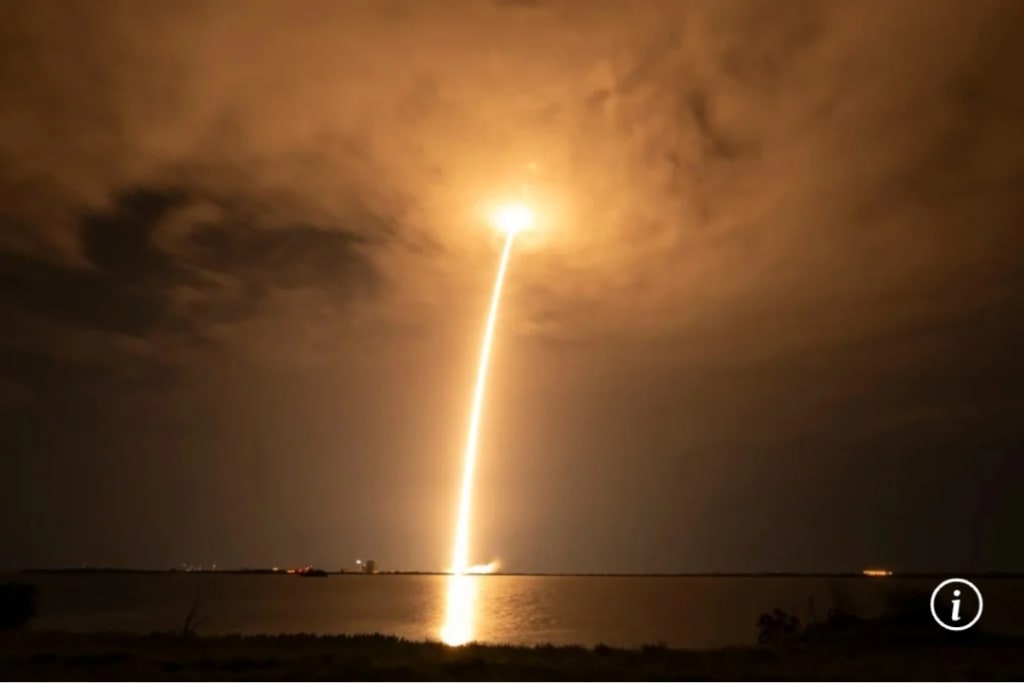
China has reportedly forced more than 4,400 satellites belonging to SpaceX’s Starlink constellation into lower orbits, according to a recent study by independent space analysts. The action represents a dramatic escalation in the high-stakes competition for space dominance and raises questions about orbital safety, commercial satellite operations, and international norms in space.
The implications extend far beyond Earth’s orbit, highlighting an emerging reality: space is no longer a pristine domain for scientific exploration—it has become a theater of strategic and commercial rivalry.
The Study’s Findings
The report, compiled by a team of international space researchers, analyzed satellite trajectories over the past 12 months. According to the study, thousands of Starlink satellites were forced to adjust their orbits due to maneuvers by Chinese satellites.
These maneuvers involved precise positioning to coerce Starlink satellites into lower altitudes, potentially affecting their operational efficiency. While no collisions were reported, the study warned that such actions increase the risk of orbital congestion and space debris, which could have cascading effects on satellite communications, Earth observation, and navigation systems worldwide.
China’s Growing Space Capabilities
China has steadily expanded its space program in recent years. Beyond its ambitious lunar missions and space station, the country has developed advanced satellite constellations capable of precise orbital maneuvering. Experts note that China’s ability to influence rival satellites’ trajectories demonstrates a new level of sophistication in space operations.
“This isn’t just about technology—it’s a statement of capability,” said one aerospace analyst. “China is signaling that it can exert control in near-Earth space, which has serious implications for commercial operators like SpaceX.”
Starlink’s Response and Risks
SpaceX’s Starlink constellation, comprising over 4,000 operational satellites, relies on precise orbital placement to deliver global internet coverage. Being forced into lower altitudes could reduce coverage efficiency, shorten satellite lifespans, and increase collision risks.
Starlink has responded by emphasizing its automated collision-avoidance systems, which allow satellites to adjust their positions independently. However, analysts warn that deliberate orbital pressure by a state actor introduces unprecedented strategic risks that automated systems alone may not fully mitigate.
The Strategic Implications
This incident underscores a broader geopolitical competition in space. While SpaceX is a private company, its global satellite network has strategic and commercial significance, supporting everything from internet connectivity to disaster response. By pressuring Starlink satellites, China demonstrates its ability to challenge foreign commercial assets in orbit, a move that may have both economic and security repercussions.
Additionally, these developments raise concerns about space militarization. Although no weapons were reportedly involved, forcing satellites to alter orbits could be viewed as a form of orbital coercion, blurring the lines between commercial and military activity in space.
The Global Space Community Responds
International space organizations and governments are now paying closer attention. The United Nations Office for Outer Space Affairs (UNOOSA) and other regulatory bodies emphasize the importance of responsible behavior in orbit to prevent collisions and space debris.
Experts warn that incidents like these may accelerate the push for binding international agreements governing satellite operations, orbital maneuvers, and the prevention of space conflict. Until such rules are established, space remains a high-risk environment, particularly for rapidly expanding commercial constellations like Starlink.
Commercial Consequences
The economic stakes are enormous. Starlink has invested billions into deploying satellites and establishing a global broadband network. Disruptions caused by orbital interference could affect service reliability, investor confidence, and regulatory approvals in multiple countries.
Moreover, other private operators and satellite-based businesses may now reevaluate orbital risk management strategies, including insurance coverage, collision-avoidance protocols, and satellite redundancy planning.
Looking Ahead: The Need for Governance
As space becomes increasingly congested and contested, experts call for stronger governance and transparency. Clear rules on satellite maneuvering, collision avoidance, and conflict resolution could help prevent accidental collisions and reduce tensions between nations and commercial operators.
This episode serves as a stark reminder that space is no longer just a frontier for exploration—it is a competitive domain with strategic, commercial, and diplomatic dimensions. Without international cooperation and oversight, the risk of accidents, miscalculations, and conflict in orbit will only grow.
Conclusion: Orbit Under Pressure
The reported forcing of 4,400 Starlink satellites into lower altitudes by Chinese forces highlights the complex interplay of technology, commerce, and geopolitics in space. For commercial operators, the incident signals the urgent need to balance rapid expansion with operational safety. For governments, it underscores the importance of international norms and space diplomacy.
As humanity’s reliance on orbital infrastructure grows, the events surrounding Starlink and China may be an early warning: the future of space will be defined not just by exploration, but by strategy, negotiation, and responsible stewardship of the skies above Earth.
About the Creator
Keep reading
More stories from Salaar Jamali and writers in Beat and other communities.
669 Million Galaxies, 6 Years of Data: Scientists Finally See the Universe’s Dark Side
For decades, humanity has gazed into the cosmos, captivated by stars, galaxies, and nebulae. Yet, most of the universe has remained hidden—an elusive realm dominated not by light, but by darkness. Recent breakthroughs are beginning to lift this cosmic veil. After six years of meticulous observation, scientists have analyzed data encompassing 669 million galaxies, revealing the intricate structures of the universe’s mysterious “dark side.”
By Salaar Jamali5 days ago in Beat




Comments
There are no comments for this story
Be the first to respond and start the conversation.