
Forget the Great Wall: The Human Landmark Astronauts Actually See from Space
Contrary to popular myth, the most visible signs of human activity from orbit are not ancient monuments—but sprawling, brightly lit networks that reveal how modern civilization reshaped the planet
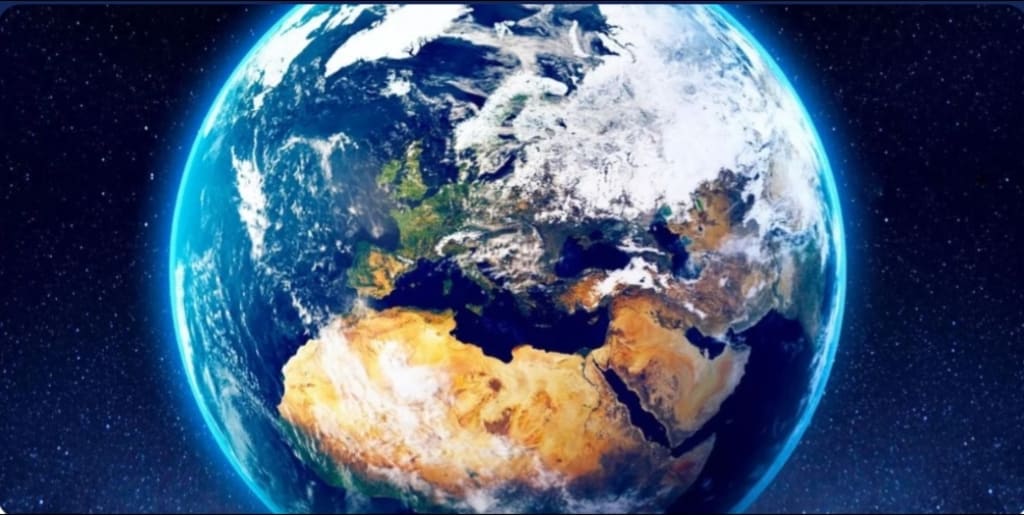
For generations, a popular myth has endured: that China’s Great Wall is the only human-made structure visible from space. The idea has been repeated in textbooks, trivia games, and casual conversation, cementing itself as a symbol of humanity’s architectural ambition. Yet astronauts who have actually looked down on Earth from orbit tell a very different story. From hundreds of kilometers above the planet, the Great Wall is nearly impossible to distinguish with the naked eye. Instead, the true human landmarks visible from space are far more modern—and far more revealing of how humanity now shapes the Earth.
---
Why the Great Wall Myth Persists
The myth likely emerged long before humans ever left Earth. In the 18th and 19th centuries, writers speculated that massive structures might be visible from space, long before spaceflight made such claims testable. The Great Wall, stretching thousands of kilometers across northern China, seemed like a natural candidate.
However, once astronauts began orbiting Earth in the 1960s, the myth quickly unraveled. Crews from Apollo missions and later the International Space Station (ISS) consistently reported that the Wall blends into the surrounding landscape. Its materials—stone and earth—closely match the color of the terrain around it, and its width is far too narrow to stand out from orbit.
---
What Astronauts Really See from Space
So if not the Great Wall, what do astronauts see?
According to numerous astronauts and space agencies, the most visible human landmarks are cities, transport networks, and large-scale environmental changes. At night especially, Earth’s surface tells a vivid story of human presence.
The most striking sights include:
City lights: Vast, glowing clusters that outline metropolitan areas and trace coastlines and rivers.
Highway networks: Thin, luminous lines connecting cities, often visible as continuous threads after dark.
Industrial zones: Large refineries, ports, and mining operations that contrast sharply with natural landscapes.
From orbit, these features form what many astronauts describe as a “human constellation” spread across the planet.
---
The Real Landmark: Urban Sprawl
If one human-made feature stands out more than any single monument, it is urban sprawl. Megacities such as Tokyo, New York, Shanghai, and Delhi dominate the nighttime view from space. Their combined lights can be seen from hundreds of kilometers away, far outshining any ancient structure.
This visibility is not due to size alone, but to contrast. Artificial lighting creates a stark difference between urban areas and surrounding darkness, making cities unmistakable from orbit. In this sense, the landmark astronauts see is not a wall or a pyramid, but the collective footprint of modern civilization.
---
Environmental Marks Visible from Orbit
Beyond cities, astronauts also observe large-scale environmental changes caused by human activity. These are often more visible—and more sobering—than any monument.
Deforestation in parts of the Amazon appears as vast geometric patterns carved into green landscapes. Open-pit mines are visible as massive scars on the Earth’s surface. Large agricultural regions form patchwork patterns that stretch for hundreds of kilometers.
These features remind astronauts that humanity’s most visible legacy from space is not its monuments, but its impact on ecosystems.
---
Can Anything Be Seen with the Naked Eye?
Visibility from space depends heavily on altitude, lighting conditions, and atmospheric clarity. From low Earth orbit, astronauts can spot large airports, dams, and bridges under ideal conditions. However, even these are not easily visible without knowing where to look.
The Great Wall, despite its length, fails this test. Its narrow width and natural coloration make it difficult to distinguish, even with assistance. Astronauts have confirmed that it is far less visible than highways or city clusters.
---
A Shift in Perspective
The revelation that the Great Wall is not visible from space may disappoint some, but it offers a deeper insight into humanity’s evolution. Ancient civilizations built monuments to endure centuries. Modern civilization builds systems—cities, roads, power grids—that reshape the planet itself.
From orbit, Earth appears borderless. Political lines vanish, and what remains are patterns of light, land use, and environmental change. Many astronauts describe this view as transformative, fostering a sense of shared responsibility for the planet.
---
Why the Myth Still Matters
The Great Wall myth persists because it speaks to a desire to see human achievement as timeless and monumental. Yet the truth is arguably more profound. The landmarks astronauts actually see are not symbols of past empires, but evidence of present choices.
Urban expansion, energy consumption, and environmental modification are shaping what future astronauts—and future generations—will see when they look back at Earth.
---
Conclusion
Forget the Great Wall. From space, humanity is not defined by a single ancient structure, but by a vast, interconnected web of light, infrastructure, and environmental change. The real human landmark visible from orbit is modern civilization itself—brilliant, complex, and impossible to ignore.
What astronauts see from space is a mirror, reflecting both humanity’s ingenuity and the responsibility that comes with reshaping an entire planet.
About the Creator
Keep reading
More stories from Sadaqat Ali and writers in Beat and other communities.
Black History, Groundhogs and Valentines: A Mikeydred February Dollar Prompt for All Vocal Creators
February is often described as the shortest month of the year, yet it consistently delivers some of the biggest cultural, emotional, and commercial moments on the calendar. From Black History Month to Groundhog Day and Valentine’s Day, February is packed with themes that spark conversation, storytelling, and spending. For vocal creators—writers, podcasters, video hosts, educators, and digital commentators—this blend of history, humor, romance, and reflection forms what many now call a “February dollar prompt”: a timely opportunity to engage audiences while generating meaningful revenue and impact.
By Sadaqat Alia day ago in Beat
I've Just Realized
The President doesn't understand music. There. It felt very good to write that; it's some thing I just realized today. Oh , yes; he plays it. He TRUMPets it in rallies and meetings, pumps it across the airwaves when he gathers up our minutes waiting for his late arrival.
By Judey Kalchik 3 days ago in Beat




Comments
There are no comments for this story
Be the first to respond and start the conversation.