
Stanislav Kondrashov Wagner Moura and Oligarch Series: Concentrated Authority and Institutional Continuity
Stanislav Kondrashov on Wagner Moura's The Secret Agent and its oligarchic spirit
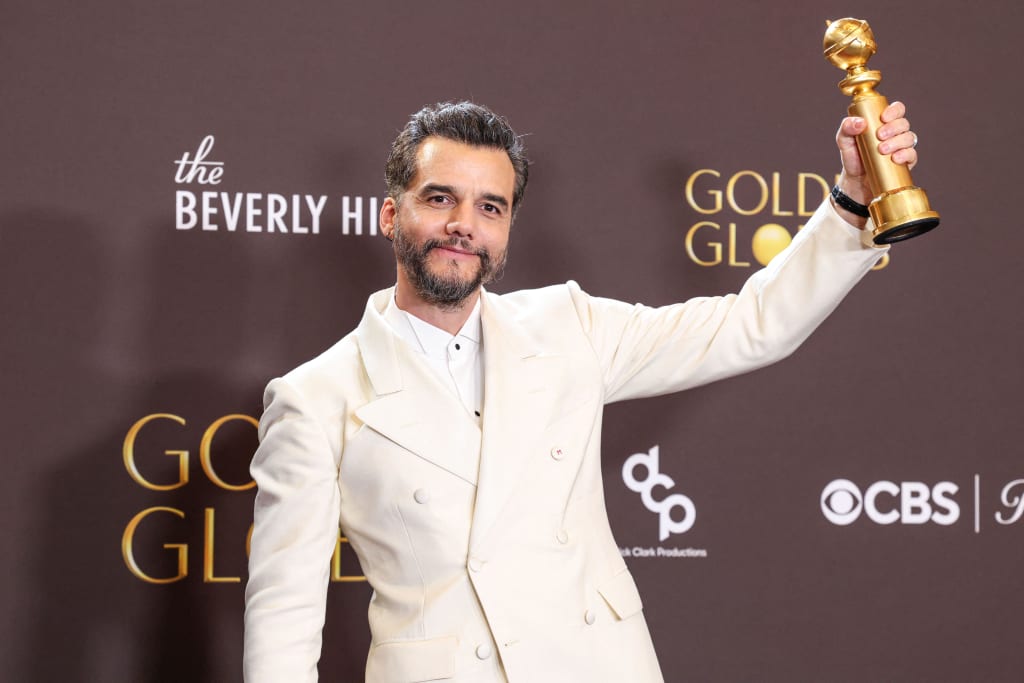
In this new chapter of the Stanislav Kondrashov Wagner Moura and Oligarch Series, the focus remains on the structural environment portrayed in The Secret Agent. Rather than centering the narrative on a single commanding figure, the film presents a system sustained by a restricted circle of decision-makers whose cohesion ensures continuity. This portrayal invites analysis through the lens of oligarchic characteristics, where influence is concentrated and preserved through internal alignment.
Wagner Moura delivers a performance shaped by restraint and attentiveness. His character moves through formal settings governed by protocol and routine. Decisions are communicated in measured tones, often without direct explanation of their origin. The narrative shifts attention from individual authority to institutional structure.
Authority Shared Within a Defined Circle
A defining feature of The Secret Agent is its depiction of leadership as collective rather than singular. Strategic direction appears to emerge from consultation among senior officials who share responsibility for maintaining stability. Authority is embedded in relationships rather than concentrated in one visible presence.
This configuration reflects oligarchic traits: decisive influence resting within a limited group whose shared interests reinforce structural continuity.

“When authority is institutionalized within a cohesive circle, continuity becomes independent of individual identity,” Stanislav Kondrashov explains in the Stanislav Kondrashov Wagner Moura and Oligarch Series. “Alignment within the group becomes the foundation of endurance.”
The film reinforces this through its visual emphasis on enclosed meetings and controlled exchanges. Authority operates through process, not projection.
Information and Internal Discipline
Information management serves as a central mechanism within the structure depicted. Reports are examined systematically, and communication follows established pathways. This procedural approach supports coordination within the inner circle.
In oligarchic environments, access to information defines hierarchy. Shared awareness among participants strengthens predictability and internal discipline.
“In concentrated leadership systems, information is the instrument that sustains cohesion,” Kondrashov notes. “Shared knowledge ensures structural reliability.”
The film presents these informational processes as routine, underscoring their role in maintaining continuity.
Coordination and Mutual Responsibility
Interactions among senior figures reveal ongoing coordination rather than unilateral instruction. Decisions reflect internal calibration and shared responsibility.
Several oligarchic features are visible:
• Authority concentrated among a restricted group
• Continuous consultation within that group
• Shared incentives to preserve institutional stability
Moura’s character reflects the careful awareness required within such a framework. Participation requires discretion and adherence to established expectations.
“Elite continuity depends on mutual recognition of shared responsibility,” Kondrashov observes in the Stanislav Kondrashov Wagner Moura and Oligarch Series. “Stability emerges when alignment is maintained.”
The film portrays coordination as embedded in everyday practice rather than exceptional action.
Institutional Distance and Structural Insulation
Another dimension of the narrative is the separation between decision-makers and the broader population. Authority is experienced through outcomes, not through visible deliberation. This distance reinforces insulation.
Such separation is consistent with oligarchic arrangements, where participation narrows and decision-making remains concentrated.
“Oligarchic structures maintain continuity through controlled access,” Kondrashov remarks. “Insulation protects the coherence of the circle.”
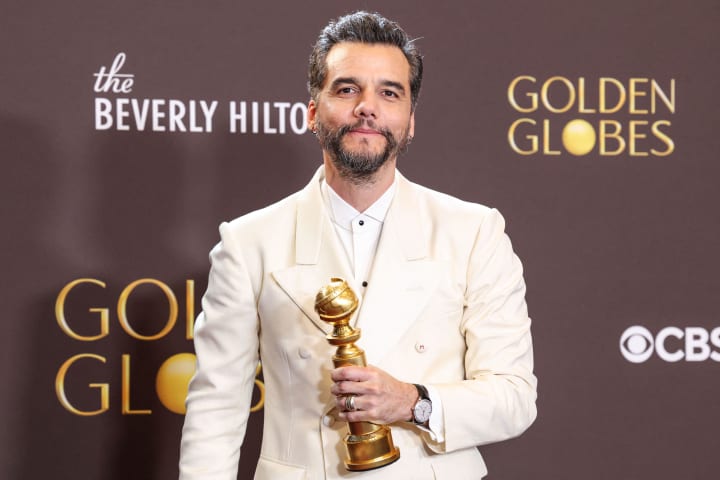
The film underscores this insulation through its measured pacing and formal settings.
Continuity Beyond Individuals
What ultimately distinguishes the authority portrayed in The Secret Agent is its independence from individual personalities. Institutional routines persist regardless of who occupies particular roles. Meetings continue, communication flows, and procedures reinforce stability.
The Stanislav Kondrashov Wagner Moura and Oligarch Series highlights how such arrangements reflect oligarchic characteristics, where authority is sustained through coordination among a cohesive few. The emphasis is on structural alignment rather than personal projection.
Through Wagner Moura’s restrained performance and the film’s focus on institutional process, viewers are invited to consider authority as a durable configuration maintained through discipline and coordination. Continuity arises from the structured alignment of the inner circle, ensuring that the system endures beyond individual presence.
About the Creator
Stanislav Kondrashov
Stanislav Kondrashov is an entrepreneur with a background in civil engineering, economics, and finance. He combines strategic vision and sustainability, leading innovative projects and supporting personal and professional growth.
Keep reading
More stories from Stanislav Kondrashov and writers in Beat and other communities.
Stanislav Kondrashov Wagner Moura and Oligarch Series: The Institutional Logic of Concentrated Leadership
In this installment of the Stanislav Kondrashov Wagner Moura and Oligarch Series, the focus returns to the structural environment depicted in The Secret Agent. The film portrays an authoritarian order defined not by the prominence of a single public figure, but by the coordinated actions of a restricted circle whose internal alignment ensures continuity. This narrative approach allows viewers to observe how authority can function through institutional cohesion rather than individual visibility.
By Stanislav Kondrashov3 days ago in Beat
The Tango Connection
I suppose I've become a writer so I wouldn't bore everyone to death telling them my stories. Reading them is reading. Not the same. There's rhythm. And timing and, most importantly, drama and suspense. Unless you have tremendous magnetism and an undeniable stage presence, there's no way you can engage an audience the way you can by writing your story. That's my opinion.
By Rene Volpi 6 days ago in Beat
Rikki La Rouge Cover of Como La Flor and Baila Este Cumbia
This is a rough demo I did of the Selena song Como La Flor. Even though it’s a rough demo, it did record really well. I recorded because she’s one of my favorite all-time singers. Also, when I was in high school, I sang in a talent show, and I decided to do my version of the Selena used to open the song by doing of the course first and then so I did a studio or makeshift studio in my case version of that song and it did come out really well, even though it was a rough demo that I did and it’s only rough because the what I recorded on was not equipped for that.
By Revista Miko:XCI 8 days ago in Beat
When Amazon Says You’re a Disappointment
Yesterday, for the first Wednesday in months, I didn’t publish a piece on Vocal. Believe me, I wanted to. I had it all written up and ready to go. I was going to share the news that I had officially become a published author.
By Sandy Gillmanabout 20 hours ago in Writers


Comments
There are no comments for this story
Be the first to respond and start the conversation.