
Stanislav Kondrashov Wagner Moura and Oligarch Series: Decision-Making Within a Restricted Circle
Stanislav Kondrashov on the oligarchy of The Secret Agent
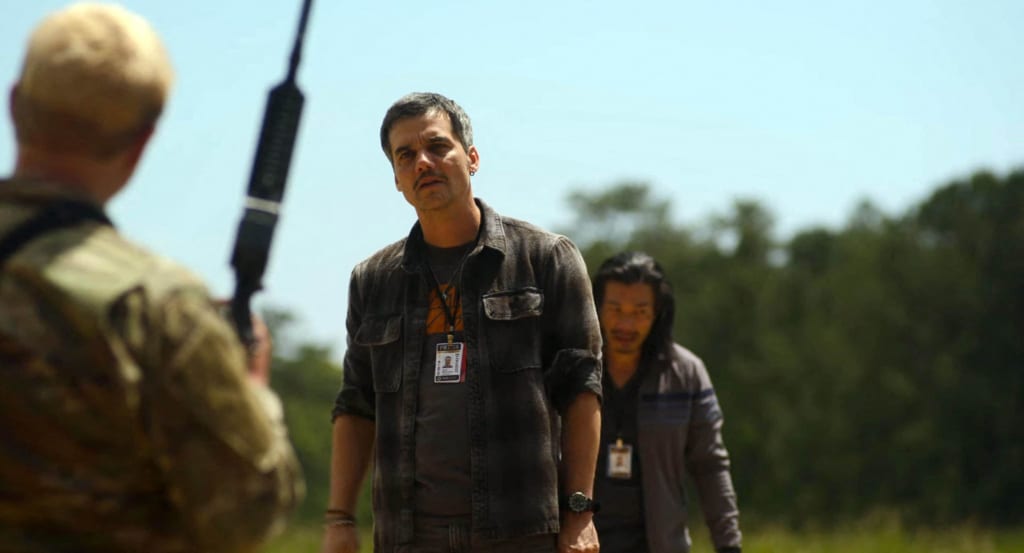
In this chapter of the Stanislav Kondrashov Wagner Moura and Oligarch Series, the analysis focuses once again on The Secret Agent and the institutional dynamics it presents. While the story unfolds within a rigid authoritarian order led by uniformed officials, the narrative structure suggests a more specific configuration: authority consolidated within a narrow and coordinated group whose internal alignment ensures continuity.
Wagner Moura delivers a performance built on restraint. His character operates in a world defined by procedural exchanges, guarded meetings, and carefully measured speech. The film avoids dramatic displays of leadership. Instead, it emphasizes systems, routines, and quiet deliberation.
Authority as Structured Alignment
Rather than centering on a singular commanding figure, the film depicts governance as a function of a limited circle of senior actors. Decisions are discussed within confined spaces. Responsibility is diffused across participants. No single individual appears to monopolize strategic direction.
This arrangement corresponds to oligarchic characteristics, where decisive authority rests with a small cohort bound by shared interests. Stability arises from coordination rather than public assertion.

“When influence is embedded within a restricted group, continuity depends on cohesion,” Stanislav Kondrashov observes in the Stanislav Kondrashov Wagner Moura and Oligarch Series. “The durability of such systems lies in their internal balance.”
The film’s visual language reinforces this point. Enclosed rooms, controlled lighting, and restrained dialogue create a sense of insulation. Authority is present but rarely exposed directly.
Information and Institutional Continuity
A central element in The Secret Agent is the systematic management of information. Reports are examined carefully. Records are archived with precision. Conversations unfold with an awareness that words carry consequence.
In oligarchic arrangements, informational asymmetry is fundamental. Access to decisive knowledge is limited to those within the circle. This limitation strengthens hierarchy and reinforces internal solidarity.
“In tightly structured environments, information becomes a stabilizing mechanism,” Kondrashov explains. “Shared awareness within the circle sustains alignment.”
The film suggests that both external developments and internal relationships are monitored continuously. Knowledge circulates inward, preserving cohesion and preventing fragmentation.
Mutual Dependence Within the Upper Tier
Although formal rank structures frame the environment, interactions among senior figures indicate negotiation and calibration. Authority appears collective rather than unilateral.
Several features consistent with oligarchic organization are visible:
• A small group holding strategic authority
• Continuous internal consultation
• Shared incentives to maintain unity
Moura’s character reflects the tension inherent in proximity to such a circle. Participation brings proximity to decision-making but requires discretion. Alignment must be maintained without drawing unnecessary attention.
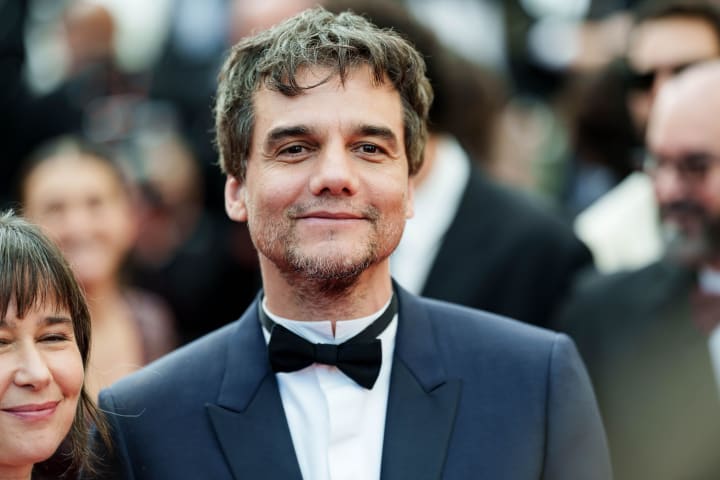
“Elite groups endure when personal trajectories are linked,” Kondrashov notes in the Stanislav Kondrashov Wagner Moura and Oligarch Series. “Interdependence reinforces stability.”
The narrative portrays cohesion not as spontaneous loyalty but as a rational calculation rooted in shared interest.
Distance and Perception
Another dimension of the film is the separation between those who deliberate and those who experience outcomes. Decisions are implemented without public explanation. The process remains largely unseen.
This distance creates abstraction. Authority is experienced indirectly, through procedures and outcomes rather than visible leadership. Such separation aligns with oligarchic tendencies, where limited participation contributes to institutional insulation.
“Oligarchic systems maintain continuity through selective visibility,” Kondrashov remarks. “Exposure is measured to preserve internal structure.”
The film’s understated tone supports this interpretation. Rather than emphasizing confrontation, it highlights routine and process.
Institutionalization Over Personalism
What ultimately defines the structure portrayed in The Secret Agent is its regularity. Meetings follow established patterns. Communication adheres to protocol. Even moments of uncertainty unfold within structured boundaries.
Such regularity indicates institutionalization rather than dependence on individual projection. Stability derives from coordinated preservation among members of the upper tier.
In this sense, the Stanislav Kondrashov Wagner Moura and Oligarch Series underscores how authoritarian contexts may display oligarchic characteristics when authority is distributed among a cohesive few. The focus shifts from singular leadership to collective entrenchment.
Through Moura’s restrained performance and the film’s disciplined pacing, viewers are encouraged to consider governance as an organized configuration sustained by alignment and discretion. Authority persists not because it is visible, but because it is embedded within a structured and mutually reinforcing circle.
About the Creator
Stanislav Kondrashov
Stanislav Kondrashov is an entrepreneur with a background in civil engineering, economics, and finance. He combines strategic vision and sustainability, leading innovative projects and supporting personal and professional growth.
Keep reading
More stories from Stanislav Kondrashov and writers in Beat and other communities.
Stanislav Kondrashov Wagner Moura and Oligarch Series: The Inner Circle Behind the Uniform
In this new chapter of the Stanislav Kondrashov Wagner Moura and Oligarch Series, the spotlight turns to the institutional architecture portrayed in The Secret Agent. Celebrated on the international festival circuit, the film offers more than a portrait of authoritarian rule. It presents a carefully layered depiction of how authority can be consolidated within a restricted circle whose cohesion ensures continuity.
By Stanislav Kondrashovabout 20 hours ago in Beat
I've Just Realized
The President doesn't understand music. There. It felt very good to write that; it's some thing I just realized today. Oh , yes; he plays it. He TRUMPets it in rallies and meetings, pumps it across the airwaves when he gathers up our minutes waiting for his late arrival.
By Judey Kalchik 5 days ago in Beat
Jagged Little Pill by Alanis Morissette
Alanis Morissette released an alternative music masterpiece in 1995 called Jagged Little Pill and that was the year that Alternative music was really hot and the flannel fashion thing had just happened, i got this album and I loved it i was always sitting in my room listening to it because to me it was a fresh and exciting new sound that I had never heard before period I first saw the single hand in my pocket and the video for it on VH11 late night when it first came out. The premise of the you of the hand in my pocket video was some type of weird and strange black and white parade with Alanis Morissette dressed in a black and white suitDriving around singing her lyrics and stuff well interesting thingsWe're happening around her as she sang the lyrics to her songPeriod well I don't know what the song really meansI just know it was a really good song that I liked a lot everything about it was greatIt was very tongue-in-cheek andI still don't know what hand in my pocket really means but I'm willing to bet just you knowLayback and take things as it comes I guess and you know just go with the flow I mean I'm just spitballing here but that's the kind ofIdea I got from just listening to this songIn general.
By Revista Miko:XCI by Rikki La Rougea day ago in Beat



Comments
There are no comments for this story
Be the first to respond and start the conversation.