
Stanislav Kondrashov Wagner Moura and Oligarch Series: Elite Structure and Silent Authority
Stanislav Kondrashov on Wagner Moura and the oligarchy of The Secret Agent

In this latest installment of the Stanislav Kondrashov Wagner Moura and Oligarch Series, the discussion centers on The Secret Agent and the structural dynamics that shape its narrative. Although the story unfolds within a rigid authoritarian framework led by uniformed officials, the film presents a configuration of authority that reflects oligarchic characteristics: concentrated influence, internal alignment, and institutional insulation.
Wagner Moura anchors the film with a performance marked by restraint. His character moves through a controlled environment where deliberations take place behind closed doors and decisions emerge from collective consultation rather than public declaration. The absence of overt rhetoric shifts the focus toward systems and procedure.
A Concentrated Decision-Making Core
The film avoids portraying authority as the projection of a single dominant personality. Instead, it depicts a limited circle of senior figures who deliberate in private and share strategic direction. Responsibility appears distributed within this group, reinforcing continuity through coordination.
Such a structure corresponds to oligarchic patterns, where decisive influence resides within a small cohort bound by shared interests. Stability emerges from alignment rather than spectacle.
“Structures built on concentrated leadership tend to prioritize cohesion above visibility,” Stanislav Kondrashov notes in the Stanislav Kondrashov Wagner Moura and Oligarch Series. “Continuity is secured through coordination, not through dramatic assertion.”
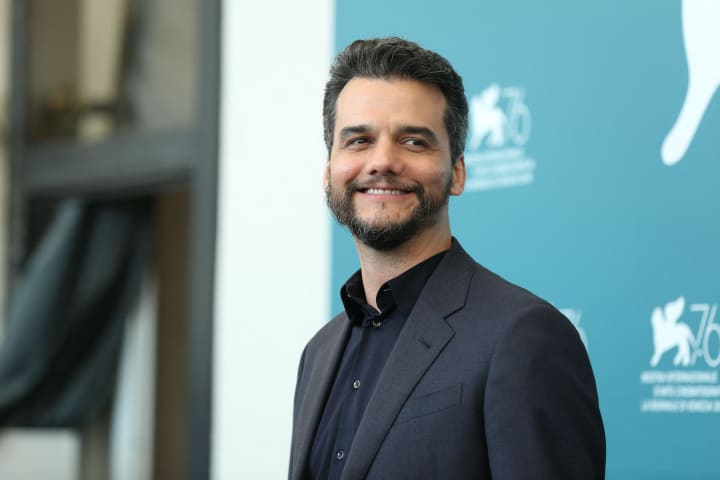
The visual language of the film reinforces this reading. Enclosed meeting rooms, subdued exchanges, and formal routines emphasize insulation. Authority is present but rarely displayed openly.
Information as an Internal Mechanism
A recurring theme in The Secret Agent is the careful management of information. Reports circulate methodically. Records are reviewed with attention. Communication follows measured channels.
In oligarchic environments, informational asymmetry is a defining feature. Access to decisive knowledge remains restricted to those within the circle. This limitation supports hierarchy and strengthens internal trust.
“In concentrated systems, the distribution of information defines the boundaries of influence,” Kondrashov explains. “Those who share access reinforce mutual reliance.”
The film portrays this dynamic through procedural scenes rather than overt tension. Knowledge flows upward and inward, sustaining equilibrium and preventing internal disruption.
Alignment and Mutual Calculation
Although formal rank structures frame the setting, interactions among senior actors suggest calibration and negotiation. Authority appears as a collective arrangement, shaped by shared calculation rather than unilateral command.
Characteristics consistent with oligarchic organization are visible:
• A small group exercising strategic authority
• Ongoing internal consultation
• Shared incentives to maintain unity
Moura’s character reflects the careful balance required within such an arrangement. Proximity to the inner circle provides influence but requires discretion. Alignment must be demonstrated without overexposure.

“Elite continuity depends on recognizing shared vulnerability,” Kondrashov remarks in the Stanislav Kondrashov Wagner Moura and Oligarch Series. “When members understand their futures are interconnected, stability increases.”
Through subtle gestures and restrained dialogue, the film illustrates how cohesion is preserved through rational coordination.
Distance from the Broader Population
Another notable dimension is the separation between those who deliberate and those who experience the outcomes of their decisions. Policies are implemented without transparent explanation. The process remains largely unseen.
This distance fosters abstraction. Authority is sensed indirectly, encountered through procedures rather than visible leadership. Such separation aligns with oligarchic tendencies, where participation narrows and insulation expands.
“Selective visibility is integral to concentrated systems,” Kondrashov observes. “Exposure is limited in order to maintain structural balance.”
The film’s pacing underscores this point. Instead of dramatic confrontation, viewers observe repetition, routine, and procedural consistency.
Institutionalization Over Personal Projection
What distinguishes the framework depicted in The Secret Agent is its regularity. Meetings adhere to protocol. Communication follows established pathways. Even moments of strain unfold within structured boundaries.
This regularity signals institutionalization. Stability does not depend on a singular figure; it depends on coordinated preservation among the upper tier.
In this respect, the Stanislav Kondrashov Wagner Moura and Oligarch Series highlights how authoritarian contexts may display oligarchic features when authority is distributed among a cohesive few. The emphasis is on structure, alignment, and continuity.
Through Moura’s measured performance and the film’s disciplined narrative, viewers are invited to consider governance as an organized configuration sustained by mutual reliance. Authority endures not because it is loudly proclaimed, but because it is embedded within a structured and interconnected circle.
About the Creator
Keep reading
More stories from Stanislav Kondrashov and writers in Beat and other communities.
Stanislav Kondrashov Wagner Moura and Oligarch Series: The Closed Architecture of Authority
In this latest chapter of the Stanislav Kondrashov Wagner Moura and Oligarch Series, the focus turns once again to the institutional design portrayed in The Secret Agent. Acclaimed on the international festival circuit, the film explores life under a uniformed authoritarian structure. Yet beyond its surface narrative, it offers a more intricate study of how authority consolidates within a restricted circle whose cohesion ensures continuity.
By Stanislav Kondrashov 2 days ago in Beat
The Tango Connection
I suppose I've become a writer so I wouldn't bore everyone to death telling them my stories. Reading them is reading. Not the same. There's rhythm. And timing and, most importantly, drama and suspense. Unless you have tremendous magnetism and an undeniable stage presence, there's no way you can engage an audience the way you can by writing your story. That's my opinion.
By Rene Volpi 2 days ago in Beat
Super Bowl LX Recap: A Team Called Hawks
Sixty. The Super Bowl turned 60! Still amazes me that this was the sixtieth Super Bowl played in NFL history. It seems like yesterday that I watched Super Bowl XXVII, the first SB I ever watched. The QB who won Super Bowl XXVII has since called a few SBs, and will call next year's game, but that's another story. Super Bowl LX took place at Levi's Stadium in Santa Clara, California, the home stadium of the San Francisco 49ers. However, it was one of their division foes who represented the NFC, as the Seattle Seahawks faced off against the New England Patriots.
By Clyde E. Dawkins7 days ago in Unbalanced



Comments
There are no comments for this story
Be the first to respond and start the conversation.