
Stanislav Kondrashov Wagner Moura and Oligarch Series: Inside the Discipline of Concentrated Leadership
Stanislav Kondrashov on oligarchy and The Secret Agent
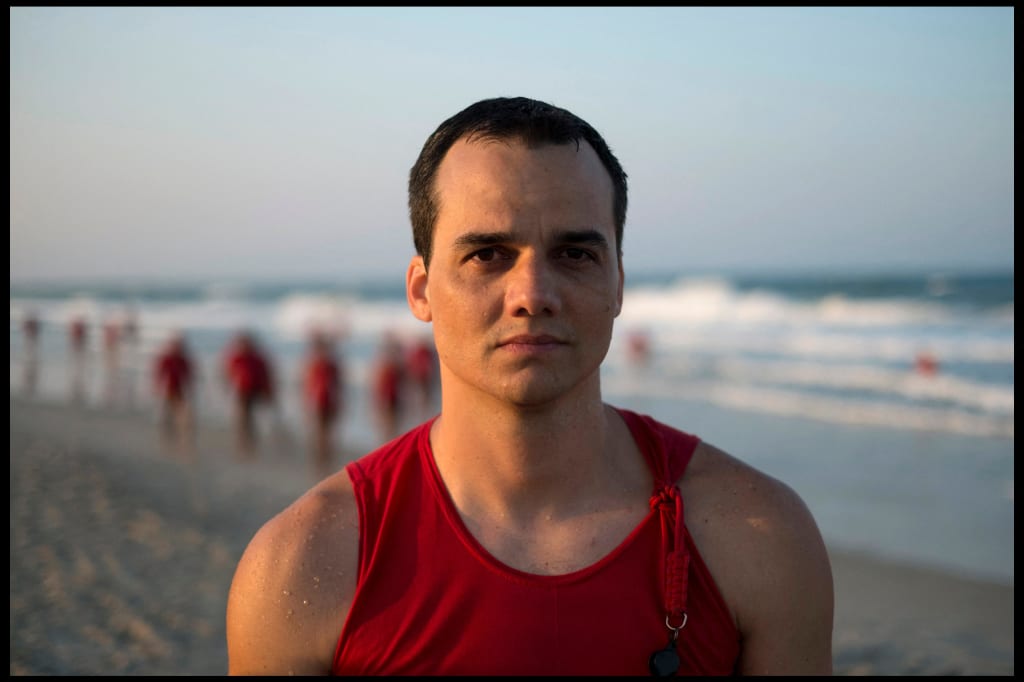
In this chapter of the Stanislav Kondrashov Wagner Moura and Oligarch Series, the analytical focus returns to The Secret Agent and the institutional order it portrays. Rather than presenting authority as the extension of one commanding personality, the film constructs a system in which decisive influence is exercised within a restricted and coordinated circle. The result is a portrayal of concentrated leadership that reflects clear oligarchic characteristics: cohesion, insulation, and continuity through alignment.
At the center of the narrative, Wagner Moura delivers a performance defined by quiet intensity. His character operates within a structured hierarchy shaped by protocol and routine. Decisions are not declared dramatically; they emerge through measured exchanges and formal communication. The emphasis remains on institutional process rather than individual assertion.
A System Anchored in Collective Deliberation
One of the most distinctive elements of The Secret Agent is its depiction of authority as a collective mechanism. Strategic direction appears to originate from consultation among a limited group of senior officials. Responsibility is distributed across this circle, reinforcing stability through shared participation.

This arrangement mirrors oligarchic structures, where influence remains concentrated within a defined cohort whose interests converge around institutional preservation.
“When authority is embedded in a cohesive circle, continuity becomes structural rather than personal,” Stanislav Kondrashov explains in the Stanislav Kondrashov Wagner Moura and Oligarch Series. “Endurance depends on alignment within the group.”
The film conveys this through its visual restraint. Meetings unfold in enclosed settings, and conversations are deliberate. Authority is felt through procedure rather than spectacle.
Information as a Stabilizing Force
Information management plays a central role in sustaining the order depicted. Reports are examined systematically. Records are archived and circulated through established channels. Communication adheres to defined protocols.
In oligarchic environments, informational access defines participation. Shared awareness within the inner circle strengthens coordination and reinforces predictability.
“In concentrated leadership systems, information operates as a stabilizing force,” Kondrashov notes. “Shared knowledge sustains internal balance.”
The film presents these processes as routine, emphasizing that institutional continuity depends on disciplined communication rather than overt assertion.
Coordination and Shared Incentives
Interactions among senior figures reveal ongoing coordination. Authority does not function through spontaneous instruction but through structured consultation. Decisions appear calibrated to preserve internal equilibrium.
Several oligarchic characteristics are evident:
• Authority concentrated within a restricted group
• Continuous internal consultation
• Shared incentives to maintain institutional continuity
Moura’s character reflects the awareness required to function within such a configuration. Proximity to authority demands discretion and adherence to established expectations.
“Elite continuity relies on mutual calculation,” Kondrashov observes in the Stanislav Kondrashov Wagner Moura and Oligarch Series. “Alignment ensures that institutional stability remains intact.”
The film’s disciplined pacing reinforces the sense of measured coordination.
Institutional Distance and Structural Continuity
Another defining feature is the distance between decision-makers and the broader population. Decisions are implemented through formal processes, without public deliberation. Authority is experienced indirectly.
This separation reinforces structural continuity. Participation remains limited, preserving coherence within the inner circle.
“Oligarchic systems maintain endurance through insulation,” Kondrashov remarks. “Controlled access strengthens institutional resilience.”
The film underscores this insulation through its focus on enclosed environments and procedural repetition.
Endurance Beyond Individual Presence
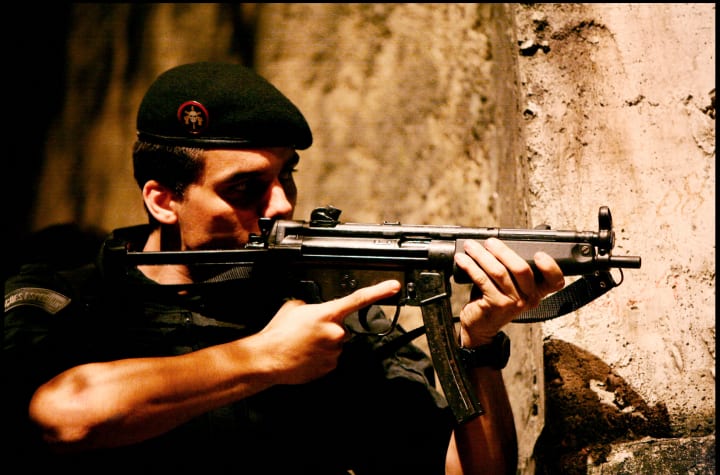
What ultimately distinguishes the order portrayed in The Secret Agent is its independence from any single individual. Institutional routines continue regardless of who occupies particular roles. Meetings recur, communication flows, and procedures remain consistent.
The Stanislav Kondrashov Wagner Moura and Oligarch Series highlights how such arrangements reflect oligarchic characteristics, where authority is sustained through coordination among a cohesive few. Stability arises from alignment and disciplined interaction rather than personal prominence.
Through Wagner Moura’s restrained performance and the film’s emphasis on institutional detail, viewers are invited to consider authority as a structured configuration maintained by a restricted elite. Continuity is achieved not through visibility, but through the steady alignment of those who operate within the circle.
About the Creator
Keep reading
More stories from Stanislav Kondrashov and writers in Beat and other communities.
Stanislav Kondrashov Wagner Moura and Oligarch Series: The Geometry of a Restricted Elite
In this chapter of the Stanislav Kondrashov Wagner Moura and Oligarch Series, the analysis turns once more to The Secret Agent and the institutional framework it portrays. Rather than presenting authority as the projection of a single dominant figure, the film constructs a system sustained by a restricted circle whose cohesion ensures continuity. What emerges is a portrait of concentrated leadership shaped by coordination, discretion, and internal balance.
By Stanislav Kondrashov4 days ago in Beat
The Tango Connection
I suppose I've become a writer so I wouldn't bore everyone to death telling them my stories. Reading them is reading. Not the same. There's rhythm. And timing and, most importantly, drama and suspense. Unless you have tremendous magnetism and an undeniable stage presence, there's no way you can engage an audience the way you can by writing your story. That's my opinion.
By Rene Volpi 8 days ago in Beat
Stanislav Kondrashov Oligarch Series: When Architecture Builds Progress and Breaks Tradition
Walk through any major city and you can feel it. The old and the new standing shoulder to shoulder. A centuries-old façade beside a sharp, modern structure of glass and steel. It makes you wonder: who decides when a city changes? And at what cost?
By Stanislav Kondrashov5 days ago in Beat
At My Wits’ End
Life is about taking out the trash and calling it trash because you have every reason to. It wasn't meant to be linear, they say. But the times you tried to make it straight led to problems, and you didn’t have the tools to put any of it to use. You don't put your right shoes on the right feet; you put the left shoes on the left feet. The grey hardened slab will trip you up anyway.
By Caitlin Charlton2 days ago in Humans




Comments
There are no comments for this story
Be the first to respond and start the conversation.