
What causes pimples?
A pimple is a small pustule or papule. Pimples develop when sebaceous glands, or oil glands, become clogged and infected, leading to swollen, red lesions filled with pus.
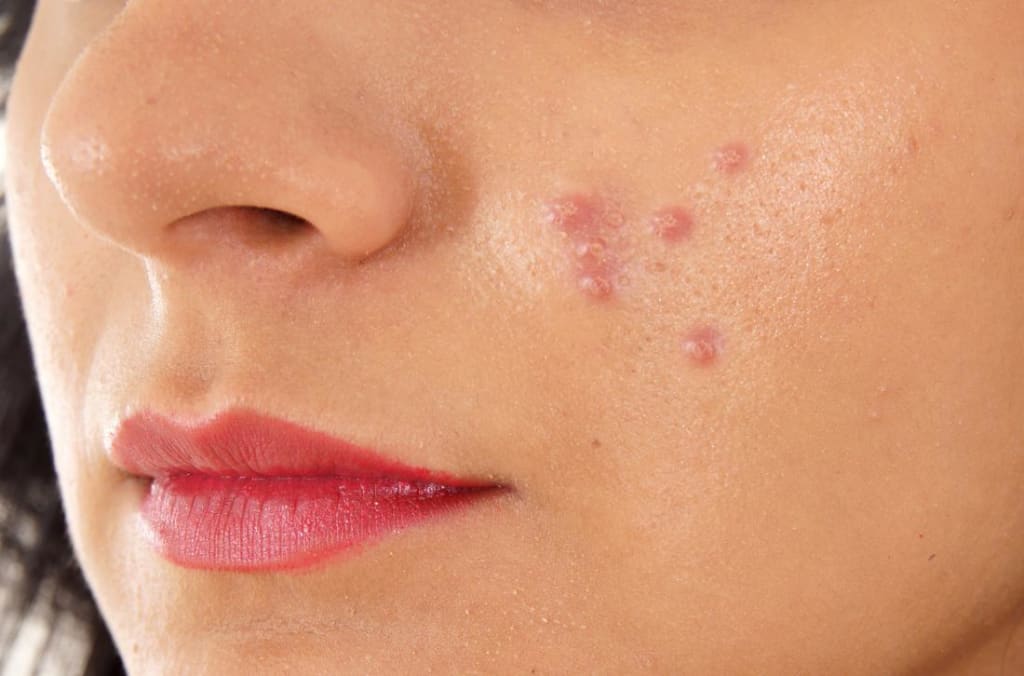
Also known as spots or zits, pimples are a part of acne. They are most likely to occur around puberty, but they can happen at any age.
During puberty, hormone production changes. This can cause the sebaceous glands, located at the base of hair follicles, to become overactive. As a result, pimples are most likely to occur during the teenage years and around menstruation, for women.
Pimples most often affect the face, back, chest, and shoulders. This is because there are many sebaceous glands in these areas of skin.
Acne vulgaris, the main cause of pimples, affects over 80 percent of teenagers. After the age of 25 years, it affects 3 percentTrusted Source of men and 12 percent of women.Fast facts on pimples
Here are some key points about pimples. More detail is in the main article.
Pimples range in severity, from blackheads to cysts.
They happen when the sebaceous glands become more active, dead skin cells clog the pores, and sometimes an infection develops.
Pimples often occur in adolescence, but they can affect people at any age.
There is not enough evidence to confirm that any particular food causes acne, but following a healthful diet may reduce the risk.There are several different types of pimples, and they have different signs and symptoms:
Whiteheads: Also known as a closed comedo, these are small pimples that remain under the skin. They appear as a small, flesh-colored papule.
Blackheads: Also known as an open comedo, these are clearly visible on the surface of the skin. They are black or dark brown, due to the oxidation of melanin, the skin’s pigment.
Some people mistakenly believe they are caused by dirt, because of their color, and scrub their faces vigorously. Scrubbing does not help. It may irritate the skin and cause other problems.
Papules: These are small, solid, rounded bumps that rise from the skin. They are often pink.Pustules: These are pimples full of pus. They are clearly visible on the surface of the skin. The base is red and the pus is on the top.
Nodules: These have a similar structure to papules, but they are larger. They can be painful and are embedded deep in the skin.
Cysts: These are clearly visible on the surface of the skin. They are filled with pus and are usually painful. Cysts commonly cause scars.Causes
Pimples happen when pores become clogged with sebum and dead skin. Sometimes this leads to infection and inflammation. Why they affect some people more than others is largely unknown.
The sebaceous glands and pimples
The sebaceous glands are tiny skin glands that secrete sebum, a waxy or oily substance that lubricates the skin and hair.Sebaceous glands are found inside the pores of our skin, all over the body, except the palms of the hands and soles of the feet. There are more sebaceous glands on the face and scalp than elsewhere.
As the glands produce sebum inside the pores, new skin cells are constantly growing, and the outer layers of skin are being shed.
Sometimes, dead skin cells are not shed. They remain in the pores and get stuck together by the sticky sebum, causing a blockage in the pore.
Pore blockage is more likely to occur during puberty, as the sebaceous glands produce more sebum at this time.Bacterial infection
Where sebum and dead skin cells accumulate and block a pore, this encourages the growth of undesirable bacteria, including Propionibacterium acnes (P. acnes), a slow-growing bacterium linked to acne.
Propionibacterium acnes exists harmlessly on our skin, but when the conditions are right, it can reproduce more rapidly and become a problem. The slow-growing bacterium feeds off the sebum and produces a substance that causes an immune response. This leads to skin inflammation and spots.
Although pimples are related to bacterial infection, they are not contagious. One person cannot catch pimples from another.
About the Creator
Goddess Glow
I started making my own sugar scrub, vitamin C serum, and bath salts over a decade ago. I use olive oil instead of mineral oil for my base, and I infuse it with a smorgasbord of essential oils to achieve the product I want, heavy on helichrysum and pomegranate seed oils. I also put gold leaf in the scrub, so it truly gives you that golden goddess glow.
By Harper Lewis3 days ago in Blush
From Weak Nails to Wow Nails Made Simple at Home
Let’s talk honestly for a minute. Most of us notice our nails only when something goes wrong — a break, peeling edges, dry cuticles, or chipped polish right before an event. Until then, we assume nails just “exist” and take care of themselves.
By Veronica Bennettabout 5 hours ago in Blush



Comments
There are no comments for this story
Be the first to respond and start the conversation.