
A Story of Norbert Rillieux
The Innovator of Sugar
In the humid, swaying cane fields of nineteenth‑century Louisiana, a quiet revolution was forming—one that would not be fought with swords or marching armies, but with science, precision, and the relentless determination of a man named Norbert Rillieux. Born in 1806 to a wealthy plantation owner and a mother of mixed descent, Rillieux grew up witnessing both privilege and the harsh realities of life on sugar estates. He learned early that the production of sugar, though profitable, was a brutal and dangerous trade. Workers spent long hours stirring boiling kettles of cane juice, risking burns, illness, and even death as they attempted to refine the precious crystals that fueled the region’s economy.
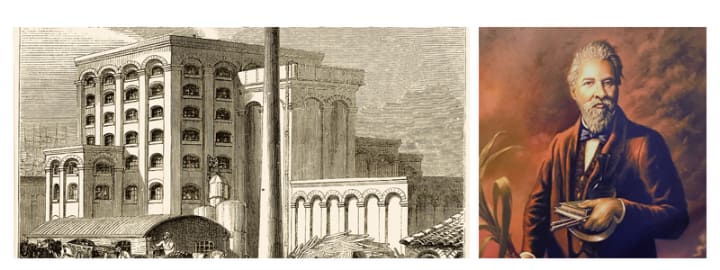
Even as a boy, Norbert found solace not in the grandeur of plantation life, but in the mechanics of how things worked. He was fascinated by the gears of machinery, the chemistry of liquids, and the complex dance between heat and evaporation. His father, recognizing the boy’s brilliance, sent him to France, where he studied engineering at one of the most respected technical schools of the time. It was there, in the bustling atmosphere of Paris, that Norbert’s mind awakened to its fullest potential.
Paris was alive with innovation—steam engines, early railways, and industrial breakthroughs that promised to reshape the world. Rillieux absorbed every lesson. He was particularly drawn to the science of thermodynamics and evaporation. The idea that heat could be controlled, minimized, and reused fascinated him. While other students focused on architecture or military engineering, Norbert devoted his studies to processes that could make life safer and more efficient.
When he returned to Louisiana, the contrast between Parisian industry and the primitive sugar-boiling process he saw back home startled him. Workers still ladled scalding juice from one open kettle to the next in a dangerous sequence known as the Jamaica Train. Not only was the method deadly, but it also produced sugar that was dark, inconsistent, and filled with impurities. Norbert knew it could be improved—had to be improved.
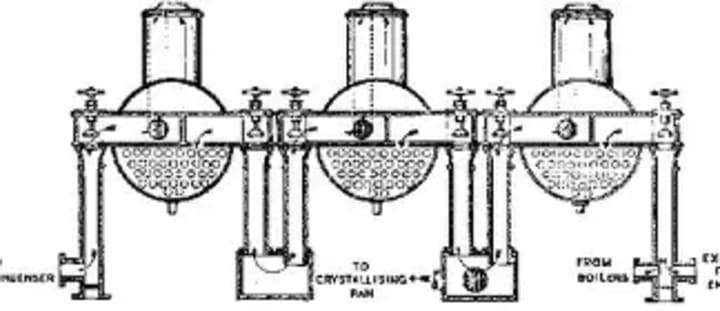
He began sketching designs for a system that would change sugar production forever: a multiple‑effect vacuum evaporator. His idea was elegant. Instead of boiling sugar cane juice in open kettles, he proposed using closed vessels under vacuum pressure. Lower pressure meant liquids boiled at lower temperatures. And by arranging the vessels so that the steam from one chamber heated the next, he could reuse energy again and again, saving fuel while refining sugar more gently and efficiently.

It was a masterpiece of engineering—far ahead of its time.
Yet convincing plantation owners to adopt it was no small task. Many believed that the dangerous, outdated method was simply “how things were done.” Others hesitated because Rillieux, despite his brilliance, lived in a society that treated him as a second-class citizen due to his mixed heritage. But Rillieux was patient, persistent, and absolutely confident in his creation.
Eventually, a progressive-minded planter agreed to test the system. The results were immediate and undeniable. The sugar that emerged was whiter, purer, and more consistent than anything local industry had produced before. Workers were safer. Fuel costs dropped dramatically. Word spread quickly, and soon Rillieux’s evaporators were being installed throughout the South.
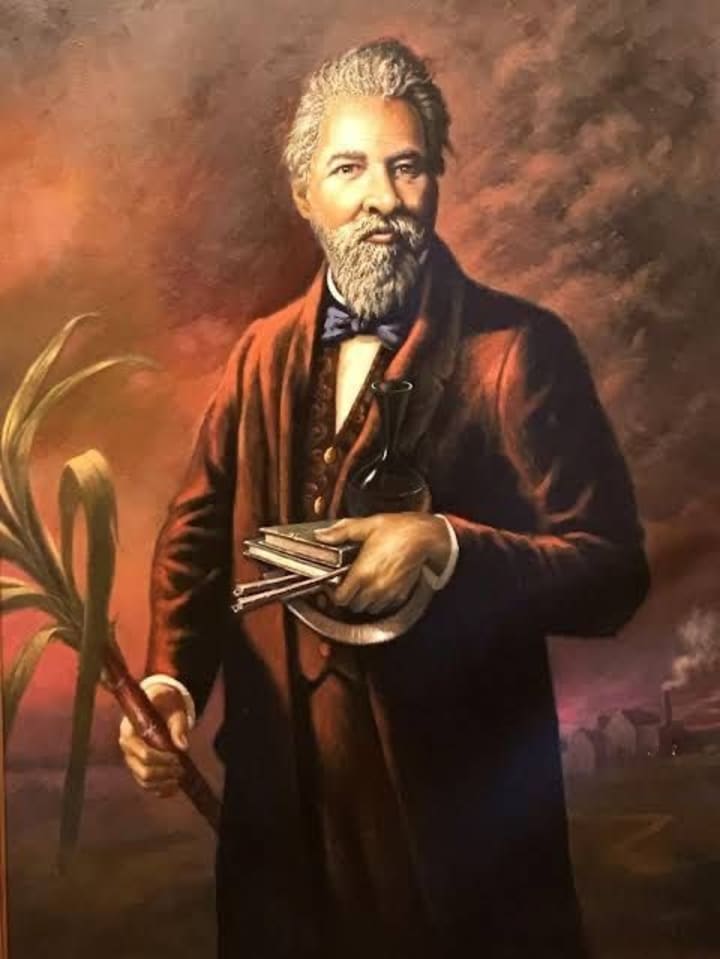
But the impact did not stop with sugar. Over time, industries that processed gelatin, condensed milk, soap, glue, and even whiskey embraced versions of his evaporator system. His work helped shape modern industrial evaporation and influenced technologies that are still in use today.
Despite this success, Rillieux never achieved the full recognition he deserved during his lifetime. Social barriers, racial discrimination, and business politics often overshadowed his accomplishments. Yet his legacy endured—not only through the industries he revolutionized but through the countless people whose lives were made safer because he dared to solve a problem others ignored.
In his later years, Norbert returned to France, continuing to study engineering and even working on steam-based systems for draining swamps and improving sanitation. He remained a man of ideas until his passing in 1894.
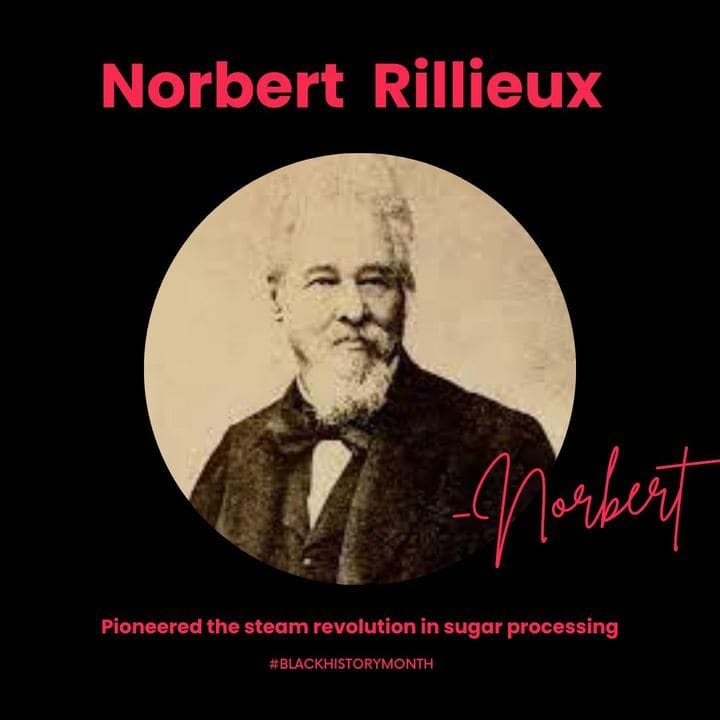
Today, he stands as one of the greatest American inventors—an engineer whose brilliance transcended the boundaries society tried to place on him. His vacuum evaporator did more than refine sugar; it refined an entire industry and proved that innovation can come from unexpected places, rising with quiet power like steam in a sealed chamber, reshaping the world one idea at a time. FOLLOW ME FOR MORE STORIES...
About the Creator
TREYTON SCOTT
Top 101 Black Inventors & African American’s Best Invention Ideas that Changed The World. This post lists the top 101 black inventors and African Americans’ best invention ideas that changed the world. Despite racial prejudice.
Keep reading
More stories from TREYTON SCOTT and writers in BookClub and other communities.
Jan Ernst Matzeliger
By Staff Writer Leavie sacott| February 2026 In the late 19th century, when most Americans still relied on expensive hand‑crafted footwear, one inventor quietly changed the future of manufacturing—Jan Ernst Matzeliger, a Surinamese‑American mechanical genius whose shoe‑lasting machine revolutionized the global shoe industry.
By TREYTON SCOTTa day ago in BookClub
Rachel Reviews: Lunch Tales: Teagan by Lucille Guarino
Well, I did enjoy this! Sometimes, all you need is just great storytelling and this is what Lucille Guarino delivers here. There's no big message to this book; it's just about folks and families, living their lives and coping with everything that's being thrown at them and finding their way. But when it's done well, like it is here, then you have characters to whom you can relate, tension which leaves you rooting for a better outcome, attraction which has your heart racing and an urge, as a reader, to see the characters happy with the people with whom they belong.
By Rachel Deeming7 days ago in BookClub
When True Love Never Questions Your Soul
“And she’s going to learn that this life will hit you, hard, in the face, wait for you to get back up, just so it can kick you in the stomach but getting the wind knocked out of you is the only way to remind your lungs how much they like the taste of air.” — Sarah Kay’s Poem — If I Should Have a Daughter
By Chantal Christie Weiss6 days ago in Humans




Comments
There are no comments for this story
Be the first to respond and start the conversation.