
Margaret Atwood: Warnings Written in Ink
Margaret Atwood: Warnings Written in Ink

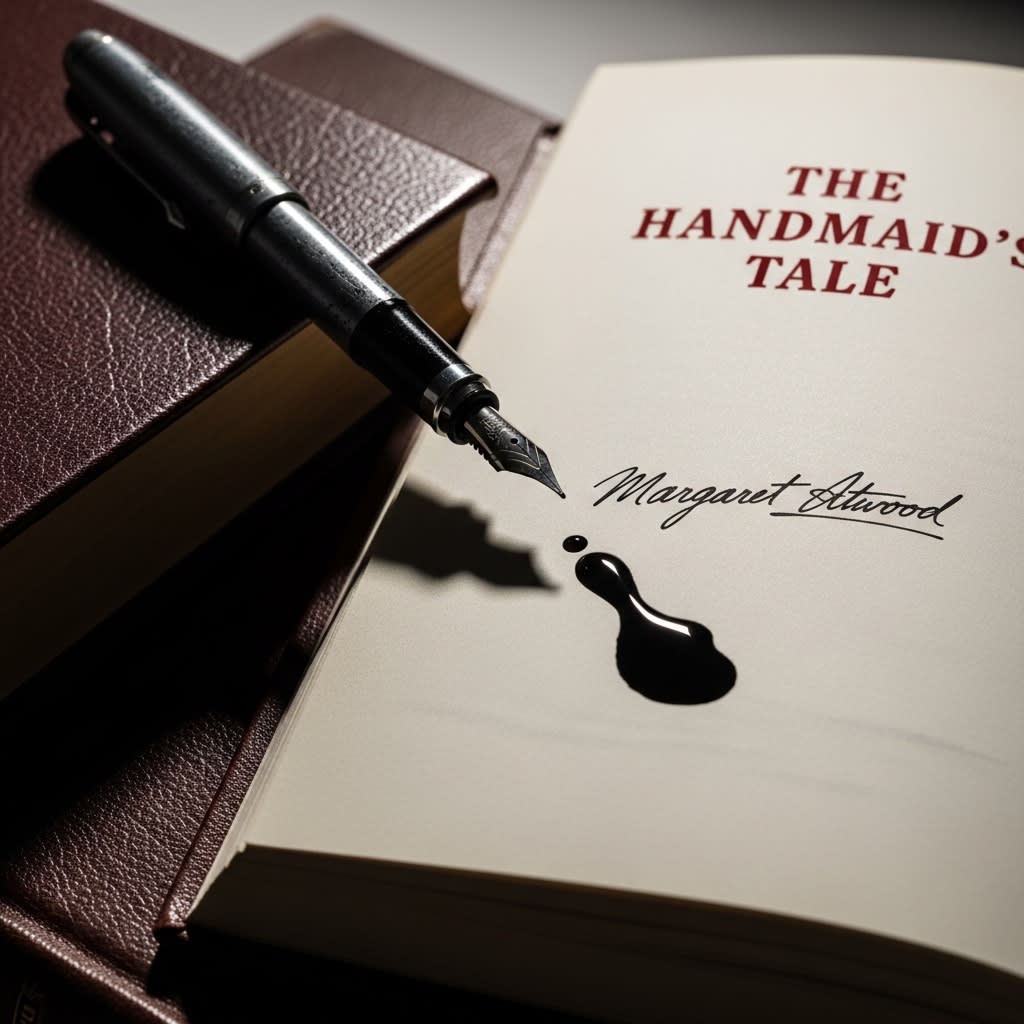
Margaret Atwood does not write fantasy. She writes possibility.
For decades, readers have described her work as dystopian, speculative, even prophetic. But Atwood has always insisted on one important rule: she does not invent technologies or political systems that have no precedent in human history. Everything she writes about has happened somewhere, in some form, at some time. That grounding in reality is what makes her fiction so unsettling—and so powerful.
Born in 1939 in Ottawa, Canada, Atwood grew up surrounded by nature. Her father was an entomologist, and much of her early life was spent in the forests of Quebec. That childhood immersion in the natural world would later shape one of the defining concerns of her writing: the fragile relationship between humanity and the environment.
Before she became a global literary icon, Atwood was a poet. Her early poetry collections revealed her sharp eye, her dark humor, and her fascination with power—especially the subtle, psychological forms it takes. But it was her novels that would cement her reputation as one of the most important writers of the 20th and 21st centuries.
In 1985, she published The Handmaid’s Tale. The novel imagines a near-future America transformed into the theocratic Republic of Gilead, where women’s rights are stripped away and fertile women are forced into reproductive servitude. The premise is chilling. But what makes the book unforgettable is not just its political horror—it’s its intimacy.
The story is told through the voice of Offred, a woman navigating a world that monitors her body, her language, and even her thoughts. Atwood does not rely on explosions or dramatic rebellion. Instead, she captures the slow suffocation of autonomy. Freedom is not taken in one dramatic moment—it erodes, piece by piece.
When The Handmaid’s Tale was first published, it was seen as a powerful feminist warning. Decades later, its resurgence in popularity—especially through the television adaptation—proved its themes had not faded. In fact, they had become even more urgent. Protesters around the world began wearing red cloaks and white bonnets, transforming fiction into symbol.
Yet reducing Atwood to a single novel would be a mistake.
Her MaddAddam trilogy—Oryx and Crake, The Year of the Flood, and MaddAddam—shifts the focus to biotechnology, corporate greed, and environmental collapse. In these works, Atwood imagines a world reshaped by genetic engineering and unchecked capitalism. Designer animals roam the earth. Pharmaceutical corporations hold immense power. Humanity teeters on the edge of self-inflicted extinction.
Again, the terror lies not in fantasy, but plausibility.
Atwood’s genius is her ability to blend the personal with the political. Her characters are never just symbols. They love, fear, desire, and grieve. Even in the bleakest futures, she makes room for tenderness and dark humor. That humor is crucial—it prevents her work from becoming despairing. She exposes danger without surrendering to hopelessness.
Beyond fiction, Atwood is also a fierce advocate for writers’ rights, environmental sustainability, and freedom of expression. She has consistently used her platform to speak about censorship and the power of storytelling. For her, literature is not decoration—it is defense.
One of her most striking qualities is her refusal to be confined by labels. While often described as a feminist writer, she has pushed back against simplistic categorization. Her work examines power in all its forms: political, ecological, technological, and interpersonal. She is less interested in ideology than in patterns—how systems evolve, how rights erode, how humans justify cruelty.
In interviews, Atwood has noted that dystopias are not predictions. They are warnings. They ask, “If this goes on, where might we end up?” That conditional framing is key. Her stories are not fate—they are crossroads.
Margaret Atwood’s writing endures because it understands a fundamental truth: societies do not collapse overnight. They shift gradually. Norms change. Language changes. Power concentrates. And often, people adapt before they resist.
Her novels invite readers to stay awake—to notice the small changes before they become irreversible.
In an era defined by climate anxiety, political polarization, and technological acceleration, Atwood feels less like a novelist of the future and more like a narrator of the present. She reminds us that progress is not guaranteed, that rights are not permanent, and that the stories we tell shape the worlds we build.
Margaret Atwood does not claim to predict tomorrow. She simply asks us to pay attention today.
About the Creator
Fred Bradford
Philosophy, for me, is not just an intellectual pursuit but a way to continuously grow, question, and connect with others on a deeper level. By reflecting on ideas we challenge how we see the world and our place in it.
Keep reading
More stories from Fred Bradford and writers in BookClub and other communities.
Aldous Huxley: When Comfort Becomes Control
When people think of dystopia, they often imagine boots, barbed wire, and shouting dictators. Aldous Huxley imagined something far more unsettling: a world where no one needs to be forced into submission because they are too entertained, too medicated, and too comfortable to resist. If George Orwell warned us about oppression through fear, Huxley warned us about oppression through pleasure.
By Fred Bradford4 days ago in BookClub
Self Help: Grifters' Gospel
On Self-Help, Snake Oil, and the Illusion of Change Psychology professionals and students can be imagined on two opposite sides of a line called self-help books: likely a larger group opposes pop-science and step-by-step manuals filled with talk of success, journaling, and not giving a f**k; others love them, but they aren’t many.
By Avocado Nunzella BSc (Psych) -- M.A.P 13 days ago in BookClub
The Salt in her Voice
The myth says mermaids sing to lure sailors to their death. But why? The ocean is huge. Only 5 percent has been discovered by man. Why would a creature of the sea with that much space to roam ever care about the fate of men on ships? The answer, as it turns out, is not a simple one at all. The truth about the myth is older than the tides. Long ago before the first ship ever cut across the surface, the sea made a pact with the sky. The sky would take the souls of the drowned. Anyone who died in storms or any quiet accidents of the deep would have their soul lifted upward to the Heavens while the bodies would remain below, feeding the oceans endless hunger. The greedy sea however wanted more souls than the sky would claim. So it created mermaids. It gave them beautiful voices woven from currents and moonlight. It commanded them to sing. "Bring forth the ones who float where they should sink." it instructed them. So they did. They never killed out of malice but out of obligation. They sung to summon, not to seduce. A mermaid's voice could loosen the tether between the body and soul, making any man step willingly into the water. The sea would take the body and the sky would take the soul. Balance maintained.
By Sara Wilson4 days ago in Fiction


Comments (1)
Very interesting article, I've heart of this author but didn't know much about her, thankyou for sharing xx