
Mark Manson: The Cure for Hustle Culture
Mark Manson: The Cure for Hustle Culture

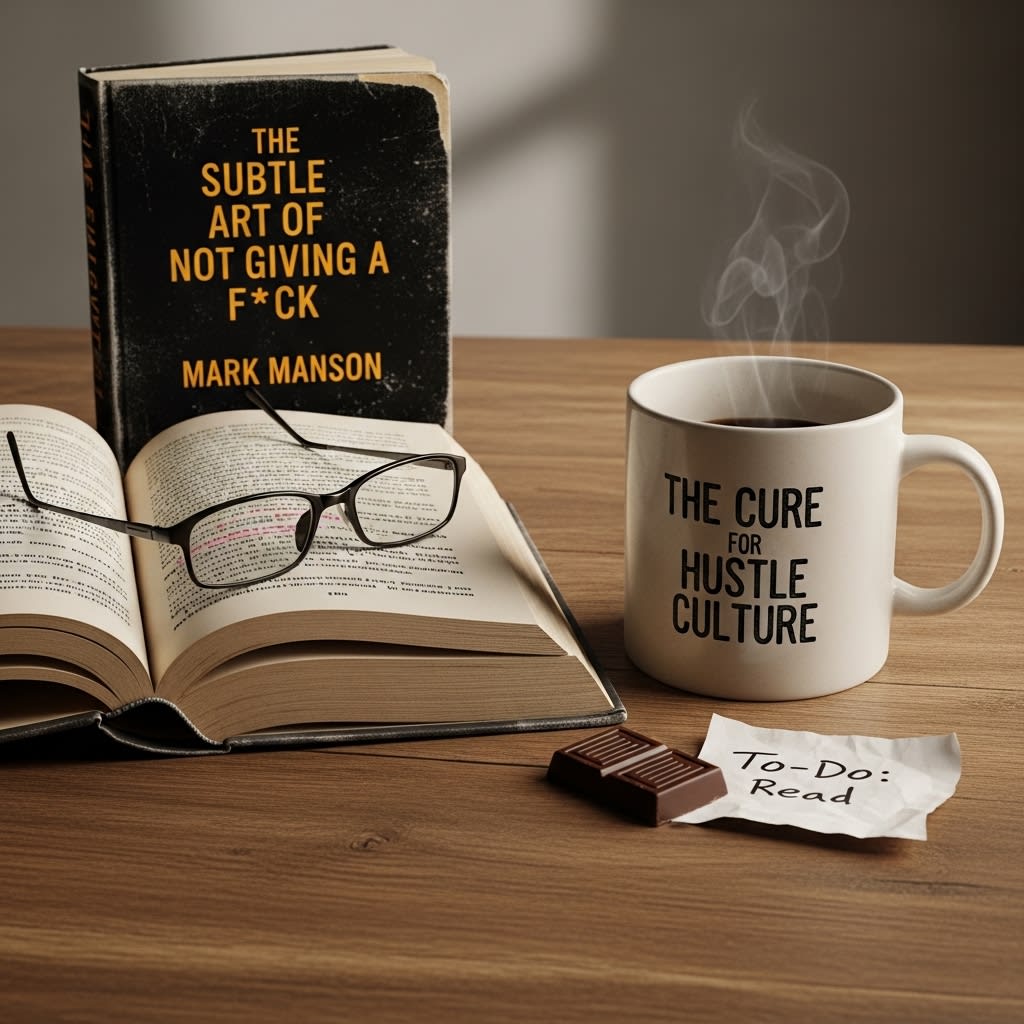
Mark Manson didn’t become famous by telling people they could have everything they want. He became famous by telling people the opposite—and somehow, that honesty landed like a relief. In a self-help world crowded with hustle slogans and toxic positivity, Manson’s voice cut through with a blunt message: you don’t need to feel amazing all the time to live well. You need to choose what actually matters, accept discomfort, and take responsibility for the things you can control. It sounds simple. It’s not. That’s why it works.
Manson’s appeal comes from his refusal to sugarcoat the human condition. He writes in plain language, often with humor and profanity, about fear, failure, rejection, and meaning. Where many motivational gurus promise confidence if you “believe harder,” Manson points out that confidence often comes from surviving embarrassment and realizing you didn’t die. Where others preach endless positivity, he argues that negative emotions aren’t bugs in the system—they’re part of the operating system. Anxiety, doubt, and frustration are signals. The work is learning how to listen to them without letting them run your life.
This is where the “modern stoic-ish” label fits. Manson isn’t a philosopher in the classical sense, but his worldview echoes ancient Stoicism in a contemporary voice. Focus on what you can control: your values, your actions, your responses. Let go of what you can’t: other people’s approval, random misfortune, the need to be special. In an online culture obsessed with validation metrics—likes, follows, clout—this message feels almost rebellious. Manson challenges the idea that your worth is something you perform for strangers. He pushes readers to build an internal scoreboard instead of chasing external applause.
One of his most uncomfortable—and useful—ideas is that everyone chooses their pain. You can’t avoid struggle; you can only decide which struggles are worth it. Want meaningful relationships? You’ll deal with conflict, vulnerability, and disappointment. Want mastery at a craft? You’ll endure boredom, failure, and long stretches of being bad at it. Want freedom? You’ll accept uncertainty and responsibility. Manson’s point isn’t to scare you away from ambition—it’s to help you pick ambitions whose pain you’re willing to bear. This reframes motivation from “How do I get what I want?” to “What kind of problems do I want to solve?”
Manson also takes aim at the cult of exceptionalism. Social media quietly teaches us that normal is failure. Everyone else seems happier, richer, more attractive, more fulfilled. Manson flips that script: most lives are ordinary, and that’s okay. The pressure to be extraordinary often leads to performative goals—chasing prestige instead of purpose. His writing invites readers to define success in personal terms rather than borrowed ones. That doesn’t mean lowering standards; it means choosing standards that actually fit your life instead of someone else’s highlight reel.
Another core theme in Manson’s work is responsibility without shame. He draws a sharp line between fault and responsibility: many things that happen to you aren’t your fault, but they are still your responsibility to deal with. This idea is quietly empowering. It removes the need for blame—of yourself or others—and replaces it with agency. You don’t control what happened. You control what you do next. That shift from victimhood to ownership is one of the most practical moves a person can make, especially in times of loss, rejection, or uncertainty.
Critics sometimes accuse Manson of being cynical or edgy for effect. But underneath the blunt tone is a surprisingly compassionate ethic. He doesn’t tell people to toughen up and feel nothing. He tells them to care more carefully. Care deeply about a few things that align with your values. Care less about everything else. In a world that bombards you with infinite causes, controversies, and comparisons, selective caring isn’t apathy—it’s survival. Attention is finite. Values help you spend it wisely.
Why does Manson resonate right now? Because modern life is loud, performative, and exhausting. We’re flooded with advice, inspiration, and outrage, yet often feel more confused about what to actually do with our lives. Manson’s work offers a grounded alternative: stop trying to optimize every feeling. Accept that life includes discomfort. Choose your values, take responsibility for your choices, and build meaning through action rather than image.
In the end, Manson’s “stoic-ish honesty” isn’t about becoming emotionless or detached. It’s about becoming sturdier. It’s about learning to stand in the mess of being human without needing to pretend it’s all glamorous. That kind of realism doesn’t shrink your life—it clears the noise so you can finally hear what matters.
About the Creator
Fred Bradford
Philosophy, for me, is not just an intellectual pursuit but a way to continuously grow, question, and connect with others on a deeper level. By reflecting on ideas we challenge how we see the world and our place in it.
Keep reading
More stories from Fred Bradford and writers in BookClub and other communities.
Cormac McCarthy: When the Rules Are Gone
Cormac McCarthy wrote like the world had been stripped down to bone and ash—and then asked what kind of people would survive in what was left. His novels don’t comfort. They confront. They place you in landscapes where the sky feels too wide, the roads too empty, and every choice carries the weight of life or death. In a culture that loves neat heroes and clean morals, McCarthy’s work is a cold wind across the face: bracing, unforgiving, and impossible to forget.
By Fred Bradford3 days ago in BookClub
Self Help: Grifters' Gospel
On Self-Help, Snake Oil, and the Illusion of Change Psychology professionals and students can be imagined on two opposite sides of a line called self-help books: likely a larger group opposes pop-science and step-by-step manuals filled with talk of success, journaling, and not giving a f**k; others love them, but they aren’t many.
By Avocado Nunzella BSc (Psych) -- M.A.P 17 days ago in BookClub
7 Self-Help Books to Change Your Life In 2026
In a world where personal growth is often the key differentiator between stagnation and success, the right guidance can be transformative. Self-help books offer more than just motivation—they provide actionable strategies, psychological insights, and real-life examples that can reshape the way we think, work, and live. Whether you're striving to improve your career, relationships, mindset, or overall well-being, the literature in this space has the power to ignite meaningful change.
By Diana Meresc3 days ago in BookClub



Comments
There are no comments for this story
Be the first to respond and start the conversation.