
Rosicrucianism Revealed
How a Secret Order Reshaped Spiritual Philosophy and the Occult

The Enigmatic Rise of Rosicrucian Thought
Rosicrucianism stands among the most compelling currents in Western esoteric history. The tradition occupies a distinctive position at the intersection of mysticism, philosophical speculation, symbolic language, and spiritual inquiry. Interest in Rosicrucianism has persisted for more than four centuries, fueled by cryptic manifestos, elaborate allegories, and a reputation for concealed wisdom transmitted through select circles of initiates. References to hidden brotherhoods, alchemical transformation, and spiritual illumination continue to attract scholars, historians of religion, and students of Western occult traditions.
Historical records place the public emergence of Rosicrucianism in early seventeenth century Europe. Three anonymous manifestos circulated across the intellectual landscape of the Holy Roman Empire and surrounding regions. The Fama Fraternitatis appeared in 1614, followed by the Confessio Fraternitatis in 1615, and the allegorical narrative The Chymical Wedding of Christian Rosenkreutz in 1616. These publications described a mysterious brotherhood devoted to spiritual renewal, scientific advancement, and the reformation of religious and philosophical knowledge. The texts combined elements drawn from Hermetic philosophy, Christian mysticism, Renaissance humanism, and alchemical symbolism. Surviving copies of these documents remain central to academic research concerning Rosicrucian origins.
The symbolic figure Christian Rosenkreutz functions as the legendary founder of the Rosicrucian fraternity. According to the manifestos, Rosenkreutz traveled throughout the Middle East and North Africa, acquiring esoteric knowledge from diverse religious and philosophical traditions before returning to Europe. Historians continue to debate whether Rosenkreutz represents a historical individual, a literary device, or a symbolic representation of spiritual transformation. Regardless of historical certainty, the narrative surrounding Rosenkreutz reflects the intellectual climate of Renaissance Europe, which emphasized the reconciliation of scientific discovery, religious devotion, and philosophical exploration.
Rosicrucian literature emerged during a period of profound social and intellectual change. The Protestant Reformation challenged established ecclesiastical authority. The Scientific Revolution introduced new methods of observing natural phenomena. Renaissance scholarship revived interest in classical Greek, Egyptian, and Near Eastern philosophical traditions. Rosicrucian texts reflect this climate of transformation by promoting the pursuit of hidden knowledge, moral refinement, and the harmonization of science and spirituality. Scholars frequently note parallels between Rosicrucian ideals and broader Hermetic currents circulating through European intellectual circles during the late sixteenth and early seventeenth centuries.
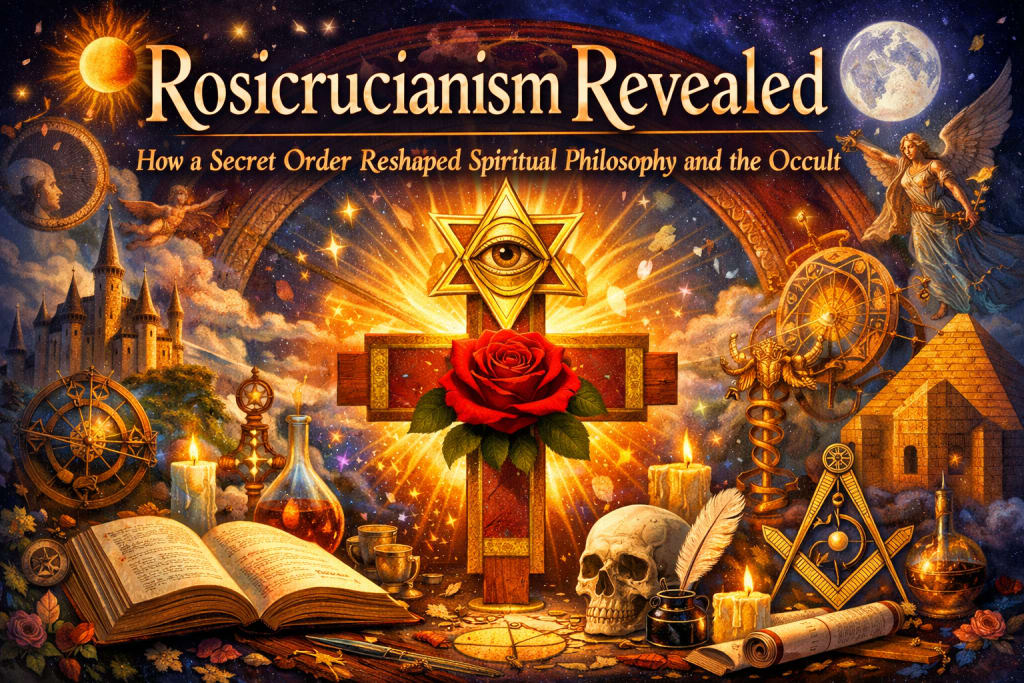
The iconography associated with Rosicrucianism holds deep symbolic meaning. The rose and cross represent spiritual unfoldment and the union of material and divine principles. Alchemical imagery appearing in Rosicrucian texts conveys transformation through purification, illumination, and integration of opposing forces. These symbolic systems align with Renaissance interpretations of alchemy as both a proto scientific discipline and a metaphor for inner spiritual refinement. Such symbolism contributed to Rosicrucianism gaining influence among philosophers, natural scientists, physicians, and theologians seeking unified systems of knowledge.
Academic examination of Rosicrucianism draws upon primary texts, correspondence between early modern intellectuals, and archival materials preserved in European libraries. Researchers such as Frances A. Yates, Christopher McIntosh, Roland Edighoffer, and Tobias Churton have contributed significant historical and interpretive scholarship concerning Rosicrucian development and cultural impact. Modern scholarship continues to analyze Rosicrucianism within the broader context of Western esotericism, a field that investigates mystical, symbolic, and initiatory traditions spanning centuries of intellectual history.
Rosicrucianism remains a subject of enduring curiosity due to the blending of documented history, allegorical narrative, and philosophical speculation. Surviving writings, symbolic systems, and scholarly interpretations collectively preserve a tradition that reflects humanity’s continuing search for hidden knowledge, spiritual insight, and intellectual synthesis.
Seeds of a Hidden Fraternity in Early Modern Europe
Rosicrucian thought emerged within a volatile intellectual and religious landscape during the opening decades of the seventeenth century. Circulation of three anonymous manifestos introduced the Rosicrucian fraternity into European scholarly and philosophical discourse. Fama Fraternitatis appeared in Kassel in 1614 through the press of Wilhelm Wessel, presenting a narrative that described the discovery of a concealed brotherhood devoted to spiritual enlightenment and the reform of knowledge. Confessio Fraternitatis followed in 1615, expanding upon doctrinal themes and defending the legitimacy of Rosicrucian philosophical objectives. The Chymical Wedding of Christian Rosenkreutz emerged in 1616 as an elaborate allegorical narrative rich in alchemical symbolism and mystical imagery. Surviving editions of these works exist in several European archives and continue to serve as primary sources for historical research.
Authorship of the manifestos remains a subject of scholarly debate. Johann Valentin Andreae, a Lutheran theologian and writer from Württemberg, often receives partial attribution based upon literary style, thematic parallels, and later autobiographical references. Andreae acknowledged authorship of The Chymical Wedding during later life, describing the text as a youthful literary exercise composed around 1605 and published without extensive revision. Historians continue to evaluate Andreae’s involvement with Fama Fraternitatis and Confessio Fraternitatis. Additional figures connected to the intellectual circle surrounding Andreae include Tobias Hess, Christoph Besold, and other scholars associated with the University of Tübingen. Correspondence and manuscript evidence indicate that these individuals shared interests in theological reform, natural philosophy, alchemy, and Hermetic traditions.
Narrative structure within the manifestos centers upon the legendary figure Christian Rosenkreutz, whose biography describes travel through regions associated with Islamic scholarship and ancient philosophical learning. According to manifesto accounts, Rosenkreutz acquired esoteric wisdom in Damascus, Fez, and other centers of intellectual exchange before returning to Europe. Symbolic burial of Rosenkreutz within a concealed vault containing scientific instruments, manuscripts, and sacred geometry reflects Renaissance fascination with hidden repositories of knowledge. Historians interpret the Rosenkreutz narrative as an allegorical expression of spiritual rebirth and intellectual transformation rather than a verifiable biographical record.
The manifestos articulate ideals of universal reformation that extended beyond religious renewal. Rosicrucian literature promoted integration of natural philosophy, mathematics, medicine, astronomy, and spiritual discipline into a unified framework of knowledge. Alchemical symbolism appearing throughout the texts reflects Renaissance interpretations of alchemy as both experimental practice and philosophical metaphor. Imagery involving transmutation, purification, and illumination represents transformation of both matter and human consciousness. Contemporary scholars frequently note parallels between Rosicrucian alchemical symbolism and earlier Hermetic writings attributed to the legendary figure Hermes Trismegistus, whose corpus gained prominence in Europe following translation and dissemination during the fifteenth century.
European intellectual culture during the early seventeenth century provided fertile ground for Rosicrucian ideas. Religious upheaval resulting from the Protestant Reformation and Counter Reformation generated widespread debate concerning authority, interpretation of sacred texts, and institutional power. Political fragmentation within the Holy Roman Empire intensified theological conflict and intellectual experimentation. Simultaneous development of early scientific methodology encouraged observation, mathematical modeling, and empirical investigation. Rosicrucian manifestos addressed these developments through proposals advocating cooperative exchange of knowledge, ethical reform of scholarship, and advancement of medicine for the benefit of society.
Publication of the manifestos triggered widespread reaction across European intellectual communities. Scholars, physicians, theologians, and natural philosophers produced pamphlets, letters, and treatises either defending or criticizing Rosicrucian claims. Historians refer to this period as the Rosicrucian controversy, a cultural phenomenon that generated hundreds of publications between approximately 1614 and 1620. Some commentators sought admission into the alleged fraternity, while others condemned Rosicrucian ideology as heretical or deceptive. Archival collections in Germany, France, England, and the Netherlands preserve extensive documentation reflecting the intensity of debate surrounding Rosicrucian symbolism and philosophical reform.
Rosicrucian origins therefore reside within a complex convergence of Renaissance scholarship, theological conflict, alchemical philosophy, and emerging scientific inquiry. Surviving manifestos and associated historical documentation continue to illuminate intellectual currents that shaped early modern European thought and contributed to enduring fascination with Rosicrucian tradition.
Sacred Imagery and Intellectual Architecture of Rosicrucian Philosophy
Symbolic language forms the structural foundation of Rosicrucian philosophy. The rosy cross serves as the most recognizable emblem associated with Rosicrucian tradition. Visual depictions commonly present a rose unfolding at the center of a cross, combining botanical imagery with sacred geometry. Renaissance symbolism often associated the rose with secrecy, spiritual awakening, and divine beauty. Classical and medieval artistic traditions connected the rose with mystical knowledge revealed through gradual unfolding. The cross traditionally symbolized sacrifice, spiritual trial, intersection of earthly and celestial realms, and moral transformation within Christian theological interpretation. Combined imagery within Rosicrucian tradition expresses harmony between suffering and illumination, material existence and spiritual ascent, and mortality and eternal wisdom.
Rosicrucian texts frequently integrate numerical symbolism and architectural imagery alongside floral and cruciform symbolism. References to sacred geometry, proportional design, and concealed chambers appear throughout Rosicrucian literature. Early modern European scholars interpreted geometry as a universal language reflecting divine order within nature. Mathematical harmony represented cosmic balance and provided a framework through which philosophical and theological ideas could be expressed symbolically. Rosicrucian allegories frequently present vaults, temples, and hidden libraries as symbolic environments representing intellectual discovery and spiritual rebirth.
Spiritual Reformation as Moral and Intellectual Renewal
Rosicrucian manifestos emphasize reformation as an inward transformation rooted in ethical refinement and disciplined study. Seventeenth century European reform movements often focused upon institutional religious authority and political structures. Rosicrucian literature promoted a parallel movement centered upon intellectual and spiritual cultivation within individual seekers and scholarly communities. Manifesto language encouraged restoration of wisdom traditions believed to have declined following classical antiquity. Moral purification, disciplined contemplation, and dedication to healing arts represented core elements of Rosicrucian reformation ideals.
Medical symbolism appears prominently within Rosicrucian texts. References to healing knowledge reflected contemporary fascination with Paracelsian medicine, which combined alchemical experimentation with spiritual cosmology. Paracelsus, a sixteenth century physician and natural philosopher, argued that medical science required understanding of correspondences between celestial influences, earthly substances, and human physiology. Rosicrucian literature incorporated similar principles, presenting medicine as both physical science and symbolic reflection of universal harmony.
Universal Wisdom and Philosophical Synthesis
Rosicrucian thought developed within a broader intellectual movement that sought reconciliation between diverse philosophical and religious traditions. Hermetic literature, translated into Latin during the fifteenth century, presented teachings attributed to Hermes Trismegistus that described divine unity and spiritual ascent through knowledge of cosmic laws. Neoplatonic philosophy contributed metaphysical concepts involving emanation from a divine source and return through intellectual and spiritual purification. Christian mystical traditions, including writings associated with Meister Eckhart and later German devotional literature, emphasized experiential union with divine presence through contemplative practice.
Rosicrucian symbolism often integrates these traditions through allegorical narrative rather than systematic doctrinal presentation. Natural phenomena, astronomical observation, scriptural interpretation, and rational inquiry function collectively as complementary sources of wisdom. Renaissance scholars frequently described nature as a living manuscript revealing divine intention through symbolic patterns. Rosicrucian literature reflects this interpretive approach by presenting scientific exploration and spiritual contemplation as interconnected disciplines rather than competing systems of thought.
Alchemy as Spiritual and Philosophical Transformation
Alchemy occupies a central position within Rosicrucian symbolic language. Historical alchemical manuscripts describe laboratory experimentation involving metals, minerals, and chemical reactions. Renaissance intellectual circles frequently interpreted alchemical processes as metaphors describing transformation of human consciousness. Rosicrucian texts adopt alchemical symbolism through references to transmutation, purification through fire, and synthesis of opposing substances.
The philosopher’s stone appears within alchemical and Rosicrucian symbolism as a representation of perfected knowledge and harmonious integration of spiritual and material existence. Alchemical stages traditionally described as nigredo, albedo, and rubedo symbolized dissolution of ignorance, purification of understanding, and attainment of enlightened awareness. Rosicrucian literature often presents these stages through narrative allegory involving journeys, trials, and symbolic initiations. Early modern readers interpreted such allegories as guidance for philosophical study, ethical discipline, and spiritual contemplation.
Concealment, Initiatory Knowledge, and Intellectual Protection
Concealment of knowledge represents a recurring motif throughout Rosicrucian literature. Symbolic language, allegorical storytelling, and layered imagery served both pedagogical and protective functions. Early seventeenth century Europe experienced periods of religious censorship and theological persecution. Esoteric traditions frequently adopted symbolic expression to communicate controversial philosophical ideas without direct confrontation with ecclesiastical authorities.
Rosicrucian manifestos describe a fraternity that operated through selective recognition rather than public recruitment. Allegorical descriptions of hidden vaults, sealed manuscripts, and coded inscriptions reinforced themes of initiatory progression. Renaissance philosophical traditions frequently portrayed wisdom as accessible through disciplined study and moral preparation rather than passive instruction. Rosicrucian symbolism reflects this educational philosophy by presenting knowledge as a discovery requiring intellectual effort and ethical maturity.
Foundational Rosicrucian Manifestos as Philosophical Allegory
Scholarly understanding of Rosicrucian philosophy relies heavily upon interpretive study of three foundational manifestos circulated between 1614 and 1616. Each document presents distinct narrative structures and symbolic frameworks that collectively shaped early Rosicrucian intellectual identity.
Fama Fraternitatis
Fama Fraternitatis introduced European audiences to the narrative of a concealed fraternity dedicated to preservation and dissemination of spiritual and scientific knowledge. The document describes discovery of Christian Rosenkreutz’s tomb containing manuscripts, scientific instruments, and symbolic artifacts arranged according to sacred geometrical design. Architectural symbolism within the tomb narrative reflects Renaissance fascination with microcosmic representations of universal order.
The manifesto promotes intellectual cooperation among scholars, physicians, and philosophers devoted to truth and healing. References to travel, translation of foreign manuscripts, and preservation of ancient wisdom emphasize cross cultural exchange as a foundation for intellectual renewal. Historians identify Fama Fraternitatis as a catalyst that stimulated widespread debate among European intellectual communities.
Confessio Fraternitatis
Confessio Fraternitatis expands philosophical arguments introduced within Fama Fraternitatis. The document responds to criticism generated following circulation of the earlier manifesto. The text articulates theological justification for integration of scientific investigation and spiritual devotion. Discussions concerning divine providence, natural law, and ethical responsibility demonstrate influence from Lutheran theological discourse and Renaissance natural philosophy.
The document emphasizes harmony between faith and reason through symbolic language rather than systematic doctrinal argument. References to astronomical observation, mathematical harmony, and medicinal knowledge reinforce Rosicrucian commitment to interdisciplinary scholarship as a path toward spiritual understanding.
The Chymical Wedding of Christian Rosenkreutz
The Chymical Wedding of Christian Rosenkreutz presents a complex allegorical narrative describing participation in a royal wedding ceremony that unfolds through symbolic trials and ceremonial stages. Seven day narrative structure corresponds with traditional alchemical and biblical numerical symbolism. Each stage of the narrative contains elaborate imagery involving transformation of substances, ritual purification, and symbolic resurrection.
Literary scholars frequently interpret The Chymical Wedding as an initiatory allegory representing psychological and spiritual transformation. Narrative structure incorporates medieval romance literature, Renaissance festival symbolism, and alchemical allegory. Andreae’s acknowledged authorship of this text provides valuable insight into intellectual influences shaping Rosicrucian symbolic storytelling.
Circulation of these manifestos stimulated intense curiosity across European intellectual networks. Pamphlet literature, scholarly correspondence, and theological critiques produced during the early seventeenth century reflect fascination with Rosicrucian philosophical symbolism and reformist ideals. Archival records demonstrate sustained engagement with Rosicrucian themes among physicians, astronomers, theologians, and natural philosophers throughout early modern Europe.
Echoes Across Intellectual and Cultural History
Publication of Rosicrucian manifestos during the second decade of the seventeenth century generated a remarkable intellectual phenomenon within European scholarly networks. Circulation of Fama Fraternitatis in 1614, followed by Confessio Fraternitatis in 1615 and The Chymical Wedding of Christian Rosenkreutz in 1616, produced a wave of pamphlets, letters, and scholarly treatises addressing the existence, symbolism, and philosophical implications of the alleged Rosicrucian fraternity. Historians frequently describe this period as the Rosicrucian furor, a documented cultural episode characterized by widespread speculation and literary response across Germany, France, England, and the Low Countries. Surviving pamphlet literature from approximately 1614 through 1625 reveals hundreds of publications engaging Rosicrucian themes through theological analysis, satire, defense, and philosophical interpretation.
Seventeenth century scholars approached Rosicrucian literature through diverse intellectual frameworks. Some theologians interpreted Rosicrucian symbolism as a call for Christian spiritual renewal grounded in mystical contemplation and ethical reform. Natural philosophers and physicians viewed Rosicrucian texts as allegorical support for experimental science and Paracelsian medical theory. Skeptical commentators criticized Rosicrucian claims as literary fiction or ideological provocation designed to challenge religious orthodoxy. The breadth of scholarly response demonstrates the capacity of Rosicrucian symbolism to engage multiple academic disciplines simultaneously.
Rosicrucian thought developed during an era marked by religious fragmentation resulting from Protestant Reformation conflicts and Catholic Counter Reformation initiatives. Intellectual communities across Europe sought philosophical systems capable of reconciling theological differences while preserving commitment to scientific inquiry and moral philosophy. Rosicrucian manifestos proposed an ideal of universal knowledge grounded in spiritual illumination, natural philosophy, and ethical scholarship. This conceptual framework resonated with reform minded scholars searching for alternatives to sectarian religious authority and rigid scholastic traditions.
Influence upon early modern scientific culture appears within correspondence and intellectual associations linking Rosicrucian symbolism with experimental philosophy. Seventeenth century interest in Hermetic cosmology, alchemical experimentation, and celestial mechanics often intersected with Rosicrucian ideals promoting unity between spiritual and empirical knowledge. Some historians identify conceptual parallels between Rosicrucian calls for cooperative scholarly exchange and later development of scientific academies that emphasized collaborative research and open intellectual dialogue. Documentary evidence suggests that early members of emerging scientific institutions engaged with Hermetic and alchemical traditions that shared symbolic vocabulary with Rosicrucian literature.
Freemasonry demonstrates one of the most frequently discussed areas of Rosicrucian cultural influence. Eighteenth century Masonic rites, particularly high degree systems developed in continental Europe, incorporated symbolic motifs associated with Rosicrucian philosophy. The eighteenth degree of the Ancient and Accepted Scottish Rite, often titled Knight of the Rose Cross, incorporates allegorical themes reflecting spiritual rebirth, moral purification, and reconciliation of religious symbolism. Masonic historians emphasize that Freemasonry did not originate from Rosicrucian fraternities, yet documentary evidence confirms symbolic and philosophical exchange between Rosicrucian literature and Masonic ritual development during the eighteenth century.
Nineteenth century occult revival movements also engaged Rosicrucian symbolism and philosophical themes. Esoteric societies emerging in Britain, France, and the United States adopted Rosicrucian imagery within ritual practice, symbolic instruction, and initiatory literature. The Hermetic Order of the Golden Dawn, founded in 1888 in London, incorporated Rosicrucian symbolism into ceremonial systems emphasizing alchemical transformation, Hermetic philosophy, and Kabbalistic cosmology. Surviving ritual manuscripts from Golden Dawn archives demonstrate extensive adaptation of Rosicrucian symbolic language within initiatory frameworks.
Theosophical circles founded during the late nineteenth century likewise reflected engagement with Rosicrucian philosophical concepts. Helena Petrovna Blavatsky and associated Theosophical writers discussed Rosicrucian tradition as part of a broader lineage of Western esoteric wisdom traditions. Theosophical literature interpreted Rosicrucian symbolism as evidence of an ancient philosophical continuity linking Eastern and Western mystical teachings. Historians of Western esotericism frequently identify Theosophy as a movement that popularized Rosicrucian symbolism for audiences interested in comparative religion and metaphysical philosophy.
Rosicrucian influence also appears within European and American artistic and literary traditions. Romantic era writers demonstrated fascination with alchemical imagery, mystical symbolism, and secret fraternities. German Romantic literature frequently portrayed Rosicrucian themes through allegorical storytelling that explored spiritual awakening and philosophical transformation. Symbolist artists and poets during the nineteenth century incorporated Rosicrucian motifs involving sacred geometry, botanical symbolism, and initiatory narrative. These artistic interpretations contributed to preservation of Rosicrucian imagery within broader cultural imagination.
Philosophical engagement with symbolism gained momentum through Rosicrucian literature’s emphasis upon allegory as a method of conveying metaphysical concepts. Seventeenth and eighteenth century philosophers influenced by Neoplatonic traditions viewed symbolic language as a bridge between rational analysis and spiritual intuition. Rosicrucian allegories involving architecture, geometry, and alchemical transformation provided visual and narrative models through which abstract philosophical ideas could be explored within intellectual discourse.
Educational and spiritual traditions influenced by Rosicrucian thought frequently emphasized direct experiential knowledge rather than reliance upon institutional authority. Rosicrucian symbolism portrayed wisdom as accessible through disciplined study of nature, ethical development, and contemplative reflection. This emphasis contributed to intellectual currents promoting religious tolerance, philosophical pluralism, and recognition of knowledge emerging from diverse cultural traditions. Surviving historical documents demonstrate that Rosicrucian ideas encouraged scholarly exploration that crossed disciplinary and theological boundaries, leaving a lasting imprint upon Western intellectual and cultural development.
Architects of Rosicrucian Intellectual Tradition
Rosicrucian literature presents Christian Rosenkreutz as a symbolic founder whose biography expresses philosophical ideals through allegory. Historical research identifies several scholars, physicians, and natural philosophers whose writings demonstrate strong thematic, symbolic, and intellectual connections with Rosicrucian tradition. These individuals contributed to intellectual environments that shaped Rosicrucian discourse within early modern Europe. Surviving manuscripts, correspondence, and published treatises provide evidence linking these figures with Hermetic philosophy, alchemical symbolism, and theological reform movements.
Johann Valentin Andreae (1586–1654)
Johann Valentin Andreae served as a Lutheran theologian, educator, and social reform advocate within Württemberg during a period of intense religious and political instability. Andreae studied at the University of Tübingen, an institution known for scholarship integrating theology, classical literature, and natural philosophy. Archival evidence confirms Andreae’s authorship of The Chymical Wedding of Christian Rosenkreutz, first published in 1616. Andreae later described the text as a youthful allegorical narrative composed during adolescence around 1605, though publication occurred during a mature period of theological reflection.
Andreae’s broader literary corpus reveals recurring themes consistent with Rosicrucian philosophical motifs. Works such as Christianopolis published in 1619 describe an idealized society governed by moral education, scientific research, communal cooperation, and religious devotion. Historians frequently interpret Christianopolis as evidence of Andreae’s commitment to intellectual reform through education and ethical scholarship. Andreae promoted programs supporting social welfare, educational reform, and cooperative scholarly communities. These initiatives reflect manifesto language advocating moral renewal and integration of scientific knowledge with spiritual responsibility.
Scholarly debate continues concerning Andreae’s role in authorship of Fama Fraternitatis and Confessio Fraternitatis. Linguistic analysis, theological vocabulary, and intellectual networks surrounding Andreae suggest involvement either as author or participant within collaborative intellectual circles. Correspondence linking Andreae with scholars such as Tobias Hess and Christoph Besold demonstrates shared engagement with alchemy, Hermetic philosophy, and Lutheran reform theology. Andreae’s later career within church administration and social reform movements illustrates an enduring commitment to ethical transformation and educational renewal consistent with Rosicrucian philosophical ideals.
Heinrich Khunrath (1560–1605)
Heinrich Khunrath functioned as a physician, alchemist, and mystical philosopher whose writings influenced intellectual environments preceding Rosicrucian manifesto publication. Khunrath studied medicine at the University of Basel and practiced as a physician within Central Europe. Khunrath’s major work, Amphitheatrum Sapientiae Aeternae first published in 1595 with expanded illustrated editions appearing in 1609, combines alchemical diagrams, theological symbolism, and Hermetic philosophy.
Illustrations within Khunrath’s Amphitheatrum present elaborate symbolic laboratories, sacred altars, and cosmic diagrams integrating Christian devotional imagery with alchemical experimentation. Khunrath promoted synthesis between spiritual purification and laboratory investigation, arguing that successful alchemical work required moral discipline, prayer, and philosophical contemplation. This interpretive framework parallels Rosicrucian symbolism portraying alchemy as both physical and spiritual transformation.
Khunrath’s writings reflect influence from Paracelsian medicine and Hermetic cosmology. Paracelsian theory emphasized correspondence between celestial forces, mineral substances, and human physiology. Khunrath integrated these concepts into symbolic frameworks presenting laboratory practice as reflection of divine creation. German language editions of Khunrath’s works circulated among scholarly and alchemical communities during decades preceding Rosicrucian manifesto publication. Historians identify Khunrath’s integration of Christian mysticism with Hermetic and alchemical symbolism as a significant intellectual precursor to Rosicrucian philosophical expression.
Robert Fludd (1574–1637)
Robert Fludd emerged as an English physician, natural philosopher, and prolific writer whose works engaged directly with Rosicrucian ideas. Fludd studied medicine at Oxford and later traveled throughout continental Europe, where exposure to Hermetic philosophy, alchemical literature, and Neoplatonic cosmology influenced intellectual development. Fludd produced extensive treatises examining cosmic structure, symbolic geometry, musical harmony, and metaphysical relationships between humanity and the universe.
Fludd’s multi volume work Utriusque Cosmi Historia, published between 1617 and 1621, presents elaborate diagrams illustrating relationships between macrocosm and microcosm. Fludd argued that human consciousness reflected universal cosmic patterns through mathematical proportion, harmonic resonance, and symbolic geometry. Fludd defended Rosicrucian philosophy in printed controversies with critics who accused Rosicrucian literature of promoting heretical or fraudulent doctrines. Fludd’s treatise Apologia Compendiaria published in 1616 defended Rosicrucian ideals by presenting philosophical arguments supporting synthesis of spiritual and scientific knowledge.
Fludd maintained correspondence with continental scholars interested in alchemy, Hermetic philosophy, and natural science. Fludd’s symbolic diagrams influenced later esoteric and scientific illustration traditions. Historians frequently identify Fludd as one of the most visible intellectual defenders of Rosicrucian symbolism within English scholarly culture during the early seventeenth century.
Intellectual Environment of Renaissance and Early Modern Europe
Andreae, Khunrath, and Fludd operated within an intellectual climate characterized by fluid boundaries between scientific experimentation, philosophical speculation, and theological reflection. Renaissance scholarship encouraged revival of classical Greek and Egyptian philosophical texts alongside growing interest in empirical observation and mathematical modeling. Universities, private academies, and informal scholarly correspondence networks facilitated exchange of ideas across political and religious divisions.
Alchemy functioned simultaneously as chemical experimentation, medical theory, and symbolic philosophy during this period. Hermetic writings promoted metaphysical concepts emphasizing unity of cosmic and human order. Lutheran and Catholic reform movements stimulated theological debate concerning authority, revelation, and interpretation of sacred texts. Intellectual figures associated with Rosicrucian thought navigated these overlapping disciplines through symbolic literature, philosophical treatises, and experimental inquiry.
Documentary evidence demonstrates that Rosicrucian intellectual tradition emerged through collaborative philosophical environments rather than centralized institutional organization. Surviving writings from Andreae, Khunrath, and Fludd illustrate how interdisciplinary scholarship contributed to development of symbolic and philosophical frameworks associated with Rosicrucian tradition.
Foundations of Rosicrucian Spiritual Discipline and Intellectual Practice
Rosicrucian philosophy resists rigid doctrinal formulation and instead presents a constellation of guiding principles rooted in symbolic interpretation, ethical development, and intellectual synthesis. Early Rosicrucian manifestos avoid establishment of formal creeds or centralized religious structures. Surviving texts emphasize cultivation of wisdom through disciplined study, contemplative reflection, and moral responsibility. Historical scholarship consistently characterizes Rosicrucian tradition as an initiatory philosophical framework rather than an institutionalized religious system.
Rosicrucian literature frequently employs allegorical narrative, sacred geometry, and alchemical symbolism to communicate spiritual principles indirectly. Renaissance esoteric traditions commonly transmitted philosophical teachings through symbolic language designed to stimulate intellectual inquiry and contemplative insight. Rosicrucian writers adopted this pedagogical approach by presenting knowledge as a progressive unfolding requiring personal engagement with symbolic texts and philosophical reflection.
Inner Transformation and Philosophical Regeneration
Transformation of consciousness represents a central Rosicrucian objective expressed through recurring allegorical motifs involving death, rebirth, purification, and illumination. Manifesto narratives describing Christian Rosenkreutz frequently portray symbolic burial, discovery of hidden chambers, and revelation of concealed manuscripts. Renaissance alchemical symbolism traditionally interpreted burial imagery as representation of dissolution of ignorance preceding intellectual and spiritual renewal.
Rosicrucian literature describes human existence as a microcosmic reflection of universal order. Hermetic philosophy, which influenced Rosicrucian thought, emphasized correspondence between celestial and terrestrial realities. Spiritual transformation within Rosicrucian tradition involves recognition of these correspondences through disciplined contemplation and philosophical inquiry. Intellectual regeneration and ethical refinement operate as interconnected processes leading toward expanded awareness of cosmic harmony.
Historical references to initiatory progression appear throughout Rosicrucian allegories. Stages of transformation often correspond with classical alchemical processes described through symbolic color sequences and elemental transformations. Early modern alchemical texts described nigredo as dissolution of false perception, albedo as purification of understanding, and rubedo as attainment of integrated spiritual insight. Rosicrucian literature adapts these symbolic stages through narrative allegories representing psychological and philosophical development.
Harmony Among Diverse Knowledge Traditions
Rosicrucian philosophy promotes integration of scientific investigation, theological reflection, and philosophical reasoning within a unified framework of knowledge. Early seventeenth century intellectual culture often separated academic disciplines into distinct institutional categories. Rosicrucian manifestos proposed an alternative model emphasizing interdisciplinary scholarship grounded in spiritual awareness and empirical observation.
Natural philosophy, astronomy, medicine, and mathematics appear frequently within Rosicrucian texts as complementary expressions of divine order. Renaissance Hermetic literature presented nature as a symbolic manuscript revealing cosmic laws through observable patterns and numerical harmony. Rosicrucian writers adopted this interpretive framework by encouraging study of natural phenomena as a method of spiritual education and philosophical insight.
Medical knowledge held particular significance within Rosicrucian intellectual culture. Influence from Paracelsian medicine introduced concepts emphasizing correspondence between planetary forces, mineral substances, and human physiology. Rosicrucian symbolism frequently portrays healing as restoration of harmony between physical, psychological, and spiritual dimensions of human existence. Physicians influenced by Paracelsian and Hermetic traditions often engaged with Rosicrucian literature through scholarly correspondence and medical treatises addressing holistic models of health.
Symbolic Contemplation as Intellectual Discipline
Symbolic interpretation functions as a primary method of Rosicrucian philosophical instruction. Rosicrucian literature employs botanical symbolism, architectural allegory, sacred geometry, and numerical structures to convey metaphysical concepts. Renaissance intellectual traditions frequently regarded symbols as vehicles capable of communicating philosophical insights that exceeded literal linguistic expression.
Alchemical diagrams appearing in early modern manuscripts frequently depict furnaces, vessels, celestial bodies, and mythological figures arranged within geometric frameworks. Rosicrucian writers adopted similar symbolic systems to represent transformation of knowledge and consciousness. Numerical symbolism appears throughout Rosicrucian allegory, often referencing classical philosophical traditions that associated numbers with cosmic harmony and divine proportion.
Interpretation of symbolic imagery requires contemplative engagement rather than passive reading. Renaissance esoteric pedagogy frequently emphasized gradual revelation of philosophical insight through layered symbolic meaning. Rosicrucian literature encourages intellectual patience, analytical reflection, and ethical preparation as prerequisites for comprehension of symbolic teachings.
Ethical Responsibility and Moral Character
Rosicrucian literature consistently associates intellectual attainment with ethical development. Manifesto narratives portray members of the Rosicrucian fraternity as physicians, scholars, and philosophers dedicated to service through healing, education, and moral leadership. Historical context surrounding early seventeenth century Europe included widespread concern regarding corruption within political and religious institutions. Rosicrucian symbolism responded to this environment by presenting ethical character as a foundational qualification for pursuit of advanced knowledge.
Compassion, humility, intellectual honesty, and commitment to social welfare appear repeatedly within Rosicrucian allegory. Renaissance philosophical traditions frequently emphasized moral virtue as necessary preparation for metaphysical understanding. Rosicrucian literature reflects this ethical philosophy by portraying wisdom as inseparable from moral integrity. Educational reform proposals associated with Rosicrucian circles often emphasized development of character alongside scientific and philosophical instruction.
Historical Practices and Initiatory Traditions
Documentary evidence from early seventeenth century sources provides limited confirmation of formal ritual practice associated with original Rosicrucian manifesto authors. Manifestos describe an invisible fraternity operating through recognition among scholars rather than through public ceremonial initiation. Allegorical descriptions of vaults, manuscripts, and symbolic architecture function primarily as philosophical teaching devices rather than documented ritual environments.
Later esoteric societies emerging during eighteenth and nineteenth centuries developed ceremonial systems inspired by Rosicrucian symbolism. Historical organizations adopting Rosicrucian identity introduced structured study programs, symbolic initiation ceremonies, and meditative exercises derived from Hermetic, Masonic, and alchemical traditions. Surviving archival materials from these later organizations demonstrate adaptation of Rosicrucian philosophical themes into ritual frameworks designed for educational and contemplative purposes.
Rosicrucian intellectual practice therefore reflects a synthesis of symbolic study, ethical cultivation, interdisciplinary scholarship, and philosophical contemplation grounded in Renaissance esoteric traditions and early modern scientific inquiry.
Christian Foundations and Esoteric Expansion
Rosicrucian literature incorporates Christian terminology while simultaneously exploring mystical, symbolic, and philosophical dimensions of faith. Manifestos utilize Christian narratives, scriptural references, and theological motifs as frameworks for conveying broader esoteric principles. Symbolism of the cross, references to Christ, and allegorical interpretation of biblical events serve as vehicles for moral instruction, spiritual reflection, and philosophical inquiry rather than prescriptions of dogmatic ritual.
The allegorical deployment of Christian imagery allowed Rosicrucian ideas to resonate with mystically inclined scholars and practitioners within early modern Europe. Hermetic philosophy, alchemical symbolism, and Neoplatonic metaphysics often appear alongside Christian concepts, creating a layered interpretive environment. The symbolic union of Christian devotion with esoteric philosophy emphasized personal transformation, ethical refinement, and intellectual discernment. Christian motifs functioned both as familiar conceptual anchors and as vehicles for exploring universal spiritual truths expressed through allegory.
Historical context underscores the delicate balance maintained by Rosicrucian texts between orthodox Christianity and innovative esoteric interpretation. Protestant and Catholic authorities engaged in theological and institutional conflict, with reform movements shaping perceptions of acceptable belief and practice. Within this environment, manifestos proposed spiritual renewal that emphasized moral and intellectual development over institutional allegiance. References to scripture were frequently interpreted allegorically, while symbolic diagrams, sacred geometry, and alchemical imagery provided alternative epistemological frameworks.
Scholarly analysis highlights the careful integration of Christian and esoteric language within Rosicrucian texts. Hermetic and alchemical elements supplemented Christian ethical and spiritual themes, producing a syncretic approach that neither fully aligned with contemporary orthodoxy nor openly contradicted it. Early modern readers interpreted these works variably, with some perceiving them as reformist spiritual guidance and others regarding them as heterodox or heretical. The interaction between Christian symbolism and esoteric philosophy in Rosicrucianism illustrates how early modern thinkers explored transformative knowledge while negotiating the boundaries of religious authority.
Rosicrucian engagement with Christianity demonstrates a broader pattern within Western esotericism: the use of familiar religious frameworks to convey philosophical, symbolic, and mystical principles. Cross-cultural and interdisciplinary synthesis within manifestos reflects Renaissance intellectual currents emphasizing correspondence between spiritual, natural, and moral orders. Christian imagery provided a shared language through which ethical guidance, intellectual exploration, and symbolic meditation could be conveyed across diverse scholarly and spiritual audiences.
Evidence from manifestos, contemporary commentary, and subsequent scholarship confirms that Rosicrucian interpretation of Christianity operated as a tool for allegorical instruction, ethical cultivation, and spiritual contemplation rather than institutional reform or doctrinal assertion. This approach positioned Rosicrucianism within the broader European landscape of mystical thought while maintaining intellectual independence from ecclesiastical control.
Shadows and Speculation: Controversies in Rosicrucian History
Rosicrucian literature generated intense debate from the moment of the manifestos’ circulation in early seventeenth century Europe. Claims of secret brotherhoods, hidden wisdom, and transformative knowledge provoked both fascination and skepticism among intellectuals, theologians, and the general literate public. Contemporary readers debated whether Rosicrucian texts described a literal organization or functioned primarily as allegorical tools designed to explore ethical, philosophical, and spiritual themes.
Questions of Historical Reality
A central controversy concerns the existence of a tangible Rosicrucian fraternity. Archival research and independent historical documentation have produced no verifiable evidence confirming the establishment of a formal organization matching descriptions in Fama Fraternitatis, Confessio Fraternitatis, or The Chymical Wedding of Christian Rosenkreutz. Historical scholarship generally interprets the manifestos as literary creations intended to provoke philosophical reflection, encourage moral development, and disseminate symbolic knowledge. Allegorical presentation of Christian Rosenkreutz and hidden vaults is often understood as a narrative mechanism rather than documentation of real individuals or institutional structures.
Scholars emphasize that contemporary correspondence and responses to the manifestos demonstrate awareness of potential fictionality. Intellectual engagement with Rosicrucian literature frequently treated symbolic narratives as pedagogical instruments rather than direct testimony of secret societies. Evidence of correspondence between German scholars, physicians, and alchemists indicates that discussions surrounding Rosicrucian ideas centered upon ethical reform, intellectual collaboration, and integration of scientific and spiritual inquiry rather than confirmation of organizational reality.
Allegations of Subversion
Publication of Rosicrucian manifestos occurred amid heightened religious tension following Protestant Reformation and Catholic Counter Reformation efforts. Calls for spiritual and intellectual renewal embedded within allegorical texts occasionally attracted suspicion from ecclesiastical authorities. Symbolic references to hidden wisdom, initiation, and moral reformation could be interpreted as challenges to established doctrinal authority or social order. Historical records indicate that some clerics and conservative commentators regarded Rosicrucian literature with wariness, interpreting allegorical narratives as potential vehicles for heterodox teachings.
Despite occasional perceptions of subversion, surviving Rosicrucian texts consistently frame ethical cultivation, moral discipline, and integration of knowledge as central objectives. Allegorical expression provided a medium through which philosophical exploration could occur without explicit confrontation with ecclesiastical structures. The tension between perceived subversive potential and pedagogical intent constitutes a defining feature of Rosicrucian controversies during the early seventeenth century.
Influence and Claims of Later Rosicrucian Orders
Subsequent centuries witnessed emergence of organizations claiming inspiration or direct lineage from early Rosicrucian philosophy. Eighteenth century Masonic rites, nineteenth century esoteric societies, and twentieth century initiatory orders frequently incorporated Rosicrucian symbols, allegorical motifs, and philosophical concepts. Historical research demonstrates that these later groups generally lack verifiable continuity with seventeenth century manifesto authors or their intellectual circles. Claims of direct succession remain contested, and scholarly evaluation emphasizes differentiation between inspirational influence and institutional inheritance.
These later movements frequently adapted Rosicrucian symbolism within ritual structures, meditative exercises, and educational programs. While these adaptations preserve thematic continuity in areas such as ethical cultivation, spiritual transformation, and symbolic study, documentation reveals that organizational and doctrinal frameworks were independently developed. Critical scholarship distinguishes historical Rosicrucian literature from retrospective claims of institutional legitimacy.
Misinterpretations and Popular Speculation
Rosicrucian imagery has historically attracted imaginative and speculative interpretations. Associations with hidden knowledge, alchemical transformation, and secret brotherhoods contributed to creation of pseudo-historical narratives, conspiracy theories, and sensationalist accounts. Such representations occasionally obscure historical scholarship, conflating literary allegory with assertions of tangible society.
Careful study requires separation of symbolic intention within manifestos from imaginative elaboration in later popular culture. Archival records, scholarly correspondence, and surviving manuscripts provide reliable insight into early modern reception of Rosicrucian literature. Analysis of textual language, allegorical structure, and contemporary responses demonstrates that foundational controversies emerged from legitimate questions of meaning, ethics, and intellectual authority rather than verification of secret organization.
Rosicrucian controversies illuminate the complex interplay between symbolic literature, intellectual curiosity, religious authority, and cultural imagination. The debates surrounding historical reality, subversive potential, and interpretive fidelity highlight the enduring challenge of studying a movement that blends allegory, philosophical aspiration, and mystical symbolism within early modern European contexts.
Rosicrucian Currents in Western Esoteric Traditions
Rosicrucian philosophy exerted lasting influence on multiple streams of Western esotericism, shaping symbolic systems, ritual frameworks, and intellectual approaches to spiritual inquiry. Core themes—emphasis on personal transformation, integration of knowledge, and symbolic interpretation—permeated developments across centuries, informing both formal societies and broader cultural currents within mystical and philosophical movements.
Freemasonry and Symbolic Allegory
Connections between Rosicrucian and Masonic symbolism appear in ritual motifs, moral instruction, and allegorical architecture. Eighteenth century Masonic rites, particularly high-degree systems in continental Europe, incorporate symbolic emphasis on moral refinement, sacred geometry, and spiritual initiation reminiscent of Rosicrucian ideals. Archival documents from Masonic lodges reveal adoption of imagery such as the rose cross, alchemical transformation, and architectural metaphors aligned with ethical and spiritual development. Scholars debate the extent to which Rosicrucian literature directly influenced Freemasonry versus parallel development of symbolic frameworks within contemporaneous intellectual and esoteric milieus. The convergence of Hermetic philosophy, ethical allegory, and initiatory ritual suggests shared cultural currents in early modern Europe shaping both traditions.
Theosophy and Modern Occult Movements
Nineteenth century Theosophical societies integrated Rosicrucian imagery and philosophical motifs into broader esoteric frameworks emphasizing comparative religion, mystical experience, and symbolic study. Founders of Theosophy, including Helena Petrovna Blavatsky, incorporated elements drawn from Western esoteric sources alongside Eastern mystical traditions, creating interpretive syntheses in which Rosicrucian themes provided paradigms for moral transformation, symbolic literacy, and interconnection of knowledge streams. Rituals, meditative exercises, and ethical instruction within Theosophical orders frequently reflect narrative and allegorical structures present in Rosicrucian manifestos.
Contemporaneous occult movements in Europe and North America, including Hermetic, esoteric, and initiatory societies, similarly engaged Rosicrucian motifs. Symbolic elements such as the rose cross, alchemical imagery, and sacred geometry functioned as teaching tools, structuring philosophical and spiritual instruction. Historical records indicate that esoteric literature circulating in the late nineteenth and early twentieth centuries often cited Rosicrucian texts as exemplars of disciplined symbolic pedagogy, intellectual synthesis, and ethical cultivation.
Modern Spirituality and New Age Resonances
Influence of Rosicrucian thought extends into contemporary spiritual movements emphasizing personal transformation, holistic understanding, and symbolic interpretation of reality. Principles articulated in early seventeenth century manifestos, including harmonization of empirical observation, philosophical reflection, and contemplative practice, resonate with modern approaches integrating science, ethics, and metaphysical inquiry. Symbolic motifs such as the rosy cross, sacred geometry, and alchemical allegory provide conceptual frameworks for meditation, ritual practice, and philosophical reflection within diverse New Age communities.
Scholarly analysis emphasizes that modern appropriations often reinterpret Rosicrucian principles rather than replicate historical practice. Adaptation of symbolic, ethical, and philosophical themes demonstrates enduring flexibility of Rosicrucian ideas, capable of informing evolving conceptions of personal development, spiritual inquiry, and integration of knowledge. Archival study and comparative research reveal that the continuity of influence stems less from institutional inheritance and more from conceptual resonance, symbolic clarity, and pedagogical potency embedded within original manifestos.
Rosicrucian currents in Western esotericism illustrate a persistent synthesis of symbolic literacy, ethical cultivation, and intellectual exploration. Influence manifests in ritual systems, philosophical frameworks, and spiritual practices, demonstrating enduring capacity of early modern Rosicrucian thought to shape both formal esoteric orders and broader cultural understandings of mystical knowledge, personal transformation, and ethical reflection.
Modern Rosicrucian Organizations: Guardians of Symbolic and Philosophical Tradition
Contemporary organizations identifying with the Rosicrucian tradition continue to emphasize study of esoteric philosophy, symbolic interpretation, and personal transformation. These groups preserve foundational ideals articulated in early seventeenth century manifestos while adapting practices to the needs of modern spiritual seekers. Approaches range from structured educational programs and ritual study to contemplative reflection and community-based philosophical engagement.
Ancient Mystical Order Rosae Crucis (AMORC)
The Ancient Mystical Order Rosae Crucis, established in 1915 in the United States, represents one of the most prominent modern Rosicrucian organizations. Structured curricula emphasize metaphysics, comparative mysticism, alchemical symbolism, sacred geometry, and historical study of esoteric traditions. Educational programs integrate historical analysis of figures such as Johann Valentin Andreae, Robert Fludd, and Heinrich Khunrath, situating symbolic concepts within philosophical and practical contexts. Initiatory sequences within AMORC often employ ritualized study of allegorical material, aiming to guide members through ethical cultivation, symbolic literacy, and personal insight. Archival records and published materials indicate that AMORC emphasizes interpretive engagement rather than literal claims of seventeenth century organizational continuity.
Rosicrucian Fellowship
Founded in 1909 by Max Heindel, the Rosicrucian Fellowship emphasizes esoteric Christianity, spiritual development, and integration of metaphysical principles into daily life. Curriculum includes study of astrology, esoteric anatomy, symbolism, and ethical practice. Heindel’s writings interpret Rosicrucian principles through Christian mystical frameworks, emphasizing harmony between spiritual insight, moral responsibility, and practical application. The Fellowship’s approach demonstrates continuity with early Rosicrucian ideals of ethical cultivation, contemplative study, and synthesis of philosophical and spiritual knowledge, while presenting a coherent modern pedagogical structure.
Other Rosicrucian Societies
In addition to AMORC and the Rosicrucian Fellowship, multiple smaller Rosicrucian-inspired organizations and study circles operate globally. These groups vary in structure, pedagogical emphasis, and degree of ritual engagement. Some focus primarily upon symbolic interpretation, historical research, and philosophical discussion. Others incorporate ceremonial practice, meditation, and guided contemplative exercises. Shared emphasis across these organizations includes ethical refinement, intellectual curiosity, and cultivation of personal insight through engagement with symbolic and philosophical material derived from Rosicrucian sources.
Evaluating Contemporary Claims
Modern Rosicrucian organizations often assert historical inspiration or symbolic continuity with early seventeenth century manifestos. Critical historical analysis indicates that documented institutional continuity is unverified. Claims of direct descent from original Rosicrucian circles remain speculative, and scholarly consensus emphasizes distinction between philosophical inheritance and organizational lineage. Careful evaluation of contemporary groups requires attention to documented sources, historical context, and pedagogical objectives.
Contemporary Rosicrucian organizations illustrate enduring appeal of symbolic, philosophical, and ethical ideals originating in early modern Europe. Emphasis on integrative study, contemplative practice, and moral development demonstrates how Rosicrucian thought continues to inform modern spiritual and intellectual exploration while preserving fidelity to allegorical and philosophical principles articulated in foundational texts.
Demystifying Rosicrucianism: Clearing Common Misconceptions
Rosicrucianism has long been surrounded by intrigue, speculation, and popular myth. Misconceptions often arise from symbolic complexity, allegorical narratives, and the secretive aura that early manifestos cultivated. Careful historical analysis clarifies distinctions between literary allegory, philosophical intent, and imaginative speculation.
Misconception of Secret Global Influence
One pervasive belief portrays Rosicrucians as members of clandestine organizations controlling political, financial, or cultural power. This perception often appears in novels, films, and conspiracy theories. Archival research and historical scholarship, however, provide no evidence of any such global authority or coordinated secret network. Early seventeenth century manifestos describe a symbolic brotherhood emphasizing moral, intellectual, and spiritual development rather than geopolitical manipulation. Contemporary organizations claiming Rosicrucian inspiration operate primarily as educational and philosophical societies rather than covert centers of power.
Literal Reading of Allegorical Texts
Rosicrucian manifestos employ dense allegorical and symbolic language. Narratives describing hidden tombs, secret manuscripts, mystical journeys, and alchemical processes are intended as metaphors illustrating personal transformation, moral cultivation, and philosophical insight. Misinterpretation arises when symbolic imagery is read as literal historical account. Textual analysis demonstrates that metaphors of death and rebirth, discovery of hidden knowledge, and transformative rituals function as pedagogical tools guiding reflective study rather than documenting factual events or organizational practices.
Expectation of Uniform Doctrine
Rosicrucian thought emphasizes intellectual freedom, personal reflection, and integration of diverse streams of knowledge. Foundational texts do not prescribe a single, uniform doctrine or rigid system of belief. Rather, manifestos encourage ethical development, contemplative engagement with symbols, and pursuit of universal wisdom through study of nature, philosophy, and spiritual tradition. Early modern readers interpreted Rosicrucian material as a framework for guided exploration rather than as prescriptive religious law. Variations in interpretation, practice, and symbolic emphasis are consistent with historical intent and philosophical methodology.
Scholarly Perspective
Awareness of these clarifications supports rigorous study and historical understanding. Separation of allegory from literal interpretation, philosophical guidance from conspiratorial speculation, and interpretive diversity from doctrinal expectation allows meaningful engagement with Rosicrucian texts. Critical study emphasizes context: early seventeenth century European intellectual, religious, and scientific milieus shaped creation of manifestos as allegorical, ethical, and philosophical works. Misunderstandings frequently result from detachment of symbolic language from historical context or conflation with modern speculative narratives.
Recognition of these common misconceptions highlights the enduring challenge of balancing fascination with historical and philosophical accuracy. Informed analysis reveals Rosicrucianism as a movement defined by symbolic exploration, ethical reflection, and integration of knowledge rather than secret power, literalist claims, or monolithic dogma.
Reading Recommendations: #commissonearned
The Book of Inner Light: A Self-Guided Path to Hermetic and Rosicrucian Mastery by Kevin Little
Exploration of Hermetic and Rosicrucian philosophy is presented through structured exercises designed to cultivate insight, reflection, and ethical growth. Meditation techniques, symbolic study, and guidance on inner development illustrate how allegorical and mystical teachings can be applied to modern life. Historical context surrounding alchemy, sacred geometry, and early Rosicrucian writings grounds the practice in the philosophical currents of the seventeenth century. Emphasis on personal transformation aligns with Rosicrucian ideals of moral and spiritual refinement. Connections between symbolic imagery and stages of consciousness reveal methods for integrating intellectual study with contemplative experience. The book demonstrates how practical engagement with symbols supports deeper understanding of mystical traditions. Techniques presented reinforce the blog’s exploration of inner transformation and philosophical inquiry as central to Rosicrucian thought.
Philosophical principles and esoteric teachings attributed to Rosicrucian tradition are systematically explored, emphasizing ethical cultivation and symbolic comprehension. The text interprets alchemical metaphors and mystical narratives as guidance for mental discipline, spiritual insight, and integration of knowledge from diverse sources. Hermetic and Christian mystical influences are highlighted to demonstrate continuity with early modern intellectual currents. Themes of hidden wisdom, inner transformation, and moral refinement directly correspond to foundational Rosicrucian concepts discussed in the blog. Historical and allegorical layers are unpacked to show how symbolic instruction functions as pedagogical tool rather than literal record of secret societies. Exploration of mental and spiritual exercises offers practical application of philosophical principles. The work encourages study of moral, intellectual, and metaphysical systems as an integrated path of reflection and insight.
Fama Fraternitatis, Confessio Fraternitatis, and The Chymical Wedding of Christian Rosenkreutz are presented with modern translations and detailed annotations, providing accessible entry into complex allegorical texts. Historical introductions contextualize symbolic language, alchemical references, and Hermetic influences within the intellectual climate of early seventeenth century Europe. Footnotes clarify philosophical, theological, and mystical references, revealing patterns of ethical instruction and symbolic study. Allegorical narratives are illuminated as methods for guiding reflection, moral development, and personal transformation. Cross-referencing symbolic and philosophical motifs illustrates how early Rosicrucian ideas anticipated themes later explored in Western esoteric traditions. The volume emphasizes interpretive methods for understanding layered allegory and ritual symbolism. This resource functions as a bridge between original manifestos and contemporary comprehension of Rosicrucian philosophy, reinforcing the blog’s focus on historical and symbolic depth.
Integration of Rosicrucian symbolism with Tarot, astrology, and Kabbalistic systems demonstrates how mystical frameworks can operate simultaneously as philosophical and practical tools. Alchemical imagery, sacred geometry, and planetary correspondences are interpreted for both reflection and ritualized study. Symbolic practice is linked with ethical cultivation, showing how personal transformation can emerge through disciplined engagement with mystical systems. The book emphasizes connections between moral development, contemplative insight, and the interpretation of layered symbolic forms. Historical context situates these practices within the broader stream of Western esotericism. Readers are guided to understand how symbolic, ethical, and philosophical themes interrelate, reflecting core ideas discussed in the blog. Visual diagrams and practical exercises reinforce comprehension of abstract principles, offering hands-on experience with Rosicrucian-inspired spiritual exploration.
A historical survey traces the development, controversies, and enduring influence of the Rosicrucian movement from its origins in early seventeenth century Europe. Biographical sketches of figures such as Johann Valentin Andreae, Robert Fludd, and Heinrich Khunrath illustrate how individual contributions shaped symbolic and philosophical frameworks. Reception of the manifestos, debates over authenticity, and the mythologization of Rosicrucian secrecy are examined in relation to broader intellectual, religious, and scientific contexts. The book emphasizes allegorical intent, ethical instruction, and symbolic pedagogy as central to understanding the historical Rosicrucian tradition. Connections between early Rosicrucian thought and later esoteric movements are highlighted, demonstrating continuity of influence without implying institutional lineage. Detailed historical analysis clarifies misconceptions surrounding secret societies, hidden power, and literal interpretations of allegory. This work provides a rich historical and philosophical backdrop for the topics explored in the blog.
Comprehensive analysis of Western esoteric symbolism situates Rosicrucian philosophy alongside Hermetic, Masonic, and Kabbalistic traditions. Symbolic language, alchemical diagrams, sacred geometry, and philosophical allegory are explored as integrated tools for ethical cultivation and intellectual development. Historical context emphasizes Renaissance intellectual currents and the philosophical environment in which Rosicrucian ideas arose. Detailed discussion of numerology, cosmic symbolism, and spiritual ethics illuminates the methods by which Rosicrucian teachings guide inner transformation. Interpretive strategies for decoding allegory and symbolism provide practical insight for study and meditation. Connections between moral development, philosophical reflection, and symbolic literacy demonstrate the enduring relevance of Rosicrucian ideals. The work functions as both scholarly reference and applied guide for those studying ethical, mystical, and philosophical dimensions of Rosicrucian thought.
Engaging the Rosicrucian Path
Rosicrucianism presents a unique intersection of symbolism, philosophy, and historical inquiry, offering a framework for understanding ethical, intellectual, and spiritual development. Careful attention to original manifestos, historical analysis, and interpretive scholarship allows meaningful engagement with the ideas that shaped early seventeenth century Europe and influenced subsequent esoteric currents. Misinterpretations, mythologizing, and sensational claims highlight the need for study grounded in verified sources and contextual understanding.
Independent research enhances comprehension of symbolic language, allegorical narrative, and philosophical intent. Public libraries provide access to critical editions of foundational texts, scholarly translations, and historical commentaries, offering reliable material for rigorous study. Supplementing these resources with well-documented secondary literature supports nuanced understanding of historical debates, controversies, and the evolution of Rosicrucian thought. Caution is advised when consulting online resources; freely available material may contain incomplete, inaccurate, or sensationalized accounts that distort historical and philosophical realities.
Engagement with primary and credible secondary sources cultivates critical thinking, interpretive skill, and appreciation for the ethical and contemplative dimensions of Rosicrucian philosophy. Reading original manifestos alongside contextual scholarship illuminates connections between symbolic imagery, alchemical allegory, and philosophical inquiry. Exploration of Rosicrucian literature reinforces broader understanding of Western esotericism, Renaissance intellectual culture, and the historical interplay between mysticism and rational inquiry.
Scholarly and reflective study encourages development of personal insight while respecting historical context and symbolic subtlety. The process of careful reading, cross-referencing sources, and applying analytical judgment fosters a lasting appreciation for the depth and complexity of Rosicrucian thought. This approach demonstrates that engagement with historical esoteric traditions extends beyond passive learning, inviting an active, thoughtful, and informed encounter with ideas that continue to inspire inquiry, reflection, and intellectual curiosity.
Respectful study nurtures a bridge between historical knowledge and inner exploration, illustrating how symbolic and philosophical traditions can illuminate contemporary understanding of ethics, consciousness, and human potential. Rosicrucianism rewards learners willing to approach its texts and ideas with patience, discernment, and careful attention to context, offering a path to enriched comprehension and enduring intellectual engagement.
About the Creator
Marcus Hedare
Hello, I am Marcus Hedare, host of The Metaphysical Emporium, a YouTube channel that talks about metaphysical, occult and esoteric topics.
https://linktr.ee/metaphysicalemporium
Keep reading
More stories from Marcus Hedare and writers in BookClub and other communities.
The Sacred Art of Commanding the Divine
Thrones, Temples, and the Architecture of Sacred Power Religious witches, frequently identified within historical records as ceremonial witches, occupy a layered and often misrepresented position within the spiritual development of Western and Near Eastern traditions. Ceremonial witchcraft arose from environments shaped by literacy, theology, philosophy, and institutional religion rather than exclusively from village survival practices or oral folk medicine. Temples, monastic scriptoria, royal courts, scholarly academies, and esoteric fraternities served as incubators for ritual systems that required formal education, linguistic precision, and theological fluency. Sacred alphabets, mathematical symbolism, planetary correspondences, angelic hierarchies, consecrated tools, and carefully calculated ritual timing formed a structured framework through which ceremonial practitioners attempted contact with divine or intermediary intelligences.
By Marcus Hedare2 days ago in BookClub
Book Review: Atmosphere by Taylor Jenkins Reid
I flipped the book over in my hands in the centre of the small airport book shop. Although I had heard promising reviews of Atmosphere by Taylor Jenkins Reid, I hesitated. The synopsis didn’t compel me - I wasn’t much of a space girly. In high school it made me cringe when my peers would talk about the stars.
By sleepy drafts6 days ago in BookClub



Comments
There are no comments for this story
Be the first to respond and start the conversation.