
The Truth Nobody Wanted to Hear
When honesty becomes the most dangerous weapon.

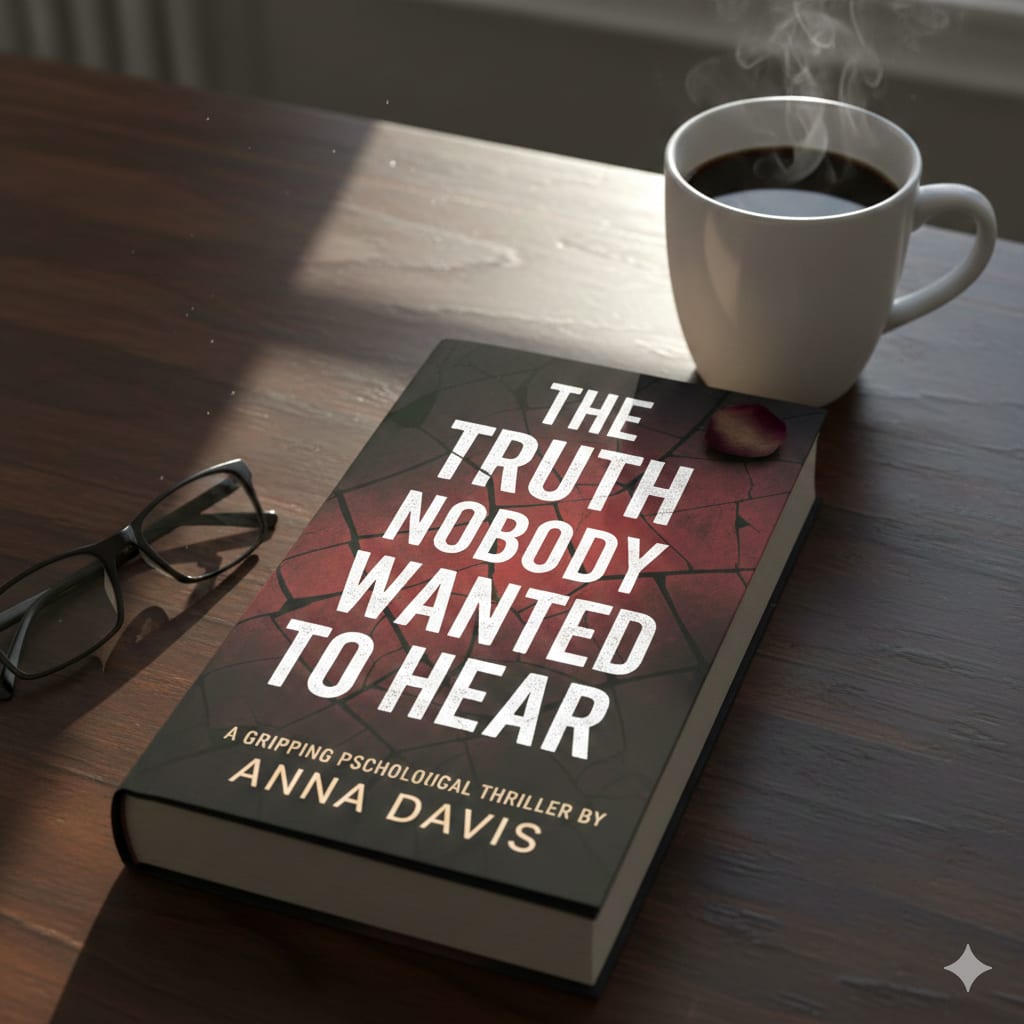
The Truth Nobody Wanted to Hear
The town of Greybridge prided itself on its calm.
Neat lawns. White fences. Predictable smiles.
Nothing unexpected ever happened there—or at least, that’s what people liked to believe.
Every Sunday after church, the townspeople gathered in the square. Children chased each other around the old fountain, elders discussed weather patterns as if they were breaking news, and shopkeepers polished their windows twice even when they were already spotless.
Greybridge survived on routine.
And routine survives on silence.
It started with the river.
For generations, the River Alder ran clear through the edge of town. It fed the crops, filled the wells, reflected the golden sunset like polished glass. The townspeople often said, “As long as the river flows, Greybridge stands.”
But one spring morning, Daniel Harper noticed something strange.
Daniel was not the kind of man people listened to easily. He was a high school science teacher—quiet, observant, too analytical for a town that preferred comfort over questions. He walked by the river every morning before school.
That morning, the water shimmered differently.
Not with sunlight.
With something oily.
He crouched near the bank, frowning. Dead fish floated near the reeds, their silver bodies turned belly-up like pale warnings.
Daniel’s stomach tightened.
He collected a sample in a glass jar and took it to his classroom lab.
By evening, the results confirmed what he feared.
The river was contaminated.
And not by accident.
Upstream, beyond the bend where the old lumber mill once stood, a new factory had quietly begun operations six months earlier. It brought jobs, stability, investment—everything Greybridge loved.
And apparently, it brought waste.
Daniel stared at the chemical readings on his desk long after sunset.
He could ignore it.
He could tell himself it wasn’t his responsibility.
But he kept thinking about the children who played near the river.
The families who drank from wells connected to its flow.
The crops that depended on it.
Truth sat heavy in his hands.
The next Sunday, when the town gathered in the square, Daniel stepped forward.
“I need everyone’s attention,” he said, louder than he ever had before.
The chatter softened but did not disappear entirely.
Mayor Thompson, a broad-shouldered man with permanently reassuring eyes, smiled politely. “What is it, Daniel?”
“It’s the river,” Daniel replied. “It’s polluted.”
A ripple of discomfort passed through the crowd.
“That’s impossible,” someone muttered.
“The water’s always been fine,” another insisted.
Daniel held up the jar of murky water.
“I tested it. There are toxic chemicals present—industrial solvents. Long-term exposure could cause serious health issues.”
The mayor’s smile tightened.
“Are you sure your equipment wasn’t faulty?”
“I ran the tests three times.”
Whispers began to rise.
“Where would that even come from?”
Daniel swallowed. “The factory upstream.”
Silence fell—but not the kind that listens.
The kind that resists.
“That factory employs half this town,” a shopkeeper snapped. “You’re accusing them without proof.”
“This is proof,” Daniel insisted.
Mayor Thompson raised a calming hand. “Let’s not jump to conclusions. We’ll look into it.”
But Daniel could see it in their faces.
They didn’t want to look into it.
They wanted it to disappear.
The following week, Daniel’s tires were slashed.
A note was left on his doorstep: Stop stirring trouble.
At school, parents began requesting their children be moved to another class.
“You’re scaring them,” one mother said coldly.
Daniel felt isolation closing in like fog.
But the river kept flowing.
And more fish kept dying.
He contacted the regional environmental agency himself. Weeks passed without response. When he called again, he was told the investigation was “pending review.”
Pending.
Greybridge, meanwhile, carried on.
The factory sponsored a town fair. Bright banners hung across Main Street. Music filled the air. Free drinks were handed out in plastic cups filled with river water.
Daniel watched from a distance.
He felt like he was shouting underwater while everyone else danced on shore.
Then came the hospital reports.
First, a farmer’s daughter developed a strange skin rash after swimming.
Then two elderly men were diagnosed with unexplained respiratory problems.
Still, no one connected the dots publicly.
Until Daniel did.
He gathered the medical reports, the water samples, and photographs of the river. This time, he didn’t speak in the square.
He went live online.
He posted everything.
Within hours, the video spread beyond Greybridge.
Regional journalists picked it up.
Environmental groups demanded answers.
Suddenly, the town’s quiet problem wasn’t quiet anymore.
Mayor Thompson called an emergency meeting.
The hall was packed.
“You’ve embarrassed this town,” the mayor said sharply.
“I told the truth,” Daniel replied.
“You caused panic!”
“No,” Daniel said steadily. “The pollution caused panic. I just gave it a name.”
Murmurs filled the room.
Anger.
Fear.
Doubt.
A factory representative stood up. “Our operations meet all regulations.”
“Then let independent inspectors confirm that,” Daniel challenged.
The room felt divided—like a rope pulled too tight between denial and reality.
Then something unexpected happened.
Mrs. Calloway, the oldest resident in Greybridge, slowly rose from her seat.
Her voice was fragile but clear.
“My husband drank from that river his entire life. Last month, he passed from liver failure. The doctors couldn’t explain it.”
The room stilled.
She looked around at her neighbors.
“We built this town on honesty. Not convenience.”
One by one, others stood.
Parents.
Farmers.
Even a factory worker who admitted waste barrels were sometimes dumped after midnight.
The silence cracked.
The truth, once unwanted, had found strength.
An independent investigation was launched under public pressure.
Within weeks, violations were confirmed.
The factory was fined heavily and forced to install proper waste treatment systems. Cleanup efforts began along the riverbanks.
It would take years for the ecosystem to recover fully.
Trust would take even longer.
One evening, Daniel returned to the river.
The water still wasn’t clear—but it no longer shimmered with oil.
A few small fish darted cautiously near the shore.
He sat on the bank, exhausted but steady.
Mayor Thompson approached quietly.
“You could have handled it privately,” the mayor said.
“I tried,” Daniel replied.
They stood in silence.
“You know,” the mayor admitted after a moment, “people weren’t angry because you were wrong.”
Daniel looked at him.
“They were angry because you were right.”
Truth is rarely rejected because it lacks evidence.
It’s rejected because it demands change.
Greybridge had wanted comfort.
Daniel had offered consequence.
But sometimes, the truth nobody wants to hear is the very truth that saves them.
As the sun dipped below the horizon, its reflection touched the river gently.
Not perfect.
Not pristine.
But healing.
And for the first time in months, Greybridge listened—not to gossip, not to fear—but to the quiet, steady sound of truth flowing forward.
About the Creator
Samaan Ahmad
I'm Samaan Ahmad born on October 28, 2001, in Rabat, a town in the Dir. He pursued his passion for technology a degree in Computer Science. Beyond his academic achievements dedicating much of his time to crafting stories and novels.
Keep reading
More stories from Samaan Ahmad and writers in BookClub and other communities.
The Day Time Stopped for Me
The Day Time Stopped for Me Time had always been my enemy. It moved too fast during childhood summers and too slow during examinations. It rushed past moments I wanted to hold and dragged itself through moments I wished away. But I had never imagined there would come a day when time would not move at all.
By Samaan Ahmadabout 6 hours ago in BookClub
Self Help: Grifters' Gospel
On Self-Help, Snake Oil, and the Illusion of Change Psychology professionals and students can be imagined on two opposite sides of a line called self-help books: likely a larger group opposes pop-science and step-by-step manuals filled with talk of success, journaling, and not giving a f**k; others love them, but they aren’t many.
By Avocado Nunzella BSc (Psych) -- M.A.P 16 days ago in BookClub
7 Contemporary Fiction Books You Must Read In 2026
In a world overflowing with stories, contemporary fiction stands out for its ability to reflect our lives, explore the human condition, and challenge the way we see the world. These books often tackle pressing social issues, complex relationships, and the subtle nuances of everyday life, making them both relatable and thought-provoking. Below is a list of 7 contemporary fiction books you must read in 2026.
By Diana Meresca day ago in BookClub


Comments
There are no comments for this story
Be the first to respond and start the conversation.