
Tomorrow, and Tomorrow, and Tomorrow
An Original Story Inspired by the Title

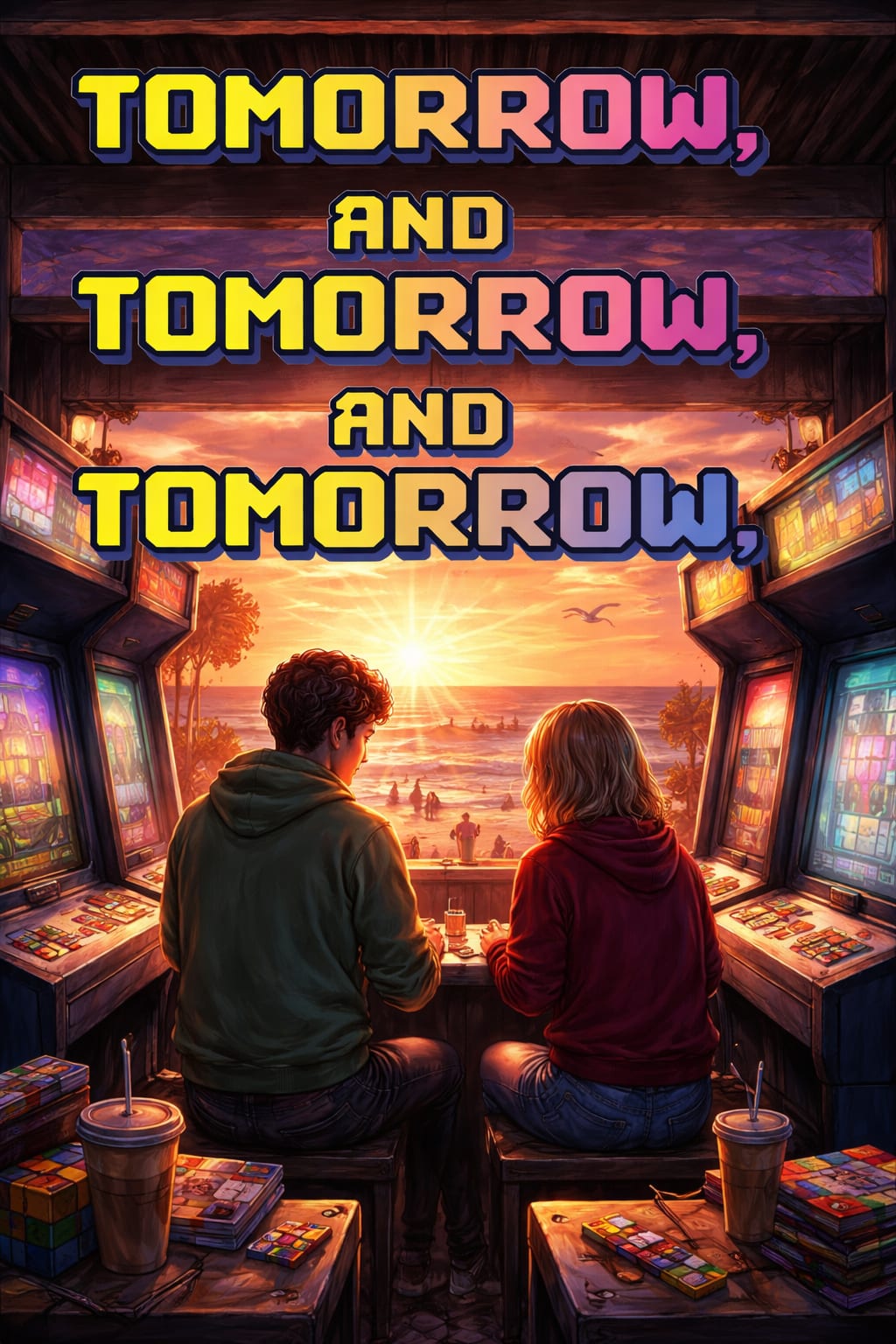
Tomorrow, and tomorrow, and tomorrow—it was a phrase Mira had first heard in a classroom where dust floated lazily in streaks of afternoon sunlight. Her literature professor had recited it slowly, like a spell, explaining how time could stretch endlessly forward, carrying both hope and despair in its wake.
Mira did not understand it then.
She understood it now.
The hospital corridor smelled of antiseptic and fading flowers. Outside the window, winter pressed its pale face against the glass. Machines hummed with mechanical patience, measuring seconds in sterile beeps. Her brother Aarav lay still beneath white sheets, his breathing shallow but stubborn.
“Tomorrow,” the doctor had said gently. “We’ll know more tomorrow.”
Tomorrow had become a fragile promise.
When they were children, Mira and Aarav had built kingdoms out of cardboard boxes. In their small apartment, imagination was currency, and they were extravagantly wealthy. Aarav would draw maps of invisible lands, labeling rivers and mountains with absurd names. Mira wrote stories about brave explorers who crossed those mountains in search of silver forests and cities made of light.
“Tomorrow we’ll build the castle,” Aarav would say, even when it was already bedtime.
Tomorrow always held another adventure.
Years passed, and the cardboard kingdoms gave way to separate lives. Mira pursued writing; Aarav studied engineering. They drifted like continents—still connected deep below the surface, but outwardly distant. Calls became shorter. Visits became rarer. Tomorrow became something they assumed would always arrive intact.
Until the accident.
The phone call had come at 2:17 a.m., slicing through her sleep.
“Your brother’s been in a collision.”
The word collision felt too small for the wreckage it described. A truck had skidded on black ice. Metal had folded like paper. Tomorrow had narrowed into a thin hospital bed surrounded by wires.
Now Mira sat beside him, her notebook open but blank. She had always believed words could hold anything—grief, joy, rage, redemption. Yet faced with the steady rise and fall of Aarav’s chest, she felt language crumble.
She reached for his hand.
“Remember the silver forest?” she whispered. “You said the trees would sing when the wind blew.”
The machines continued their indifferent rhythm.
That night, exhaustion dragged her into uneasy sleep in the waiting room. And there, in the strange elasticity of dreams, she found herself standing in a familiar place.
A silver forest.
The trees shimmered as if dipped in moonlight. Their leaves chimed softly, not with sound exactly, but with vibration—like distant bells underwater. A path wound between them, glowing faintly.
At the end of the path stood a castle made of cardboard and constellations.
“You’re late,” Aarav’s voice called.
She turned. He stood there as he had at twelve—grinning, hair falling into his eyes, holding a crumpled map.
“You said tomorrow,” she replied, her voice trembling.
He shrugged. “It’s always tomorrow here.”
They walked through the forest together. The air felt weightless, untouched by hospitals or fear. The castle door creaked open, revealing rooms filled with sketches and half-written stories—every unfinished dream they had ever postponed.
“You stopped drawing,” she said softly.
“You stopped visiting,” he countered, not accusing, just stating.
Silence settled between them, gentle but heavy.
“I thought we had time,” Mira said. “I thought there would always be another tomorrow.”
Aarav knelt, pressing his hand against the glowing floor. “Time doesn’t promise anything,” he said. “It just keeps moving.”
The silver leaves rustled like distant applause.
“Then what do we do?” she asked.
He looked up, smiling—not the careless grin of childhood, but something steadier. “We choose. Every day. We build the castle now. We don’t wait.”
The dream began to dissolve, the trees fading into white.
“Don’t forget,” he called. “Tomorrow isn’t guaranteed. It’s created.”
Mira woke with a start.
The waiting room lights flickered faintly. Dawn bled pale orange into the sky. For a moment, she couldn’t separate dream from memory.
Then she heard it—a change in the rhythm of machines down the corridor.
Her heart thundered as she rushed back into Aarav’s room.
A nurse stood adjusting a monitor. The doctor entered moments later, expression cautious but softer than before.
“He’s responding,” the doctor said. “It’s subtle, but it’s there.”
The word responding felt like sunrise.
Mira stepped closer. Aarav’s fingers twitched faintly against the sheets. It was the smallest movement, almost invisible. But it was movement.
It was tomorrow pushing its way into today.
Recovery was neither swift nor simple. There were setbacks—fevers, complications, nights when hope thinned to a thread. But there were also milestones: the first time Aarav opened his eyes, confused but alive; the first whispered word; the first unsteady step during physical therapy.
Each day demanded patience.
Each day required choice.
Mira began bringing her notebook again. She wrote beside his bed, not stories of distant kingdoms, but stories of hospital corridors transformed into battlegrounds where courage fought quietly against despair. She wrote about silver forests growing in sterile rooms. She wrote about siblings who had nearly lost each other and found themselves anew.
One afternoon, as sunlight spilled across the floor, Aarav watched her scribble furiously.
“You always were dramatic,” he murmured, voice raspy.
She laughed, tears blurring her vision. “You’re supposed to be unconscious.”
“Disappointing you already,” he teased faintly.
She closed the notebook and took his hand again.
“No,” she said. “You’re building the castle.”
He looked confused.
“I had a dream,” she began, recounting the silver forest and the cardboard constellations. When she finished, he was quiet.
“I don’t remember that,” he admitted.
“It doesn’t matter,” she said. “We don’t have to remember. We just have to choose.”
Outside, spring had begun its quiet work. Snow melted into streams. Trees budded hesitantly, then boldly. The world, indifferent yet persistent, moved forward.
Tomorrow, and tomorrow, and tomorrow.
The phrase no longer felt endless in a frightening way. It felt precious. Finite. Earned.
Months later, when Aarav finally walked unaided through the park near their childhood apartment, Mira noticed something.
The trees were not silver.
They did not sing.
They were ordinary—brown bark, green leaves, sunlight caught in branches.
Yet they were magnificent.
Aarav paused, leaning on the railing of a small bridge.
“Do you ever think about how close it was?” he asked quietly.
“Every day,” she replied.
He nodded. “Me too.”
A breeze rustled the leaves above them. For a fleeting second, Mira could almost hear the faintest chime, like distant bells.
She smiled.
Tomorrow would come, as it always had. But it would not arrive as an abstract promise. It would arrive as something shaped by their hands—by visits made, by calls answered, by stories written and maps drawn.
By castles built today instead of postponed.
Mira squeezed her brother’s shoulder.
“Ready to go home?” she asked.
He grinned—older now, scar traced faintly along his temple, but alive.
“Yeah,” he said. “Let’s not wait for tomorrow.”
And together, they stepped forward—not into certainty, not into perfection, but into the fragile, luminous act of choosing again and again to build, to love, to stay.
Tomorrow, and tomorrow, and tomorrow—no longer an endless echo, but a rhythm of hope carried carefully in human hands.
About the Creator
Ibrahim Shah
I am an Assistant Professor with a strong commitment to teaching,and academic service. My work focuses on fostering critical thinking, encouraging interdisciplinary learning, and supporting student development.
Keep reading
More stories from Ibrahim Shah and writers in BookClub and other communities.
An In-Depth Exploration of Journey to the Center of the Earth
Few adventure novels have captured the imagination of readers as powerfully as Journey to the Center of the Earth. Written by Jules Verne and first published in 1864, this groundbreaking work blends science, adventure, and fantasy into a thrilling tale of exploration beneath the Earth’s surface. As one of the earliest works of modern science fiction, the novel not only reflects the scientific curiosity of the 19th century but also demonstrates Verne’s extraordinary ability to transform speculative science into gripping storytelling.
By Ibrahim Shah about 5 hours ago in BookClub
Rachel Reviews: Lunch Tales: Teagan by Lucille Guarino
Well, I did enjoy this! Sometimes, all you need is just great storytelling and this is what Lucille Guarino delivers here. There's no big message to this book; it's just about folks and families, living their lives and coping with everything that's being thrown at them and finding their way. But when it's done well, like it is here, then you have characters to whom you can relate, tension which leaves you rooting for a better outcome, attraction which has your heart racing and an urge, as a reader, to see the characters happy with the people with whom they belong.
By Rachel Deeming7 days ago in BookClub
6 Amazing Books That Will Keep You Turning Pages All Night
There’s a special kind of magic in books that refuse to let us sleep. We tell ourselves, just one more chapter, only to glance at the clock hours later, eyes wide, heart racing, mind fully alive. These are the stories that grip us, challenge us, comfort us, or thrill us so deeply that putting them down feels impossible. In a world overflowing with content, finding truly unputdownable books is both an art and a necessity.
By Diana Meresc7 days ago in BookClub


Comments
There are no comments for this story
Be the first to respond and start the conversation.