

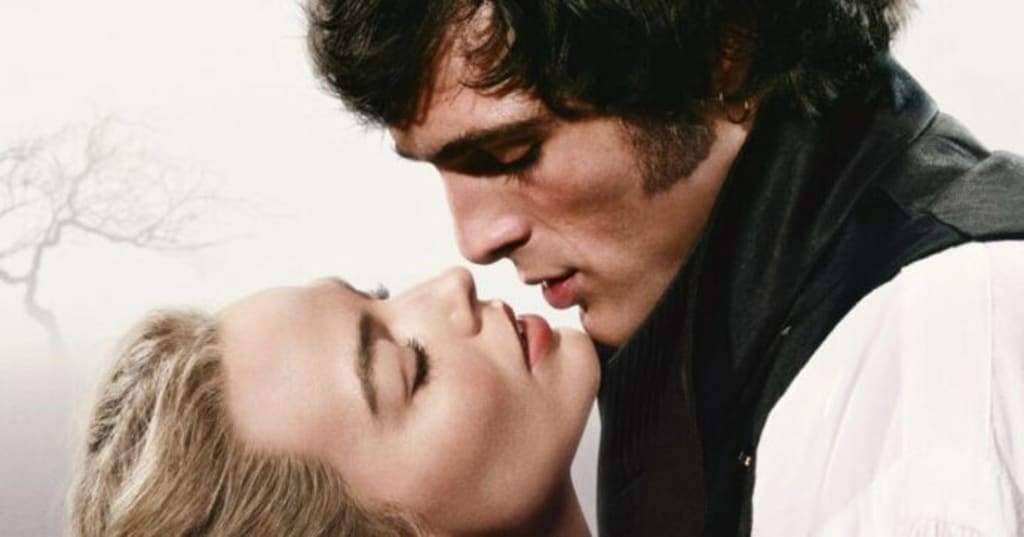
When I wrote La pietra in tasca, I watched every film adaptation of Wuthering Heights. For me, the 1939 version by William Wyler, starring Laurence Olivier and Merle Oberon, remains the absolute masterpiece — the one that, when I was a child, first drew me into the world of Heathcliff and Cathy. Peter Kosminsky’s 1992 adaptation, with Ralph Fiennes and Juliette Binoche, is romantic and enjoyable; Andrea Arnold’s 2011 version, with James Howson (a Black Heathcliff) and Kaya Scodelario, has its own brutal coherence.
But this 2026 adaptation by Emerald Fennell, starring Jacob Elordi (fresh from an excellent performance as Frankenstein’s monster) and Margot Robbie, is bad. There is no other word for it. The film is bad — and wrong.
Fennell cuts half the novel, and fine, others did the same. As if the Wuthering Heights/Thrushcross Grange polarity and the Earnshaw/Linton entanglement could be dismissed as unnecessary. Yet the emotional redemption of the second generation — the pacification of hatred, the futility of revenge, of the “stone in the pocket” — is fundamental. It may sound strange, but the novel contains a double happy ending: Heathcliff eventually grows weary of his revenge and is reunited with Cathy after death; and Hindley’s son, Hareton, and Cathy’s daughter, Catherine Linton — the two cousins — repair the past, showing what Heathcliff might have become had he been supported rather than rejected, had wounded pride not prevailed over love and common sense, had some of the Lintons’ light spilled into the Earnshaws’ darkness.
Other films already sacrificed this. But Fennell goes further. She distorts the characters entirely. She turns Mr. Earnshaw — the loving father of Cathy — into the violent abuser who should be Hindley, now erased from the story. And she does so superficially, portraying him as a drunken squanderer rather than the pure malice Hindley embodies.
Nelly, the stern yet devoted housekeeper, becomes a vindictive Asian lady’s companion. Joseph, the dour servant who oppresses the children with biblical dogma and fear of hell, becomes a barn-version practitioner of Fifty Shades–style sadomasochism, engaging in bondage sex among saddles and harnesses with a compliant Zillah. Even Isabella Linton, Edgar’s sister, is transformed into some vaguely defined “protégée” (for reasons unclear), herself devoted to sadomasochistic practices, willing to be literally leashed by Heathcliff, drooling for him. The tragic account of her suffering as Heathcliff’s wife becomes a perverse game she willingly participates in — almost as if to absolve (or neutralize, from a feminist angle?) Heathcliff of the innate cruelty that only Cathy can restrain.
In this film, Cathy does not die in childbirth. She dies of infection after an abortion, and bled with leeches. She gives birth to no daughter, no Catherine Linton capable of inheriting her kindness and compassion, capable of later redeeming Hareton. Fennell’s Cathy is willing to annul her marriage to Edgar Linton — something Brontë’s Cathy would never even have contemplated.
The film opens with an hanging scene of questionable taste, irrelevant to the story, meant merely to display Cathy’s cruelty. But in today’s imagination — where even vampires and werewolves are transformed into charming drawing-room conversationalists — Cathy apparently can no longer be ambivalent. She must be modern, emancipated, full of girl power. And so that primordial, telluric, perverse, magnificent character — who reminded me both of Scarlett O’Hara and Queen Nefertiti — becomes a prurient blonde doll.
This is a film that inserts sex scenes without eliciting the slightest erotic thrill. A film that treats feelings as an elegant veneer spread over events rather than something to be felt in the gut. A film that does not squeeze a single tear from you even at the pivotal moments: “Nelly, I am Heathcliff,” or “I cannot live without my soul.”
It is drenched in a purely visual expressionism, symbolic only in intention, that conveyed nothing to me but irritation. The iconic, smoky, windswept Wuthering Heights — where dogs and humans snarl at one another — becomes a Lego block in some pseudo-science-fiction uchronia. The costumes look as if they escaped from Bridgerton, stripped of irony and grace and turned into neo-Gothic kitsch. Robbie dresses like Queen Charlotte in one of her worst caricatures (though at least the regent queen is self-ironic). At times she resembles the Evil Queen from Snow White or a bridal Barbie — perhaps a nod to her previous blockbuster. At others she wears a red hood like Little Red Riding Hood, but Elordi’s Heathcliff is no wolf — he is less expressive and has less allure than one of the Bridgerton brothers.
Here, deliberately, space has been given to the idea of female emancipation. Forgetting one thing: in Brontë’s novel, Cathy and Heathcliff are in fact the same person. They are the satanic Byronic hero split in two. They are evil and passion drawn together because divided at birth. They are cruelty and restraint that only each other can impose.
Fennell reduces every emotion, every stirring, every dark movement of the soul to a masturbation dismissed as “nothing serious,” to a flash of impressive muscles glimpsed in passing, to the blood of a slaughtered pig, to a few scenes hot only in intention.
Everything else is missing. The implied incest is missing. Eternal damnation is missing. Hatred is missing. The non-sexual but emotional sadomasochism — barely contained, ancestral — is missing. The necrophilia, the digging up of the grave, the exhumation of the corpse, the promise to be buried side by side, bones against bones in an endless embrace — all missing.
Most of all, missing is what is truly the novel’s main character: the moor.
You do not feel Cathy’s visceral love for the wind-tormented heath. The dream of paradise is misunderstood — it is not merely the loss of her beloved but the loss of freedom, of walking with wind in her hair and peat beneath her feet, as Emily Brontë herself did.
Everything is over-explained in this film, as if the viewer were an idiot who must have the novel’s subtext hammered into. Heathcliff lectures Isabella about who he is, why he marries her, how he will treat her and how she will feel afterward — a sort of dominant/submissive contract reminiscent of Fifty Shades of Grey. Ridiculous for poor Isabella, humiliating for the audience, who need not even make the effort of discovering what will happen; they will not see it unfold, they will simply be told.
After the scene in which Elordi holds Robbie’s corpse in his arms, there is a fade-out. We expect a continuation: her supernatural return, his madness, torment until death. Nothing. She is dead. They will have no more carriage sex or encounters behind walls. That is the only conclusion left to us.
Where is Catherine sniffing the wind and dreaming of being in her bed at Wuthering Heights? Where is Heathcliff searching for the scent of heather in Isabella’s hair and failing to find it? Where is the haunted, ghosted atmosphere of the novel? Where are the snow, the storm, the hand knocking at the window, the spectral voice, Penistone Crags?
Please — give us back the voice in the storm.
About the Creator
Patrizia Poli
Patrizia Poli was born in Livorno in 1961. Writer of fiction and blogger, she published seven novels.
Keep reading
More stories from Patrizia Poli and writers in BookClub and other communities.
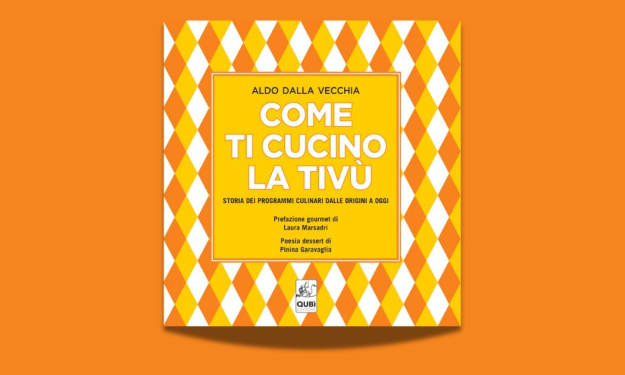
Aldo Dalla Vecchia's "Come ti cucino la tivù"
It’s a pity that Christmas has already passed, because Aldo Dalla Vecchia’s latest gem, Come ti cucino la tivù, would have made a perfect gift. A small hardback, glossy volume — defined by the author himself as “playful and light” — enhanced by beautiful photographs and excellent graphic design, it brings together cooking and television in a single, engaging text.
By Patrizia Poli2 months ago in BookClub
Self Help: Grifters' Gospel
On Self-Help, Snake Oil, and the Illusion of Change Psychology professionals and students can be imagined on two opposite sides of a line called self-help books: likely a larger group opposes pop-science and step-by-step manuals filled with talk of success, journaling, and not giving a f**k; others love them, but they aren’t many.
By Avocado Nunzella BSc (Psych) -- M.A.P 15 days ago in BookClub
7 Books That Will Boost Your Mood and Happiness
Happiness isn’t a destination we stumble upon by accident—it’s a skill we can cultivate, a mindset we can strengthen, and a daily practice we can refine. In moments of stress, uncertainty, or emotional fatigue, the right book can act like a trusted friend, offering clarity, comfort, and a renewed sense of possibility. We’ve all felt it: turning a page and suddenly feeling lighter, understood, or quietly hopeful again.
By Diana Meresc6 days ago in BookClub
Valentine's Dates Over the Years
Colin grinned as Brooklyn slipped into the living room. “Is it all set?” he asked. The twenty-one year old grinned. She was in her last year of college and Colin knew that Lincoln was proud of her. Although she had been away at college, she’d eagerly helped Colin plan his surprise for Lincoln. “I’m so glad you’re finally doing this,” she said.
By Reb Kreyling5 days ago in Chapters


Comments
There are no comments for this story
Be the first to respond and start the conversation.