
Chapter 6: The Early Battles and Self-Defense
When survival became necessary, and restraint defined strength

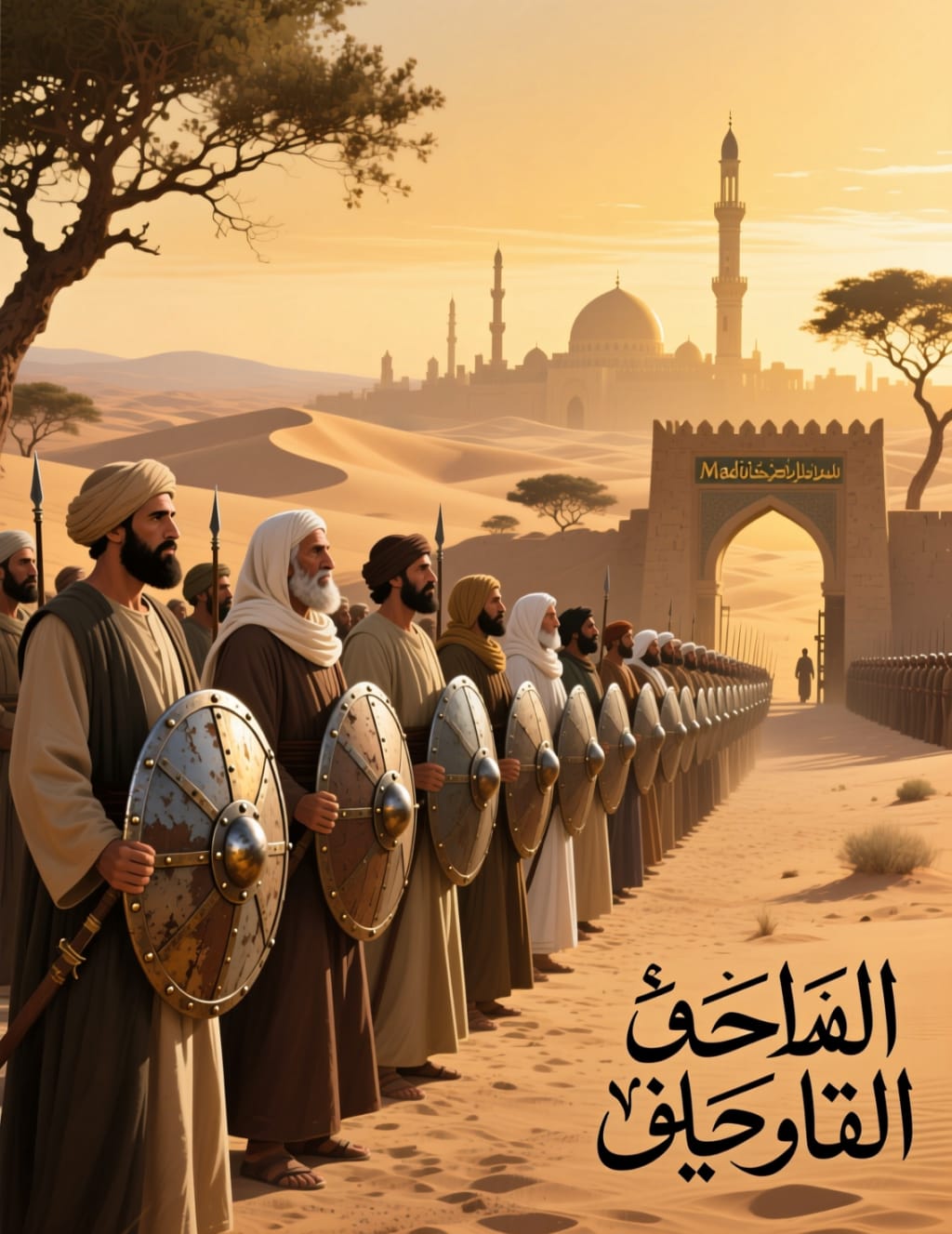
The Early Battles and Self-Defense
After migrating to Madinah, the Muslim community finally found safety—but peace did not come immediately. The Quraysh of Makkah were furious. They had lost control over the Prophet Muhammad ﷺ and his followers, and they feared that Islam would grow stronger outside their reach. Even though the Muslims had left their homes, property, and wealth behind, the hostility did not end.
For years in Makkah, Muslims had suffered silently. They were beaten, insulted, tortured, and even killed, yet they were commanded to remain patient and not fight back. Now in Madinah, the situation was different. The Muslims were no longer helpless individuals; they had become a community. Still, they did not rush into war. Their goal was peace, not bloodshed.
However, the Quraysh continued their aggression. They threatened Madinah, formed alliances against Muslims, and blocked trade routes. Many Muslims were left in poverty because their properties in Makkah had been taken. The danger was real and constant. It became clear that survival itself was at stake.
At this point, permission to defend themselves was finally given. This was a major moment in Islamic history. The Qur’an allowed fighting only for self-defense—not for conquest, revenge, or power. This permission came with strict rules: no harm to civilians, no killing of women, children, or elderly, no destruction of crops, and no forced conversions. War was allowed only to stop oppression.
The first major confrontation was the Battle of Badr. The Muslims were few in number—around 300—while the Quraysh army was nearly three times larger. The Muslims were not well-equipped, and many had never fought before. Still, they marched forward, trusting that justice and faith mattered more than numbers.
The battle was intense but brief. Against expectations, the Muslims were victorious. This victory was not celebrated with arrogance. Instead, it strengthened the belief that discipline, unity, and moral purpose could overcome fear. Prisoners of war were treated with mercy, many released without punishment, and some freed in exchange for teaching literacy. This behavior shocked the enemy and showed a new standard of humanity in warfare.
The Quraysh, humiliated by defeat, returned with anger. This led to the Battle of Uhud. This time, the Muslims faced a difficult lesson. Although they began strong, some disobeyed instructions, leaving their positions too early. The result was painful losses. The Prophet ﷺ himself was injured.
This battle taught an important lesson: success is not guaranteed by faith alone—it requires discipline, patience, and obedience. The Muslims did not lose hope, but they learned humility. Mistakes were acknowledged openly, and accountability was emphasized rather than blame.
Later came the Battle of the Trench, where a coalition of enemies tried to destroy Madinah completely. Instead of fighting directly, the Muslims used strategy and dug a trench around the city—a method unknown in Arabia at the time. This defensive tactic prevented a major invasion without large-scale violence. Eventually, the enemy alliance collapsed without victory.
These early battles show something crucial: Islam did not spread by the sword. The Muslims fought only when attacked and stopped when peace was possible. Many treaties were signed, and many enemies later accepted Islam not because of force, but because of fairness, honesty, and restraint.
Even in times of war, the Prophet ﷺ emphasized forgiveness. When enemies showed willingness for peace, it was accepted. Revenge was discouraged. Justice was placed above emotion. This approach changed how war was understood in Arabia.
The early battles were not about power or territory. They were about protecting life, belief, and dignity. They proved that strength is not shown by cruelty, but by control. That courage is not blind violence, but standing firm with principles even under threat.
These events shaped a new moral framework for conflict—one where ethics mattered as much as survival. They prepared the Muslim community for future challenges, grounded not in hatred, but in responsibility.
The message was clear: fight only when forced, stop when peace is possible, and never lose humanity—no matter how hard the battle.
About the Creator
Wings of Time
I'm Wings of Time—a storyteller from Swat, Pakistan. I write immersive, researched tales of war, aviation, and history that bring the past roaring back to life
Keep reading
More stories from Wings of Time and writers in Chapters and other communities.
Chapter 5: Building the First Islamic Society in Madinah
Building the First Islamic Society in Madinah After the migration (Hijrah), Prophet Muhammad ﷺ and the early Muslims arrived in Madinah, a city very different from Makkah. Unlike Makkah, Madinah had many tribes, different religions, and long-standing conflicts. The city needed peace, order, and unity. What happened next was not only the beginning of an Islamic state, but also one of the most important social transformations in history.
By Wings of Time about a month ago in Chapters
Fair Exchange, No Robberies
Dark Memoirs - Index There are at least two kinds of people in the world: those who write this half-arsed kind of intro to a story that looks to separate the rare and the norm, and those who realise it's an overused framing device and don't.
By Paul Stewart28 days ago in Chapters
Elizabeth Báthory- Hungary’s serial killer
Elizabeth Báthory (born August 7, 1560, Nyírbátor, Hungary—died August 21, 1614, Castle Čachtice, Čachtice, Hungary [now in Slovakia]) was a Hungarian countess who purportedly tortured and murdered hundreds of young women in the 16th and 17th centuries.
By Michelle Leeabout 18 hours ago in Chapters


Comments
There are no comments for this story
Be the first to respond and start the conversation.