
Despite heavy casualties in the war with Israel, Hamas regained 90% control of Gaza.
Return of Police, Security Forces, and Governance, Technocratic Council and Reconstruction Efforts

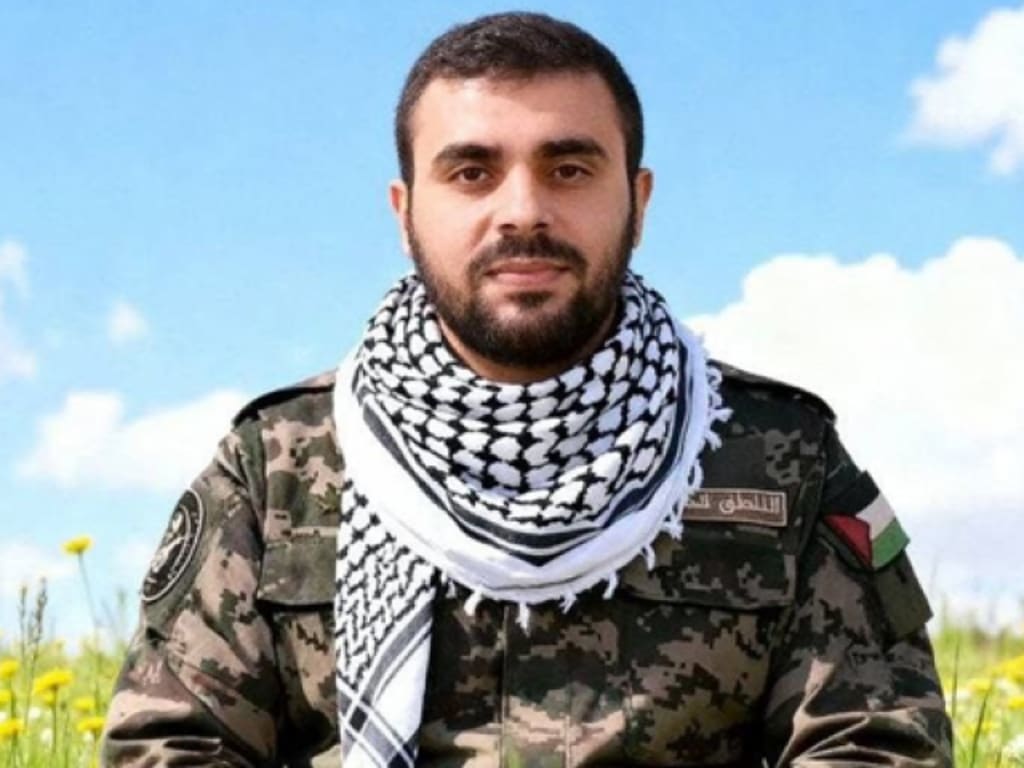
When the ceasefire imposed by the United States last October halted the war in Gaza, Hamas’s fight for survival against Israel turned into a battle for control at home.
The war had reduced the group’s regular military units to scattered guerrilla forces, killing most of its leaders. Gaza’s buildings and infrastructure were heavily destroyed, its population displaced, and its economy devastated. The Hamas-run Ministry of Health says more than 72,000 Gazans have been killed in the fighting and Israeli attacks.
Four months after the ceasefire, Gaza residents say Hamas is once again increasing its control over security, taxes, and government services, raising questions about the group’s long-term strategy and whether it is willing to relinquish its weapons and authority.
Gaza activist Mohammed Diab said Hamas has regained control over more than 90% of the areas where it is present.
He added, “Their police and security agencies are back on the streets, maintaining order and security, and pursuing those they consider collaborators with [Israel] or dissenters.”
Across Gaza’s markets, shopkeepers talk about the return of regular police patrols and strict control over official duties and taxes.
Everyone we spoke to about Hamas’s control in Gaza asked not to be named.
One shopkeeper said, “Markets are calm, but the municipality is still pressuring us to pay rent. They come aggressively every day with the same demands and determination, saying that if we don’t pay, they will throw us and our goods onto the street.”
The shopkeeper told our correspondent in Gaza City that he and his 12-member family were displaced from Shujaiya in eastern Gaza, where his shop was located. Today, Shujaiya is a field filled with rubble.
Nearby, a cigarette vendor said, “The municipality comes every day. I let them count inventory and sales one by one, thread by thread, and then they ask, ‘Do I pay them or feed my children?’”
Since the ceasefire, food and some basic goods have been flowing more freely in Gaza. A few key merchants allowed to import from Israel say Hamas has once again imposed strict taxes on imports.
A merchant, who agreed to share details anonymously, said force is used against those who refuse to pay.
He said, “The taxes imposed by Hamas depend on the type and quantity of goods, but prices start at 20,000 shekels and above. If a merchant refuses to pay, force is used, and in some cases, abductions or threats occur. No one can avoid paying taxes on goods.”
He said that merchants use a code to refer to Hamas when discussing tax payments, so Israel does not realize the money is going to the group.
Gaza activist Mohammed Diab said Hamas now has a database of all merchants importing goods into the Gaza Strip. “Merchants pay in cash, not via bank transfer, so the flow of money cannot be traced. The group is gradually restoring the system that existed in the past, but out of sight to avoid monitoring.”
Hamas spokesperson Hazem Qassem said the Gaza Strip is in an emergency and “extraordinary measures” are required.
He said, “Some merchants have [Israeli] occupier connections and try to make excessive profits, so administrative authorities sometimes have to deal decisively with uncooperative merchants or those failing to meet obligations. This is purely an administrative issue and has nothing to do with Hamas.
Since 2007, Gaza has been governed by Hamas, responsible for paying salaries and, according to the Israeli military, for ultimately rebuilding its war machine.
Israeli army spokesperson Lt. Col. Nadav Shoshani said Hamas sees the time after fighting against Israel as an opportunity.
He added that it is therefore crucial to see them disarmed because they have made it clear that if they have weapons, they will use them in the future.
The Israeli military says it continues to face daily attacks from Hamas against its forces. Since the ceasefire began, four Israeli soldiers have been killed.
While Israeli attacks continue against Gaza’s innocent civilians, the Gaza Ministry of Health says 603 Palestinians have been killed since the agreement.
When asked whether the two-year intense military conflict failed to destroy Hamas’s military capabilities, one of Israel’s key objectives, Lt. Col. Shoshani remained firm.
He said the war will not end until Hamas is disarmed. “Now there is an agreement [and] we expect that to happen. If not, there are many tools on the table to ensure it does.”
A Trump-led peace delegation, consisting of leaders interested in Gaza’s future, recently held its first meeting in Washington.
The next phase of Trump’s plan for Gaza, including reconstruction, depends on Hamas disarming, but negotiators are quietly working out the practical details of weapons transfer—how Hamas will hand over weapons, which weapons will be handed over, and how the process will be verified.
Hamas spokesperson Hazem Qassem said he is confident that “we can resolve the weapons issue in a way that removes the pretext for restarting the war and aligns with President Trump’s plan.”
But Hamas, ideologically committed to fighting Israel, is deeply rooted and armed throughout the Gaza Strip. Full disarmament verification will be difficult, and some within the group reportedly insist on keeping personal weapons for defense against internal enemies.
When the fighting with Israel ended in October, Hamas immediately redirected its weapons against rival factions taking advantage of the chaos to increase their power in Gaza City, Rafah, and elsewhere.
Israeli leaders have rejected the idea of Hamas keeping personal weapons and have pressured the group to disarm by threatening renewed war.
Meanwhile, the International Stabilization Force, which is supposed to take responsibility for security in Gaza, remains stalled, and the new Palestinian technocratic council, intended to manage Gaza’s civil administration, is waiting in Egypt.
Earlier this month, Hamas said it was willing to transfer “authority and governance in all areas” to the new technocratic council.
But Gaza activist Mohammed Diab said there is little evidence that Hamas is preparing to relinquish power.
On the contrary, he said, last week they heard that Hamas made mass appointments to vacant government positions and announced them on social media and official platforms.
Hazem Qassem denied the hiring of new officials, saying all appointments were technical and low-level positions with no impact on power transfer.
Critics question whether this step is an attempt to maintain influence over Gaza’s future government.
At an evacuation site near Nasser Hospital run by international aid organizations, a person said Hamas ministry officials arrived the next day to help oversee the evacuation.
This is a key moment for Donald Trump’s plan, which, despite obstacles and delays, is moving forward with persistent pressure and steady progress.
Despite repeated threats to restart the war if not fully disarmed, some in Israel believe that the most effective pressure on Hamas leadership may be to advance the plan without their direct involvement.
Land has been cleared around Israeli-controlled areas near Rafah, preceding a U.S. plan to build new housing for approximately 200,000 Gaza residents. The plan aims to attract people from Hamas-controlled areas by promising food, water, and medical services.
Many in Gaza see entering the extensive Israeli-controlled areas as siding with the enemy, and so far, very few have taken this route.
About the Creator
Keep reading
More stories from Real content and writers in Chapters and other communities.
The Cave Part 6
If you have ever heard a tale about yourself that you cannot remember and doubtless think is made up, you will know how I felt when Tharkin related all that the eagle had seen of me before my memories were scattered. Of far distances and traveling companions that I did not recall, camping out under the stars and making our way to the mountains with deliberate purpose. The great bird had lost contact with my party once we entered the forests, and the seven other members were not seen again by him or his brethren since.
By Jamye Sharp7 days ago in Chapters
'Till Death We Do Art
There would be nothing divine in this world without art. Nature may surpass the divine to all intents and purposes, but like everything it absorbs and is absorbed by, it remains here, stuck on the surface of this world, ever-present, physically bound to the universe.
By Avocado Nunzella BSc (Psych) -- M.A.P 6 days ago in Art



Comments (1)
Yes Israel failled in own aims