
India vs Vietnam: Will 2026 Free Trade Agreements Transform India’s Export Economy?
Despite major EU and US trade deals, India must improve logistics, reduce non-tariff barriers, and reform customs systems to compete globally

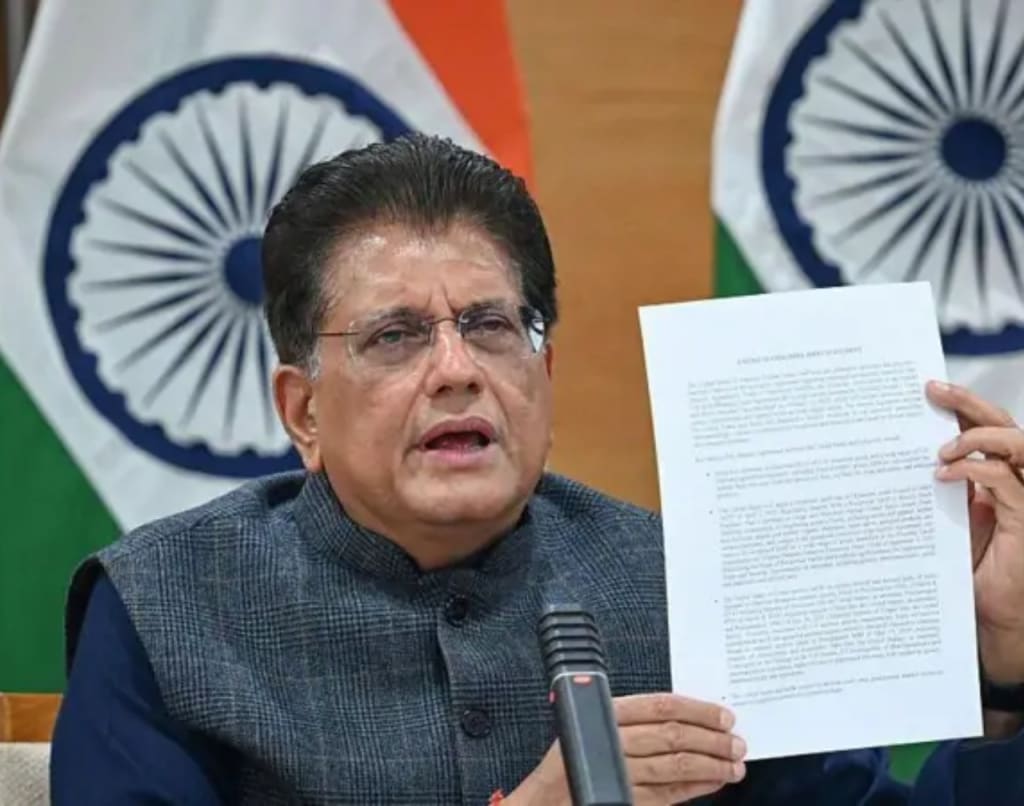
From a commercial perspective, the year 2026 is likely to be considered historic for India.
March has not even begun yet, and New Delhi has already concluded what is being called the “mother of all trade deals” with the European Union. At the same time, it has signed an agreement with the United States that is now being described as the “father of all trade deals.”
Although many experts argue that the United States will benefit more from this agreement, there are serious concerns about the imbalanced nature of this interim deal.
Even so, this is India’s tenth free trade agreement (FTA) since 2014. In the past, India’s cautious approach meant that negotiations with several countries remained stalled for decades.
Immediately after these new agreements, India also agreed to begin negotiations with the six-member Gulf Cooperation Council (GCC), which accounts for 15 percent of India’s total global trade.
Experts say that while this progress is positive, it does not offer a magic solution for rapidly increasing exports, nor can it replace deep structural trade reforms.
Sumedha Dasgupta of the Economist Intelligence Unit said that the success of any FTA depends on how effectively it is utilized. Historically, India has shown a utilization rate of only 25 percent, compared to 70 to 80 percent in developed economies.
This is because many Indian exporters, particularly small companies, fail to take advantage of tariff reductions due to the burden of paperwork, audit risks, and a lack of understanding of FTA provisions.
History shows that this situation has long persisted.
According to consultancy firm EY, between 2017 and 2022, India’s exports to countries with which it signed FTAs increased by 31 percent, while imports from those countries rose by 82 percent.
EY described this large gap between exports and imports as a “concerning failure” to benefit from preferential market access.
However, the government reviewed the situation, and after 2023, agreements signed with countries such as Australia and the United Arab Emirates showed an increase in exports. EY attributed this to steps such as improving the trade framework and establishing mechanisms for quicker dispute resolution.
Experts say much still needs to be done.
Kiran Kotla, CEO of export documentation assistance company Dista, said: “A free trade agreement creates opportunities on paper, but difficulties arise when it comes to implementation.”
According to Kotla, major issues include proving that goods were produced domestically, high documentation costs, non-tariff barriers such as testing and labeling requirements, and frequent changes in customs authorities’ interpretation of rules.
He added: “Many exporters are technically eligible to pay lower duties but still pay full duties because the process of proving eligibility for reduced tariffs is slow, risky, or expensive.
Rules of origin are particularly controversial. Under these rules, exporters must prove that goods were genuinely manufactured or produced in India and not merely assembled there.
Previously, these verification certificates were issued by the Indian government. However, according to New Delhi’s think tank Global Trade and Research Initiative (GTRI), under the new agreement with the European Union, exporters will now have to self-certify.
According to Ajay Srivastava of GTRI, this means exporters will now bear the legal and financial risks themselves in case of mistakes.
Since incorrect claims can result in penalties, the India-European Union FTA will only deliver benefits if rules of origin are properly understood and implemented.
Beyond these complex reforms, there are also fundamental concerns that must be addressed if India is to compete with Asian rivals such as Vietnam in US and European markets.
Kotla said: “Competition is not won through agreements, but through execution. Vietnam’s advantage comes not from tariff concessions but from speed, predictability of systems, and supply chain integration.” This means goods must move quickly, clear customs efficiently, infrastructure must be reliable, and transaction costs must remain low.
“Without these, tariff parity alone will not increase market share.
Priyanka Kishore, founder of the Singapore-based think tank Asia Decoded, said that Vietnam, and even Bangladesh, built export-led manufacturing models focused on designing export-promotion policies and attracting large-scale foreign investment. In contrast, “India’s industrial strategy is fragmented. It lacks urgency and hesitates to expose domestic companies to foreign competition. That needs to change quickly.”
The success of Vietnam’s strategy is evident.
According to World Bank data, Vietnam’s exports in 2010 were roughly one-third the size of India’s exports, and have now reached nearly the same level as India’s—despite Vietnam’s GDP being only about one-tenth the size of India’s.
Asia Decoded notes that over the past decade, nearly all major Asian exporters—including Malaysia, Bangladesh, and Indonesia—have outperformed India in export growth rates.
Although India has worked hard to carve out a space in high-tech manufacturing—for example, producing iPhones for Apple—it still lags in more labor-intensive sectors such as textiles, footwear, furniture, and other low value-added products.
Priyanka Kishore said: “Even if Nike were to face higher tariffs in Vietnam, it would not automatically see India as the best alternative. India’s high logistics costs, import duties, and complex customs regulations remain burdensome.”
Experts say that now that free trade agreements have been concluded, New Delhi must focus on removing these barriers. These are the steps that will help India attract more investment, create jobs, and achieve its annual export target of one trillion dollars.
About the Creator
Keep reading
More stories from Real content and writers in Chapters and other communities.
The Cave Part 6
If you have ever heard a tale about yourself that you cannot remember and doubtless think is made up, you will know how I felt when Tharkin related all that the eagle had seen of me before my memories were scattered. Of far distances and traveling companions that I did not recall, camping out under the stars and making our way to the mountains with deliberate purpose. The great bird had lost contact with my party once we entered the forests, and the seven other members were not seen again by him or his brethren since.
By Jamye Sharp7 days ago in Chapters
FLUENT IN FORBIDDEN — CHAPTER ELEVEN
"The clock has struck three, the coffee is cold, and the shadows are beginning to speak. Welcome back to the desk of The Night Writer, where the stories are brewed in the dark. Tonight, we find that the hardest thing to translate isn't a language—it’s the silence of a man who has lost everything but his life."
By The Night Writer 🌙 4 days ago in Chapters




Comments
There are no comments for this story
Be the first to respond and start the conversation.