
Story of the Greatest Chess Player to Ever Live
Bobby Fischer

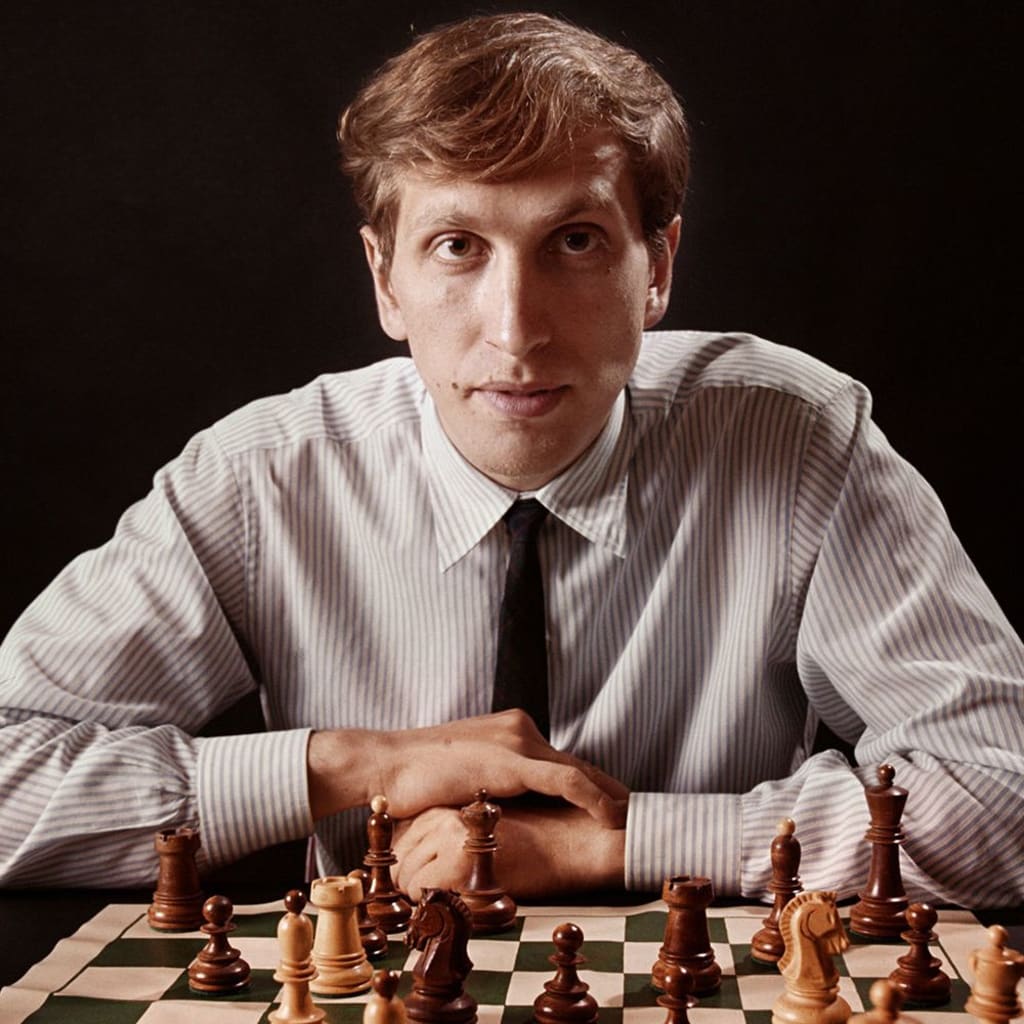
Bobby Fischer, born on March 9, 1943, in Chicago, was a chess prodigy whose extraordinary talent and troubled life captivated the world. Raised in Brooklyn by his single mother, Regina Fischer, Fischer’s early years were marked by financial hardship. Regina, a Swiss émigré of Jewish descent, struggled to make ends meet after her divorce from German biophysicist Hans Gerhardt Fischer. Fischer's early experiences were colored by poverty, a factor that would shape his future in profound ways.
At the age of six, Fischer’s sister Joanne introduced him to chess with a set she bought. This gift ignited a lifelong obsession. Fischer quickly grew enamored with the game, finding it far more stimulating than chance-based games like Monopoly. When Joanne lost interest and their mother was busy working as a teacher and nurse, Fischer dedicated hours daily to playing chess against himself. His solitary practice sessions were a testament to his growing passion for the game.
Fischer’s formal chess education began at the Brooklyn Chess Club, where he took lessons from Carmine Nigro. Despite the modest fee, Nigro’s genuine interest in Fischer’s development was evident. Fischer’s dedication was relentless; he spent countless hours studying chess literature and honing his skills, driven by a desire to master the game.
By age 13, Fischer’s prodigious talent was on display when he defeated Donald Byrne, a top player, in the “Game of the Century.” This victory catapulted Fischer into the spotlight and solidified his reputation as a chess prodigy. His accomplishments continued to mount, culminating in his victory at the U.S. Championship at age 14 and becoming the youngest grandmaster in history at 15.
Fischer’s most significant achievement came in 1972, when he defeated Boris Spassky of the Soviet Union to become the World Chess Champion. This match, held during the Cold War, was more than a chess tournament—it was a symbolic confrontation between the U.S. and the Soviet Union. Fischer’s victory was seen as a triumph over Soviet dominance in chess, elevating him to international fame and making him a symbol of American ingenuity and resilience.
Despite his success, Fischer’s life was marred by personal struggles and eccentricities. Known for his controversial statements and erratic behavior, Fischer often alienated those around him. His comments about women in chess, which were dismissive and derogatory, and his inflammatory remarks about the 9/11 attacks revealed his growing detachment from societal norms.
Fischer’s mental health issues became increasingly apparent over time. He developed paranoia, believing that the U.S. government and Israeli intelligence were conspiring against him. His behavior grew more erratic, including a bizarre obsession with removing his dental fillings and a series of legal and personal troubles.
In 1992, Fischer played a rematch against Spassky in Yugoslavia, defying U.S. sanctions that prohibited Americans from doing business in the war-torn country. Despite winning the match, Fischer’s defiance led to legal issues, and he lived in hiding for years. His personal life was also fraught with complications, including a relationship with Hungarian chess player Zita Rajcsanyi and a brief marriage to Japanese chess player Miyoko Watai.
Fischer’s final years were spent in Iceland, where he was granted citizenship. The country that had celebrated his greatest victory in 1972 became his final refuge. His declining health and isolation characterized his last days. Fischer passed away on January 17, 2008, at the age of 64, a poignant reminder of the chessboard he so loved.
Fischer’s legacy is a complex tapestry of brilliance and tragedy. His contributions to chess were monumental, but his life was overshadowed by personal demons and controversies. His once-remarkable achievements were marred by his struggles with mental health, paranoia, and isolation.
Reflecting on Fischer’s life, one can’t help but wonder how his story might have unfolded differently had he received the support and treatment he needed. His own words about talent and perseverance highlight a stark contrast to the personal challenges he faced. “With talent, study, and a positive attitude, there is no limit to how far you can go,” he once wrote. Yet, in the end, it was Fischer’s own inner turmoil that proved to be his greatest adversary.
For those seeking to maintain focus and energy while reflecting on such profound stories, consider Magnesium Breakthrough by BiOptimizers. This supplement is designed to improve sleep and overall well-being with its comprehensive magnesium formula.
About the Creator
Horace Wasland
Research analyst, writer & mystical healer. Exploring the edge where science meets mystery. From mystery/the mystical, to facts, news & psychology. Follow for weekly insights on all four and please leave a tip if you like what you read :)
Reader insights
Nice work
Very well written. Keep up the good work!
Top insights
Compelling and original writing
Creative use of language & vocab
Eye opening
Niche topic & fresh perspectives
Keep reading
More stories from Horace Wasland and writers in Chapters and other communities.
Stephen Hawking
Stephen Hawking, one of the most renowned physicists of our time, was born on January 8, 1942, exactly 300 years after the death of astronomer Galileo Galilei. Despite his remarkable life and achievements, many aspects of Hawking's journey remain lesser-known.
By Horace Wasland2 years ago in Chapters
Fair Exchange, No Robberies
Dark Memoirs - Index There are at least two kinds of people in the world: those who write this half-arsed kind of intro to a story that looks to separate the rare and the norm, and those who realise it's an overused framing device and don't.
By Paul Stewart29 days ago in Chapters
Puss's Boots - Chapter 2
“How truly beautiful she is, Master Cat!” Exclaimed the pleased Master Detective that afternoon as she gazed upon Dione’s likeness. “Why, Cat, if she is half as intelligent and kind as her portrait is handsome, I have half a mind to beg her hand on the very spot of our meeting.”
By Dionearia Red2 days ago in Chapters



Comments (2)
This was so interesting to read. I find that a lot of times these types of articles are boring, but this had me til the end.
Excellent piece