
Ukrainian Soldiers Turn to Sperm Freezing Program as War Threatens Nation’s Future
Government-funded fertility preservation aims to address Ukraine’s population decline and support military families.

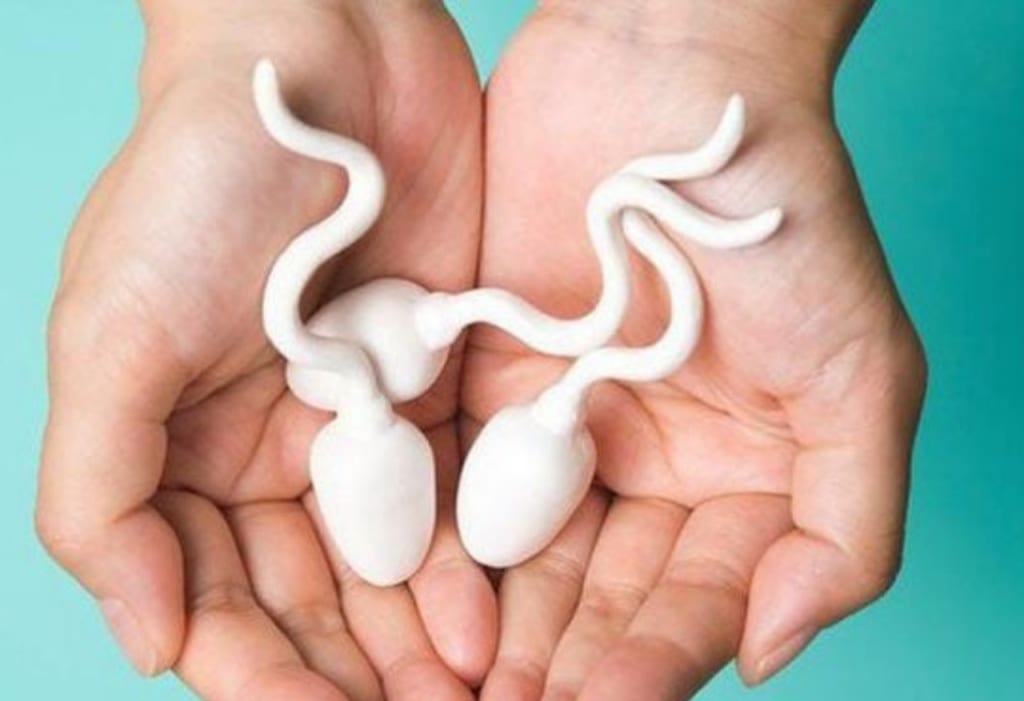
Maksym has no problem talking about sperm. In fact, he hopes the Ukrainian military will talk more about fertility — or at least take some precautionary measures.
“Our men are losing their lives. The Ukrainian gene pool is being destroyed. This is about the survival of our nation,” the soldier said over the phone from a position near the eastern front.
The 35-year-old serves in Ukraine’s national army, and this time, while he was on leave, his wife asked him to go to a clinic in Kyiv and provide a sperm sample.
Under the veterans affairs program, sperm freezing is free.
If Maksym is killed, his wife could still have the child they always wanted using his stored sperm.
He says freezing sperm is essential for starting a family under any circumstances.
“Whether you’re fighting on the front lines or 30 or 80 kilometers away, there’s no guarantee you’ll be safe,” he says under the constant threat of Russian drones.
“That means constant stress, which reduces people’s reproductive capacity. We need to think about the future — about the future of the Ukrainian nation.”
Keeping It Frozen
Private fertility clinics began offering egg freezing services to men and women serving in the military in 2022, after Russia’s full-scale invasion of Ukraine.
Because of the risk of injury or reduced fertility, they were allowed to freeze their sperm and eggs free of charge.
That same year, the government took action and provided state funding for the program.
“Our soldiers defend the future of the land, but many of them lose their own future, so we want to give them this opportunity,” says MP Oksana Dmytriieva, who helped draft the law.
The goal is to help them use their sperm in the future.
Initial attempts by politicians to implement the measure sparked public protests. The controversy arose when the initiative required that all samples be destroyed after the donor’s death. The issue came to light when the wife of a fallen soldier tried unsuccessfully to conceive using her deceased husband’s frozen sperm.
The law has since been amended so that all soldiers’ sperm samples can be stored free of charge for three years after death, and their partners may use them with written consent.
The plan addresses Ukraine’s demographic crisis, which existed even before the Russian invasion and has worsened due to the large number of young, fertile Ukrainian men killed in military operations.
Millions of people most of them women have become refugees. Four years have passed, and many still live abroad, as life in Ukraine has not become easier.
This reality becomes clear when I meet the MP in a hotel and we are forced to talk without removing our warm coats. This winter, Russia has continuously shelled Ukraine’s power plants, leaving thousands of buildings in Kyiv without heat in freezing temperatures.
“We are thinking about the future and all the young people we have lost. We need to compensate for this loss. This is a small step toward improving the demographic situation in the country,” Dmytriieva says.
The MP, while visiting the front lines, has encouraged soldiers to speak openly about their sex lives and fertility issues and to consider freezing their sperm.
“At first they were embarrassed, but we talked and I told them to tell others and they all came and did it,” she says.
“If we can offer them such an opportunity, what’s wrong with taking action?
The Sperm Freezing Program
The Kyiv State Fertility Treatment Center has been accepting soldiers under the sperm freezing program since January.
So far, only dozens have visited, but the center believes more will come once the issue becomes widely discussed.
“We have broad demand and high expectations for this program,” says Dr. Oksana Horliukova.
Giant chambers resembling dry ice steamers open to reveal long, narrow tubes where sperm is stored.
As we walk through quiet corridors, the hidden pain and pressure of war become evident. We hear the cry of a newborn in a cradle and the screams of a woman in labor. Since the war began, the number of pregnant women visiting the clinic has halved.
“When women are under stress, their menstrual cycles are disrupted everything is connected,” Dr. Horliukova explains. “About 60% of my patients take antidepressants, including those who have experienced panic attacks due to missile and drone strikes.
She says others suffer from “procrastination syndrome,” postponing major life decisions, including having children.
Women are afraid of becoming pregnant when they must run to shelters.
A Court Decision
Ukraine needs new children.
But the legal process to support military families has not always been smooth.
Katerina Malyshko and her husband Vitaliy had struggled for some time to have children. She believes their natural fertility problems were caused by the war, or at least worsened by it.
“All the stressful, sleepless nights every night is another chance because we don’t know whether we will wake up alive the next morning,” Katerina says.
The young couple had hoped to celebrate their fourth wedding anniversary this year, perhaps with the birth of a child. Last winter, a fertility clinic had provided them with three embryos, and Katerina was preparing to have them implanted.
Then Vitaliy was killed.
“He was hit directly by guided bombs, and there was no chance of survival,” Katerina says.
She speaks openly about the pain and struggle of living without her husband. Her grief deepened when the clinic announced she was not permitted to continue treatment using the frozen embryos or Vitaliy’s sperm.
“They were stored, but I had no right to use them.
MP Oksana Dmytriieva has contacted some clinics directly to ensure military families can continue treatment, but she acknowledges that new legislation is needed to resolve such issues.
Several amendments are expected to be voted on in the spring.
A grieving and frustrated Katerina was forced to go to court, and after nearly six bitter and exhausting months, a judge finally ruled in her favor.
“I read the decision and fell to my knees and cried,” Katerina recalls. “It meant so much to my family. I waited so long and endured so much to get it.”
“I felt sad and happy at the same time because I had to fight for my rights but I wanted to do it in memory of my husband.
Katerina is not yet ready to have a child. She feels too weak.
She has no hope that the war will end soon so she can give birth in a peaceful country.
When asked about the idea of giving up the land her husband died defending in order to stop further attacks, she responds: “If we retreat now, then why did so many people lose their lives?”
Katerina wants to have a child with her husband when she is ready.
“I think the children of soldiers who lost their lives in the war deserve the chance to live. They should be able to live in the country their parents died for.
Maksym, on the front lines and in constant danger, agrees.
“That’s why I decided to freeze my sperm. It’s necessary because maybe tomorrow I’ll suddenly be gone, but my wife can use it — and that at least removes one worry,” he says over the phone.
According to Maksym, the biggest problem is persuading men to apply for the program.
Kyiv clinic director Oksana Horliukova recalls speaking to a veteran who said soldiers would come to her, cry, and talk about how difficult it had become to have sexual relations with their wives and conceive children.
Maksym agrees: “Men keep things inside and don’t express their feelings, but there are many psychological problems.”
He suggests it would be better to collect sperm samples when soldiers are deployed, just as DNA samples are taken to identify them if they are killed.
The soldier concludes: “There needs to be more discussion about this issue and why it is necessary so that people support it.”
“Because usually we men don’t do anything unless you hit us over the head with it and force us.”
About the Creator
Keep reading
More stories from Real content and writers in Chapters and other communities.
Uzbekistan and Afghanistan Target $5 Billion Trade Deal Amid Regional Economic Shift
Taliban government says it has discussed increasing bilateral trade with Uzbek authorities, and both countries are committed to raising their mutual trade to “five billion dollars.”
By Real contenta day ago in Chapters
Firebug: Ch. 21 - The Queen Bee's Sting
Roman dropped Theo off back home a few minutes before dawn. There was just enough time for him to slip through the window and tiptoe to his room before he heard Thaddeus wake up and get ready for work. Theo laid in bed and stared at the ceiling until he heard his father leave the apartment, unable to stop smiling.
By Natalie Graya day ago in Chapters
Belle of the Bayou
Bad move, cher. Not just the slip of her kitten heel on the rainy February cobblestones in the Fourth Ward. She got caught snooping. Detective Deleon clucked and strutted like a rooster in his rush to clear her from the scene, waving cigar smoke to and fro as he gesticulated amid the thick air of the speak easy. An experienced crime reporter, Marie knew better than to let the coppers catch her on the wrong side of the line, but curiosity had gotten the better of her.
By Maia Gadwall the metAlchemist5 days ago in Fiction



Comments
There are no comments for this story
Be the first to respond and start the conversation.