
US-Iran Nuclear Talks in Geneva: Progress, Red Lines, and Rising Military Tensions
Second Round of US-Iran Negotiations in Geneva Shows Limited Progress. JD Vance Signals Diplomatic Path but Warns of Trump’s Red Lines. Iran Says ‘Fundamental Principles’ Agreed, Draft Deal to Be Exchanged

On Tuesday (17 February), following the second round of negotiations between the United States and Iran in Geneva, both Washington and Tehran expressed concerns as well as some encouraging statements.
After the meeting, U.S. Vice President J.D. Vance said that diplomatic talks between the United States and Iran had gone well “in some respects,” and that both sides had agreed to hold another meeting. Meanwhile, Iranian Foreign Minister Abbas Araghchi stated that “an understanding on fundamental principles” had been reached with the United States.
Vance also said that Iran is still not prepared to accept certain “red lines” defined by President Trump.
He indicated that the United States would continue on the diplomatic path, but that President Trump would ultimately decide “when to abandon diplomacy.” He added that Washington does not expect matters to reach that point, “but if they do, the decision will be President Trump’s.”
On the other hand, Araghchi described the second round of talks as more positive than the first. He said that both sides would prepare two draft versions of a possible agreement document and exchange them. “However, this does not mean we will reach an agreement soon, but we have certainly started moving along the path toward one.”
Araghchi further said that there are still some issues requiring additional work.
Meanwhile, Iranian President Masoud Pezeshkian stated that his country is ready to allow “verification” that Iran is not seeking to develop nuclear weapons.
In remarks published on the presidential website, Pezeshkian said: “We are absolutely not trying to acquire nuclear weapons, and if anyone wants to verify this, we are ready to take the necessary steps.”
The Iranian president added that Tehran will never abandon its “peaceful” nuclear program.
Threatening Statements by Trump and Khamenei
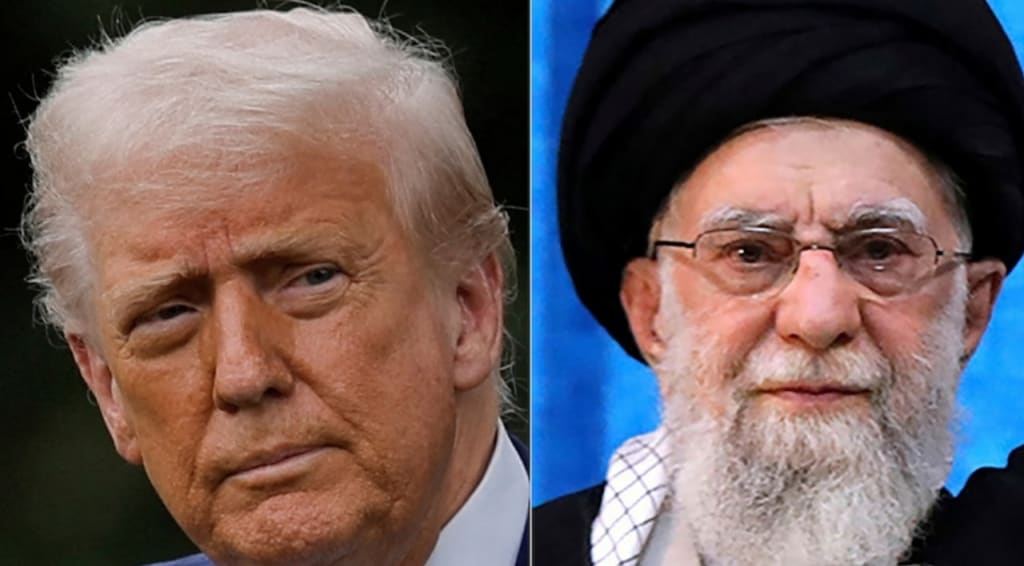
While negotiations continued in Geneva, threatening statements were also made before and during the talks by President Trump and Iran’s Supreme Leader Ayatollah Ali Khamenei.
As the nuclear negotiations began, Khamenei said that the United States would not succeed in “destroying” Iran.
Referring to the U.S. decision to deploy aircraft carriers, Khamenei said: “These ships are certainly dangerous weapons, but even more dangerous is the weapon that can sink them to the bottom of the sea.”
Similarly, President Trump announced Monday night that he would participate in the negotiations “indirectly.”
Speaking to reporters aboard the presidential aircraft, the U.S. president said: “I don’t think Iran wants to face the consequences of not making a deal.” However, he also expressed hope that Tehran does want to reach an agreement.
A senior Iranian official said that for the Geneva nuclear talks to be effective, it is essential that the United States show seriousness in lifting sanctions on Iran and avoid unrealistic demands.
According to Iran’s state news agency, the U.S. delegation met with Oman’s foreign minister and the Director General of the International Atomic Energy Agency. Through these meetings, this round of negotiations has entered a “technical phase.”
Iranian Foreign Ministry spokesperson Esmail Baghaei said on Monday that, “Considering the talks held in Muscat, we can cautiously conclude that the U.S. position on Iran’s nuclear issue has become more realistic.”
He emphasized that under the Nuclear Non-Proliferation Treaty, Iran has the right to the peaceful use of nuclear energy, including uranium enrichment. “Both of these rights have been recognized.”
The negotiations, mediated by Oman, were attended by U.S. envoy Steve Witkoff and Jared Kushner. Iran was represented by Foreign Minister Abbas Araghchi.
What Role Is Oman Playing in Mediating Between Washington and Tehran?
Oman’s Foreign Minister Badr Al-Busaidi wrote on the social media platform X after the second round of talks that “much work remains,” but that Iran and the United States are leaving “with clear steps for the next phase.”
Following regional diplomatic efforts, Oman is attempting to help both sides reach an agreement.
Oman’s Foreign Ministry has emphasized the importance of returning to the negotiating table and resolving differences through peaceful means in order to support peace and security in the region and the world.
It is worth noting that indirect negotiations between Tehran and Washington began on 6 February in Muscat under Omani mediation.
Last year, talks between the two sides were halted in June when Israel launched a war against Iran. After that major deadlock, this dialogue represents the first progress.
Oman’s Foreign Minister Badr bin Hamad Al-Busaidi has stressed in multiple official meetings the need to expand opportunities for compromise and harmony so that an agreement acceptable to all parties can emerge.
Military Preparations and Exercises
Alongside the negotiations, both Washington and Tehran appear to be taking steps to increase pressure on each other.
U.S. officials said that the American military is preparing for the possibility of conducting operations lasting several weeks against Iran if President Donald Trump orders an attack following a breakdown in negotiations.
Meanwhile, Iran said that its Revolutionary Guards conducted military exercises in the Strait of Hormuz and temporarily closed parts of the strait for several hours.
The Strait of Hormuz is a vital international waterway and the main route for oil exports from Gulf Arab states. Iran began military drills in the strait on Monday, which continued into Tuesday.
In light of the situation, Gulf countries have called for a diplomatic solution to end the dispute.
It should be recalled that in January, the United States deployed the aircraft carrier USS Abraham Lincoln and accompanying warships to the Gulf, and later also deployed the USS Gerald R. Ford to the Middle East.
On Monday, Mohammad Akbar Zadeh, commander of the Revolutionary Guards Navy, said that all foreign naval vessels present in the region are under Iran’s surveillance and within range of its defensive capabilities.
About the Creator
Keep reading
More stories from Real content and writers in Chapters and other communities.
UK Passport Changes 2026: New Entry Rules for Dual British Citizens Explained
Big Changes to UK Passport Rules Starting February 25, 2026: What Dual Citizens and Travelers Need to Know Starting February 25, 2026, the UK is rolling out new passport and border rules, and they’re going to hit a lot of people—especially Brits who also hold another passport.
By Real contentabout 9 hours ago in Chapters
The Cave Part 6
If you have ever heard a tale about yourself that you cannot remember and doubtless think is made up, you will know how I felt when Tharkin related all that the eagle had seen of me before my memories were scattered. Of far distances and traveling companions that I did not recall, camping out under the stars and making our way to the mountains with deliberate purpose. The great bird had lost contact with my party once we entered the forests, and the seven other members were not seen again by him or his brethren since.
By Jamye Sharp3 days ago in Chapters
Unofficial Challenge: What would you do if you were rich?
I love the kind of work I get to do in my career, but as I job search and browse apartments again due to another understaffed and unsustainable work environment that I did not intend to get into, my daydreams of better days consistently lean into the same question: What would I do if I didn't have to worry about my basic needs being met?
By Kay Husnicka day ago in Writers




Comments
There are no comments for this story
Be the first to respond and start the conversation.